Support

Kunstsammlung Nordrhein-Westfalen

About

Imagine a place where the boldest ideas of the last century meet the daring experiments of today. The Kunstsammlung Nordrhein-Westfalen is more than just a museum; it is a prestigious state gallery and one of the world's most significant collections of 20th and 21st-century art. Located in Düsseldorf, this treasure trove attracts thousands of travelers who discover Germany through the lens of high modernism.
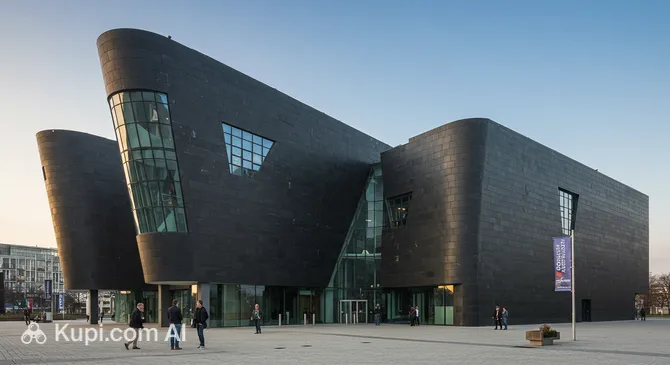
Kunstsammlung Nordrhein-Westfalen
Kunstsammlung Nordrhein-Westfalen. Иллюстрация. Источник: Kupi.com AI

The museum complex is divided into two main venues: the monumental K20 building on Grabbeplatz, whose dark granite facade hides masterpieces of the classical avant-garde, and the historic K21 building in the Ständehaus, dedicated to contemporary trends. The heart of the collection is a unique assembly of works by Paul Klee, which served as the starting point for the development of the entire foundation back in 1960.

Here, you will come face-to-face with originals by Pablo Picasso, Henri Matisse, and Piet Mondrian, and you can also see Jackson Pollock’s famous "drip" paintings. The museum spaces are designed to let viewers feel the scale of each work: high ceilings, plenty of natural light, and minimalist room designs create the perfect atmosphere for a dialogue with great art.

Contacts

To ensure your walk through the galleries of modern art is as comfortable as possible, we recommend saving the gallery's address and phone number in advance. Official information will help you quickly find your way around the city and contact museum staff if needed.

How to contactContact
AddressGrabbepl. 5, 40213 Düsseldorf, Германия
Phone+49 211 8381204
Websitewww.kunstsammlung.de

What to Do

A visit to the museum is a fascinating journey through the key milestones in the development of visual culture. At the K20 building, guests can trace the creative evolution of geniuses such as Max Ernst, Georges Braque, and Max Beckmann. Be sure to dedicate time to the Paul Klee gallery — it is a rare opportunity to see such a cohesive and large-scale collection of his works in one place. Fans of American Pop Art will find inspiration in the halls featuring canvases by Andy Warhol and Robert Rauschenberg.

The K21 branch offers visitors a completely different experience, where contemporary art reigns supreme. You can interact with large-scale installations by Thomas Hirschhorn or Katharina Fritsch, or immerse yourself in the world of conceptual photography by Wolfgang Tillmans. Interactive projects under the massive glass dome often become one of the most exciting attractions, where the boundaries between architecture and art virtually disappear.

For those who want to delve deeper into the "inner workings" of the art world, the museum offers access to the digitized archive of the famous Konrad Fischer Gallery. This priceless collection of documents, letters, and photographs provides a firsthand look at the history of modernism. After exploring the exhibitions, it's nice to relax in the spacious halls furnished with designer pieces by Arne Jacobsen or browse the bookstore for rare art publications.

Getting There

The art collection enjoys a prime location in the very heart of the city, making it easy to reach. The main building, K20, is located at Grabbeplatz 5. The nearest subway and tram station is Heinrich-Heine-Allee, which is served by lines U70, U74, U75, U76, U77, U78, and U79, as well as tram lines 703 and 706. If you are coming from the main station, Düsseldorf Hbf, the subway journey takes only about 10 minutes.

If your destination is the K21 branch, located in the Ständehaus building, you can take public transport to the Graf-Adolf-Platz stop. A special free shuttle for ticket holders runs between the two museum buildings, but many tourists prefer to walk (about 15–20 minutes), enjoying the architecture of the old part of the city. From Düsseldorf Airport (DUS), the most convenient way is to take the S11 suburban train to the station and then transfer to the subway.

For those who prefer comfort, city taxis or car-sharing services are always available. However, keep in mind that parking spaces in central Düsseldorf are very limited, so public transportation remains the most reliable and fastest way to reach the exhibitions.

Ближайший город: Dusseldorf

History & Facts

The history of this ambitious project began in 1960 with a truly fateful decision: the state government purchased 88 works by Paul Klee from the private collection of American industrialist David Thompson. This step laid the foundation for one of Europe's most significant 20th-century art collections. In 1961, the Kunstsammlung Nordrhein-Westfalen foundation was established, and the legendary Werner Schmalenbach became its first director, meticulously selecting world-class masterpieces for thirty years.

Initially, the collection was exhibited in the exquisite Rococo interiors of Schloss Jägerhof. However, the growing holdings required completely different spaces. In 1986, the K20 building opened on Grabbeplatz, designed by the Danish architects Dissing+Weitling. Its facade of black Bornholm granite became a symbol of the city's modern identity, while the spacious halls with natural lighting were a perfect fit for the monumental canvases of Jackson Pollock and Andy Warhol.

A new milestone in the museum's development came in 2002 with the opening of the K21 branch in the former parliament building (Ständehaus). The historic Neo-Renaissance facade was preserved, but the interior was completely transformed, with the courtyard covered by a giant glass dome. In recent decades, the collection has grown actively thanks to the archive of the Konrad Fischer Gallery, making the Kunstsammlung Nordrhein-Westfalen a global center for the study of Minimalism and Conceptual Art.

Time Needed

To fully appreciate the scale and depth of the Kunstsammlung Nordrhein-Westfalen exhibitions, it is worth planning your visit in advance. If you are short on time and only want to visit one building (for example, K20 with its classic masterpieces of modernism), you will need at least 2–3 hours. This is enough time for a quick look at the main halls and a brief introduction to the temporary exhibitions.

For true art lovers wishing to visit both venues — K20 and K21 — it is best to set aside half a day (4 to 6 hours). Factor in the time to travel between the buildings and potential breaks at the museum cafes. The collection is so rich in detail and complex installations that trying to see everything too quickly can lead to emotional sensory overload.

Working Hours

When planning your cultural route, remember that Kunstsammlung Nordrhein-Westfalen follows a standard schedule for many German museums. The main closing day is Monday; both venues (K20 and K21) are closed at this time.

From Tuesday to Sunday, the museum welcomes guests from 11:00 AM to 6:00 PM. Occasionally, during the opening of new exhibitions or on holidays, opening hours may change, so we strongly recommend checking for up-to-date information on the official website before your trip.

DayWorking hours
понедельникЗакрыто
вторник11:00–18:00
среда11:00–18:00
четверг11:00–18:00
пятница11:00–18:00
суббота11:00–18:00
воскресенье11:00–18:00

Nearby

After immersing yourself in the world of high art, it is worth spending time at other interesting locations nearby. The museum's central location allows you to easily combine your cultural program with active leisure, family fun, or even virtual adventures.

NameDistance
Kunsthalle Düsseldorf0.1 km
The Wellem0.1 km
Düsseldorf Memorial0.2 km
Stadterhebungs Monument0.3 km
Düsseldorf Town Hall0.4 km
Market Square0.4 km
CANNANA Museum0.4 km

Reached the end of the page?

That means the route is fully explored