Support

Staatliches Museum für Naturkunde Karlsruhe

About

For those who want to take a fascinating journey through millions of years of our planet's history, the State Museum of Natural History Karlsruhe is a must-see. Located in the heart of Karlsruhe, this museum is among the largest natural science repositories that Germany is proud of.
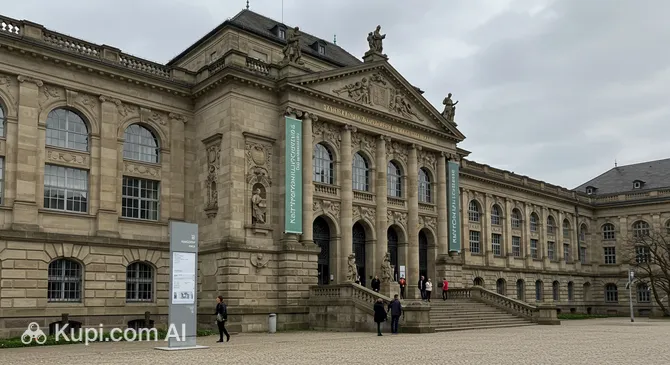
State Museum of Natural History Karlsruhe
State Museum of Natural History Karlsruhe. Иллюстрация. Источник: Kupi.com AI

The museum is famous for its colossal collections covering fields such as paleontology, zoology, mineralogy, and botany. One of the crown jewels of the exhibition is a unique skeleton of a giant salamander, which has become a true scientific and tourist symbol of the place.

A special feature of the museum lies in the harmonious combination of classical exhibition halls with a modern vivarium. Here, you can not only see rare fossils and taxidermy of exotic animals but also observe the lives of live inhabitants of terrariums and aquariums, making the visit interesting for researchers of all ages.

Contacts

To make your visit as comfortable as possible, we recommend checking the official contact information in advance. This will help you find your way quickly and clarify details about special exhibitions.

Below are the current contact details for the museum administration and its exact location:

How to contactContact
AddressErbprinzenstraße 13, 76133 Karlsruhe, Germany
Phone+49 721 1752111
Websitewww.smnk.de

What to Do

The main reason to visit the museum is its extensive paleontological halls. Here you can see majestic dinosaur skeletons, ancient horses, and marine mammals that vividly illustrate what the world looked like long before the appearance of humans. The collections of minerals and fossils are striking in their diversity and natural beauty.

Special attention should be paid to the vivarium, where fish, insects, amphibians, and reptiles live in specially recreated ecosystems. Watching the exotic inhabitants of the aquariums and terrariums is one of the most vivid impressions, especially for families with children.

In addition to the permanent exhibitions, the museum often hosts temporary exhibitions on current scientific topics. Curious visitors can take part in educational workshops or go on a themed tour to learn details of scientific discoveries hidden from the average tourist's eyes.

Getting There

Thanks to its central location, finding your way to the museum is easy even for first-time visitors. Convenient transport links allow you to reach the building quickly from any part of the city using trams or buses that stop within walking distance.

If you arrive at the main railway station, the public transport journey will take only 10–15 minutes. For those who prefer walking, the route through picturesque streets will take about 20–25 minutes, making it a great addition to your sightseeing program.

If you value maximum comfort or are traveling in a large group, you can use taxi services. A trip from the central city squares is inexpensive and takes just a few minutes. For drivers, paid parking zones are provided near the museum.

Ближайший город: Karlsruhe

History & Facts

The roots of this scientific institution go deep into the past—all the way back to the 18th century. It all began with the passion of the Margraves of Baden, who assembled "cabinets of curiosities," collecting rare natural objects and amazing finds from all over the world.

One of the most amusing and significant facts in the museum's history is related to the skeleton of the giant salamander Andrias scheuchzeri, found in 1726. For a long time, scientists mistakenly believed it was the remains of a sinner who perished during the biblical Great Flood. Today, this skeleton is an honored symbol of the museum.

Over the centuries of its existence, the museum has transformed from a private collection into a major scientific center. Having survived many historical transformations, it has managed to preserve and expand its holdings, becoming one of Europe's most important repositories of natural history knowledge.

Today, the State Museum of Natural History Karlsruhe welcomes about 150,000 guests annually. This makes it one of the city's most visited cultural venues, second in popularity only to the State Museum of Baden and the famous ZKM center.

Time Needed

To fully appreciate the scale of the collections and examine all the exhibits without rushing, an average visitor needs 2 to 4 hours. This is enough time to walk through the main halls and check out the live animal section.

If you are planning a visit with children, who will surely want to linger longer in the vivarium by the aquariums, or if you plan to participate in one of the interactive programs, it is better to set aside half a day for the visit.

Working Hours

Before visiting, be sure to check the current schedule to ensure your introduction to the world of nature goes smoothly. The current opening hours allow you to choose a convenient time on both weekdays and weekends.

The museum welcomes guests according to the following schedule: from Tuesday to Friday, the doors are open from 9:30 AM to 5:00 PM. On Saturday and Sunday, the opening hours are slightly extended—from 10:00 AM to 6:00 PM. Please remember that Monday is a closing day.

DayWorking hours
ПонедельникЗакрыто
Вторник9:30 – 17:00
Среда9:30 – 17:00
Четверг9:30 – 17:00
Пятница9:30 – 17:00
Суббота10:00 – 18:00
Воскресенье10:00 – 18:00

Nearby

Exploring the surroundings after visiting the exhibitions can greatly enrich your travel experience. The close proximity of key cultural sites allows you to create a packed itinerary for the whole day without spending much time on travel.

NameDistance
Friedrichsplatz0.1 km
Market Square0.3 km
Ettlinger Tor Karlsruhe0.3 km
Baden State Theatre Karlsruhe0.5 km
Postgalerie0.5 km
Vierordtbad Thermal Baths0.6 km
Schlossplatz0.6 km

Reached the end of the page?

That means the route is fully explored