Support

Money Museum of the Deutsche Bundesbank

About

The Bundesbank Money Museum (Geldmuseum der Deutschen Bundesbank) in Frankfurt am Main is a unique place where financial history comes to life. Located within the German Federal Bank building, this specialized museum takes visitors on an exciting journey through the world of money, currency circulation, and banking. It is widely considered one of the largest and most authoritative museums of its kind in Germany, offering a deep dive into economic history.
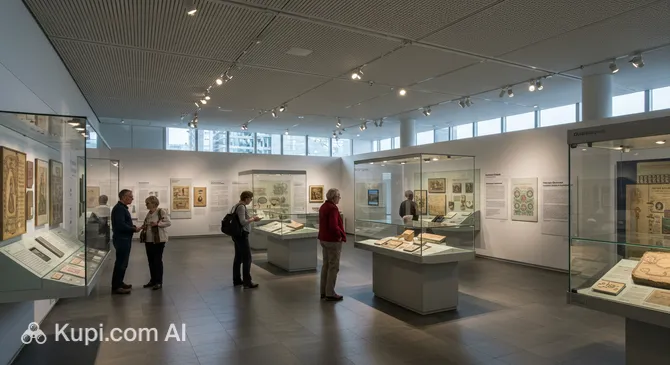
Money Museum of the Deutsche Bundesbank. Illustration.
Source: Kupi.com AI

Traveler photos:

At the heart of the museum is its impressive collection, which includes thousands of exhibits. Here, you will see not only the familiar coins and banknotes of different eras and countries but also trace the entire evolution of payment methods—from ancient forms to modern digital currencies. The displays clearly demonstrate how money and its role in society have changed over the centuries, reflecting economic, cultural, and political shifts.

Of particular interest are the sections dedicated to unusual and exotic forms of money. Visitors can learn about times when cowrie shells, cocoa beans, massive stone slabs, or even tea bricks were used as payment. Interactive stands and multimedia installations make the visit not only educational but also exciting, helping to better understand complex economic concepts and the significance of money in our lives.

Contacts

For the most up-to-date information about the Bundesbank Money Museum, including opening hours, ticket prices, and current exhibitions, it is recommended to consult official sources. We suggest checking the museum's official website before planning your visit.

How to contactContact
AddressWilhelm-Epstein-Straße 14, 60431 Frankfurt am Main, Germany
Phone number+49 69 956633073
Websitewww.geldmuseum.de

What to Do

The Bundesbank Money Museum in Frankfurt am Main offers its visitors a unique opportunity to immerse themselves in the world of finance and the history of money circulation. The museum's primary pride is its extensive numismatic collection, featuring over 90,000 coins and approximately 250,000 banknotes from all over the world. Here, you can see ancient coins from the Roman Empire as well as modern banknotes, tracing the evolution of currency through the ages.

Beyond the money itself, the exhibition introduces guests to the process of creating currency. Visitors can examine banknote-making devices, explore historical safes, and learn about modern security features designed to prevent counterfeiting. This provides a deeper understanding of not just the history, but also the technical side of the monetary business.

The Bundesbank Money Museum actively engages visitors in the learning process. It regularly hosts interactive exhibitions that make studying complex economic topics fun and accessible. Thematic tours and educational programs explain in detail the principles of modern payment systems, the history of monetary policy in Germany, and key stages of global economic development.

Special attention is given to how the functions and forms of money have changed across different historical eras and cultures. Visitors can see firsthand how humanity moved from simple commodity equivalents to the complex financial instruments of today. This journey through time and space allows for learning much that is new while offering a fresh perspective on the money we use every day.

Getting There

The Bundesbank Money Museum is conveniently located in Frankfurt am Main at Wilhelm-Epstein-Str. 14, making it easily accessible for visitors using various modes of transport. If you prefer public transport, the museum can be reached by bus or tram. The nearest stops are within walking distance, and a stroll to the museum building takes about 15-20 minutes.

From the center of Frankfurt am Main, you can take the subway or a bus to the appropriate stop. After that, a short walk follows; signs will help you find your way. It's a great opportunity to stretch your legs and look around while heading to one of the most interesting financial museums in Germany.

For those planning to arrive by car, parking is available near the museum. However, please note that parking spaces may be limited during peak hours. Therefore, it is recommended to plan your route in advance and, if possible, check the current public transport schedules to choose the most convenient way to reach the Bundesbank Money Museum.

Nearest city: Frankfurt am Main

History & Facts

The Bundesbank Money Museum in Frankfurt am Main is more than just a repository of exhibits; it's a fascinating journey into the world of finance. Although the museum officially opened its doors in 1999, its history dates back much further—to the mid-19th century. It was then that the Reichsbank of a unified Germany began collecting unique banknotes and coins. This collection, established during the German Empire, became the foundation for the modern museum and continues to grow today with new and interesting exhibits reflecting a rich numismatic history.

Relatively recently, in 2014, the Bundesbank Money Museum closed its doors temporarily for a major modernization project. This two-year renovation allowed for the updating of existing displays and the introduction of modern multimedia technologies. As a result, visiting the museum has become even more interactive and educational. The renovated museum reopened its doors, offering visitors a fresh perspective on the history of money and its role in society.

One of the museum's key features is its ability to explain complex economic processes in a clear and accessible way. The exhibits detail the role of money in the economy, illustrating both periods of stability and significant economic upheavals. For instance, visitors can learn more about the events of the 1930s global economic crisis and its impact on financial systems. The museum offers a unique opportunity not only to see rare coins and banknotes but also to understand the fundamental principles of how the monetary system works.

Time Needed

When planning a visit to the Bundesbank Money Museum in Frankfurt am Main, you should expect to spend at least 1.5–2 hours exploring its exhibits. This is usually enough for a general introduction to the main halls and the most interesting items that tell the history of money and the role of the central bank.

However, if you have a deep interest in numismatics, financial history, or want to explore the interactive installations in detail, you may need significantly more time. Money and history enthusiasts could easily spend half a day here, immersing themselves in the fascinating world of finance. Therefore, consider your level of interest when planning your visit to ensure you get the most out of the experience.

Working Hours

The Bundesbank Money Museum in Frankfurt am Main is typically open to visitors on weekdays. It is important to note that the museum is closed on Saturdays. It is also closed on certain holidays, such as Easter Sunday and May 1st. Since exact opening hours may vary, it is highly recommended to check the current schedule on the museum's official website or other local information sources before your visit.

At this time, there is no specific information regarding the need for advance ticket booking or registration. To avoid any potential inconvenience and to ensure your visit—especially if you are planning to go during a popular time or with a group—it is best to check this information in advance on the official website of the Bundesbank Money Museum. This will help you plan your visit effectively.

DayOpening hours
Monday9:00 – 17:00
Tuesday9:00 – 17:00
Wednesday9:00 – 17:00
Thursday9:00 – 17:00
Friday9:00 – 17:00
SaturdayClosed
Sunday9:00 – 17:00

Nearby

Visiting the Bundesbank Money Museum in Frankfurt am Main is an engaging immersion into the world of finance and the history of German currency. However, to make your trip even more fulfilling and informative, it's worth taking some time to explore the surrounding area. There are many interesting spots near the museum that will complement your experience and allow you to see Frankfurt from different perspectives.

A walk through the nearby neighborhoods will reveal both green oases for relaxation and other cultural sites, each with its own unique atmosphere. This is a wonderful chance to combine intellectual enrichment with a pleasant pastime and discover new facets of this dynamic city.

NameDistance
Kish Restaurant1.9 km
Senckenberg Natural History Museum2.1 km
Old Opera House2.3 km
Selection Restaurant Frankfurt-City2.4 km
Former Police Headquarters2.9 km
Goethe House2.9 km
Shishantash3 km

Have you reached the end of the page?

So the route has been studied inside and out