Support

Frankfurt Stadium

About

The stadium in Frankfurt am Main, known today as "Deutsche Bank Park", is an iconic place for all lovers of sports and grand events. It was formerly named "Waldstadion", which translates from German as "Forest Stadium," and this is no coincidence: the arena is nestled in a picturesque forest on the outskirts of the city. This modern complex is the home arena for the famous Eintracht football club and one of the most important sports venues in Germany.
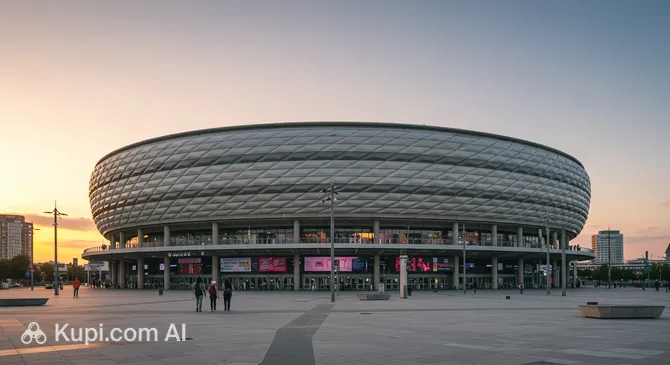
Frankfurt Stadium. Illustration.
Source: Kupi.com AI

Traveler photos:

The arena acquired its modern look as a result of a large-scale reconstruction that took place from 2002 to 2005, designed by a well-known architectural firm. Interestingly, this is already the fourth structure on this historical site. The reconstruction process was unique: the stadium did not close completely but was updated in stages, stand by stand, allowing sporting events to continue.

Today, Deutsche Bank Park is a multifunctional venue capable of accommodating 47,000 spectators for international matches. In addition to exciting football matches, it hosts concerts by world stars, festivals, and other major events, making it a hub for sports fans and anyone looking for vivid impressions during a trip to Frankfurt.

Contacts

It is best to check the official arena website for up-to-date information on event schedules, ticket prices, and stadium rules. Detailed directions and parking information are also usually published there. Below are the main contact details for communication.

How to contactContact
AddressMörfelder Landstraße 362, 60528 Frankfurt am Main, Germany
Websitewww.deutschebankpark.de

What to Do

The main reason thousands of people come here is, of course, football. The stadium is the home arena for the local club Eintracht Frankfurt, and attending one of its matches is a chance to immerse yourself in the incredible atmosphere created by devoted fans. Here you can fully feel the passion and energy of German football, as the arena has a rich history: it has hosted matches for major international tournaments, including the World Cup and the European Championship, making it a truly iconic place for any fan of the game.

Beyond football, "Deutsche Bank Park" regularly transforms into a venue for a wide variety of events. Not only sports competitions but also iconic cultural events take place on its field. For example, in 2010, the famous boxing match where Wladimir Klitschko knocked out Samuel Peter to defend his championship titles was held here. Additionally, the stadium is a popular concert venue where world music stars perform, gathering tens of thousands of spectators for grand shows.

Even if you don't make it to a game or a concert, the stadium offers interesting visit opportunities. Guided tours are available for everyone, allowing you to peek behind the scenes of sports life: see the players' locker rooms, VIP boxes, and the press center. The Eintracht Museum, located right on the arena grounds, deserves special attention. Its exhibition features trophies, historical documents, and memorabilia that tell the glorious story of one of the oldest teams in Germany.

Getting There

Getting to the stadium in Frankfurt am Main is quite simple thanks to the excellently developed transport system. The most convenient and popular way is to use public transportation. The arena has its own railway station, "Frankfurt am Main Stadion", making it easily accessible for visitors. S-Bahn commuter trains (lines S7, S8, and S9) run regularly from Frankfurt's main station. The trip takes only a few minutes. Additionally, you can reach the stadium by tram (lines 21 and 20) and bus (route 61), which stop in the immediate vicinity. On match or concert days, public transport runs more frequently, which helps to avoid traffic jams and parking issues.

If you prefer to travel by car, the stadium is also accessible. It is located in the southern part of the city, in the picturesque Frankfurt City Forest — the largest urban forest in Germany. Due to this location on the outskirts, there are convenient access roads to the arena from the major A3 and A5 motorways. Once there, follow the signs to parking lots such as "Gleisdreieck" and "Waldparkplatz". However, it is worth noting that during major events, the number of parking spaces may be limited, and traffic jams are likely on the approach roads. Alternatively, you can use taxi or ridesharing services to get to the venue comfortably and without any hassle.

Nearest city: Frankfurt am Main

History & Facts

The history of the stadium in Frankfurt am Main began on May 21, 1925, when the "Waldstadion" arena was opened after four years of construction. In its original configuration, it held 35,000 spectators and quickly became an important center for the city's sporting life. Since then, the stadium has gone through several eras and large-scale transformations, each leaving its mark on its appearance and history.

Already in 1937, the stadium was expanded to 55,000 seats. Another modernization followed in the mid-1950s, and on May 23, 1959, an all-time attendance record was set: 81,000 fans came to the match between Eintracht and Pirmasens. This victory paved the way for the Frankfurt club to its first and, so far, only championship title in Germany. A year later, modern floodlight lighting was installed at the Waldstadion.

The arena has repeatedly hosted major international tournaments. The stadium was reconstructed for the 1974 World Cup, hosted matches for the 1988 European Championship, and was finally radically rebuilt before the 2006 World Cup. It was this last reconstruction, completed in 2005, that gave it the modern look familiar to fans today. This process was unique because the stadium never fully closed; it was updated in stages, stand by stand, while continuing to host matches.

Time Needed

Planning time for a visit to the Frankfurt Stadium depends entirely on the purpose of your visit. If you are going to a football match or a concert, it will take up a significant part of the day or evening. However, if your goal is to see the arena on a non-match day, it will take much less time. The main options for a tourist are a guided stadium tour and a visit to the club museum.

For those who want to take a look behind the scenes of the sports arena, a guided tour is the best choice. A standard stadium tour usually lasts about an hour and a half. During this time, you can see the players' locker rooms, the press center, VIP boxes, and go to the edge of the field. To this, you should add a visit to the Eintracht Frankfurt museum, which is located on the arena grounds. It is recommended to set aside another 30 minutes to explore it. Thus, you should allocate about two hours for a full introductory visit with a standard tour and the museum.

If you plan to attend a football match or another mass event, be prepared to spend at least 3–4 hours, or even more. This includes travel to the stadium, security checks, the event itself (about two hours for football), and time to exit the arena after it concludes. On match days, the atmosphere around the stadium becomes particularly lively, which is a unique experience in itself.

Working Hours

Deutsche Bank Park does not have standard opening hours for general public access, as entry to the arena is mainly tied to events — football matches, concerts, or festivals. However, there are two great opportunities for tourists to see the stadium from the inside: guided tours and a visit to the Eintracht Museum. Their operating hours can change, especially on match days, so it is highly recommended to check the current schedule on the official arena website before your visit.

Generally, the Eintracht Museum is open to visitors during the day, and behind-the-scenes stadium tours are conducted on a specific schedule. A standard tour lasts about an hour and a half, and another 30 minutes should be set aside for the museum. It is recommended to book tour tickets in advance online, as group sizes are limited. This will guarantee your entry and help you plan your visit without unnecessary hassle.

10:00 – 19:00

Nearby

Visiting the stadium in Frankfurt am Main is a vibrant event, but you shouldn't stop there. Exploring the arena's surroundings will help you discover other interesting sides of the city and enrich your trip experience. The stadium is located in a picturesque area, where you can find both nature spots for peaceful relaxation and cultural sites worth seeing.

Even a short walk or a public transport ride from the stadium can lead you to iconic places in Germany. You can plan your leisure time so that before or after a sports match or concert, you have time to visit one of the nearby museums, parks, or just sit in a cozy bar. Below is a list of attractions located near the stadium.

NameDistance
Stadtwaldhaus & Fasanerie Information Center1.9 km
Roomers4.3 km
Städel Museum4.3 km
Der Fette Bulle4.6 km
Former Police Headquarters4.7 km
German Film Museum4.7 km
Jewish Museum Frankfurt4.7 km

Have you reached the end of the page?

So the route has been studied inside and out