Support

Old Opera House

About

In the heart of Frankfurt am Main, the cultural and financial capital of Germany, lies the Alte Oper (Old Opera)—a magnificent concert hall and one of the city's primary landmarks. It is not just a building, but a true symbol of Frankfurt's cultural life, attracting both music lovers and those interested in history and architecture. Originally built as an opera house in 1880, today it serves as a prestigious venue for a wide variety of cultural events.

The Old Opera building is a striking example of Neo-Renaissance architecture. Its majestic facade is adorned with a double pediment, columns, sculptures, and richly decorated bas-reliefs, making it one of the city's most beautiful and recognizable buildings. Having survived destruction during World War II, the building was lovingly restored at the initiative of the city's residents and reopened its doors in 1981, preserving its historical appearance.
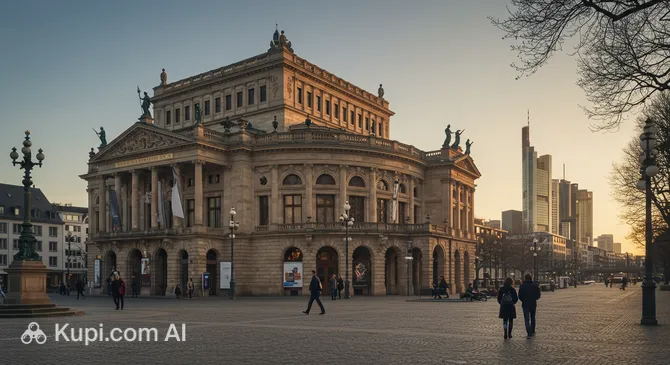
Old Opera House. Illustration.
Source: Kupi.com AI

Traveler photos:

Today, the Alte Oper is a modern concert complex with superb acoustics. Within its walls, symphony concerts, opera productions, jazz evenings, musicals, and performances by world stars take place. The theater's repertoire is extremely diverse, allowing every guest to find an event to their liking, from classical works to modern shows.

Contacts

To obtain current information about the repertoire, ticket purchases, and other questions regarding your visit to the Alte Oper, you can use the official contact details. It is recommended to check the opening hours and visiting conditions on the website.

How to contactContact
AddressOpernpl. 1, 60313 Frankfurt am Main, Germany
Phone number+49 69 1340400
Websitewww.alteoper.de

What to Do

A visit to the Alte Oper is an opportunity to dive headfirst into the cultural life of Frankfurt. The main attraction here is, of course, the diverse program of events. You can find everything in the schedule: from classical music concerts performed by world-renowned symphony orchestras to jazz evenings, modern musical shows, and theatrical productions. Additionally, the building serves as a venue for festivals, congresses, and grand balls. To make your evening even more pleasant, you can stop by one of the restaurants or cafes located right in the complex before the performance or during the intermission to enjoy a drink or a full dinner.

Even if you don't have a concert ticket, the Alte Oper is well worth your attention. You can simply admire its magnificent Neo-Renaissance architecture while strolling through Opera Square (Opernplatz). The facade and interior decoration are impressive in their splendor and attention to detail. For those who want to learn more about the building's history and take a look behind the scenes, special guided tours are conducted. In the warmer months, the square in front of the opera turns into a lively meeting place for walks and gatherings, often hosting street concerts and festivals, creating a unique atmosphere in the heart of the city.

Getting There

The Alte Oper is conveniently located in the very heart of Frankfurt am Main, on Opernplatz, making it easily accessible for visitors. The simplest way to get here is by using the well-developed public transport system. Directly next to the building is the namesake Alte Oper subway station, served by lines U6 and U7. There is also an "Alte Oper" bus stop within walking distance, served by route 64, as well as other bus and tram lines connecting the opera house with various districts of the city.

If you are arriving at Frankfurt Central Station (Frankfurt Hauptbahnhof), the journey to the Alte Oper will not take long. You can take the S-Bahn suburban train (lines S1-S6, S8) to the "Taunusanlage" station, which is just a few minutes' walk away. Alternatively, you can take a pleasant 20-minute walk through the central streets, allowing you to get better acquainted with the city. For those traveling by car, there are several paid parking lots near the square, for example, directly under the opera building or in the neighboring OpernTurm.

Nearest city: Frankfurt am Main

History & Facts

The history of the Alte Oper is a story of civic pride and a love for art. The idea of creating their own opera house was born among the residents of Frankfurt am Main back in the 19th century. The realization of this dream was made possible by the generosity of local aristocrats and industrialists who raised the funds for construction. The project was entrusted to Berlin architect Richard Lucae, and construction of the Neo-Renaissance building began in 1873. Almost seven years later, the city received one of the most magnificent theaters of its time.

The grand opening took place on October 22, 1880. Mozart's opera "Don Giovanni" was performed that evening, and Kaiser Wilhelm I himself was among the honored guests. According to legend, the monarch was so impressed by the luxury and grandeur of the building that he uttered the famous phrase: "I could not afford something like this in Berlin." This endorsement highlighted the theater's status as one of the leading cultural centers not only of the city but of all Germany.

During World War II, the building was almost completely destroyed as a result of bombing. For many years, its picturesque ruins, which citizens bitterly called "Germany's most beautiful ruins," stood as a sad reminder of its former splendor. The theater's fate remained undecided until the 1970s, when a powerful civic initiative saved it from demolition. Thanks to the efforts and donations of concerned residents, a large-scale reconstruction began.

In 1981, the Alte Oper reopened its doors, but in a new capacity—as a modern concert hall and congress center. Today, it is not only a historical monument but also a vibrant cultural hub, becoming a true symbol of Frankfurt's resilience and rebirth. Within its walls, history harmoniously blends with modernity, continuing the cultural traditions established over a century ago.

Time Needed

When planning a visit to the Alte Oper, it is worth setting aside between one and a half to three hours. This time is usually sufficient for a full introduction to the attraction. The duration of your visit will depend on your chosen goal: whether you want to simply view the building from the outside, join a guided tour, or attend an evening concert.

For a quick look at the magnificent architecture and a stroll through the adjacent Opera Square, one hour might be enough. If you want to dive deeper into the history and take a look behind the scenes, you should choose an organized tour, which lasts about two hours. For those planning to attend a concert or performance, at least three hours should be allowed to enjoy the event without rushing, including the intermission.

Working Hours

Since the Alte Oper is an active concert hall rather than a museum, it does not have standard visiting hours for tourists. Access to the building is directly tied to the schedule of concerts, performances, and other events that take place here year-round. However, the theater's box offices, where you can purchase tickets, have their own schedule: as a rule, they are open Monday through Friday from 10:00 to 18:00. On weekends, the box office opens two hours before the start of a scheduled event.

To plan your visit, it is highly recommended to check the schedule on the official Alte Oper website in advance. This is the most reliable way to find out the current schedule, choose an event of interest, and purchase tickets. Given the venue's popularity and high demand, it is better to book tickets for performances by famous artists and ensembles well in advance to guarantee yourself the best seats.

Nearby

A visit to the Alte Oper is just the beginning of your acquaintance with the multifaceted Frankfurt am Main. Thanks to the theater's central location, you are in the heart of the city, where iconic historical monuments, modern skyscrapers, and cultural sites are concentrated within a short distance of each other. A walk through the surrounding area will allow you to immerse yourself deeper into the atmosphere of this amazing city of contrasts.

Exploring nearby attractions will enrich your impressions and help you form a complete picture of Frankfurt. From observation decks with breathtaking views to historical squares and house-museums—all of this is within a pleasant walking distance. Below is a list of interesting places located near the Alte Oper.

NameDistance
Selection Restaurant Frankfurt-City0.6 km
Goethe House0.7 km
Frankfurt Römer0.9 km
What's Beef0.9 km
Römerberg1 km
Der Fette Bulle1 km
Historical Museum Frankfurt1 km

Have you reached the end of the page?

So the route has been studied inside and out