Support

Zealandia Te Māra a Tāne

About

Imagine a pocket of wild nature where time seems to have turned back thousands of years. This is exactly the feeling offered by Zealandia—a unique ecological sanctuary located in the heart of Wellington. It is the world’s first fully fenced protected natural area in an urban setting, created to restore the valley's ecosystem to its original state.
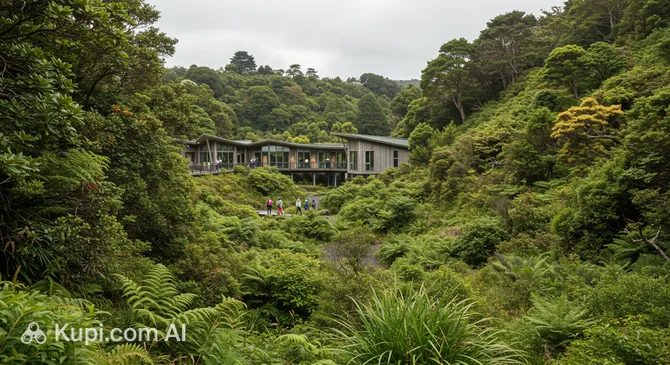
Zealandia
Zealandia. Иллюстрация. Источник: Kupi.com AI

This project, also known as an ecosanctuary, has become home to many of the rarest representatives of flora and fauna that had practically disappeared from the country's mainland. Thanks to a specialized high-tech fence protecting the area from introduced predators, New Zealand has been able to preserve populations of unique birds, reptiles, and insects here in their natural habitat.

Zealandia is not just a park, but a living open-air laboratory. Here you can encounter the amazing tui, hear the song of the bellbird, or see the ancient tuatara, a reptile that dates back to the era of the dinosaurs. Visiting this place allows one to realize the incredible value of the islands' biodiversity and see the results of large-scale nature restoration work.

Contacts

To contact the sanctuary administration or clarify visit details, you can use the official contact information. It is recommended to check for special tours in advance, especially if you are planning a night tour.

How to contactContact
Address53 Waiapu Road, Karori, Wellington 6012, New Zealand
Phone+64 4 920 9213
Websitewww.visitzealandia.com

What to Do

The main activity at Zealandia is, of course, birdwatching and leisurely walks. There are many trails of varying difficulty throughout the territory: from flat paths around the lake to steeper forest routes. During your walk, be sure to listen—the local "chorus" of birds is considered one of the most beautiful and unusual in the world.

Visitors are offered a unique chance to see endemic animals. Watching the rangers feed the kaka parrots or seeing rare saddlebacks (tieke) foraging in the bushes leaves an unforgettable impression. For those who want to learn more, organized guided tours are available, with experts who masterfully locate the forest's hidden inhabitants.

The night tours deserve special attention. This is a rare opportunity to see the national symbol—the kiwi bird—in its natural environment, as well as to observe glowworms and other nocturnal creatures. During the day, it is worth visiting the modern interactive museum at the visitor center, which vividly tells the story of the long struggle to preserve the islands' nature.

Getting There

Zealandia Te Māra a Tāne is located at 53 Waiapu Road, Karori, which is very close to the city center. Reaching the sanctuary is quite easy thanks to the capital's well-developed transport system.

The most scenic way to start your journey is by taking the famous Wellington Cable Car. This bright red car will take you from the city center up to the Botanic Garden, where a free branded shuttle for visitors runs to the Zealandia entrance. You can also use city buses that run regularly to the Karori district.

If you prefer comfort and speed, a taxi or ride-sharing app from central Wellington will take no more than 10–15 minutes. For those traveling by rental car, there is a parking lot next to the visitor center, though it can fill up quickly on weekends.

Ближайший город: Wellington

History & Facts

The history of this place is inextricably linked to the global vision of restoring nature to its original state, as it was before human arrival. Wellington, perched on scenic slopes along the harbor, has always cherished its natural heritage, but the Zealandia project was a true ecological breakthrough.

The connection to the culture of the indigenous Māori people is of particular importance to the park. The sanctuary does not just save birds; it restores the ecosystem that shaped Māori life and traditions for centuries. Local exhibits often emphasize that preserving rare species is a tribute to ancestors and a way to protect the living history of the islands.

Creating Zealandia required an ambitious 500-year plan. Scientists believe this is how long the forest needs to fully recover to its prehistoric state. Today, this place serves as living proof that humans are capable of not only destroying but also bringing life back to where it had almost disappeared.

Time Needed

To fully experience the magic of this place and take a leisurely walk along the main trails, we recommend setting aside at least 3–4 hours for your visit. The sanctuary territory is quite vast, and many of its inhabitants require patient observation.

If you are a passionate birdwatcher or plan to hike the further routes to the upper dams, it is better to budget half a day. Many tourists choose to stay longer to have lunch at the local cafe overlooking the forest or to wait for the evening tours when the nocturnal forest dwellers wake up.

Working Hours

Zealandia Te Māra a Tāne is open to visitors daily, making it easy to include in your travel schedule. The operating hours are consistent throughout the week: doors are open from 9:00 AM to 4:30 PM, Monday through Sunday.

Please note that entry to the sanctuary ends shortly before closing time, so it is best to arrive in the first half of the day. For those who have booked special night tours, access times are managed individually depending on the start of the tour.

9:00 – 16:30

Nearby

The area surrounding Zealandia offers many interesting locations that will help you dive deeper into the atmosphere and history of Wellington. Exploring this district allows you to see modern science centers, architectural monuments, and quiet natural corners.

After a walk through the ancient forests, you can head to historical fortifications or enjoy views of the bay. Below is a list of notable sites located within a few kilometers.

NameDistance
Space Place at Carter Observatory1.3 km
Wrights Hill Fortress1.3 km
Cable Car Museum1.3 km
Wellington Botanic Garden1.4 km
Neo Cafe & Eatery1.7 km
Boulcott Street Bistro1.8 km
Kisa1.8 km

Reached the end of the page?

That means the route is fully explored