Support

Whanganui Regional Museum

About

In the heart of Whanganui lies one of the region's most significant cultural spaces — the Whanganui Regional Museum. Established back in 1895, it serves as a unique bicultural gateway (waharoa), revealing the rich history and natural secrets for which New Zealand is famous.
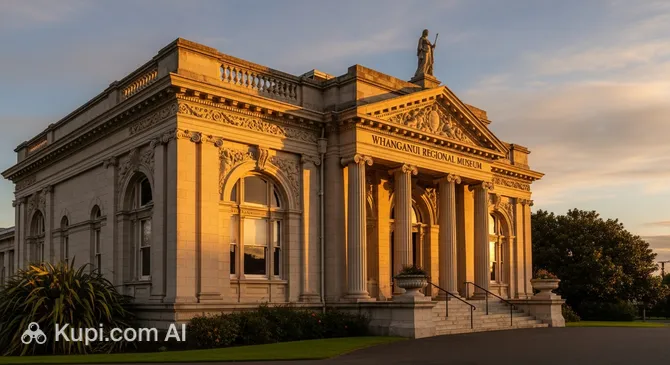
Whanganui Regional Museum
Whanganui Regional Museum. Иллюстрация. Источник: Kupi.com AI

This museum is widely regarded as one of the country's finest natural history institutions. Its collections house approximately 300,000 objects, including true global treasures: from ancient Asian ceramics to rare examples of Pacific tapa cloth. A special place in the exhibition is held by Maori artifacts, reflecting the museum's deep connection with local communities and respect for their cultural heritage.

The museum's highlight is its outstanding moa collection — giant extinct birds. Here, you can see not only rare skeletons found in nearby swamps but also one of the few surviving intact moa eggs in the world. The museum is located in the picturesque Pukenamu Queen’s Park, making it a must-visit for any traveler seeking inspiration and knowledge.

Contacts

To inquire about current exhibitions or to plan a group visit, you can use the following contact details:

How to contactContact
Address4 Watt Street, Whanganui 4500, Новая Зеландия
Phone+64 6 349 1110
Websitewww.wrm.org.nz

What to Do

Start your journey through the museum in the famous Māori Court. Here, priceless taonga Māori (treasures) are on display, allowing you to connect with the spiritual heritage of the indigenous people. Be sure to visit the Gottfried Lindauer Gallery: his realistic portraits of tribal leaders are considered national treasures and are stunning in their detail.

Natural history enthusiasts should spend some time in the hall dedicated to the moa. Seeing the assembled skeletons of these feathered giants and a unique egg found nearly a century ago is an experience that will stay with you for a long time. Equally interesting is the McLachlan Coin Collection, recognized as the largest collection of British coins in the Southern Hemisphere.

For those interested in social history, the museum offers touching exhibitions on historical fashion and textiles, as well as poignant displays of local life that tell the story of the community. Interactive elements and temporary exhibitions make the museum engaging even for the youngest visitors, turning the study of the past into an exciting adventure.

Getting There

Finding the museum is very simple: it is located at 4 Watt Street, in the very heart of the city, within the scenic Pukenamu Queen’s Park. Thanks to its central location, it is easily reachable on foot from most parts of town while enjoying views of the river.

If you arrive in the city by InterCity bus, the walk from the station to the museum doors will take no more than 10–15 minutes (a distance of about 1 km). For those who prefer comfort, local taxi services are always available to take you to the site in just minutes.

For travelers arriving by plane, the city's airport is only a 10-minute drive away. If you are traveling by your own or a rental car, parking spaces are provided near the cultural complex, making your visit as convenient as possible.

Ближайший город: Whanganui

History & Facts

The museum owes its existence to the passion of one man — local jeweler and naturalist Samuel Henry Drew. In 1895, he donated his extensive private collection to the city, becoming the first honorary curator. The official opening took place on March 24, 1895, and the institution was originally named the Wanganui Public Museum.

The modern building on Watt Street was constructed much later, in 1928. Its construction was made possible by the generous bequest of Henry Alexander, in whose honor the museum was renamed the Alexander Museum for many years. In 1968, the complex was expanded using funds from the Davis Trust, which allowed for the creation of a spacious Māori court and a lecture hall, significantly increasing the exhibition space.

The museum has repeatedly been the site of scientific sensations. In the 1930s, thousands of bones of extinct moa birds were discovered in the nearby Makirikiri swamp, from which staff managed to assemble ten complete skeletons. Another extremely rare find was an intact moa egg, discovered in 1931. Most recently, between 2016 and 2019, the building underwent a major $2.6 million renovation aimed at earthquake strengthening and reopened its doors to the public in its refreshed form.

Time Needed

To leisurely explore all the key halls, including the unique Māori court and the giant moa exhibition, most visitors need 2 to 3 hours. The museum's collections are rich with small details that invite careful observation.

If you are interested in costume history or plan to attend a talk in the Davis Lecture Theatre, we recommend setting aside half a day. This will allow you to fully immerse yourself in the region's atmosphere without rushing and appreciate the skill of the portraitists in the Lindauer Gallery.

Working Hours

The museum's doors are open to residents and visitors every day. You can plan your visit at any convenient time during the week: the facility is open from 10:00 AM to 4:30 PM, Monday through Sunday.

As the schedule may change on public holidays, it is recommended to check the museum's official website or call ahead before your visit to ensure your walk through the halls of history goes perfectly.

10:00–16:30

Nearby

Its location in the heart of the cultural quarter allows tourists to combine a visit to the museum with other iconic sites. A stroll around Pukenamu Queen’s Park will reveal numerous historical monuments and art venues.

NameDistance
Mint Cafe & Bar0.1 km
The Barracks Sports Bar0.4 km
Paddle Steamer Waimarie0.5 km
Trafalgar Square Shopping Centre0.5 km
Durie Hill Elevator0.7 km
Kowhai Park1 km
War Memorial Tower1 km

Reached the end of the page?

That means the route is fully explored