Support

Hammerfest Airport

About the Airport

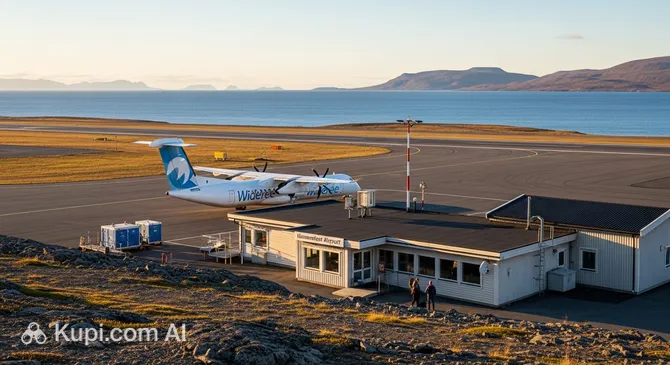
Hammerfest Airport. Source: Kupi.com Binoculars

Hammerfest Airport (Hammerfest lufthavn) is the aerial gateway to one of the northernmost cities in the world, Hammerfest, located on the rugged coast of Norway. This compact air harbour plays a key role in the transport system of the Finnmark region, ensuring reliable connections with other parts of the country. In addition to serving passenger flights, the airport is a strategic base for helicopter operations supporting the oil and gas industry in the Barents Sea. Its location makes it the starting point for travellers eager to explore the Arctic nature and the unique culture of the north.

IATA Code HFT
ICAO Code ENHF
City Hammerfest
Distance to Centre approx. 3 km
Status domestic, regional
Annual Passengers approx. 145,000–172,000
Popular Airlines Widerøe
Schedule Online Board "Hammerfest Airport"

The main advantage of Hammerfest Airport is its exceptional convenience. Thanks to its close proximity to the city, you can reach the centre in just a few minutes by taxi or bus. The airport is small, ensuring fast and simple navigation through the terminal. It specialises in serving flights within northern Norway, acting as an important transfer hub for travel across the Finnmark region. A distinctive feature of the airport is its short runway, designed for smaller turboprop aircraft such as the Dash 8, which adds a special charm to flights in this region.

Contact Information

Below is the main contact information for Hammerfest Airport (HFT), which is managed by the Norwegian company Avinor.

  • Official Website: All current information regarding flights, services, and regulations can be found on the official airport page on the Avinor website: avinor.no/flyplass/hammerfest.
  • Information Service Phone: For inquiries, you can call the unified Avinor contact centre at +47 67 03 00 00.
  • Airport Address: Rossmolla 95, 9600, Hammerfest, Norway.
  • Email: For official inquiries and requests, it is recommended to use the contact form on the Avinor website, as a direct email for general public use is usually not published.
  • Lost Luggage Information: If your luggage was lost during the flight, you should first contact your airline's representative. regarding items left behind in the terminal building, please contact the Lost and Found service (Hittegods) — contact details can be found on the airport website.
  • Passenger Support Service: Main passenger support is provided via the Avinor telephone centre and through feedback forms on the official website.

How to Get to the Airport

Hammerfest Airport (HFT) is conveniently located near the centre of the city of the same name, making the journey there quick and simple. The distance is approximately 5.5 kilometres, so a trip by car or bus will take no more than 10–15 minutes. You can reach the terminal from Hammerfest in several ways, the choice of which depends on your budget and preferences.

The most budget-friendly way to get to the airport is the city bus. Local routes connect the airport with the city centre and other key points. The trip will be not only economical but also very short. The ticket price is usually around 40–60 Norwegian Krone (NOK). It is recommended to check the schedule on the local transport company's website in advance, as the frequency of trips may vary depending on the season and day of the week. Other types of public transport, such as trains or metro, are not available in this region of Norway.

Taxi is the most comfortable and fastest option. It is the ideal choice if you are travelling with bulky luggage or simply value convenience. A car can be ordered by phone, via an app, or found at a designated rank in the city. The cost of a trip from the city centre typically varies in the range of 150–250 Norwegian Krone (NOK). For additional peace of mind, you can book a transfer in advance, especially if you have an early departure or late arrival.

If you plan to actively explore the picturesque surroundings, car rental will be an excellent solution. Several rental agencies operate in Hammerfest, and you can often pick up or return the car directly at the airport. The road from the city centre is simple and will not cause difficulties. For those arriving in their own or a rented vehicle, the airport grounds offer parking, where you can leave a car for both short and long periods.

The choice of transport to Hammerfest Airport depends on your priorities: bus for savings, taxi for comfort and speed, and a rented car for freedom of movement. Given the short distance, even walking to the airport in good weather can be an interesting experience for travellers with a light backpack. It is also worth noting that for a wider choice of flights, travellers often use the larger Alta Airport (ALF), located approximately 80 km from the city.

Terminals and Map

Hammerfest Airport (HFT) is a small and compact regional airport that plays a key role in the transport system of northern Norway. Its main feature is simplicity and convenience for passengers, due to the presence of just one passenger terminal. This single-storey building serves both arriving and departing flights, making navigation intuitively clear even for those visiting for the first time.

The structure of the terminal is extremely simple. Upon entering the building, you immediately find yourself in the general area where check-in counters and airline representatives are located. The exit for arriving passengers with the baggage claim area is also located here. Departure and arrival zones are in the same building and within walking distance of each other. Thanks to the compact size, it is virtually impossible to get lost here. Signs are clear and lead passengers along a short route: check-in → security check → boarding gate.

Check-in and security procedures at Hammerfest Airport are generally very quick. Due to the small passenger flow and limited number of flights, long queues are a rarity here. Usually, it takes no more than 15–20 minutes to complete all formalities from entering the terminal to reaching the boarding gate. Nevertheless, it is always recommended to arrive with a little time to spare, especially in poor weather, which can affect the schedule.

Since the airport has only one terminal, there is no need for transfers between terminals. After passing security control, passengers enter a small but cosy waiting lounge with a view of the runway. To navigate, it is sufficient to follow standard signs. Airport staff are always ready to help and answer any questions, making your stay here as comfortable and carefree as possible.

Airport History

The history of Hammerfest Airport (HFT) is inextricably linked to the development of aviation in the north of Norway and the exploration of the Arctic shelf. The airport was officially opened on 30 June 1974 as part of a state programme to create a network of regional airfields with short take-off and landing runways (STOL) in Finnmark county. From the very beginning, its main operator became the airline Widerøe, which provided a vital link between remote municipalities and the rest of the country.

Initially, it was a small airfield serving mainly local passenger transport. However, its role changed radically in the early 2000s with the start of the development of the Snøhvit gas field in the Barents Sea. Hammerfest became a key base for the oil and gas industry, and the airport turned into an important logistics hub for helicopter connections to offshore platforms. This economic boom was the main stimulus for the development and modernisation of the air harbour.

The most significant reconstruction in the airport's history occurred in 2007, when a new, modern terminal was built and put into operation. The old building could no longer cope with the increased passenger flow, which had grown due to oil and gas industry workers. The new building offered passengers significantly more comfort and space, and also allowed for the optimisation of flight servicing, including helicopter operations.

Today, Hammerfest Airport is not just a regional airfield, but a strategically important facility playing a key role in the economy of northern Norway. Despite its modest size and short runway (880 metres), it successfully handles both scheduled flights and intensive helicopter traffic. In recent years, there have been active discussions about a possible extension of the runway, which would allow for larger aircraft and open direct flights to other European cities, marking a new stage in the airport's history.

Services and Amenities

Hammerfest Airport (HFT) is a compact regional air hub providing passengers with a basic set of services for a comfortable wait before their flight. Being one of the key transport nodes in the north of Norway, it provides travellers with all the essentials.

Dining and Shopping. A small café operates in the terminal, where you can order hot and cold beverages, sandwiches, and light snacks. There is also a kiosk offering newspapers, books, and a small selection of local souvenirs. The range is limited, so one should not expect extensive shopping.

Wi-Fi and Waiting Areas. Free Wi-Fi is available throughout the airport, allowing you to stay connected before departure. The waiting lounge has power outlets for charging gadgets. There are no separate VIP lounges here, but the general waiting area is clean and comfortable.

Financial and Medical Services. An ATM is installed at the airport for cash withdrawals. However, full-service bank branches and currency exchange points are absent, so it is better to resolve financial matters in the city of Hammerfest beforehand. First aid can be provided by airport staff, who will call emergency services if necessary.

Services for Special Categories of Passengers. The airport is equipped to serve passengers with reduced mobility. Assistance with boarding and disembarking is provided upon prior request through the airline. For travellers with small children, baby changing tables are provided in the restrooms.

Hotels and Business Services. There are no hotels within the airport grounds, but many accommodation options can be found in Hammerfest itself, which is just a few minutes' drive away. Conference rooms or business centres are also absent in the terminal; it is better to use the city's infrastructure for business meetings.

Where to Eat

Hammerfest Airport (HFT) is a compact regional air hub, and dining options here correspond to its size. A small café operates within the terminal, offering passengers the opportunity to have a snack before departure. This is not a restaurant with an extensive menu, but rather a kiosk, ideally suited for quickly and lightly satisfying hunger.

In the café's assortment, you will find a standard set of snacks: sandwiches, pastries, crisps, and chocolate. Here you can buy hot coffee, tea, or refreshing beverages. This is a convenient option if you want to take something with you on the plane or simply drink a coffee while waiting for boarding. However, one should not count on a full hot lunch or dinner here.

Due to the limited selection, it is strongly recommended to arrange meals in advance, especially if you prefer a substantial meal or follow a specific diet. The best solution would be to visit one of the restaurants in the city of Hammerfest. There you can enjoy dishes of local Norwegian cuisine, for example, made from fresh fish and seafood.

Thus, plan your time so that you can eat in the city before heading to the airport. And if you only need a light snack, the café at Hammerfest Airport will be able to offer you the necessary minimum.

Tips for Travellers

Travelling through Hammerfest Airport, one of the northernmost airports in Norway, can be a unique experience. To ensure your trip goes smoothly, make use of these useful tips, especially if you are flying to the Arctic region for the first time.

Arrival Time and Check-in. Hammerfest Airport is a small regional hub, so procedures here are faster than in major hubs. Nevertheless, it is recommended to arrive at the airport at least 1.5–2 hours before the departure of a domestic flight. This will give you a buffer of time in case of unforeseen circumstances, especially in the winter period when the weather can be unpredictable. To save time, use online check-in on your airline's website.

Choosing a Seat on the Plane. Without a doubt, choose a window seat. Flights in this part of Norway are famous for breathtaking views of fjords, mountains, and the Arctic coast. The scenery during take-off and landing in Hammerfest is part of the adventure that should not be missed.

Hand Luggage. Rules for carrying hand luggage are standard: liquids in containers up to 100 ml, packed in a transparent bag, and a ban on sharp objects. Given the changeable weather, it is wise to pack a change of warm clothing, necessary medicines, and chargers in your hand luggage in case of flight delays.

Passengers with Connections. Most flights from Hammerfest are to major Norwegian cities such as Tromsø or Oslo, from where you can fly further. Ensure that you have enough time for the transfer at the transit airport — allow at least 2 hours. Also, check in advance whether you will need to collect and re-register your luggage.

Customs Control. Since the airport mainly serves domestic flights, there is no customs control for passengers travelling within Norway. If you arrive on an international charter flight from a country outside the Schengen area, you will have to undergo the standard procedure by choosing the green or red channel.

Saving Time and Money. Book flight tickets in advance, especially for the summer and winter seasons. Prices for food and drinks at Norwegian airports can be high, so you can take a small snack with you. Travelling light, with only hand luggage, will also help save both time and money.

Flight Delays. Delays or cancellations of flights due to weather conditions (strong wind, snowfall, fog) are not uncommon in the Arctic. Always check the status of your flight before leaving for the airport. In case of a delay, contact your airline's counter to find out about your rights to the provision of food, drinks, or hotel accommodation, which are regulated by European regulations for passengers.

Reached the end of the page?

That means the route is fully explored