Support

Shri Shiva Temple

About

The Shiva Temple, also known as Motishwar Mandir, is a fascinating Hindu temple complex dedicated to Lord Shiva. It is located in the colorful Muttrah district of Old Muscat in Oman. Notably, this spiritual center is situated very close to the magnificent Sultan's Al Alam Palace, highlighting its special place in the heart of the city.
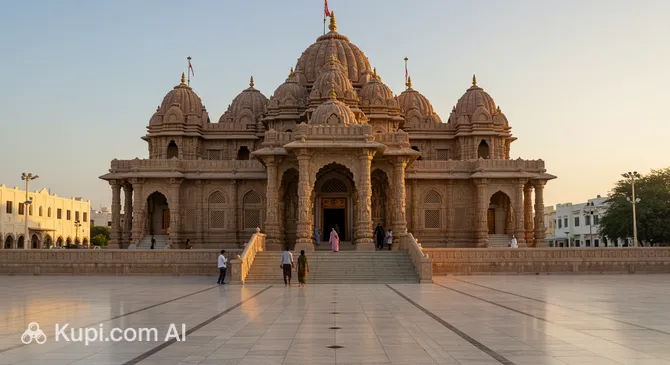
Shri Shiva Temple. Illustration.
Source: Kupi.com AI

Traveler photos:

This temple is not just a place of worship, but also an important religious and cultural hub for Oman's Hindu community, whose history dates back to the 16th century. For many, it has become a symbol of preserving traditions and faith over centuries in this Arab country.

The Shiva Temple is a beautiful example of traditional Hindu temple architecture that blends harmoniously into its Arabic surroundings. Its existence is a vivid testament to the religious tolerance and multiculturalism that Oman prides itself on, creating a unique space for the dialogue of cultures and beliefs.

Contacts

For the most up-to-date information on the opening hours of the Shiva Temple, visiting rules, or contact details, it is recommended to consult the official tourism resources of Muscat or contact representatives of the Hindu community in Oman directly. Useful information can also be found on specialized travel forums or tourism websites dedicated to Oman.

The temple is located in the Muttrah district of Old Muscat, near the Al Alam Palace, making it relatively easy to find for visitors exploring the city's main attractions.

How to contactContact
AddressJH5Q+R6Q, Muscat, Oman
Phone number+968 24 737311
Websitewww.facebook.com

What to Do

Visiting the Shiva Temple in Muscat is a unique opportunity to experience living Hindu culture and better understand its religious traditions. As an active temple, it allows visitors to witness traditional Hindu rites and ceremonies dedicated to Lord Shiva. This is more than just sightseeing; it is an immersion into an atmosphere of spirituality and ancient rituals held here regularly, offering a rare chance to see these practices in an authentic setting.

The temple's architecture is particularly striking. Here, you can examine traditional elements of Hindu temple design in detail, which contrast vividly with the surrounding Arabic buildings of Muscat. This contrast creates a unique cultural space, allowing you to appreciate the diversity and harmonious coexistence of different cultures in Oman. For lovers of religious art and those interested in cultural heritage, the temple will be a true discovery and leave a lasting impression.

Getting There

The Shiva Temple is conveniently located in the historic Muttrah district of Old Muscat, making it easily accessible for tourists. It is situated near one of the city's main landmarks, the Sultan's Al Alam Palace, which serves as an excellent reference point.

The simplest and most common way to reach the temple is by taxi. Taxis are widely available in Muscat, allowing you to reach the Shiva Temple from almost anywhere in the city. A taxi ride also offers a chance to enjoy the urban views along the way.

Since the temple is located in the old part of the city, public transport might be less convenient than a taxi, especially if you are traveling with luggage or in a group. It is advisable to check the approximate fare with the taxi driver beforehand or agree on a price.

Given the temple's location, you can also combine your visit with other sights in the Muttrah area. For example, the historic Al Mirani and Al Jalali forts, built by the Portuguese, are located nearby. By planning your route this way, you can use your time efficiently and see more of Old Muscat in a single trip.

Nearest city: Muscat

History & Facts

The history of the Shiva Temple in Muscat is inextricably linked to the centuries-old presence of the Indian community in Oman. Since the 16th century, people from India have played a significant role in the life of the country's coastal regions, particularly in trade. Historically, Omani authorities have shown foresight and a commitment to maintaining friendly ties with Hindustan, guaranteeing Hindus the protection of their religious rights. This created favorable conditions for building temples and practicing religious rites freely, leading to the creation of such an iconic site as the Shiva Temple.

The temple itself was built between 1892 and 1909, making it not just a place of worship but also an important historical monument of the colonial era. Its history is remarkable because, despite challenging periods—including the pogrom that the Hindu colony in Muscat faced in the late 19th century—the temple survived. The fact that the Shiva Temple has been preserved to this day and continues to function actively is a clear testament to the extraordinary religious tolerance inherent in Omani society over the years.

The temple's location is also deeply symbolic, being in close proximity to the Sultan's Al Alam Palace. This proximity is no coincidence and eloquently underscores the special and respectful attitude of the Omani authorities toward religious diversity in the country. It serves as a visual example of how Oman values and supports the harmonious coexistence of different cultures and faiths on its land, making Muscat a truly multicultural city.

Time Needed

To explore the Shiva Temple in Muscat and immerse yourself in its atmosphere, most visitors usually find 1-2 hours sufficient. This is enough time to walk around the temple complex, admire the architectural details, observe the activities, and take photographs.

If you plan more than a quick look and want to experience the spiritual atmosphere more deeply—perhaps catching a service or ceremony (if allowed for visitors)—your stay may be longer. Also, keep in mind that during holidays or special religious events, the temple may be more crowded, which could also affect the duration of your visit.

Overall, the Shiva Temple is not a very large complex, so even with a thoughtful tour, you are unlikely to spend more than a few hours here. This makes it easy to include in a program of exploring other sights of Old Muscat.

Working Hours

Exact information regarding the opening hours of the Shiva Temple in Muscat may vary, especially during religious holidays or special ceremonies. Generally, Hindu temples are open to visitors daily, particularly during the morning and evening hours when the main services are held. However, to obtain the most current schedule and learn about any possible visiting restrictions, it is highly recommended to check the temple's official website, if available, or inquire at local tourist information centers in Muscat before your visit.

Usually, no advance booking or registration is required to visit the Shiva Temple, unless you plan to participate in special rituals or events requiring prior arrangement. The temple is typically open year-round. Nevertheless, it is always better to confirm details just before your trip to ensure your visit to this significant site in Oman is as comfortable and informative as possible.

6:00 – 11:30, 5:00 – 21:00

Nearby

Visiting the Shiva Temple in Muscat is undoubtedly a bright and memorable event. However, to make your trip even more enriching, it is worth exploring what lies in the immediate vicinity of this unique site. Exploring the surroundings will allow you to dive deeper into the city's atmosphere and discover its other treasures.

Near the Shiva Temple, there are several interesting attractions that can complement your experience and broaden your understanding of Oman's culture and history. Below is a list of some of these sites with their distances to help you plan your itinerary more efficiently.

NameDistance
National Museum of Oman0.6 km
Bait Al Zubair Museum0.6 km
Muscat Gate Museum0.9 km
Al Alam Palace1 km
Al Mirani Fort1 km
Kalbuh Park1.6 km
Riyam Park1.7 km

Have you reached the end of the page?

So the route has been studied inside and out