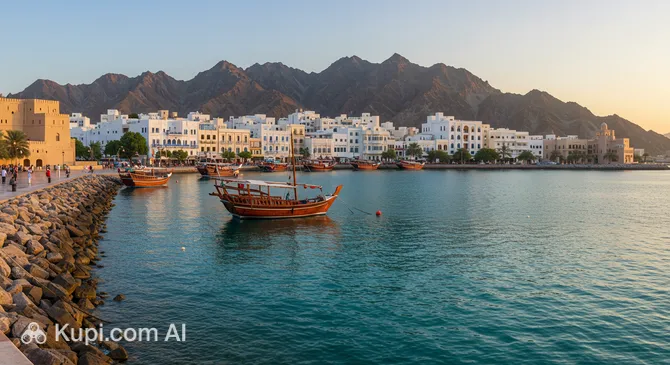
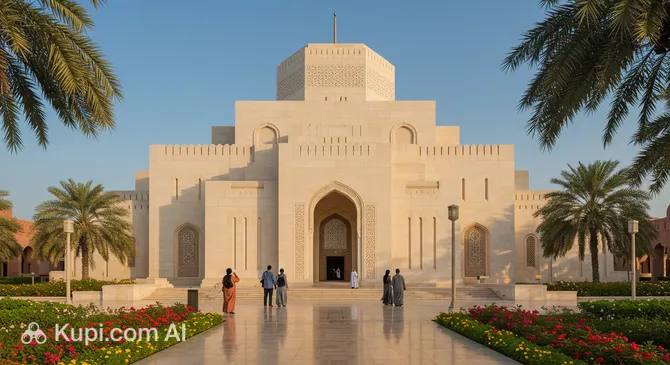
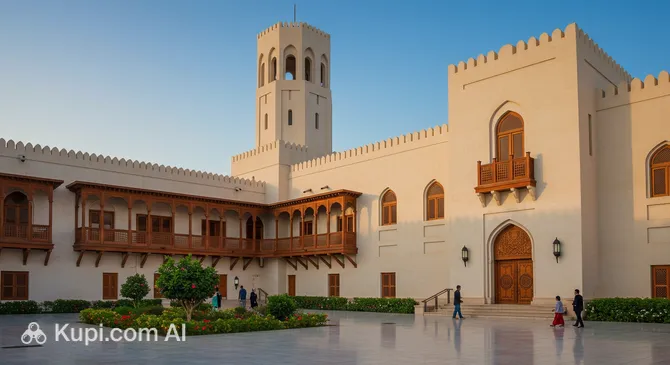
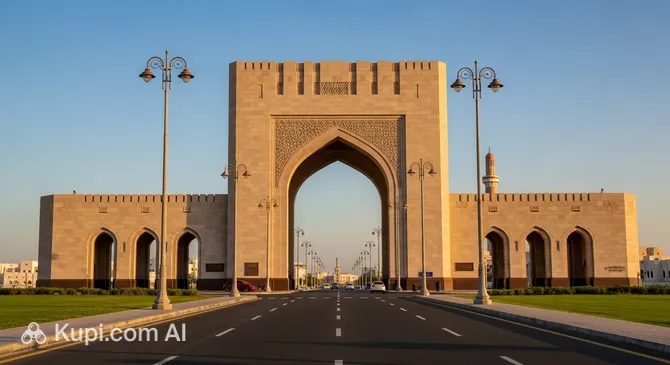
Muscat, the capital of the Oman Sultanate Of, is a mesmerizing blend of ancient heritage and modern elegance. Unlike many other capitals in the region, it retains a distinctively traditional charm, characterized by uniform white architecture and a deliberate lack of towering skyscrapers. Nestled between the rugged Hajar Mountains and the azure waters of the Gulf of Oman, the city offers a dramatic landscape that captivates every visitor.
Muscat. Illustration.
Source: Kupi.com AI
With a population of over 1.4 million people, Muscat serves as the political and economic heart of the nation. The city's unique geography spreads across a long strip of coastline, connecting several districts that each possess their own flavor. While the climate is generally hot and arid, the coastal breeze often provides relief, especially during the cooler winter months. Those interested in the past will find the history of Muscat fascinating, as the city has served as a vital trading port connecting the East and West for centuries.
Travelers are often drawn to the breathtaking Sultan Qaboos Grand Mosque, a marvel of contemporary Islamic architecture featuring one of the world's largest chandeliers. For a taste of local life, the vibrant Mutrah Souq offers a labyrinth of stalls where the scent of frankincense fills the air. The Royal Opera House Muscat stands as a testament to the country's deep appreciation for culture and arts. Whether you are wandering along the scenic Corniche or exploring its pristine beaches, Muscat invites you to experience the warmth of true Arabian hospitality.
Weather Overview
The climate in Muscat is characteristically hot and arid, offering sunny skies for the vast majority of the year. Summers can be quite intense, particularly in June, when the average temperature reaches 33.0°C and daily highs often peak around 36.5°C. However, the winter months provide a refreshing contrast, with January seeing average temperatures drop to a comfortable 20.5°C and minimums around 17.7°C.
Rainfall is extremely scarce in this region, ensuring that outdoor plans are rarely disrupted. Expect hot summers and mild winters with almost no precipitation, as most months record 0mm of rainfall and typically see no more than two wet days. For travelers planning their itinerary, checking the detailed weather in Muscat is recommended to choose the most comfortable time for a visit.
Average monthly temperature
Average monthly precipitation
Interesting Facts
Beyond the polished marble of its grand mosques and the serenity of the coastline, Muscat holds many fascinating secrets that reveal its deep-rooted traditions and unique urban character. The city is full of hidden stories, from ancient laws to quirky architectural marvels that often go unnoticed by the casual observer.
Al Alam Palace. Illustration.
Source: Kupi.com AI
Traveler photos:
What visitors often perceive as a single city is historically a conurbation of three distinct towns that grew together over time: the walled port of Muscat (the royal seat), the bustling trading hub of Mutrah, and the commercial district of Ruwi. Each area retains a unique vibe, with Mutrah being home to the famous Mutrah Souq, one of the oldest marketplaces in the Arab world.
Until 1970, the city gates were locked strictly three hours after sunset, and anyone walking the streets without a lantern could be arrested. Today, you can stand at the location of these former barriers by visiting the Muscat Gate Museum, which straddles the road between the old port and the corniche.
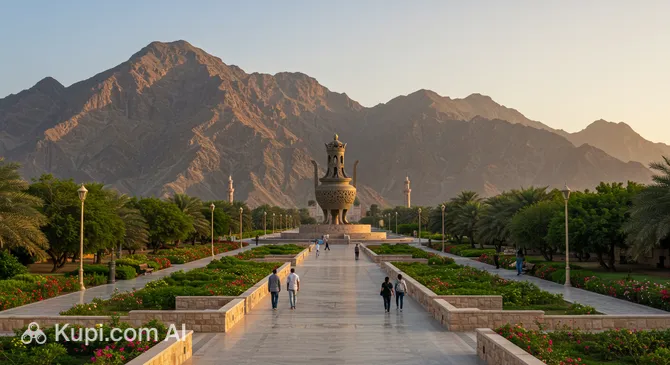
Overlooking the harbor in Riyam Park stands a colossal white monument shaped like a giant frankincense burner. Known as the Riyam Censer, this whimsical structure honors Oman’s ancient trade heritage and offers spectacular views for those who hike up to its base.
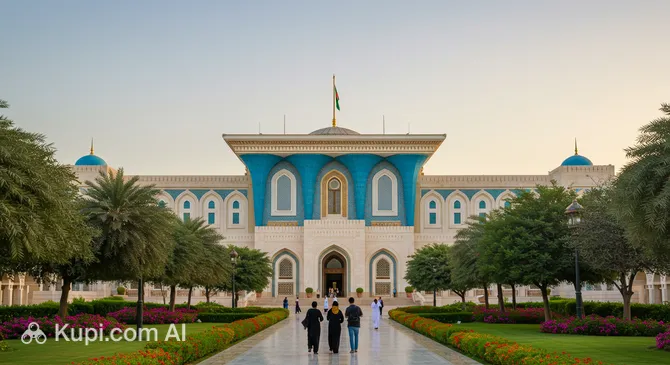
While most of the city follows a strict color code of white and beige, the Al Alam Palace breaks all the rules with its vibrant gold and blue flared columns. Built in the 1970s, this ceremonial residence of the Sultan showcases a distinctive retro-futuristic style that contrasts sharply with the surrounding 16th-century forts.
How to Get There
Reaching the capital is a straightforward experience for most travelers, with air travel being the primary method of entry. Whether you are arriving from a neighboring region or a distant continent, you can find more information in our detailed guide on how to get to Muscat.
The most convenient entry point is Muscat International Airport (MCT), which is situated directly in Muscat, only about 10 km from the city center. As the country's main aviation hub with a large passenger volume, it offers excellent connectivity and modern facilities. A trip from the terminal to the heart of the city by taxi usually takes approximately 35 minutes.
Another option for arrival is Sohar Airport (OHS), located in the city of Sohar. It is a smaller regional airport situated about 200 km northwest of Muscat. While less central, it serves as an alternative entry point, with the drive to the capital taking roughly 2 to 2.5 hours via the highway. Travelers might also encounter Al-Fujairah International (FJR) in the neighboring United Arab Emirates, located approximately 268 km away, though this route requires crossing the border.
For clarity, here is a summary of the main airports:
Muscat does not have a railway station, and there is currently no passenger train network connecting the city to other parts of the region. Visitors typically rely on the well-maintained road network, utilizing intercity buses or rental cars to navigate between towns and governorates.
Main Attractions
Muscat offers a wealth of cultural and historical experiences, seamlessly blending its maritime heritage with a growing arts scene. While the city is spread out, many of its most captivating sights are clustered around the old port area and the historic districts, making it rewarding to explore specific neighborhoods in depth.
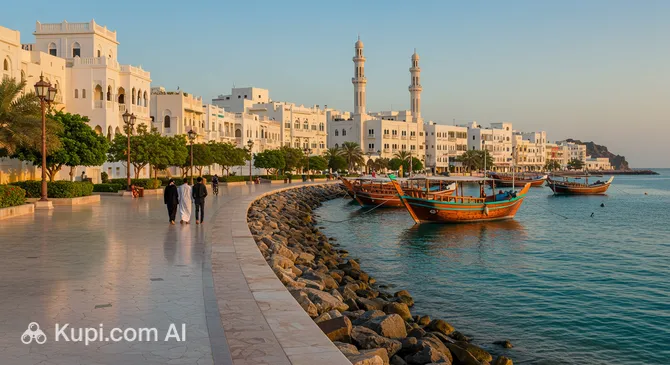
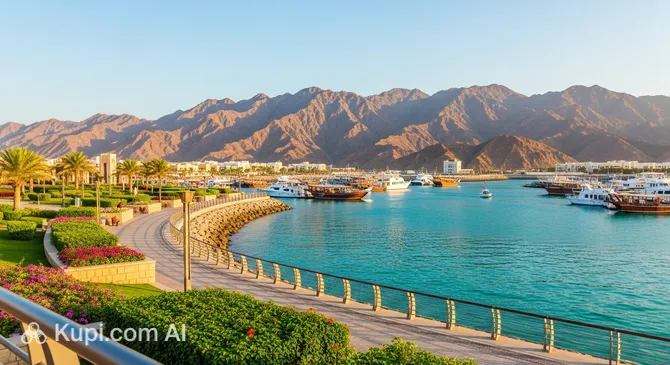
One of the most scenic spots in the capital is the Mutrah Corniche. This picturesque waterfront promenade stretches along the harbor, offering stunning views of the sea, traditional dhow boats, and the rugged mountains behind. It is particularly enchanting at sunset when the lights of the city begin to reflect on the water. Tourists love strolling here to soak in the atmosphere, watch the local fishermen, and admire the lineup of 19th-century merchant houses with their intricate latticework balconies.
Mutrah Corniche. Illustration.
Source: Kupi.com AI
Traveler photos:
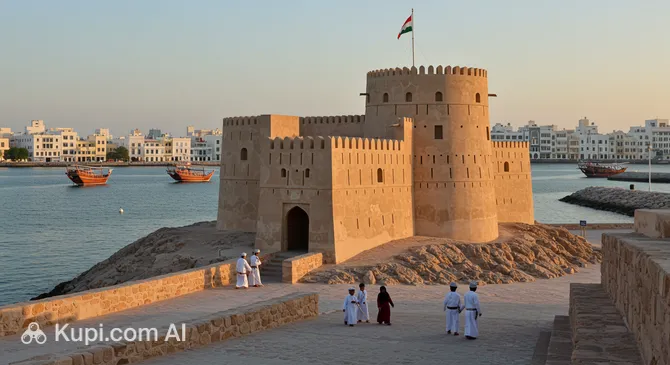
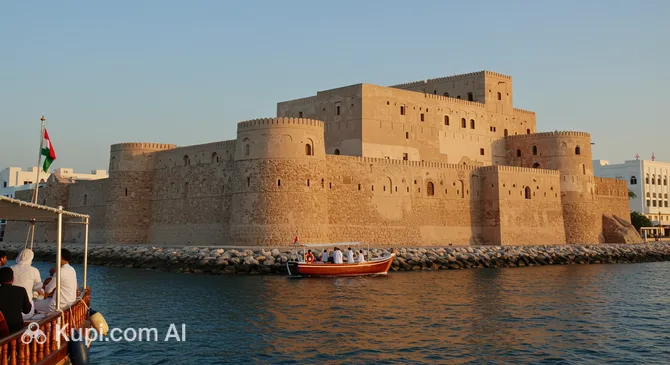
Standing guard over the harbor is the majestic Mutrah Fort. Built by the Portuguese in the 16th century, this historic fortification dominates the skyline with its three towers. Visitors can climb the steps to the top for a panoramic vantage point that provides one of the best photo opportunities in the city, overlooking the Corniche and the Gulf of Oman. It is a fascinating site for history buffs interested in the region's strategic military past.
Mutrah Fort. Illustration.
Source: Kupi.com AI
Traveler photos:
For a deep dive into the country's rich heritage, the National Museum of Oman is an essential stop. Located opposite the Sultan's Palace in Old Muscat, this modern institution houses thousands of artifacts that tell the story of Oman from prehistoric times to the present day. The museum is renowned for its state-of-the-art displays and immersive learning center, making it the perfect place to understand the maritime, cultural, and architectural evolution of the Sultanate.
National Museum of Oman. Illustration.
Source: Kupi.com AI
Traveler photos:
Another cultural gem is the Bait Al Zubair Museum. Housed in a beautifully restored traditional home, this private museum offers a more intimate look at Omani heritage. Its collection includes exquisite jewelry, traditional costumes, household items, and old weaponry, including the famous Omani Khanjar (dagger). The complex also features a recreated traditional village and a garden, providing visitors with a comprehensive glimpse into the daily life and traditions of the Omani people.
Bait Al Zubair Museum. Illustration.
Source: Kupi.com AI
Traveler photos:
Local Cuisine
The local cuisine in Muscat is a delicious reflection of Oman’s maritime history and its position on the ancient spice routes. The food culture here is a rich fusion of Arabian, Indian, Persian, and African flavors, characterized by the generous use of spices like cardamom, saffron, turmeric, and dried limes. Unlike some of its neighbors, the dining scene in Muscat feels grounded and authentic, ranging from traditional floor-seating restaurants to upscale seaside dining.
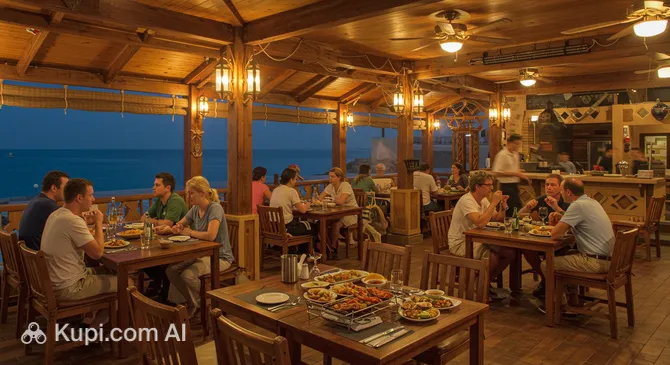
Given the city's long coastline, seafood is a staple of the local diet. A must-try dish is Mashuai, which consists of tender roasted kingfish served with savory lemon rice. For those seeking the freshest catch prepared in a traditional style, Aroos Al Bahar Grill & Seafood Restaurant is a favorite among locals and tourists alike. Located near the fish market, it offers a simple yet unforgettable experience where you can select your fish and have it grilled to perfection.
Aroos Al Bahar Grill & Seafood Restaurant. Illustration.
Source: Kupi.com AI
Traveler photos:
For meat lovers, the signature dish of Oman is Shuwa. This festive meal involves marinating chunks of lamb or goat in a special spice blend, wrapping them in banana leaves, and slow-cooking them in an underground sand oven for up to 48 hours. The result is incredibly tender meat that falls off the bone, typically served over a bed of fragrant spiced rice. Another popular dish is Majboos (also known as Kabsa), a saffron-infused rice dish cooked with meat, which serves as a comfort food staple across the city.
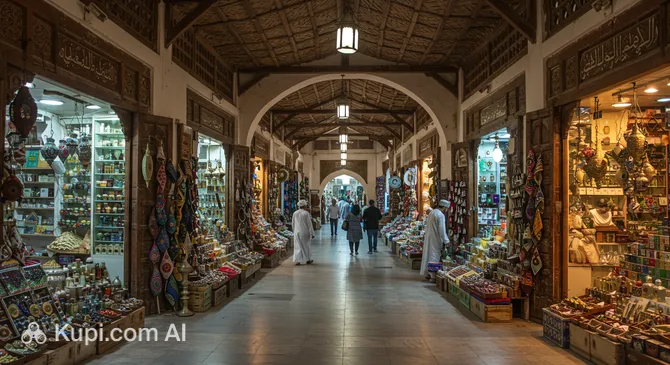
No culinary journey in Muscat is complete without experiencing Omani hospitality, which invariably revolves around Kahwa (traditional coffee) and dates. The coffee is mixed with cardamom and served in small cups without sugar, balanced by the intense sweetness of the dates or Omani Halwa. This famous gelatinous sweet, flavored with rose water, saffron, and nuts, is a symbol of welcome. Visitors can find some of the best varieties of Halwa while exploring the aromatic alleys of Mutrah Souq, where vendors are often happy to offer a taste.
Mutrah Souq. Illustration.
Source: Kupi.com AI
Traveler photos:
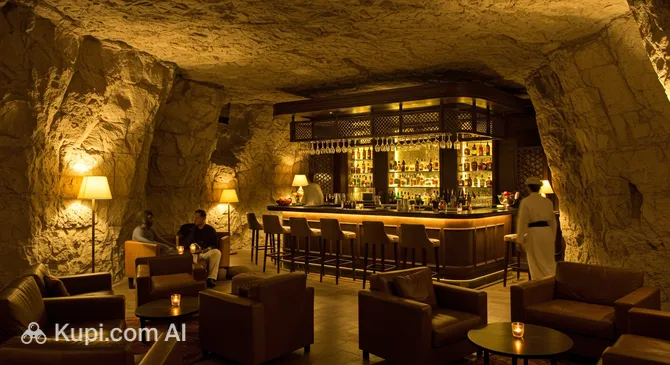
When it comes to beverages, Laban (a salty yogurt drink) mixed with mint is a popular way to cool down in the heat. Alcohol is generally restricted in Oman and is mostly available in licensed hotels and specific restaurants. For a unique dining and nightlife experience, travelers often visit The Cave, a distinct complex built into a man-made cavern that houses several restaurants and lounges. Alternatively, Thalassa Restaurant offers a relaxed atmosphere to enjoy a meal with a Mediterranean touch.
Travel Tips
Planning a trip to Muscat is the start of an exciting adventure, and a few practical insights will ensure your journey is as smooth as it is memorable. Here are some essential tips to help you navigate the city’s unique blend of tradition and modernity with ease.
Clothing and Gear: The climate demands lightweight, breathable fabrics like cotton or linen. However, modesty is key; always keep shoulders and knees covered in public to respect local norms. For religious sites like the Grand Mosque, the dress code is strict: long sleeves and trousers are required, and women must cover their hair. Don't forget to bring a Type G power adapter (the same three-pin style used in the UK).
Transportation: Muscat is a sprawling city designed for driving, and there is no metro or tram system. Renting a car offers the most freedom to explore at your own pace. If you prefer not to drive, Mwasalat buses are modern and affordable for main routes, while ride-hailing apps like Otaxi provide a reliable and fair-priced alternative to negotiating with traditional street taxis.
Finances: The local currency is the Omani Rial (OMR), which is a high-value currency. While international credit cards are widely accepted in hotels, malls, and larger restaurants, carrying cash is necessary for haggling in the souqs or visiting smaller shops. ATMs are plentiful, and exchange bureaus in commercial districts often offer better rates than hotels.
Health and Safety: Muscat is one of the safest capitals in the world, and walking around is generally very secure. The primary concern for tourists is the intense heat; always carry water, wear a hat, and use high-SPF sunscreen. Pharmacies are common, well-stocked, and many operate 24/7 in case of minor ailments.
Communication:Arabic is the official language, but English is widely spoken and understood, especially in the service industry. Wi-Fi is available in most hotels and cafes, but buying a tourist SIM card from providers like Omantel or Ooredoo at the airport is highly recommended for using maps and staying connected.
Local Etiquette: Omanis are famous for their hospitality. A friendly "Salam Alaykum" (Peace be upon you) is a great way to greet locals. Always use your right hand for eating or shaking hands. If you are offered dates and Kahwa (coffee), it is polite to accept a small cup as a gesture of respect.
What to Avoid: Public displays of affection (PDA) are culturally inappropriate and should be avoided. Furthermore, privacy is highly valued; never take photographs of people, especially women, without asking for their explicit permission first.
Weekend Timing: Remember that the official weekend in Oman falls on Friday and Saturday. Friday is the holy day, meaning the famous souqs and many businesses are closed in the morning and only open in the late afternoon. It is best to plan your beach visits or relaxation for Friday mornings.
With these tips in your pocket, you are ready to embrace the warm hospitality and stunning landscapes of the capital. Enjoy the relaxed pace of life, the aromatic scents of frankincense, and the unforgettable sunsets over the Arabian Sea.
Entertainment & Nightlife
Nightlife in Muscat is a sophisticated and relaxed affair, distinct from the high-energy clubbing scenes found in some neighboring capitals. Instead of neon-lit dance floors, the city favors elegant lounges, English-style pubs, and seaside terraces where the focus is on conversation, ambiance, and enjoying the cool evening breeze. Most bars and clubs are located within 4-star and 5-star hotels due to local licensing laws, ensuring a safe and upscale environment for visitors.
For a unique evening experience, one of the most intriguing venues is The Cave. Carved into a hillside in the Darsait area, this massive complex is designed to resemble a natural cavern and houses several restaurants, a garden lounge, and bars under one roof. It offers a variety of atmospheres, from lively Latino beats to quiet corners for a refined drink, making it a popular spot for both locals and expats to unwind after sunset.
The Cave. Illustration.
Source: Kupi.com AI
Traveler photos:
Beyond the hotel walls, the city comes alive in its own traditional way. The district of Ruwi, often referred to as "Little India," buzzes with activity well into the night. It is a sensory overload of neon shop signs, street food vendors, and busy shoppers. A walk around the area near Ruwi Hypermarket offers a glimpse into the everyday life of the city's diverse residents and is a great place to find affordable textiles and electronics.
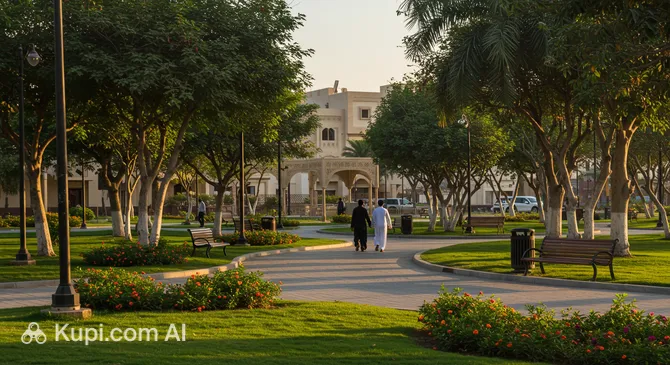
If you prefer a more serene evening under the stars, Bandar Al Rodah Park is a wonderful choice. Located near the marina, this beautifully landscaped area is perfect for a night stroll. Families and groups of friends often gather here to enjoy the cooler temperatures and the sound of the waves. It is a safe and picturesque spot to experience the laid-back Omani lifestyle away from the commercial centers.
Bandar Al Rodah Park. Illustration.
Source: Kupi.com AI
Traveler photos:
When planning a night out, keep in mind that the dress code in bars and clubs is generally "smart casual." Beachwear is not appropriate for evening venues. Alcohol is expensive compared to many other countries, so budget accordingly. In terms of safety, Muscat is exceptionally secure, and walking at night is safe in most areas. However, distances between districts can be vast, so it is best to rely on licensed taxis or ride-hailing apps like Otaxi to get from one venue to another.
While the nights are for relaxation, daytime entertainment in Muscat offers its own charm. Apart from the historical sites, the city features several green spaces that are perfect for leisurely afternoons. Kalbuh Park, situated along the coast towards Old Muscat, provides stunning views of the sea and is a favorite spot for picnics and swimming. For families, the city also offers modern cinemas and bowling alleys within the larger shopping malls.
Kalbuh Park. Illustration.
Source: Kupi.com AI
Traveler photos:
Whether you are sipping a signature mocktail by the Corniche, exploring the bustling streets of Ruwi, or enjoying a fine dining experience in a cave, Muscat offers a nightlife that is as warm and welcoming as its people.
Parks & Museums
While Muscat is defined by its dramatic rocky backdrop and coastline, the city also prides itself on well-maintained green spaces and institutions that preserve its storied past. The capital offers a refreshing mix of manicured gardens and historical venues, allowing visitors to step out of the sun and into the heart of Omani culture.
One of the most prominent recreational areas is Qurum Natural Park, often referred to as the lungs of the city. Located in the heart of Muscat, this expansive park features a large boating lake, rose gardens, and shaded walkways that wind through natural mangrove forests. It is a favorite spot for locals to enjoy evening picnics and for birdwatchers hoping to spot migratory species in the sanctuary.
For those exploring the historic harbor area, Riyam Park is an unmissable stop located along the Corniche. Nestled between the sea and the mountains, this park is famous for the giant white incense burner monument that sits atop its hill. Beyond the photo opportunity, the park offers lush lawns, children’s rides, and panoramic views of the harbor, making it a perfect place to relax after a walk from Mutrah.
Riyam Park. Illustration.
Source: Kupi.com AI
Traveler photos:
Muscat's museums serve as gateways to understanding the region's transformation from a quiet port to a modern capital. The Muscat Gate Museum is a unique architectural landmark built directly over the road that once marked the entrance to the walled city. Inside, visitors can explore exhibits detailing the history of Muscat’s ancient wells, underground water channels (falaj), and the city's growth, all while enjoying a splendid view of the Corniche from the upper level.
Muscat Gate Museum. Illustration.
Source: Kupi.com AI
Traveler photos:
Standing as a silent sentinel over the bay is Al Mirani Fort. Although entry to the interior is generally restricted, this 16th-century fortification is a crucial part of the city's historical landscape. Built by the Portuguese, it played a significant role in the defense of the harbor. Tourists often visit the exterior to admire its imposing walls and to capture the classic postcard view of Old Muscat, where the fort frames the Sultan's palace against the sea.
Al Mirani Fort. Illustration.
Source: Kupi.com AI
Traveler photos:
For a truly authentic experience, try visiting the parks in the late afternoon or early evening. This is when the heat subsides, and Omani families gather to socialize, offering a lively and welcoming atmosphere that you won't find during the quiet midday hours.
Getting Around
Navigating Muscat requires a bit of planning, as the city is spread out along the coastline and lacks a rail-based transit network like a metro or tram. The public transport system primarily consists of a formal bus network and a widespread informal system of minibuses. While many residents rely on private vehicles, tourists can effectively get around using a combination of buses, taxis, and ride-hailing apps, which have become increasingly user-friendly in recent years.
The backbone of the official public transport system is Mwasalat, the national transport company. These distinct red-and-white buses are modern, air-conditioned, and comfortable, making them a reliable option for moving between major districts like Ruwi, Mutrah, Al Khuwair, and the airport. They operate on fixed routes with designated stops. Inside, you will often find free Wi-Fi and information screens announcing the next stop, which is particularly helpful for visitors unfamiliar with the city's layout.
For a more local and flexible experience, you can use the privately operated minibuses, commonly known as Baiza buses. These are typically white and orange vans that ply the main roads and connect smaller neighborhoods. Unlike the large Mwasalat buses, Baiza buses do not always have fixed schedules or strict stops; you can often flag one down from the side of the road and ask the driver to drop you off at a safe point along the route. They are faster and cheaper than taxis but can be a bit crowded and less comfortable.
Payment methods vary depending on the mode of transport. For Mwasalat buses, you can purchase tickets directly from the driver upon boarding. It is highly recommended to carry small denominations of cash, although some newer buses are equipped to accept contactless card payments. Fares are determined by zones but remain very affordable. On the other hand, Baiza buses operate strictly on cash. The fare is usually a few hundred baisa (hence the name), and you simply hand the money to the driver, often when you are about to exit.
Taxis are a popular alternative and come in two main forms. The traditional orange-and-white street taxis are ubiquitous but typically do not use meters, so you must negotiate the fare before getting in to avoid misunderstandings. Alternatively, Mwasalat taxis and app-based services like Otaxi offer metered or fixed-price rides, providing a hassle-free and transparent experience. Ride-hailing apps are particularly convenient for tourists as they eliminate the language barrier regarding directions and pricing.
When using public transport, keep in mind that services generally run from early morning, around 6:00 AM, until nearly midnight. However, frequencies can drop significantly on Fridays, which is the official weekend. Practical advice for tourists includes carrying exact change for buses and being aware of social norms; in crowded buses or shared taxis, it is customary for unrelated men and women not to sit next to each other if possible, and the front seats of minibuses are often reserved for women or families.
While public transport is improving, many visitors still find that renting a car offers the most freedom, especially for reaching attractions located on the outskirts where bus coverage is sparse. Driving allows you to explore at your own pace in the comfort of air conditioning, which is a significant advantage during the hotter months.
Accommodation
Where to Stay:
Muscat provides a diverse array of accommodation choices, though the city is particularly renowned for its high standards of hospitality and comfort. The landscape is dotted with opulent luxury resorts that sprawl along the coastline, offering private beaches, lush gardens, and world-class spa facilities. For those seeking a balance between comfort and cost, there is a wide selection of mid-range international hotel chains and modern serviced apartments, which are perfect for families or longer stays. While the backpacker hostel culture is not as prevalent here as in some other destinations, visitors can still find clean and affordable budget hotels and guesthouses.
Choosing the right neighborhood can greatly enhance your experience. Mutrah is the ideal location for travelers who want to be immersed in the city's heritage, placing you within walking distance of the historic Corniche and the traditional Souq. For a more cosmopolitan vibe with easy access to shopping malls, trendy cafes, and sandy beaches, the districts of Shatti Al Qurum and Al Khuwair are highly recommended. Meanwhile, Ruwi serves as the commercial heart of the city and is often the go-to area for budget-conscious travelers looking for value-for-money accommodation with excellent transport connections to the rest of the capital.
Prices in Muscat can vary significantly depending on the season and the level of luxury. High-end resorts command premium rates, while mid-range options generally offer competitive pricing for spacious and well-equipped rooms. Booking is typically done through major online travel platforms or directly via hotel websites. A helpful tip for visitors is to secure accommodation well in advance if planning a trip between October and April. This is the peak tourist season when the weather is most pleasant, and the most desirable rooms tend to fill up quickly.
Nearby Cities
For those looking to explore the surroundings, Muscat serves as an excellent base for day trips to several interesting nearby locations:
One of the most historically significant destinations is Sohar, located approximately two hours northwest of the capital. Often celebrated in local folklore as the mythical birthplace of Sinbad the Sailor, this ancient port city boasts a rich maritime heritage. Visitors can explore the imposing Sohar Fort and enjoy the city's green parks and long sandy beaches, making it a perfect mix of history and leisure.
Closer to the capital lies As Seeb, a vibrant coastal town that offers a more relaxed pace of life compared to the city center. It is famous for its sprawling corniche, which is ideal for evening strolls, and a lively traditional souq where visitors can find fresh catch and local produce. The area is also known for its beautifully manicured gardens and family-friendly atmosphere.
For those interested in traditional architecture, As Suwayq is another worthy stop along the coast. It is home to the Al Suwayq Fort, one of the largest fortifications in the region. The town is surrounded by lush date palm plantations, offering a scenic backdrop for travelers wanting to experience the authentic rural charm of the Batinah coast.
These nearby destinations offer a glimpse into the diverse culture and landscapes of the region, allowing travelers to experience everything from ancient forts to serene coastal retreats within a short drive.
Shopping & Souvenirs
Shopping:
Shopping in Muscat is a delightful journey that bridges the gap between the ancient and the modern. The city offers a distinct retail experience where you can wander through centuries-old alleys scented with frankincense one moment and explore gleaming, air-conditioned avenues with international brands the next. Whether you are looking for authentic handicrafts or luxury fashion, the capital provides a diverse range of options that cater to every taste and budget.
For a truly authentic Omani experience, the vibrant markets are the place to start. The most famous of these is Mutrah Souq, located right on the waterfront. As one of the oldest marketplaces in the Arab world, it is a labyrinth of narrow, covered alleyways packed with small shops. Here, visitors can haggle for colorful textiles, aromatic spices, and antiques. It is the perfect spot to soak in the local atmosphere, surrounded by the chatter of traders and the rich scent of burning incense.
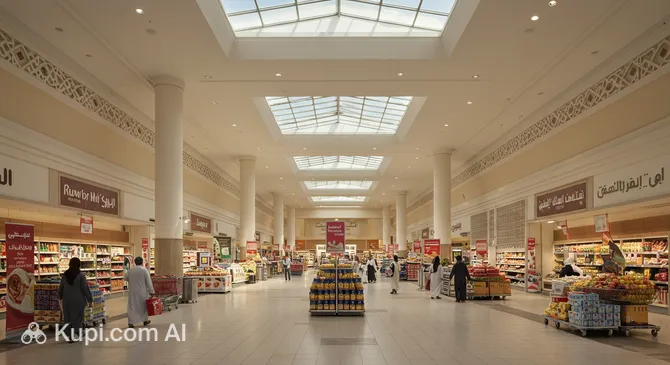
If you prefer a more modern shopping environment, the district of Ruwi serves as the city's commercial heartbeat. Often bustling with activity, this area is known for its "High Street" feel, lined with jewelry stores, electronics shops, and textile emporiums. It is a great place to find gold at competitive prices and fabrics from around the world. In the center of this busy district lies the Ruwi Hypermarket, a popular spot for locals to stock up on daily necessities, clothing, and affordable goods.
Ruwi Hypermarket. Illustration.
Source: Kupi.com AI
Traveler photos:
Beyond the traditional commercial hubs, Muscat is home to several large-scale shopping malls that offer a stark contrast to the souqs. Massive complexes like the Mall of Oman and Muscat Grand Mall feature hundreds of international retail chains, cinema complexes, and extensive food courts. These malls are excellent escapes from the midday heat and offer a standard of luxury shopping comparable to any major global city.
When it comes to souvenirs, Oman is renowned for its high-quality frankincense (Luban), which is harvested from trees in the southern Dhofar region. You can buy it as resin or in the form of essential oils and perfumes. Other popular keepsakes include the Khanjar (the traditional Omani curved dagger) made from silver, intricate Bedouin silver jewelry, and pottery. Do not forget to pick up some Omani Halwa, a sweet, gelatinous dessert flavored with saffron and rosewater, which makes for a delicious gift.
Store hours in Muscat can vary depending on the type of establishment. Major shopping malls typically operate from 10:00 AM to 10:00 PM throughout the week. However, traditional souqs and smaller independent shops often close for a midday break, usually between 1:00 PM and 4:00 PM, and stay open late into the night. On Fridays, which is the weekly holiday, markets like Mutrah Souq generally open only in the late afternoon, around 4:00 PM.
Payment methods are convenient for tourists. Credit and debit cards are widely accepted in malls, supermarkets, and hotels. However, cash is king in the souqs and smaller shops, and carrying Omani Rials is essential if you plan to bargain for better prices. Regarding taxes, Oman applies a 5% Value Added Tax (VAT) on most goods and services. Tourists may be eligible for a VAT refund on purchases made at participating merchants, which can be claimed at designated counters at Muscat International Airport upon departure.