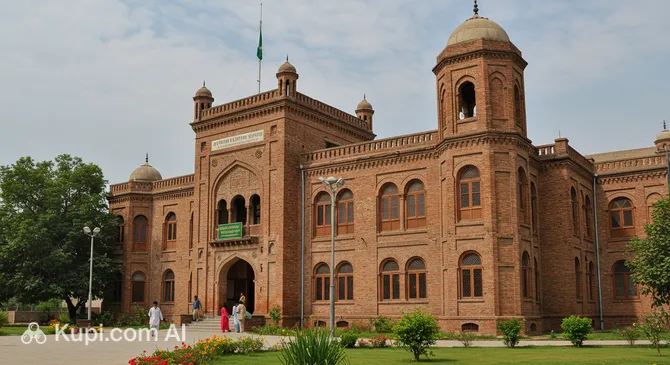
The Bahawalpur Museum is an outstanding cultural institution dedicated to preserving and showcasing the rich historical heritage of the region. Located in the colorful city of Bahawalpur, it occupies the majestic Gulzar Mahal palace, built over a century ago. This museum is rightfully considered one of the most important centers for the study of archaeology and art in Pakistan.
Bahawalpur Museum. Illustration.
Source: Kupi.com AI
Traveler photos:
The exposition is divided into eight specialized galleries, each revealing a certain facet of the past to guests. Here you will find halls dedicated to Islamic art, numismatics, and ancient archaeology. The Cholistan Gallery attracts particular attention, housing everyday objects and traditional crafts of the peoples inhabiting the desert of the same name.
The museum's significance is underscored by its unique collections, ranging from rare manuscripts of the Quran to artifacts from ancient temples. It is an ideal place for those who want to understand how the once-powerful Bahawalpur State developed and to see firsthand the continuity of the cultural traditions of the Punjab province.
Contacts
To contact the museum administration or clarify visiting details, you can use the following contact information:
The main highlight here is a fascinating journey through eight thematic galleries. In the numismatic department, you can see an impressive collection of over 300 ancient coins, while in the Quran gallery, you can connect with spiritual heritage through rare manuscripts and calligraphic works. History buffs will appreciate the archaeological finds that tell the story of the region's life long before our time.
Be sure to visit the regional cultural gallery, which features authentic household items of the Cholistan desert inhabitants. Here you can see traditional clothing, metalwork, and textiles that have been used for centuries in the Bahawalnagar and Rahim Yar Khan districts. The museum's ethnographic collection is considered one of the most complete in the country.
In addition to viewing the displays, visitors can enjoy the architecture of the museum itself and take memorable photos against the backdrop of ancient gates and carved windows brought from the Kala Dhari Mandir temple. The museum's peaceful setting is perfect for educational family walks, allowing everyone to find something of interest—from ancient weapons to modern historical photographs of the leaders of the Pakistan Movement.
Getting There
Reaching this cultural landmark is easy, as it is located in the well-developed Bahawalpur Cantt area. If you are arriving in the city by plane, the nearest airport, Bahawalpur (BHV), is just a 15–20 minute ride by taxi or a traditional Pakistani rickshaw.
For those who prefer rail travel, the journey from Bahawalpur railway station to the museum takes about 10–15 minutes. You can use taxi services or local bus routes heading towards the Cantt area. The road network in this part of the city is in good condition, making the trip comfortable.
If you are traveling from cities like Lahore or Multan, it is most convenient to use intercity buses or the train. Upon arrival in the city, it is best to take a taxi to comfortably reach the gates of the Gulzar Mahal palace, where the collection is housed.
Nearest city: Bahawalpur
History & Facts
The history of the institution dates back to 1976, when it was officially opened to preserve the region's immense heritage. The museum is housed within the walls of the magnificent Gulzar Mahal palace, built in the early 20th century during the reign of Nawab Sadiq Muhammad Khan V. The building itself is an architectural masterpiece reflecting the grandeur of a bygone era.
The museum's collections are inextricably linked to the history of the Bahawalpur State, which was founded in 1748. At that time, the region flourished as an important cultural and trade center. In the galleries, you can find evidence of the Mughal period and artifacts from the Abbasid dynasty, whose rule left a profound mark on the character of modern Punjab.
Of particular historical value are the exhibits transferred from the ancient Kala Dhari Mandir temple. The preserved gates and carved windows of this temple allow visitors to touch upon the centuries-old traditions and religious diversity of the region. The museum continues to play a key role in education, guarding the memory of what was once the second-largest princely state in British India.
Time Needed
To explore all eight thematic halls without rushing and carefully study the presented artifacts, a typical visitor will need about 2–3 hours. This is the optimal time to see the exhibits, read the explanatory plaques, and enjoy the architecture of the building itself.
If you have a deep interest in numismatics or Islamic art, you might want to set aside a bit more time for your visit. The museum features a quiet and relaxed atmosphere, which encourages a thoughtful acquaintance with the history of the former princely state.
Working Hours
The museum operates on a steady schedule convenient for most tourists. Please note that the institution is closed to visitors on Mondays.
Day
Working hours
Monday
Closed
Tuesday
9:00 – 16:00
Wednesday
9:00 – 16:00
Thursday
9:00 – 16:00
Friday
9:00 – 16:00
Saturday
9:00 – 16:00
Sunday
9:00 – 16:00
Nearby
Exploring the museum's surroundings will allow you to immerse yourself even deeper into the atmosphere of this historical region. There are many iconic spots nearby that will harmoniously complement your sightseeing itinerary.