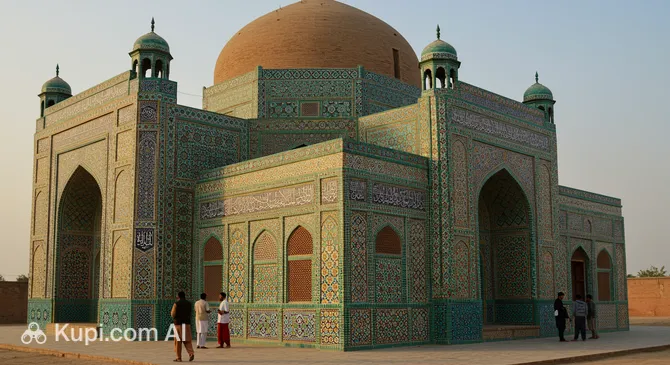
The majestic Tomb of Shah Rukn-e-Alam is not just an architectural monument but the spiritual heart of Multan. Located in the center of the old city, this shrine of the Sufi saint Sheikh Rukn-ud-din Abul Fateh is considered one of the most significant Islamic structures Pakistan has to offer a traveler.
Tomb of Shah Rukn-e-Alam. Illustration.
Source: Kupi.com AI
Traveler photos:
The hallmark of the mausoleum is its vibrant turquoise dome, crowning the massive two-tiered building. The tomb is set on an elevation within a picturesque park, making its octagonal silhouette visible from afar. The architectural style of the building reflects the unique traditions of the region, where monumentality and elegance of finish are combined.
Inside, visitors are greeted by an atmosphere of deep reverence and peace. The walls are adorned with skillful frescoes and decorative carvings, while flocks of pigeons constantly circle above the complex, giving the place an almost mystical charm. Multan is often called the "City of Saints," and this mausoleum serves as the finest testament to such an honorable title.
Contacts
For the latest information on visiting rules and special events, you can consult the official resources of the Auqaf and Religious Affairs Department of the Punjab province.
When visiting the Tomb of Shah Rukn-e-Alam, the first thing to do is spend some time studying its unique architecture. You can examine in detail the intricate frescoes and ornaments that decorate the interior and appreciate the skill of ancient architects. Since the tomb is located on a hill, its terraces offer impressive panoramic views of Multan, which is especially appreciated by photography enthusiasts.
This site is a living center of pilgrimage. If your visit coincides with commemorative dates, you will see thousands of people flocking here from all over South Asia. Observing religious rites and participating in the general atmosphere of spirituality allows for a deeper understanding of the local culture. It is important to remember the rules of etiquette: you must remove your shoes before entering, showing respect for the traditions of the holy site.
The silence of the park surrounding the mausoleum is perfect for peaceful walks. Here you can simply sit on a bench, feed the pigeons, and take a break from the city bustle while enjoying the majestic view of the turquoise dome against the clear Pakistani sky.
Getting There
Located in the very heart of the historical center, the Tomb of Shah Rukn-e-Alam towers over the city, making it an excellent landmark for any traveler. Reaching it is easy from any part of the city thanks to its central position in the Qilla Kohna district.
If you are arriving from afar, the most convenient way is to use Multan International Airport or the railway station, which connect the city with the country's major centers. From the airport or station, you can quickly reach the old city by taxi or a traditional rickshaw, which allows you to immediately immerse yourself in the local atmosphere.
Within the central districts, many tourists prefer to reach the complex by local public transport or even on foot. A walk through the streets of old Multan is a great way to see the daily life of the locals before climbing up to the majestic tomb.
Nearest city: Multan
History & Facts
The construction of this architectural masterpiece took place between 1320 and 1324 AD. The mausoleum was intended as the final resting place for the revered Sufi saint Sheikh Rukn-ud-din Abul Fateh. Remarkably, the construction of the tomb was completed during the saint's lifetime, highlighting his exceptional status and immense influence in the Muslim world of that era.
The city of Multan itself, where the monument is located, possesses a colossal history dating back to the times of the Indus Valley Civilization. For centuries, it served as a crossroads of cultures and an important spiritual center. The mausoleum became the quintessence of local craftsmanship, absorbing the best traditions of regional Islamic architecture, including the famous turquoise domes and massive two-tiered walls.
To preserve this unique heritage for future generations, a large-scale restoration was carried out in the 1970s. Specialists carefully restored the decorative elements and strengthened the structure, allowing us today to see the mausoleum in much the same grandeur as it was seen by the contemporaries of Saint Rukn-e-Alam.
Time Needed
For a standard tour of the mausoleum itself and its immediate surroundings, one hour is usually sufficient. During this time, you will be able to study the interior decoration, admire the panoramic views of the city from the heights, and take beautiful photos against the backdrop of the famous dome.
If you plan to take a leisurely stroll through the park, observe religious ceremonies, or combine your visit to the tomb with exploring other sites in the Old City, it is better to set aside 2-3 hours. This will allow you to feel the special energy of this holy place without rushing.
Working Hours
The mausoleum is an active religious site, and access is generally open during daylight hours. However, exact visiting hours may change depending on prayer times or religious holidays.
To plan your visit, we recommend checking the information on the official website of the department or clarifying the details with local guides shortly before your trip.
Nearby
The mausoleum's location within the ancient fortress makes it an ideal starting point for exploring the city's historical core. The surrounding area is rich with architectural monuments, ancient gates, and parks that provide a deeper understanding of the region's centuries-old history.
A stroll through the nearby streets will give you access to bustling markets and quiet gardens, creating a contrast between the spiritual tranquility of holy sites and the energetic life of the modern city.