Support

Sialkot Fort

About

In the heart of the Punjab province stands the majestic Sialkot Fort, one of the oldest defensive structures in the region. Located in the city of Sialkot, this historical fort served as a reliable shield for local rulers for centuries and today stands as a vivid testament to the rich cultural heritage that Pakistan carefully preserves.

This attraction is a massive military fortification whose walls remember the succession of dynasties from the Ghaznavids to the era of British rule. The fort is built on the site of ancient Sagala, the former capital of the Indo-Greek Kingdom, which gives it special archaeological value. Today, it is a popular destination among travelers who appreciate an atmosphere of antiquity and monumental architecture.
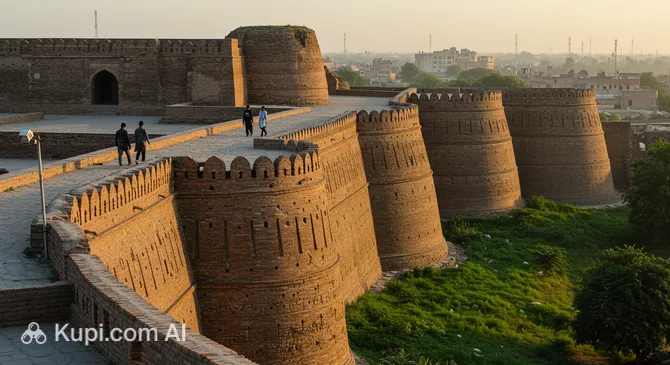
Sialkot Fort
Sialkot Fort. Иллюстрация. Источник: Kupi.com AI

Sialkot Fort harmoniously combines features of different eras and traditions. Despite its purely defensive purpose, it is surrounded by a city known for its unique crafts and manufacturing. A visit to the fort allows you not only to touch ancient stones but also to see how the historical past intertwines with the modern rhythm of life in one of the country's most important industrial centers.

Contacts

For those planning a visit to the walls of this ancient fortification, it is useful to have the exact coordinates at hand. The fort is located in the heart of the historical part of the city, making it easy to find.

How to contactContact
AddressFGXW+4CQ Sialkot Fort, Raja Rd, Sialkot, Pakistan

What to Do

The main pleasure of visiting the fort is walking along its massive walls and exploring the preserved defensive structures. Lovers of historical photography will find many impressive angles here: the high ground offers breathtaking panoramic views of the fertile Punjab valleys and the bustling streets below.

Once inside the fort, you can feel the spirit of time while examining the masonry that has survived for centuries. Tourists often complement their tour of the fortifications with a visit to the old town, where they can browse craft shops and purchase famous local products. This is a wonderful opportunity to observe daily life and experience the hospitality of the local residents.

For those interested in science, the fort's territory is fascinating from an archaeological perspective—artifacts of past eras, including ancient coins, are often found here. In the evening, when the heat subsides, the fort turns into a peaceful place for relaxation and reflection, where you can have a small picnic while admiring the sunset over the ancient horizon.

Getting There

Reaching this historical site is quite simple, as it is located in the central part of the city at Raja Rd, FGXW+4CQ. The most comfortable way for international tourists is to use a taxi or a traditional rickshaw. If you are arriving at Sialkot International Airport, the journey to the fort is about 10–15 kilometers, taking approximately 20–30 minutes depending on traffic.

If your journey begins in other major cities, such as Lahore, you can take a train to the Sialkot railway station or an intercity bus via the N-5 highway. Local public transport is represented by an extensive network of buses and motor rickshaws that run in all major directions.

For independent travelers by car, GPS navigation will serve as a good guide. The roads in this part of the city are in decent condition, and parking can usually be found near the fortification. For maximum convenience, it is recommended to use mobile taxi-hailing apps.

Ближайший город: Sialkot

History & Facts

The history of this site is rooted in antiquity, when the ancient Sagala—the capital of the Indo-Greek Kingdom—flourished on these lands. As early as the 2nd century BC, the famous King Menander I ruled here, and archaeological finds of ancient Greek coins still serve as a reminder of that era. Later, according to legend, the fort was extensively rebuilt in the 2nd century AD by Raja Salban.

For centuries, the fortification played the role of a vital strategic shield. It changed hands many times: from the Ghaznavids to the Mughal rulers and, eventually, representatives of the British Empire. Interestingly, during the Mughal era, the city became famous as one of the largest centers for high-quality paper production, contributing to its economic prosperity.

The construction and strengthening of the fort required colossal resources. According to historical records, about 10,000 workers were involved in the process. Its advantageous geographical position between the Chenab and Ravi rivers made the fort virtually impregnable and allowed for the control of key trade routes linking India with Central Asia.

Time Needed

To leisurely explore the fortification walls, study its architectural features, and take memorable photos, most tourists will need about 2–3 hours. This is quite enough time to feel the scale of the structure and enjoy the views of the city quarters from the height of the defensive ramparts.

If you plan to combine a visit to the fort with a walk through the colorful Old Town, exploring local markets, and visiting the Allama Iqbal House-Museum, it is worth allocating 4–5 hours for this excursion. It is best to plan your visit in the morning or closer to the evening when the midday heat subsides.

Working Hours

One of the main advantages of this attraction is its accessibility to visitors at any time. Sialkot Fort is open 24 hours a day, seven days a week.

You can plan your visit on Monday, Tuesday, Wednesday, Thursday, Friday, Saturday, or Sunday—the gates of the complex are open to guests around the clock. The site has an OPERATIONAL status, allowing tourists to choose the most convenient hours for exploration without being tied to a strict schedule.

Круглосуточно

Nearby

A stroll around the vicinity of the fort will allow you to immerse yourself deeper into the city's atmosphere and see local life in all its diversity. The proximity of other cultural and historical sites makes this area ideal for exploration on foot.

Exploring nearby attractions will help you gain a more complete understanding of the region's heritage—from the birthplaces of great thinkers to ancient city squares and parks.

NameDistance
Iqbal Manzil0.3 km
Iqbal House0.3 km
Dara Araiyan0.9 km
Kaori2 km
Zak Shinwari2.2 km
Gulshan-e-Iqbal Park2.3 km
Sialkot Clock Tower2.9 km

Reached the end of the page?

That means the route is fully explored