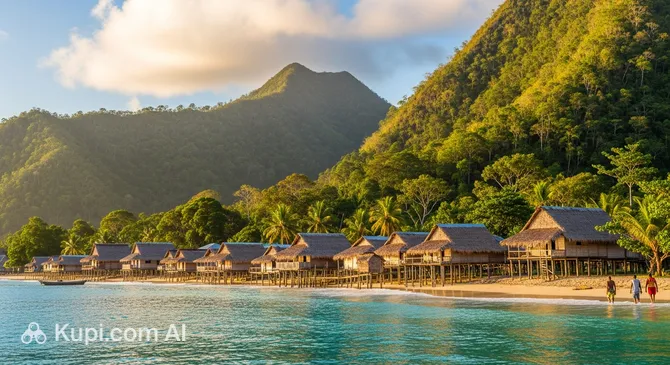
Located in West New Britain Province, Bali is a unique corner of Papua New Guinea. It is important not to confuse this settlement with the Indonesian island of the same name: here, travelers will find a completely different, pristine Melanesian atmosphere. The town and its namesake island (also known as Unea) are part of the Vitu Islands, offering guests seclusion surrounded by majestic volcanic landscapes.
Geographically, Bali is situated in the equatorial tropics, which defines its climate—it is always warm here, and the lush vegetation is striking in its vibrant colors. Learning more about the fascinating past of this region is worthwhile to understand how ancient ancestral traditions have intertwined with periods of colonial discovery.
Bali. Illustration.
Source: Kupi.com AI
The main features of this place are its isolation and incredible natural beauty. Tourists are drawn by the opportunities for diving in untouched coral reefs and the chance to experience the authentic way of life of local communities. Bali is a destination for those seeking adventure far from the beaten path, wishing to see the world in its original form.
Weather Overview
The climate in Bali is characterized as classic equatorial—it is warm and humid all year round. Air temperatures barely change from month to month, staying at an average of around 27-28°C. Even during the coolest periods, the thermometer rarely drops below 26°C, making the region ideal for lovers of tropical warmth.
The main feature of the weather is the significant amount of rainfall, which is distributed unevenly throughout the year. The rainy season usually lasts from October to March, when the number of wet days reaches its peak and downpours can be very intense. For those who want to know more, detailed information is available on the page describing Bali's climate by month.
The most favorable time for a visit is considered to be the period from May to September, when rain occurs less frequently and humidity becomes more comfortable. During this time, sunny weather sets in, ideal for diving, boat trips, and exploring the island's volcanic landscapes.
Interesting Facts
The island of Bali in Papua New Guinea is full of surprising details that often escape the notice of the average tourist. Here are a few facts that highlight its uniqueness:
Geographical Confusion: Despite the name, this Bali has no connection to Indonesia; it is located in the Bismarck Archipelago and is part of West New Britain Province.
Volcanic Heart: The island where the town is situated is actually the tip of an ancient volcano, providing incredibly fertile soil for tropical gardens.
Cultural Mix: Religious beliefs here are a harmonious blend of Christianity, brought by missionaries, and ancient animistic ancestral cults.
Dance Traditions: Dance and drama are an integral part of local life and are often used to pass down knowledge and legends from the older generation to the younger.
Natural Paradise: The region around the town is known for its bird-watching opportunities, with many species being endemic to Papua New Guinea.
How to Get There
The journey to Bali in Papua New Guinea is an adventure in itself. The primary way to reach this remote region is by air. Travelers first need to arrive at one of the country's major airports, such as Jacksons (Port Moresby), and then transfer to a domestic flight to the island of New Britain.
For detailed route planning and price inquiries, it is recommended to check the section describing how to get to Bali. Most often, tourists land at Kimbe or Hoskins airport, from where further travel is conducted via small local airline planes or sea transport.
There is no rail service in this region, so all land transport is limited to roads within major settlements and waterways. Speedboats and dinghies ply between the islands, serving as the main link for locals and visitors alike.
Main Attractions
The primary treasures of Bali in Papua New Guinea are centered in its unique nature. The island is of volcanic origin, and its terrain creates breathtaking panoramas. Travelers should pay close attention to the coastal waters, which hide incredibly rich coral gardens. It is an ideal spot for those who appreciate quiet contemplation and deep immersion into the region's ecosystem.
While there are no grand temple complexes like those in Indonesia, the local culture is equally interesting. The main focus is on visiting traditional villages where you can witness the ceremonies and rituals of the local residents. Dances hold special significance in the life of the population, having played the role of living history and drama since time immemorial.
For those ready for a short trip outside the town, the broader West New Britain region is of great interest. Here you can find thermal springs and picturesque bays. The atmosphere of Bali encourages a leisurely exploration of the surroundings, where every turn of the trail might reveal a view of the turquoise ocean or the emerald slopes of the mountains.
Local Cuisine
A gastronomic journey to Bali will introduce you to traditional Melanesian cuisine, where the gifts of the land and ocean play the leading role. The staple diet of the locals consists of sago (starchy palm flour) as well as root vegetables: yams, taro, and sweet potatoes (kaukau). These products are prepared in many different ways—from baking in ash to stewing in coconut milk.
You should definitely try dishes prepared in a traditional earth oven called a mumu. Meat, fish, and vegetables wrapped in banana leaves simmer on hot stones under a layer of earth, acquiring a unique taste and aroma. For those seeking exotic flavors, local markets may offer unusual delicacies that reflect the gastronomic diversity of this tropical region.
Among drinks, fresh tropical fruit juices and coconut water straight from the nut are popular. Alcoholic beverages are mainly represented by imported beer, though hotels will offer a variety of cocktails. The food culture here is closely tied to the communal way of life, so a meal in Bali is not just about eating, but an important social ritual.
Travel Tips
Preparing for a trip to Bali in Papua New Guinea requires attention to detail to ensure your adventure is comfortable and safe.
Clothing and Essentials: Choose lightweight clothing made from natural fabrics suitable for the humid tropical climate. Be sure to bring comfortable shoes for walking, sunscreen, and insect repellent. When visiting villages, try to dress modestly, covering your shoulders and knees.
Health: Consult a doctor before your trip regarding vaccinations and malaria prevention. Use only bottled water and be cautious with street food.
Finances: The official currency is the Papua New Guinean kina. It is recommended to exchange money at the airport or in major cities, as there may be no ATMs on the island. Cash is critical for small purchases and paying for transport.
Transport: Travel between islands depends on the weather. Always allow extra time in case of boat or flight cancellations due to storms.
Connectivity: Buy a local SIM card (such as Digicel) in Port Moresby or Kimbe. In Bali itself, Wi-Fi is only available in some lodges, and mobile internet can be unstable.
Etiquette: Greet locals with a smile. Before photographing people or their homes, always ask for permission.
What to Avoid: Do not walk alone in unfamiliar places after dark. Also, avoid discussing political or sensitive inter-tribal topics.
Tipping: Tipping culture is not common in Papua New Guinea; usually, the amount on the bill is final, but a small token of gratitude for excellent service is always appreciated.
By following these simple rules, you will be able to fully enjoy the hospitality of this amazing region and bring home only positive impressions.
Entertainment & Nightlife
Entertainment in Bali, Papua New Guinea, is primarily focused on nature and culture. Instead of noisy nightclubs and bars, you will find traditional "sing-sing" shows—vibrant musical performances where locals in traditional body paint perform dances to the rhythmic beat of drums. This captivating spectacle allows you to touch the ancient roots of Melanesian culture.
For outdoor enthusiasts, the sea is the main source of entertainment. Water sports such as diving, snorkeling, and canoeing are very popular. The crystal-clear water and abundance of marine life make every dive an unforgettable adventure. Evenings on the island are usually spent in the quiet sound of the surf, which is perfect for relaxing after an eventful day.
Some tourist lodges and hotels may organize entertainment programs and evening gatherings by the fire. If you are looking for a more lively nightlife with restaurants and concerts, you should head to the larger provincial centers; however, it is Bali that offers a rare opportunity to enjoy an authentic holiday in harmony with nature and local traditions.
Parks & Museums
The natural parks of Bali are, first and foremost, virgin tropical forests and volcanic landscapes. Unea Island, where the town is located, is a natural monument in itself. Hiking on its slopes allows you to see unique flora and fauna, and the peaks offer breathtaking panoramic views of the ocean and the neighboring Vitu Islands.
There are few museums in the classical sense on the island; however, this role is filled by cultural centers in the villages. These centers house traditional household items, ritual masks, and tools that tell the story of the local tribes' heritage. Each such place is a living museum, where history is not preserved behind glass but continues to exist in daily rituals.
Special mention should be made of the coastal zones, which can be described as "underwater parks." The coral reefs around Bali are protected by local communities and offer incredible biodiversity. For those interested in geology, visiting the surrounding hills and thermal zones will be a true discovery, showcasing the power of Papua New Guinea's nature.
Getting Around
The transport system in Bali and its surroundings has its own specific character due to the region's geography. You won't find subways or trams here; waterways play the primary role in movement. Traditional motorboats and dinghies are the main means of communication between settlements on the island and the neighboring islands of the Vitu archipelago.
Land transport within the town is limited to a few main roads. For short-distance travel, tourists often use taxis or rent 4WD vehicles with a driver, as road conditions can be challenging. In some cases, hotels offer their guests transfers by minibus or organize boat excursions to the most interesting points along the coast.
Payment for transport is usually made in cash directly to the driver or the boat captain. Small planes are used for travel to other provinces or the mainland of Papua New Guinea. When planning trips, it is important to consider weather conditions, as heavy rain or rough seas can temporarily restrict transport movement.
Accommodation
Accommodation in Bali, Papua New Guinea, is geared towards fans of eco-tourism and secluded getaways. Small guesthouses, lodges, and cozy bungalows located right on the coast predominate here. This type of housing allows you to get as close as possible to nature and feel the rhythm of local life.
Hotels usually offer full board, as the choice of separate restaurants outside the accommodation may be limited. The staff is characterized by genuine friendliness and a readiness to help organize excursions or fishing trips. During peak seasons, when cultural festivals are held, it is recommended to book accommodation in advance, as the number of spots in the best lodges is limited.
For those who value a high level of comfort, you might consider modern resort complexes in the nearby larger provincial centers, which offer a full range of services, including spa treatments and swimming pools. However, it is the modest bungalows on Bali itself that provide that "lost paradise" atmosphere that experienced travelers come here for.
Nearby Cities
The town of Bali in Papua New Guinea serves as an excellent starting point for exploring the picturesque West New Britain Province. Despite the island setting, the surrounding areas offer several interesting destinations that allow for a deeper immersion into the region's culture and nature.
One of the key nearby cities is Kimbe—the provincial capital, famous for its stunning diving spots in the namesake bay. It is also worth visiting the settlement of Talasea, where you can see traces of volcanic activity and historical relics, as well as the small town of Moro.
Each of these places has its own unique character: from the business bustle of Kimbe to the peace and quiet of remote villages. Exploring the neighboring islands and towns will help you form the most complete picture of life in this amazing part of the world.
Shopping & Souvenirs
Shopping in Bali, Papua New Guinea, is primarily an opportunity to purchase unique handmade items. There are no massive shopping centers with global brands here, but local markets thrive, where you can find true Melanesian treasures. The main goods are woven products: "bilum" bags, mats, and baskets decorated with traditional patterns.
Special attention should be paid to wood carvings. Local craftsmen create amazing figurines, masks, and home decor items that make excellent souvenirs. Textiles with ethnic prints and jewelry made from shells and animal teeth are also popular with tourists. The main shopping points are concentrated in the center of the settlement and at the wharves where boats bring in goods.
Shops usually operate from morning until evening with a break for a siesta. Local currency (kina) is used for payment; cards are not accepted at the markets, so it is always worth having cash on hand. Bargaining is not a mandatory ritual at local markets, but friendly conversation with a seller can help you learn more about the history of the item they created.