Support

Moro

About

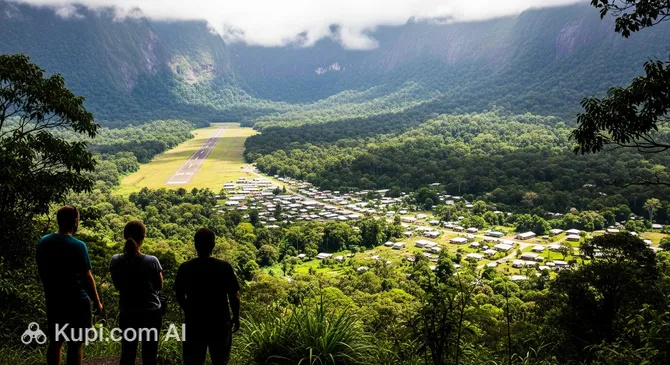
Welcome to Moro, a distinct settlement nestled within the lush greenery of the West New Britain Province. Located in Papua New Guinea (Niugini), this town serves as a vital hub for the local community and a starting point for intrepid travelers exploring the region. With a population of approximately 5,000 residents, it offers a glimpse into the everyday life of the island, far removed from the bustle of major capital cities.

Moro. Source: Kupi.Binoculars

The town is surrounded by the dense tropical rainforests and rugged terrain that define the island's geography. While often viewed as a transit point or a center for local industry, the area has its own story to tell. Visitors interested in the local heritage can delve into the history of Moro to learn about its development and the cultural tapestry of the region. The climate here is typically tropical, characterized by warm temperatures and frequent rainfall that feeds the vibrant ecosystem.

Travelers passing through Moro are often drawn to the spectacular natural wonders nearby. The town acts as a gateway to the majestic Nakanai Mountains, a range famous for its deep caves and underground rivers, attracting adventurers and speleologists from around the globe. Additionally, the surrounding forests provide excellent opportunities for birdwatching, where one might spot some of the endemic species that make this island unique.

Whether you are heading towards the coast or venturing deeper into the highlands, Moro offers an authentic slice of island life. It is a place to pause, appreciate the raw beauty of nature, and experience the warm hospitality of the local people.

Weather Overview

Moro experiences a consistent tropical climate year-round, characterized by steady warmth and significant humidity. The weather in Moro is remarkably stable, with very little variation in temperature between the seasons, making it a destination where the heat is present but generally manageable.

Travelers can expect comfortable temperatures regardless of when they visit. Daily averages consistently hover around 24°C to 25°C, with daytime highs peaking at approximately 28°C in January and slightly cooler highs of around 26°C in July and August. Nights are mild and pleasant, with minimum temperatures rarely dropping below 21°C.

Precipitation is a defining feature of the local climate. You should anticipate frequent rainfall, as the region records between 26 and 30 wet days per month throughout the entire year. While the rain is a constant companion, ensuring the surrounding vegetation stays lush, it is advisable to pack waterproof clothing and plan for wet conditions daily.

Interesting Facts

Beyond the main attractions, Moro holds many fascinating secrets that highlight its role as a gateway to some of the planet's most remote environments. While it may appear to be a quiet settlement, its location places it on the doorstep of geological and biological wonders.

  • Gateway to the Underworld: Moro serves as a strategic launching point for expeditions into the Nakanai Mountains, which house some of the deepest and most spectacular cave systems in the Southern Hemisphere. Elite cavers from around the world travel here to explore massive subterranean networks like the Nare Cave, known for its roaring underground rivers.

  • A Living Laboratory: The rainforests surrounding the town are so dense and unexplored that they are frequently the site of major scientific discoveries. Researchers working in the area have identified numerous new species of flora and fauna, including unique frogs and insects, solidifying Papua New Guinea (Niugini) as a global biodiversity hotspot.

  • Volcanic Foundations: The fertile ground beneath the town is a direct result of the region's intense volcanic history. The rich, dark soil not only supports the towering jungle but is also the lifeblood of the local agricultural community, showcasing how life thrives in the shadow of the island's geological giants.

How to Get There

Reaching this destination requires some planning, as it is located in a region where air travel is often the most practical solution for covering longer distances. You can find more about how to get to Moro and the various transport options available on our dedicated page. The journey typically involves flying into a regional hub and then continuing by road to the settlement.

The city of Moro does not have its own airport, but you can fly into Hoskins Airport (IATA: HKN) in the city of Hoskins, which serves as a key gateway for West New Britain Province. It is located approximately 126 km from Moro. Upon arrival, the journey by taxi or bus takes around 3 hours and 30 minutes, offering a chance to see the island's tropical scenery. Another major facility in the broader region is Nadzab Airport (IATA: LAE) in Lae. Although it is a significant hub with higher passenger traffic, it is situated about 299 km away on the mainland, so travelers usually prefer connecting through closer regional airports for easier access to the island.

For clarity, here is a summary of the main airports:

Airport Name City Passenger Traffic Km from City
Nadzab Airport Lae Large 299.3
Hoskins Airport Hoskins Medium 126.1

Moro does not have a railway station, and passenger trains are not a standard mode of transport in this part of the country. Visitors generally rely on flights to reach the province, followed by local road transport such as hired vehicles or PMVs (Public Motor Vehicles) to navigate between towns and villages.

Main Attractions

The primary allure of Moro lies in its strategic position as a gateway to the spectacular Nakanai Mountains. This limestone range is a world-renowned destination for adventure seekers and nature enthusiasts, offering some of the most rugged and pristine landscapes in Papua New Guinea (Niugini). The mountains are blanketed in dense tropical rainforest and are part of a tentative UNESCO World Heritage site, recognized for their exceptional biodiversity and unique geological features. For tourists, the area offers challenging trekking opportunities where one can witness exotic birdlife, including hornbills and parrots, thriving in their natural habitat.

Deep within the Nakanai range lies the legendary Muruk Cave, a site that beckons elite cavers and speleologists from around the globe. Historically recorded as one of the deepest cave systems in the Southern Hemisphere, Muruk presents a formidable challenge with its vertical shafts and complex network of tunnels. While exploring its depths requires technical skills and professional guidance, the sheer existence of such a massive subterranean wonder adds a layer of mystique to the region. It stands as a testament to the island's porous limestone foundation and the powerful natural forces that have shaped it over millennia.

Another geological marvel in the vicinity is the Nare Cave, famous for its roaring underground river. Unlike typical dry caves, Nare is a dynamic and wet environment where a massive volume of water courses through the dark chambers before emerging back into the jungle. The sight and sound of the river crashing through the cavern walls create an awe-inspiring atmosphere. Expeditions here are often described as journeys into the "veins" of the mountain, offering a raw and unforgettable encounter with the earth's hidden hydrology.

While Moro is situated inland, it serves as a connector to the broader wonders of West New Britain, including the world-famous Kimbe Bay. Located a few hours' drive away, this marine sanctuary is often cited as one of the most biodiverse reef systems on the planet. Travelers often combine a trip to the rugged highlands of Moro with a visit to the coast to experience diving or snorkeling among vibrant coral gardens. The contrast between the cool, misty mountains and the warm, azure waters of the bay provides a comprehensive experience of the province's natural beauty.

Local Cuisine

The culinary landscape of Moro is deeply rooted in the traditions of the West New Britain Province, offering an authentic taste of island life. Due to the fertile volcanic soil surrounding the town, the local cuisine is defined by an abundance of fresh, organic produce rather than imported goods. Visitors will find that meals here are hearty, wholesome, and centered around ingredients harvested directly from the nearby gardens and rainforests.

The most iconic gastronomic experience you must try is the Mumu. This is not just a dish but a traditional method of cooking where food is slow-roasted in an earth oven filled with hot stones. Typically reserved for community gatherings and special occasions, a Mumu in Moro usually consists of pork or chicken layered with leafy greens, root vegetables, and bananas, all soaked in rich coconut cream and wrapped in banana leaves. The result is a smoky, tender, and flavorful feast that perfectly encapsulates the communal spirit of the region.

For daily sustenance, the diet relies heavily on root crops, which are the staples of the highlands and inland areas. You will frequently encounter Kaukau (sweet potato), taro, and yams, often boiled or roasted over open fires. These are commonly served with aibika, a nutritious local spinach that has a slippery texture when cooked and is almost always prepared with fresh coconut milk. In this part of Papua New Guinea (Niugini), sago is also a key ingredient, often processed into a jelly-like starch or baked into pancakes known as frying-pan sago.

When it comes to beverages, the most refreshing option is undoubtedly Kulau, or fresh young coconut water. It is widely available, safe to drink, and provides excellent hydration in the tropical humidity. For something stronger, you might encounter the local favorite, SP Lager, which is the national beer and a popular choice for winding down after a day of trekking. Additionally, given the region's agricultural profile, you may find locally grown coffee, which is robust and aromatic.

The food culture in Moro is informal and community-oriented. You will not find high-end dining establishments; instead, the best places to eat are the local Kai bars—small roadside stalls or takeaway shops that serve generous portions of stewed meats and rice. The town's market is another culinary hub where locals gather to sell fresh fruits like sweet pineapples, papayas, and red bananas. visiting the market offers not just a chance to buy snacks, but an opportunity to observe the daily rhythm of the town and interact with the friendly residents.

Travel Tips

Visiting Moro offers a unique opportunity to experience the raw beauty of West New Britain, but its remote location and tropical environment require some thoughtful preparation. To help you navigate this lush region with ease and respect for the local way of life, here are some practical tips for your journey.

  1. Prepare for Wet Weather: Given that Moro experiences rain almost daily, waterproof gear is non-negotiable. Pack a high-quality, lightweight rain poncho and a waterproof cover for your backpack. Quick-drying clothing is essential, as cotton takes a long time to dry in the high humidity. Sturdy, waterproof hiking boots are recommended, especially if you plan to trek in the muddy terrain of the Nakanai Mountains.

  2. Transportation Realities: There are no metros, trams, or ride-hailing apps here. The primary way to get around is by PMV (Public Motor Vehicle), which are usually minibuses or open-back trucks. They are affordable but do not run on a fixed schedule; they leave when full. For more comfort and reliability, especially on rugged roads, renting a 4WD vehicle with a driver is highly advisable.

  3. Cash is Essential: The local currency is the Papua New Guinea Kina (PGK). Credit cards are rarely accepted outside of major hotels in larger regional hubs. Moro is a small settlement, and ATM availability can be unreliable or non-existent. It is crucial to withdraw sufficient cash in larger towns like Hoskins or Kimbe before traveling inland to cover food, transport, and guide fees.

  4. Health and Safety: West New Britain is a malarial zone, so bringing strong insect repellent and taking anti-malarial medication (consult your doctor beforehand) is vital. Medical facilities in Moro are basic, so carry a comprehensive first aid kit. Always drink bottled or purified water to avoid stomach issues, as tap water is generally not safe for tourists.

  5. Staying Connected: English is one of the official languages, but Tok Pisin is the most widely spoken lingua franca. Learning a few phrases like "Gude" (Hello) or "Tenkyu" (Thank you) goes a long way. Wi-Fi is scarce; your best bet for connectivity is to buy a local SIM card (Digicel usually has the widest coverage in remote areas) upon arrival at the airport.

  6. Local Etiquette: Papua New Guineans are generally modest. Both men and women should avoid wearing overly revealing clothing; shorts should be knee-length. Always ask for permission before taking photos of people or their property. A friendly smile and a handshake are the standard way to greet locals.

  7. Respect Land Ownership: Avoid wandering off established paths or hiking into the bush without a local guide. In Papua New Guinea (Niugini), almost all land is customary land owned by local clans. Trespassing can be a serious offense, so always ensure you have the community's blessing or a hired guide to escort you.

  8. Market Wisdom: Make sure to visit the local market early in the morning for the freshest produce. It is not just a place to buy sweet pineapples and kulau (coconuts), but a safe social hub where you can interact with residents. Bring small denominations of cash, as vendors will likely not have change for large notes.

By keeping these practicalities in mind, you can focus on the incredible adventure that awaits you in Moro. Embracing the local pace and respecting the environment will ensure your visit is both safe and deeply rewarding.

Entertainment & Nightlife

Nightlife in Moro is a tranquil and unique experience, vastly different from the bustling neon-lit districts of major international cities. As a small settlement nestled in the heart of West New Britain's rainforests, the "nightlife" here is defined not by thumping basslines or crowded dance floors, but by the immersive sounds of the jungle and the warm, communal spirit of the islanders. The atmosphere is incredibly laid-back, where the evening entertainment typically revolves around quiet conversations, stargazing, and enjoying the cool tropical breeze after a day of exploration.

There are no designated "nightlife districts" or commercial nightclubs in Moro. Instead, social life is centered around the local community hubs and accommodation facilities. The "dress code" is strictly casual and practical—think lightweight, long clothing to protect against mosquitoes rather than high heels or blazers. The rhythm of the town follows the sun; as darkness falls early in the tropics, most activity winds down by 8:00 PM or 9:00 PM. Travelers should expect a peaceful evening where the main event is often a hearty meal shared with hosts or fellow adventurers.

For those seeking a cold drink and a place to socialize, the best options are the dining areas of local guesthouses or the small, informal roadside stalls known as Kai Bars. These spots serve as the town's social anchors, where you can enjoy a bottle of the local favorite, SP Lager, or a fresh coconut while chatting with residents. It is common to see locals gathering to chew buai (betel nut) and share stories, a cultural pastime that effectively replaces the western concept of a pub. If you are invited to join a circle, it is a genuine gesture of hospitality and the best way to understand the local way of life.

Since Moro serves as a gateway to the wider region, travelers looking for a more conventional bar or club experience usually find it in the provincial capital, Kimbe, before or after their trek inland. If you are transiting through the region, you might visit the Kimbe Bay Hotel, which famously houses the Moro Bar—a venue named after this very region, offering a comfortable setting to enjoy a drink and watch sports. Another key spot in the province is the Liamo Reef Resort, known for its open-air bar overlooking the ocean, providing a stark contrast to the dense jungle setting of Moro itself. In Moro, however, your "venue" is likely the veranda of your lodge, accompanied by the symphony of nocturnal insects.

Safety is a primary consideration at night. The town has limited street lighting, and the roads can be pitch black. It is highly advisable to avoid walking around alone after dark. Always carry a reliable flashlight or headlamp if you need to move between buildings. Taxis are not available in the settlement; transport at night is virtually non-existent unless pre-arranged with your host or guide. The best advice is to stay within the secure perimeter of your accommodation once the sun sets.

While the nights are quiet, daytime entertainment in Moro offers its own charm. Visitors can explore the small local markets that buzz with activity in the morning, serving as the commercial and social heart of the town. For a cultural experience, you might witness impromptu traditional singing or dancing during community events, which are far more captivating than any staged show. Ultimately, the entertainment in Moro is about disconnecting from the noise of the modern world and reconnecting with nature and people.

Parks & Museums

In Moro, the concept of a "city park" or a "museum" is redefined by the raw, untamed environment of West New Britain. Instead of manicured gardens and glass-walled galleries, visitors are greeted by a landscape where the rainforest itself acts as a vast botanical reserve and the local villages serve as living repositories of history. The region offers an immersive experience where nature and culture are inextricably linked, providing a profound connection to the island's heritage.

Lake Hargy stands out as one of the most significant natural "parks" in the wider region. Located within a massive volcanic caldera in the Nakanai Mountains, this remote freshwater lake is a stunning example of the island's geological beauty. Surrounded by dense, untouched jungle, it is a serene and somewhat mysterious location, ideal for eco-tourists looking to observe untouched flora and fauna. The isolation of the lake means it remains a sanctuary for birdlife, offering a peaceful contrast to the rugged trekking routes nearby.

The vast Rainforests of the Nakanai Range essentially function as the town's botanical garden. Stepping just outside the settlement, you enter a world of biodiversity that rivals any formal conservatory. Giant ferns, towering hardwood trees, and wild orchids grow in abundance here. For nature lovers, a guided walk through these forests is an educational journey, revealing the medicinal plants used by locals for generations and the complex ecosystems that thrive in the volcanic soil.

Regarding cultural institutions, Moro does not possess formal museums; rather, the entire region is often described as an Open-Air War Museum. West New Britain was a significant theater of operations during World War II, and remnants of this turbulent past are scattered throughout the jungle. It is not uncommon to encounter rusted machinery, aircraft wreckage, or old supply dumps reclaimed by the vines. These sites serve as poignant, uncurated exhibits of history, allowing visitors to touch the past in its original setting.

The true cultural galleries of the area are the Community Meeting Houses found in the surrounding villages. These structures are the heart of social and ceremonial life, where the oral history of the clans is preserved and passed down. While not public museums, respectful visitors accompanied by a local guide may be invited to see traditional carvings, shell money (tabu), and other artifacts that hold deep spiritual significance. These interactions provide a dynamic understanding of the local customs that no static display could ever convey.

For a truly authentic natural spectacle, travelers in this part of Papua New Guinea (Niugini) should keep an eye out for the phenomenon of firefly trees. In various secluded spots along riverbanks in the region, thousands of fireflies are known to congregate on specific trees at dusk, lighting them up like natural lanterns. While not a fixed tourist attraction with a specific address, this magical occurrence is a highlight of the local ecosystem and showcases the enchanting side of the island's nightlife.

Getting Around

Public transport in Moro is informal and quite different from the structured systems found in large metropolitan cities. There is no metro, tram, or municipal bus network with fixed schedules and designated stops. Instead, the local transportation system relies almost entirely on PMVs (Public Motor Vehicles). These are typically 15-seater minibuses or, in more rugged areas, open-back trucks with bench seating. They serve as the lifeline for the community, connecting the settlement with nearby villages and larger regional hubs like Kimbe.

The payment system is strictly cash-based; you will not find card readers, ticket machines, or mobile apps for transport here. Fares are generally low and fixed based on the distance traveled. You pay the driver or the "crew" (the conductor who manages passengers) directly, usually at the end of the journey or when they come around to collect. It is essential to carry small denominations of the local currency, as drivers often have limited change for large notes.

For tourists, navigating this system requires patience and a bit of local know-how. PMVs do not operate on a strict timetable; they depart from a main gathering point only when they are full. If you are waiting along the road, you can simply wave one down. It is advisable to travel early in the morning, as services taper off significantly in the afternoon and virtually cease after dark. Always ask the driver to confirm their destination before boarding, as signage can be minimal or handwritten.

Given the compact size of Moro, walking is a viable and popular alternative for getting around the immediate settlement. For excursions into the surrounding rainforests or the Nakanai Mountains, relying on public transport is not recommended due to the rough terrain and lack of regular service. In these cases, the most practical option is to hire a 4WD vehicle with a driver. This is typically arranged through your accommodation or a local tour operator, as traditional car rental agencies and ride-sharing apps like Uber are not available in the area.

Travelers should be aware that comfort levels on public transport can be basic. PMVs are often crowded, and air conditioning is rare, with open windows providing the only ventilation. While there are no historic cable cars or trains to experience, riding a PMV offers an authentic glimpse into local life, often accompanied by local music and friendly curiosity from fellow passengers. For safety and reliability, especially if you have a tight schedule, private transfers remain the best choice.

Accommodation

Accommodation options in Moro are quite limited and primarily functional, reflecting the town's status as a remote industrial hub and a gateway to the wilderness rather than a conventional tourist resort destination. Travelers should not expect the wide variety of hotels, luxury resorts, or serviced apartments found in major cities or coastal vacation spots. Instead, the available lodging is typically basic, catering to workers in the region, visiting officials, or adventure tourists passing through on their way to the Nakanai Mountains.

The accommodation landscape is dominated by simple guesthouses and lodges. These facilities generally offer essential amenities such as a clean bed, mosquito nets, and shared bathroom facilities. In some cases, travelers may find accommodation within community-run setups or homestays in nearby villages, which offer a more immersive but rustic experience. For those embarking on multi-day trekking or caving expeditions, "accommodation" often means camping in the jungle with equipment provided by your tour operator.

Because Moro is relatively small, there are no distinct "tourist districts" for accommodation. Most lodgings are located near the main settlement area, providing convenient access to the road network and the few local shops. However, due to the scarcity of options within the town itself, many visitors choose to base themselves in the provincial capital of Kimbe or near Hoskins Airport, where standard hotels and resorts are available. From there, they travel to Moro for day trips or specific excursions, enjoying the comfort of coastal resorts before heading inland.

Booking Tip: It is virtually impossible to book accommodation in Moro using major online travel platforms. Availability is often not digitized, and places may be reserved for company use or local government business. The most reliable way to secure a place to stay is to book through a specialized tour operator or a local guide who can make arrangements on your behalf well in advance of your arrival.

Regarding prices, options in and around Moro typically fall into the budget to mid-range category, though costs can sometimes be higher than expected due to the remoteness of the location and the logistics involved in providing services. Payment is almost exclusively in cash (PGK), as credit card facilities are non-existent in these small establishments. Travelers are strongly advised to carry sufficient local currency to cover their entire stay, including meals and incidentals.

Nearby Cities

For those looking to explore the surroundings, Moro serves as an excellent base for day trips to several interesting nearby locations. While the town itself is nestled inland, the broader region and neighboring provinces offer a mix of coastal beauty, urban history, and natural wonders that are well worth a visit.

The most accessible and popular destination for a day trip is Kimbe, the provincial capital of West New Britain. Located approximately 95 kilometers away, it is easily reachable by road. This coastal town is world-renowned for its spectacular marine biodiversity, particularly in Kimbe Bay, which attracts divers and snorkelers from around the globe to explore its vibrant coral reefs. The town also offers essential amenities, bustling markets, and a chance to relax by the ocean after spending time in the rugged interior near Moro.

For a short visit further afield, Lae is a significant option, though it typically requires a flight as it sits on the mainland. As the second-largest city in Papua New Guinea (Niugini), Lae is an industrial hub known for the lush National Botanic Gardens and the poignant Lae War Cemetery. It offers a different perspective on the country's development and history compared to the remote wilderness of West New Britain.

Another noteworthy destination for a weekend getaway or short trip is Madang. Often referred to as the "prettiest town in the Pacific," it is famous for its peninsula setting, park-like atmosphere, and excellent diving opportunities. It provides a scenic and relaxing contrast to the dense rainforests surrounding Moro, making it a favorite among travelers seeking coastal tranquility.

City Population Distance (km)
Lae 193000 276
Popondetta 65000 349
Madang 62023 395
Kimbe 27191 95
Goroka 21507 437

These nearby destinations offer a glimpse into the diverse culture and landscapes of the region.

Shopping & Souvenirs

Shopping in Moro is a strictly functional affair, reflecting the town's nature as a remote industrial and transit hub rather than a tourist destination. Visitors will not find high streets lined with boutiques or sprawling retail complexes here. Instead, the shopping scene is centered around basic necessities, catering primarily to the local workforce and residents of the surrounding villages. For travelers, it is the place to stock up on essential supplies, snacks, and water before heading into the mountains, rather than a spot for leisure shopping.

The main commercial activity is concentrated along the settlement's primary road. Here, you will find a handful of trade stores—small, general-purpose shops that sell a little bit of everything. These establishments typically stock canned foods, rice, toiletries, basic clothing, and hardware. They are the lifeline for the community, providing the goods needed for daily life in the tropics. The selection is limited to non-perishable items and simple household goods, so it is advisable to bring any specialized equipment or specific luxury items with you.

There are no shopping malls, department stores, or supermarkets in Moro. The retail infrastructure is very basic. If you require a more comprehensive shopping experience, including pharmacies, electronics, or a wider range of clothing, you would need to visit the provincial capital, Kimbe, which is approximately a two-hour drive away. In Moro, the "shopping center" is essentially a cluster of small, independent vendors and the local market.

The most vibrant and interesting place to shop is undoubtedly the local open-air market. This is the heart of the town's economy and social life. Here, women from nearby villages gather to sell fresh, organic produce grown in the fertile volcanic soil. You can find piles of sweet potatoes (kaukau), taro, vibrant greens (aibika), and an abundance of tropical fruits like sweet pineapples, papayas, and red bananas. It is also the best place to buy fresh coconuts (kulau) for a refreshing drink. The market is not just a place to buy food; it is a cultural experience where you can observe the daily rhythm of West New Britain.

Regarding souvenirs, options in Moro are limited, but you may find authentic local handicrafts if you look closely or ask around. The most iconic item to look for is the Bilum, a traditional hand-woven string bag that is ubiquitous across Papua New Guinea (Niugini). These bags are not only beautiful and durable but also hold deep cultural significance. Occasionally, you might also find locally woven baskets or mats. Since there are no dedicated souvenir shops, these items are often sold directly by the artisans at the market or in the villages.

Store hours in Moro are generally from around 8:00 AM to 5:00 PM, Monday through Saturday. Many places close early on Sundays or may not open at all. The market is best visited in the early morning, as produce tends to sell out by midday.

Cash is the only method of payment accepted in Moro. Credit cards, debit cards, and digital payments are not used in trade stores or at the market. You must carry sufficient Papua New Guinea Kina (PGK) in small denominations. Vendors at the market will rarely have change for large banknotes (like 50 or 100 Kina notes), so coins and smaller bills are essential for smooth transactions. There is no tax-free shopping or refund scheme available in this region.
Nearby cities

Reached the end of the page?

That means the route is fully explored