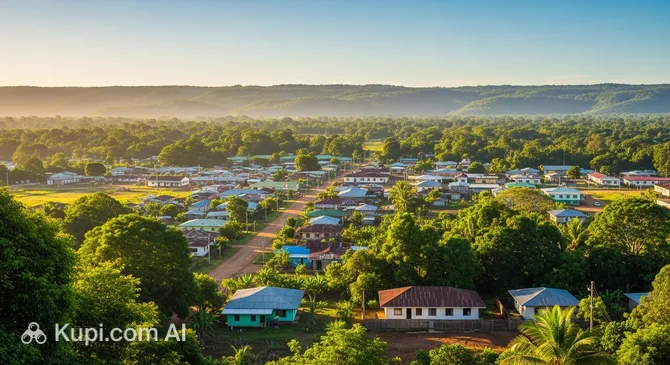
In Popondetta, the concepts of "parks" and "museums" are defined less by manicured lawns and glass display cases, and more by the raw beauty of the natural world and the tangible remnants of history scattered across the landscape. The city and its surroundings serve as a living exhibition, where the rainforest acts as a botanical garden and the jungle floor preserves the stories of the past.
While the city does not feature extensive recreational urban parks, the Mount Lamington Memorial Park stands as the most significant green space within the town limits. This area is dedicated to the memory of the approximately 4,000 lives lost during the devastating volcanic eruption of 1951. It is a solemn and peaceful place, shaded by tropical trees, where locals and visitors alike come to pay their respects. The park serves not only as a memorial but also as a quiet refuge from the bustle of the main market, offering a space for reflection amidst the town's daily activity.
Beyond the town center, the entire Oro Province Rainforest functions as a vast, uncontained natural reserve. This is the realm of the endangered Queen Alexandra's Birdwing butterfly. While there are no fenced boundaries or ticket booths, specific conservation areas managed by local landowners allow visitors to step into a pristine ecosystem. Walking through these dense, green corridors offers an immersive experience superior to any botanical garden, showcasing towering hardwoods, exotic orchids, and the vibrant birdlife that defines Papua New Guinea's biodiversity.
For those seeking cultural and historical insight, the region acts as an extensive Open-Air War Museum. There is no single building housing artifacts; instead, the "museum" is the land itself. In the nearby areas of Buna, Gona, and Sanananda, visitors can find the rusted hulks of tanks, aircraft wrecks, and artillery pieces left exactly where they fell during World War II. These relics, often reclaimed by vines and roots, offer a haunting and powerful connection to history that a conventional museum display cannot replicate.
The living culture of the Oro people is best observed in what could be described as the "Tapa Galleries" of the local markets and villages. The art of making Tapa cloth—beating bark into fabric and painting it with clan designs—is a museum-worthy craft practiced daily. Visitors can watch artisans at work in local communities, effectively turning village squares into cultural centers. The finished pieces, displayed for sale, represent centuries of tradition and offer a tangible piece of local heritage to take home.
Architecturally, the Cathedral of the Resurrection is a landmark worth visiting. Built to replace the church destroyed by the volcano, it stands as a symbol of the community's resilience and faith. Its design incorporates local materials and open-air elements suitable for the tropical climate, and its grounds often host community events that reflect the spiritual and social heart of the city.
For a truly authentic experience, ask a local guide to show you the "Plane in the Swamp" or similar specific war relics located on private customary land. These hidden gems are rarely marked on maps, and visiting them often involves a small fee to the landowner and a fascinating story passed down through generations, providing an insider’s perspective on the region's history.