Support

Jorge Chavez International Airport

About the Airport

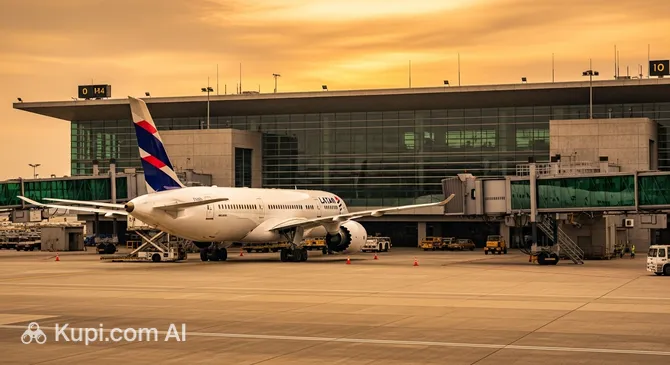
Jorge Chavez International Airport. Source: Kupi.com Binoculars

Jorge Chávez International Airport is not just a transport hub, but the true main gateway to the world of the ancient Incas and the colonial architecture of Peru. Located in the port city of Callao, it effectively serves the country's capital, Lima, and acts as a key hub for flights throughout Latin America. Despite high traffic, the airport is renowned for its clear navigation and compactness, making it a convenient starting point for a journey to Machu Picchu or the Amazon jungle.

IATA Code LIM
ICAO Code SPJC
City Lima (Callao)
Distance to Centre ~11 km
Status International
Annual Passengers ~21.2 million (2023 data)
Schedule Available on online flight board

Travellers should be aware of several key features and advantages of this airport:

Transit Convenience. One of the main highlights of the airport is the Wyndham Costa del Sol hotel, located literally a few steps from the terminal exit. This is an ideal solution for tourists with a long layover or a late-night arrival, allowing for rest without the need to travel into the city.

Peruvian Gastronomy. Even if you do not have time to visit restaurants in Lima, you can experience local cuisine right at the airport. The food court and departure zone feature establishments serving not only familiar fast food but also traditional dishes, such as ceviche or lomo saltado.

Alpaca Souvenirs. In the shopping area known as Peru Plaza, you can find high-quality items made from alpaca and vicuña wool, as well as famous Peruvian local specialties. This is an excellent opportunity to buy last-minute gifts, although prices here may be higher than in city markets.

Important Safety Note. The airport is located in the Callao district, which requires increased vigilance. It is strongly recommended to use only official taxi services (counters are located inside the arrivals area) or the Airport Express Lima bus, avoiding private transport providers on the street.

Contact Information

Below is the essential contact information for Jorge Chávez International Airport (LIM), which will help you plan your trip and resolve any potential issues.

  • Official Website: You can always find the most complete and up-to-date information on the airport's official website: www.lima-airport.com.
  • Information Desk Phone: For inquiries and flight information, you can call: +51 (1) 517-3100.
  • Airport Address: Av. Elmer Faucett s/n, Callao 07031, Perú.
  • Email: To contact various airport departments, it is recommended to use the contact forms available on the official website in the "Contacts" section.
  • Social Media: Follow news and updates on the airport's official social media pages, for example, on Facebook (LimaAirport).
  • Lost Luggage Information: If your issue concerns luggage checked in for a flight, you must contact your airline's representative directly. If you have lost personal items within the terminal building, contact the airport's Lost and Found office (Oficina de Objetos Encontrados).
  • Passenger Support Service: For general questions, you can contact the main information desk number. The website also features a detailed Frequently Asked Questions (FAQ) section.

How to Get to the Airport

When planning a trip to Jorge Chávez International Airport (LIM), it is important to consider one of the main features of Lima — unpredictable traffic. The airport is located in the Callao district, approximately 11–17 kilometres from popular tourist areas such as Miraflores and San Isidro. To reach the terminal on time and without unnecessary stress, we recommend planning your route in advance and choosing the transport mode that suits you best.

Public Transport in Peru is quite specific, but there is a proven and convenient option for trips to the airport. The official shuttle bus Airport Express Lima is considered the safest and most comfortable for tourists. These buses are equipped with air conditioning and Wi-Fi, run on a strict schedule, and connect the airport with key points in the Miraflores and San Isidro districts. The journey takes between 60 to 90 minutes, and the ticket price is around 8 USD. Cheaper local minibuses (combis) exist, but they are often overcrowded, and travelling with luggage in them can be unsafe and uncomfortable.

Taxis and Ride-Hailing Apps are the most popular way to get to the airport. For maximum safety, it is best to use the services of official taxi companies (for example, Taxi Green or Taxi 365), whose counters are located in the arrivals hall. Their rates are fixed and slightly higher, but this guarantees reliability. Alternatively, you can use apps like Uber or Cabify. A trip from Miraflores using such a taxi will cost approximately 40-60 Peruvian Soles (PEN) and take from 45 to 90 minutes depending on traffic conditions. It is important to remember that boarding vehicles booked via apps usually takes place at the parking lot, not directly at the terminal exit. It is strongly advised not to use the services of unlicensed drivers who aggressively offer their services at the exit.

If you value maximum comfort, especially when travelling with family or a large amount of luggage, a pre-booked transfer is the ideal solution. In this case, the driver will meet you right at the hotel with a sign and assist with luggage. The cost will be higher than a regular taxi, but it is fixed and will not change due to traffic jams. For those travelling by rental car, the airport has facilities for returning vehicles — offices of all major rental companies operate here. However, it is worth noting that driving in Lima requires high concentration due to the chaotic driving style.

For travellers using a personal or rental car, parking facilities are available at Jorge Chávez Airport. Zones for both short-term and long-term parking with hourly or daily rates are available. The main advice for all departing passengers: allow significantly more time for the road to the airport than maps and navigators indicate. To avoid missing an international flight, it is better to leave at least 3-4 hours before departure, taking into account the capital's famous traffic jams.

Terminals and Map

Jorge Chávez International Airport currently operates with one main passenger terminal, which serves both domestic and international flights. This significantly simplifies navigation for travellers, as there is no need to move between separate buildings for transfers. It is worth noting that the airport is undergoing massive expansion, and the opening of a second, larger terminal is planned for the future.

The layout of the current terminal is intuitive. The building has several levels: the departure zone is located on the second floor, and the arrival zone is on the first floor. The second floor houses airline check-in counters, security checkpoints, passport control, and boarding gates. After checking in, passengers proceed to the appropriate zone: to the left for international flights and to the right for domestic ones.

The first floor contains baggage claim halls, customs control, and meeting areas for arriving passengers. Here you can also find car rental offices, currency exchange points, and official taxi counters. Since all operations are concentrated in one building, transitions between arrival and departure zones are done on foot and take only a few minutes.

The time required to complete all formalities can vary greatly. For international flights, it is recommended to arrive at the airport at least 3-4 hours before departure, as queues for check-in and passport control can be long, especially during peak morning and evening hours. For domestic flights, 2 hours is usually sufficient. Navigation through the terminal is not difficult thanks to clear signs in Spanish and English, but it is always better to allow extra time for unforeseen delays.

Airport History

The history of the main airport of Peru, located in the country's capital Lima, is closely linked to the development of aviation throughout South America. Jorge Chávez International Airport was officially opened on December 30, 1960, although full-scale commercial operation began in 1965. It replaced the old Limatambo Airport, which could no longer cope with the growing volume of air traffic. The air hub was named in honour of the national hero Jorge Chávez, a brave Peruvian aviator who became the first person to fly across the Alps in 1910.

For the first few decades, the airport developed in line with general trends, but the real turning point in its history was the year 2001. It was then that management was transferred via concession to the private consortium Lima Airport Partners (LAP). This decision marked the beginning of an era of large-scale modernization and investment that radically changed the appearance and functionality of the airport.

Under LAP's management, significant reconstruction was carried out. The old terminal was completely renovated and expanded, and the modern "Perú Plaza" shopping area and a large food court were added. Thanks to these transformations and high service quality, Jorge Chávez Airport has been honoured with the prestigious Skytrax award as "Best Airport in South America" for many years. This became a significant achievement, strengthening its reputation on the international stage.

Currently, the airport is going through the most ambitious stage of its development. Since 2018, a massive expansion project has been underway, including the construction of a second runway and a completely new passenger terminal, which will be one of the largest on the continent. This project aims to double capacity and transform Lima into a key transit hub connecting South America with the rest of the world. Thus, the airport continues its history of growth, adapting to the requirements of modern civil aviation.

Services and Facilities

Jorge Chávez International Airport offers passengers a wide range of services for a comfortable wait for their flight. If you are hungry, there are many establishments to suit every taste: from restaurants where you can experience Peruvian cuisine to famous fast-food chains and cosy coffee shops. Shopping enthusiasts will find a large selection of stores: Duty Free with perfumes, luxury goods, and cosmetics, boutiques with clothing and accessories, as well as stalls with authentic souvenirs, alpaca products, and local chocolate.

Staying connected at Lima airport is easy. Passengers have access to free Wi-Fi (usually for a limited time), and numerous mobile device charging stations are located throughout the terminal. For those who value enhanced comfort, several VIP lounges operate, such as the Hanaq VIP Lounge and El Salón by Newrest. In these lounges, you can not only relax in silence but also use showers, have a snack, and get access to unlimited internet. Some lounges also offer business services and small meeting rooms.

The terminal provides all necessary practical services. Here you can find bank branches, ATMs, and currency exchange points. Mother and child rooms are equipped for passengers with children. Travellers with reduced mobility can count on special assistance, and the airport infrastructure includes ramps and adapted restrooms. In case of need, a medical centre operates around the clock at the airport, and there are pharmacies available.

For those with a long layover or an early departure, the Wyndham Costa del Sol hotel is located directly opposite the terminal building, reachable within a couple of minutes on foot. Additionally, several other hotels are located in the immediate vicinity of the airport, many of which offer transfers for their guests. This is a convenient solution to rest between flights and regain strength before your onward journey.

Where to Eat

Jorge Chávez International Airport offers diverse dining options capable of satisfying the appetite of any traveller — from those wishing for a quick snack to connoisseurs of Peruvian cuisine. Most establishments are concentrated in the public zone (landside), before passing security control, allowing those seeing off passengers and those waiting to dine comfortably.

The main centre of attraction is the large food court on the second floor, which features both world-famous fast-food chains (McDonald's, Starbucks, Dunkin' Donuts) and establishments specializing in local cuisine. This is your best chance to try authentic Peruvian dishes before departure. Pay attention to restaurants by famous chef Gastón Acurio, such as Tanta, where you can order classic dishes like lomo saltado (stir-fried beef with vegetables) or ají de gallina (chicken in a creamy sauce). For burger lovers, there is Papachos with interesting Peruvian variations.

After passing security control (airside), the choice becomes more limited, but there are also several cafes and bars here. Usually, these are coffee shops where you can grab a sandwich, pastries, and drinks. This is an ideal option if you have little time left before boarding. Regarding dietary preferences, many restaurants offer vegetarian dishes, especially those based on traditional Peruvian potatoes, quinoa, and corn. Finding certified halal or strictly gluten-free options may be more challenging, so it is recommended to clarify the ingredients directly with the staff.

Prices at the airport, as expected, are higher than average city prices. A full meal in a restaurant will cost more than a snack at a fast-food chain. Most establishments, especially in the food court, operate around the clock or have extended hours to serve passengers on night and early morning flights. Thus, if you want to enjoy the variety and quality of Peruvian gastronomy, it is better to do so before passing passport control. For a quick coffee or snack, establishments in the departure zone are quite suitable.

Tips for Travellers

Travelling through the main airport of Lima is an important part of your adventure in Peru. To ensure everything goes smoothly, use these tips. It is recommended to arrive for international flights 3-4 hours before departure, and for domestic ones — at least 2 hours. Jorge Chávez Airport can be very busy, especially during peak seasons, so extra time will allow you to avoid unnecessary stress.

To save time at check-in, use online check-in, which is offered by almost all airlines. This will allow you to proceed immediately to baggage drop or, if you are travelling light, to the security screening area. At security control, be ready to present your boarding pass and passport, as well as remove laptops and other large electronic devices from your carry-on luggage. Liquids must be in containers of no more than 100 ml and packed in a transparent bag.

Seat selection on the plane can significantly affect your comfort. If you want to enjoy the views, especially on flights flying over the Andes, choose a window seat. If the ability to stretch your legs and stand up freely during the flight is more important to you, your choice is an aisle seat. Seats at emergency exits offer more space, but an additional fee is usually charged for them.

Passengers with a transfer in Lima should carefully follow the "Conexiones" (Transit/Connections) signs. Depending on your route and airline, you may need to undergo security screening again. Clarify at check-in whether your luggage will be transferred to the final destination automatically, or if you need to collect it and check it in again.

Upon entering Peru, you will have to pass customs control. Be prepared to fill out a customs declaration. The country operates a "red" and "green" channel system based on random selection. If the green light turns on, you pass without inspection, and if red — your luggage may be checked. Honestly declare all goods subject to mandatory declaration to avoid fines.

To save money, use only official airport taxi services, whose counters are located in the arrivals hall. Their prices are fixed, which will protect you from the inflated rates of private drivers. Also, the airport has free Wi-Fi, and food and drinks are generally cheaper in the general area before the departure hall.

In case of a flight delay or cancellation, first contact your airline representative for information on further actions. Depending on the length of the delay, you may be provided with vouchers for meals or even hotel accommodation. Stay calm and use this time to relax in one of the numerous cafes or to explore the shops in the terminal.

Reached the end of the page?

That means the route is fully explored