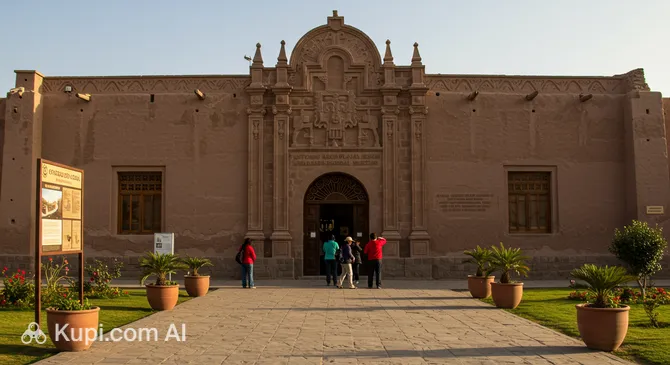
If you want to truly understand the mysteries of ancient desert civilizations, the Antonini Archaeological Museum is the perfect starting point. Located in the city of Nazca, this leading scientific center is dedicated to the heritage of the people who lived here over fifteen hundred years ago. Unlike many other exhibits, this museum offers a systematic look at the culture through hundreds of authentic artifacts.
Antonini Archaeological Museum. Illustration.
Source: Kupi.com AI
Traveler photos:
The museum's six spacious galleries house about 300 priceless exhibits. Here, you can see everything from exquisite ceramics depicting mythical creatures to ancient tools and remarkably preserved textiles. The museum was founded in 1999 to consolidate the discoveries made during Italian archaeological expeditions in Peru.
One of the collection's highlights includes materials brought from Cahuachi—a massive ceremonial center of pyramids. The museum allows guests to see not only everyday items but also touch upon the ritual side of ancient Nazca life, including their complex burial rites and unique system of aqueducts.
Contacts
To clarify visiting details or organize group tours, you can use the museum's official resources. Although email addresses and phone numbers are rarely listed publicly, up-to-date information can always be found on the website.
A journey through the museum halls begins with an introductory room featuring regional maps and photographs of archaeological sites. Be sure to notice the large-scale model of the Nazca geoglyphs: it provides an excellent perspective on how the enormous drawings are integrated into the desert landscape, which is especially helpful if you haven't flown over them yet.
The highlight for many visitors is the gallery of skulls and mummies. These finds vividly demonstrate ancient traditions of cranial deformation and rituals associated with the belief in the afterlife. Additionally, life-size tomb replicas are on display, allowing you to experience the atmosphere of the excavations.
The entrance fee is approximately 15 soles (about 5 USD), making the museum an affordable addition to any tour. After exploring the interior, you can walk through the grounds, where elements of ancient hydraulic systems are presented. This site serves as a perfect link between a flight over the Lines and a trip to the Cahuachi pyramids.
Getting There
The museum is located in the eastern part of the city at Av. La Cultura 600. Finding it is quite easy: the building is within walking distance for those who enjoy long walks, but most tourists prefer to use a local taxi. The ride from the city center takes only a few minutes and is very inexpensive.
If you are arriving in Nazca from Lima (a distance of about 400 km), your journey will likely end at one of the bus stations in the center. From there, the easiest way to reach the museum is by taxi—simply give the driver the address or the museum's name: Museo Antonini. For those renting a car, use the coordinates -14.8254276, -74.9291939 as a guide.
The city is compact enough that many travelers combine a visit to the museum with a stroll through the nearby streets. There is no direct metro or large municipal bus service, as taxis and small minivans (collectivos) remain the primary modes of transport.
Nearest city: Nazca
History & Facts
The ancient civilization that left behind the mysterious lines in the desert flourished on the southern coast of Peru between 100 BC and 750 AD. The Antonini Archaeological Museum became a vital guardian of this heritage, opening its doors in 1999 thanks to the efforts of Italian archaeologist Giuseppe Orefici.
The exhibition is largely based on finds made during excavations at Cahuachi—the largest ceremonial center of the ancient Nazca, consisting of massive adobe pyramids. It was here that scientists discovered unique tools, exceptionally well-preserved textiles, and ritual objects that today allow us to glimpse the daily life and spiritual world of this vanished civilization.
The research of Maria Reiche, who dedicated her life to protecting the geoglyphs, holds a special place in the region's history. The museum continues her legacy, demonstrating how the ancient inhabitants not only created giant drawings but also engineered complex underground aqueducts that still function today. These engineering solutions testify to the high level of cultural development achieved in the arid desert conditions.
Time Needed
To leisurely explore all six galleries and delve into the details of the exhibits, most travelers need about 1.5–2 hours. This is the ideal amount of time to get acquainted with the history of Nazca culture before visiting the geoglyphs themselves or the Cahuachi pyramids.
If you plan to study the information boards in detail or photograph every artifact, your visit may last up to two and a half hours. The museum is compact and well-structured, making it a perfect fit for a busy itinerary even if you have a limited schedule.
Working Hours
The museum welcomes visitors daily, including weekends, which is very convenient for tourists on a tight schedule. The doors of the Antonini Archaeological Museum are open from 9:00 AM to 7:00 PM, Monday through Sunday.
It is recommended to arrive an hour and a half to two hours before closing to see all the exhibits in good light and without rushing. This schedule allows you to easily combine a cultural visit with morning flights over the famous desert lines.
9:00 – 19:00
Nearby
A visit to the museum perfectly complements an introduction to the region, allowing you to link the artifacts on display with real archaeological sites. Several interesting spots are located near the museum, helping you dive deeper into the atmosphere of ancient Nazca.