Support

Museo de la Memoria

About

In the heart of the Peruvian city of Ayacucho lies a unique site—the Museum of Memory (Museo de la Memoria), known by the motto "Lest it happen again." It is the first space in Peru entirely dedicated to preserving the memory of the difficult period of internal conflict from 1980–2000. The museum is housed in the ANFASEP organization building, which is a historical monument in its own right: it previously served as a soup kitchen for children affected by those events.
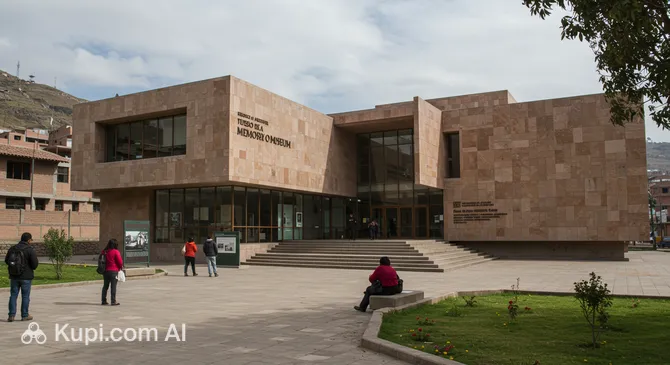
Memory Museum
Memory Museum. Иллюстрация. Источник: Kupi.com AI

The building's exterior immediately draws attention with an expressive graphic mural by Claudio Martínez, which serves as a poignant introduction to the exhibition. The museum was created through the initiative of the families of the deceased and missing with support from international organizations, making it not just an exhibition hall, but a living testament to the struggle for human rights and justice.

Today, it is an important educational center that operates solely through community initiative, receiving no government funding. Visiting the Museum of Memory allows tourists to see Peru from a different perspective—through the lens of personal stories, the resilience of local residents, and their hope for a peaceful future.

Contacts

To contact museum representatives or clarify visit details, you can use the official contact information. Since the ANFASEP organization is a community-led initiative, it is recommended to check for up-to-date information on their official website.

How to contactContact
AddressJirón Libertad 1365, Ayacucho 05003, Peru
Phone+51 66 317170
Websiteanfasep.org

What to Do

Visiting the museum is an immersive journey into history through individual lives. In the first hall, you will learn about the founding of the ANFASEP organization. It houses photographs, newspaper clippings, and most touchingly, personal belongings of missing persons, as well as everyday items from the very community soup kitchen that became a lifeline for many.

The second hall is dedicated to the harsher aspects of the past. It features a detailed reconstruction of an interrogation room with life-sized sculptures, as well as unique ceramics with symbolic imagery created by local artisans. The third space offers a look at the faces of activists and the new generations who continue the work of their mothers.

While on the museum grounds, be sure to visit the Sanctuary of Memory. This quiet spot features a historic cross and the organization's flag—key symbols of their struggle. The opportunity to speak with the museum staff adds special value to the visit: many of them are the very mothers who were at the heart of ANFASEP's creation. Their personal testimonies transform a standard tour into a living dialogue about loss and reconciliation.

Getting There

The museum is located at Jirón Libertad 1365, approximately 1.5 kilometers northwest of the city's central plaza. If you are staying in the historic center, the walk to the site takes about 15–20 minutes, allowing you to better experience the atmosphere of the city's residential neighborhoods.

The most convenient and fastest way to get there is by local taxi. Taxis are the primary mode of transport in the city, and a ride from the main square to the museum doors is quite affordable. Public transport in this area is not as widespread, making taxis the preferred option for tourists.

The city of Ayacucho is located in the highlands at an altitude of approximately 2,700 meters. You can reach the city from other regions by regular bus services or by plane—the local airport accepts flights from Lima. When planning your route, consider the mountainous terrain and allow time for potential acclimatization.

Ближайший город: Ayacucho

History & Facts

The history of this site began not with museum exhibits, but with a struggle for the truth. In 1983, three brave women founded the ANFASEP organization to find their missing sons. Over time, their initiative grew into a powerful movement, bringing together hundreds of families who faced injustice during the period of internal conflict.

Interestingly, the museum building formerly served as a community soup kitchen. Here, mothers fed children left homeless and without parents, turning this place into a symbol of hope and mutual aid. This humanitarian foundation became the base for the future memorial center, which opened its doors to visitors in 2004–2005.

The building's facade itself serves as a historical document—it is decorated with a large-scale mural by the artist Claudio Martínez. The visual narrative on the museum walls prepares visitors for what they will see inside. It is important to note that the museum remains completely independent: it operates without government funding, relying solely on the support of public organizations and private donations.

The museum grounds also house the Sanctuary of Memory. This is a special space featuring photographs and the organization's historic cross, where commemorative events are held. Every detail here, from personal belongings to archival clippings, serves one purpose—to preserve the memory of the past for the sake of a peaceful future.

Time Needed

To thoughtfully explore the exhibits in all three halls and absorb the history of the site, a typical visitor will need at least 1.5–2 hours. The museum's exhibits require emotional engagement, so rushing is not recommended.

If you decide to use a guide's services or wish to speak with the museum staff—many of whom are direct witnesses to the historical events—you should plan for a visit of about 2.5–3 hours. The personal stories of the ANFASEP mothers add a level of depth to the exhibits that is impossible to get simply by reading the information boards.

Working Hours

The museum welcomes visitors on weekdays and Saturdays, with a break in the middle of the day. Please take this schedule into account when planning your itinerary around the city.

Opening Hours:
• Monday – Friday: 09:00 AM – 1:00 PM and 3:00 PM – 6:00 PM;
• Saturday: 09:00 AM – 1:00 PM;
• Sunday: Closed.

DayWorking hours
Понедельник9:00 – 13:00, 3:00 – 18:00
Вторник9:00 – 13:00, 3:00 – 18:00
Среда9:00 – 13:00, 3:00 – 18:00
Четверг9:00 – 13:00, 3:00 – 18:00
Пятница9:00 – 13:00, 3:00 – 18:00
Суббота9:00 – 13:00
ВоскресеньеЗакрыто

Nearby

The area surrounding the Museum of Memory offers travelers the chance to switch to lighter activities or continue exploring the city's architectural heritage. The proximity of the memorial center to parks and historical sites allows for a diverse day-long itinerary.

NameDistance
Ayacucho Prison0.5 km
Hipólito Unanue Museum0.6 km
El Calvario0.9 km
Magia Negra Tavern Trattoria1 km
Toro Wings Peru1.1 km
Ayacucho Cathedral1.2 km
San Cristóbal Cultural Center1.3 km

Reached the end of the page?

That means the route is fully explored