Support

Iligan

About

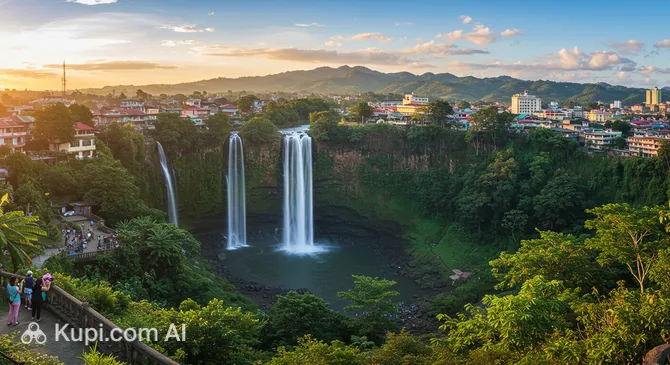
Iligan is a city seemingly created for adventure seekers and lovers of natural beauty. Located on the northern coast of Mindanao island, it is washed by the waters of Iligan Bay. It is here, where majestic mountains meet the sea, that the Philippines reveals itself in all its exotic splendor. Thanks to its unique landscape and an abundance of water cascades in the surrounding area, this place proudly bears the title of “City of Majestic Waterfalls.”

Iligan. Illustration.
Source: Kupi.com AI

Today, more than 360,000 people live in the city, making it a significant industrial and cultural center of the region. The atmosphere here is unique due to the harmonious blend of Muslim, Christian, and indigenous traditions. The rich history of Iligan is reflected in its architecture, vibrant festivals, and daily way of life, where modern urban landscapes coexist with dense tropical forests.

Travelers are drawn here not only by the developed infrastructure with cozy cafes and bustling markets but also by stunning natural parks. The main “calling card” of the area is undoubtedly its picturesque waterfalls, which attract tourists from all over the world. The city offers a striking contrast: here you can feel the energy of a modern center and simultaneously enjoy the slow pace of tropical life.

Iligan is worth visiting to see authentic Philippine exoticism and experience the sincere hospitality of the local people. This destination will give you unforgettable impressions of encountering wild nature and an original culture.

Weather Overview

The climate in this region is typically tropical, mild, and humid, making travel comfortable at almost any time of the year. When planning a trip, keep in mind that the weather in Iligan is notably stable in terms of temperature; however, an umbrella or raincoat is a must-have accessory for a tourist here.

The average air temperature throughout the year fluctuates in a pleasant range from 24°C to 26°C. The warmest month is considered May, when the air warms up to an average of 26.1°C, with maximums reaching 28°C. Even in the “cool” months, such as January and February, the temperature does not drop below a comfortable 22.5°C at night, creating ideal conditions for walking.

Precipitation here is not heavy in volume, but rain occurs frequently. The “driest” month can be called April, which sees the lowest number of rainy days (about 19). At other times, especially from October to January, rain can occur almost daily (up to 29 days a month), although it is often short-lived and refreshing.

Expect consistently warm weather year-round with frequent cloud cover and regular precipitation that maintains the lush greenery of the local forests and the abundance of the waterfalls.

Average monthly temperature

Average monthly precipitation

Interesting Facts

Beyond its main attractions, Iligan holds many fascinating secrets that make it a truly special place on the map. The city surprises travelers not only with its landscapes but also with unexpected facts hidden behind the facade of usual tourist routes.

  • The region’s energy heart. The famous Maria Cristina Falls serves a dual purpose: it is not only a majestic natural monument but also a vital industrial site. The rushing water turns the turbines of a hydroelectric power plant, providing electricity to a large part of the island, making this waterfall a vital resource.

  • The path to hidden beauty. One of the most impressive waterfalls, Tinago, fully justifies its name, which translates as “hidden.” To enjoy swimming in its turquoise lagoon, tourists must navigate a winding descent of nearly 500 steps carved through dense foliage.

  • A festival of unity. The annual Diyandi Festival is a prime example of cultural harmony. The celebration is dedicated to the city's patron, Saint Michael the Archangel, and uniquely unites the traditions of three groups in dances and rituals: Christians, Muslims, and indigenous people (Lumads).

  • Record concentration of cascades. Iligan officially and deservedly bears the title of “City of Majestic Waterfalls.” There are more than 20 waterfalls within its territory and the immediate surroundings, each with its own unique character and legend.

How to Get There

Planning logistics is an important part of any trip. Since there may not be direct flights to the city itself, it is worth researching all available routes in advance. You can find more details on how to get to Iligan on a separate page, and below we will look at the main transport hubs located nearby.

There is no active civilian airport in Iligan itself, so tourists usually fly into neighboring provinces. The most convenient and popular option is Laguindingan International Airport (CGY). It is located in Cagayan de Oro, about 48 km from Iligan. It is a modern and large aviation hub receiving many flights. The journey from there by taxi or bus takes approximately 1 hour and 30 minutes.

Another option is to use Labo Airport (OZC), located in Ozamiz City. The distance to Iligan is about 45 km, but you should take into account the geographical features of the area (the presence of the bay). The journey by land transport takes about 1 hour and 30 minutes. This is a regional airport with moderate passenger traffic, which can be a good alternative when planning your route.

For convenience, here is a summary of the main airports:

AirportPassenger trafficDistance
Labo Airport290 00045 km
Laguindingan International Airport2 mln48 km
Pagadian Airport192 72897 km
Dipolog Airport181 386108 km
Awang Airport295 801118 km

Main Attractions

It is not for nothing that Iligan is called the “City of Majestic Waterfalls”: natural cascades are the main magnet for travelers visiting the Philippines in search of adventure. However, besides the water giants, there are also cozy parks for evening strolls. Here are the places you should definitely include in your itinerary.

Maria Cristina Falls. This is perhaps the most recognizable symbol of the city and one of the most powerful natural attractions in the country. Streams of water plunge from a height of 98 meters, often separated by a rock into two parallel cascades. The waterfall is not only beautiful but also functional — it powers a hydroelectric plant that supplies energy to a significant part of the island. Swimming is prohibited here due to the strong current, but a specially equipped observation deck allows you to safely enjoy the breathtaking view and take impressive photographs.

Tinago Falls. If you are looking for a fairy-tale atmosphere, this place is perfect. The name translates as “hidden,” and the waterfall is indeed tucked away in a deep ravine surrounded by dense vegetation. To reach its cool turquoise lagoon, tourists must descend a winding staircase of about 500 steps. At the bottom, a reward awaits: calm water for swimming and the opportunity to ride a bamboo raft directly under the refreshing sprays.

Mimbalot Falls. The third member of Iligan’s famous “tourist triad.” Unlike Tinago, it is much more accessible and does not require tiring descents. The water here flows over wide rocky ledges, creating picturesque cascades among the trees. The surrounding area is well-equipped for picnics, making Mimbalot an excellent choice for a relaxed family outing after active walks.

Paseo de Santiago. For a change of scenery after natural excursions, head to this popular seaside park. This is the best place in the city to catch the sunset overlooking the bay. The spacious promenade is known for its giant installation of the city's name, which has become a mandatory spot for commemorative photos. In the evening, it becomes especially cozy: numerous cafes open, music plays, and you can try local delicacies in the fresh air.

Local Cuisine

Iligan's culinary scene is an exciting journey through the flavors of Mindanao, where traditions of different cultures blend. The hallmark of local feasts is lechon — a whole pig roasted over an open fire until the skin is crispy and the meat is incredibly juicy. Seafood lovers should definitely order kinilaw — the Filipino version of ceviche, where fresh raw fish is marinated in vinegar with coconut milk, ginger, and chili. Also, don't miss the chance to try piassak — a traditional spicy Maranao dish made of beef with toasted coconut shavings.

Street food here is its own art form, accessible to every tourist. In local markets and small stalls, pastil is very popular — a budget-friendly but delicious dish of rice topped with shredded chicken or fish, neatly wrapped in a banana leaf. For a quick snack, empanadas with various fillings or aromatic seafood skewers grilled right in front of you are excellent choices.

Those with a sweet tooth will remember Iligan for the famous halo-halo dessert, a mixture of crushed ice, condensed milk, jelly, and fruit. Local cafes also feature traditional sweets made from glutinous rice and coconut, prepared according to old recipes. Since the region is rich in fruit, be sure to try fresh mangoes, rambutan, lanzones, and, of course, the “king of fruits” — durian, which is particularly good here.

As for drinks, it is customary to accompany a meal with freshly squeezed juices or fruit shakes. In the evenings, locals often spend time in coffee shops, enjoying the aroma of fresh coffee, which is very popular here. The atmosphere in the establishments is relaxed: tourists can comfortably dine both in restaurants with international cuisine and at bustling food courts, immersing themselves in the city's authentic culinary environment.

Travel Tips

A journey to Iligan promises to be an unforgettable adventure, full of natural discoveries and cultural insights. To make your trip to the “City of Majestic Waterfalls” as comfortable and safe as possible, we have prepared a list of practical recommendations that take local specifics into account.

  1. Clothing and gear. Since the Philippines is a country with a tropical climate, prefer light clothing made of natural breathable fabrics (cotton, linen). For trips to the waterfalls, be sure to take aqua shoes (special rubber footwear) — rocks can be slippery and sharp. A waterproof case for your phone and documents is also essential, as the spray from powerful cascades gets everywhere. Given the mixed culture of the region, it is recommended to dress modestly in the city and public places, avoiding overly revealing outfits.

  2. Transport nuances. There are no subways or trams in Iligan. The main public transport consists of colorful jeepneys (for trips along main streets) and motorelas (a local hybrid of a motorcycle and a carriage) for short distances. Taxi apps here are unstable or non-existent, so it is more reliable to negotiate with drivers on the spot. To travel to remote waterfalls like Tinago, it is most convenient to rent a “habal-habal” (motorcycle taxi) or arrange with a tricycle driver for the whole day.

  3. Financial matters. The official currency is the Philippine Peso (PHP). Cards are accepted in hotels, large supermarkets, and some restaurants in the city center, but outside of it, a cash culture prevails. Be sure to withdraw money from ATMs in the center (look for BPI, BDO, or Metrobank) before heading out into nature. Always carry small bills (20, 50, 100 pesos) to pay for fares and buy water — drivers often lack change for large banknotes.

  4. Health and safety. Iligan is generally a safe and friendly city, but basic precautions are necessary. Do not leave your belongings unattended at beaches and waterfalls. Pharmacies like Mercury Drug or Watsons are widely present in the center and are open late. The tourist's main enemy here is mosquitoes carrying dengue fever, so a quality repellent should always be with you, especially when walking in the forest.

  5. Language and communication. The main language spoken by locals is Cebuano (Bisaya), but almost everyone speaks English fluently. For mobile internet, it is best to buy a SIM card from local operators (Globe or Smart) immediately upon arrival at the airport or in city malls, as Wi-Fi in small hotels can be slow. It is useful to learn the word “Salamat” (thank you) — it always brings a smile to the locals.

  6. Local etiquette. Iligan residents are famous for their hospitality. When communicating, it is customary to smile and stay calm; raising your voice or showing aggression is considered a loss of face and is highly frowned upon. Since a significant Muslim community lives in the city, show respect for religious traditions: ask permission before photographing people and clarify food ingredients if you are treating new acquaintances (many do not eat pork).

  7. What to avoid. Categorically avoid any jokes regarding security, bombs, or weapons — on Mindanao, this is taken very seriously, and such a joke can lead to problems with the police. It is also strongly recommended not to drink tap water; use only bottled water even for brushing your teeth to avoid stomach upsets.

  8. A signature souvenir. While in Iligan, don't miss the chance to buy the famous local delicacy — Cheding's Peanuts. This is the city's cult brand, and the roasted nuts (especially the spicy ones) will make an excellent and inexpensive gift for friends. The factory shop is located right in the city, where the products are always fresh.

By following these simple tips, you can avoid minor troubles and fully immerse yourself in the atmosphere of this amazing city. Iligan is open to those who respect its traditions and are ready to admire its natural beauty!

Entertainment & Nightlife

Nightlife in Iligan is not like the noisy raves of major metropolises; it has a more soulful and relaxed atmosphere. Evening entertainment in the city is closely tied to live music, delicious food, and socializing. Local residents are very musical, so acoustic bands perform in almost every popular venue in the evenings, playing both international hits and favorite Original Pilipino Music (OPM) ballads. This is an ideal place for those who want to immerse themselves in an authentic environment and spend time without unnecessary pretension.

The epicenter of nightly activity is considered to be the Pala-o district and the area around Quezon Avenue Extension. This is where most bars, restaurants, and karaoke clubs are concentrated. One of the most famous places for evening leisure is The Strip. This is an entertainment complex housing several bars and restaurants under one roof. You can find everything here: from noisy sports bars with billiards to cozy lounges serving ice-cold beer and the famous Filipino snacks known as “pulutan.”

If you prefer outdoor relaxation with a sea view, be sure to return to Paseo de Santiago in the evening. As the sun sets, this park is transformed: the lights come on, numerous street food and barbecue stalls open, and musical performances begin on stage. It’s a great place to feel the rhythm of the city while sitting at a table by the water with a group of friends. The crowd here is very diverse — from students to families — and the dress code is completely relaxed: shorts and T-shirts are perfectly appropriate.

An integral part of Filipino nocturnal culture is karaoke, or KTV. There are many KTV bars in Iligan where you can rent a private room and sing your heart out without feeling self-conscious. Entertainment prices in the city are very reasonable: the average check for dinner with drinks will be significantly lower than in Manila or Cebu. Most establishments are open until 1–2 AM, and on weekends the fun can last even longer.

Regarding safety, Iligan is a friendly city, and in busy areas like Pala-o, tourists feel comfortable. However, as elsewhere, it is worth exercising reasonable caution: do not walk alone in dark alleys and keep an eye on your belongings. For traveling at night, it is best to use tricycles. Note that it becomes harder to catch transport after midnight, so it is better to arrange things with a driver in advance or ask the venue staff to call a taxi for you.

The daytime cultural program in the city is calmer but no less interesting. If you want a break from nature excursions, visit the Macaraeg-Macapagal Ancestral House. This historical building, where the families of two Philippine presidents lived, is filled with antiques and tells the story of the country's political history. It is also pleasant to stroll through the City Plaza, where you can observe the daily life of the citizens in the shade of the trees.

Parks & Museums

While Iligan is primarily famous for its natural waterfalls, the urban environment also offers travelers cozy green oases and important historical locations. Strolling through local parks and visiting cultural sites will allow you to deeper understand the soul of this region, where history and modernity are harmoniously intertwined, and busy streets give way to the silence of shaded alleys.

City Public Plaza is the heart of Iligan's social life and a great place to feel the city's rhythm. Located right in the center, this park is a popular meeting spot for locals of all ages. Here you can relax on benches in the shade of sprawling trees, observing the daily life of the citizens. A monument to the national hero Jose Rizal stands in the center of the plaza, and in the evenings, the area often becomes a venue for impromptu concerts and dance group practices.

Centennial Park in the Dalipuga district is another significant green zone located along the shoreline. This place attracts those seeking solitude and a fresh sea breeze away from the city bustle. The park is perfect for leisurely sunset walks or morning jogs. The spacious area and views of the bay make it an ideal location for picnics and family vacations, allowing you to enjoy the beauty of Philippine nature without traveling far from the city limits.

Among cultural institutions, the Macaraeg-Macapagal Ancestral House holds a special place. This building is unique in that it is the only house in the Philippines where two of the country's presidents — Diosdado Macapagal and his daughter Gloria Macapagal-Arroyo — resided. The museum is a beautifully preserved example of mid-20th-century architecture. Inside, visitors can see the family's personal belongings, antique furniture, photographs, and mementos. An excursion here is an immersion into the country's political history through the lens of one prominent family's domestic life.

History and architecture enthusiasts should take note of the St. Michael the Archangel Cathedral. Located in the city center, this church is not only the spiritual center of the Catholic community but also an important architectural monument. The building has been rebuilt and expanded several times, reflecting the city's stages of development. The stained glass windows and the statue of the city's patron, St. Michael, which plays a central role in the annual Diyandi Festival, are of particular interest.

If you are looking for a unique experience, we recommend visiting the Timoga Cold Springs. While not a museum or a classic park, it is an iconic leisure spot for Iliganons that deserves attention. The pool complex is filled with crystal-clear, icy water coming directly from underground mountain sources. This is an authentic alternative to a beach vacation, where you can not only cool off on a hot day but also socialize with locals in a casual setting.

Getting Around

Iligan's transport system differs significantly from the usual European one: here you won't find subways, trams, or strict schedules at stops. Moving around the city is a separate attraction that allows you to dive into the local flavor. City traffic is chaotic but intuitively understandable, and the variety of vehicles ranges from classic cars to horse-drawn carriages.

The primary way to move along the main streets remains the legendary jeepneys. These elongated, brightly painted vehicles run on fixed routes, which are usually written on the sides of the body. This is the most budget-friendly way to get from the center to the outskirts or neighboring districts. There are no stops as such: to get on, you just wave your hand to the driver, and to get off, you tap a coin on the handrail or loudly say “Lugar lang,” which means a request to stop.

For short-distance trips within residential blocks, motorelas and tricycles are used. The motorela is a unique type of transport specific to Northern Mindanao: a hybrid of a motorcycle and a small jeepney, accommodating about 8–10 passengers. Tricycles are smaller and designed for 2–4 people. This is the ideal option if you need to go “door to door” where larger jeepneys do not venture.

Special mention goes to tartanillas — horse-drawn carriages. In Iligan, they are still used as full-fledged public transport, especially in the area of Badelles and Aguinaldo streets. While locals use them for trips to the market, for a tourist, it is a great opportunity to take an inexpensive and romantic ride through the historic center, feeling the atmosphere of the past.

If your goal is the famous waterfalls located in the mountains (such as Tinago or Maria Cristina), regular city transport does not go there. In this case, you will need a habal-habal — a motorcycle taxi. Drivers of these motorcycles wait at intersections and bus stations. Since this is private transport, you must negotiate the price in advance and firmly. For a comfortable group trip, you can rent an entire jeepney for the whole day.

The payment system in Iligan's public transport is exclusively cash. Transport cards, contactless payments, or mobile apps for buying bus tickets do not work here. Payment is passed to the driver (or conductor, if there is one) right during the ride in a chain through other passengers. The fare is fixed for short distances and increases depending on the mileage.

There are taxis in the city, but they are significantly fewer than in major metropolises. Taxi apps (like Grab) here may work intermittently or offer a limited number of cars, so you shouldn't rely solely on your smartphone. If you take a taxi on the street, be sure to watch that the driver turns on the meter, or agree on a fixed amount in advance if the trip is long.

Practical tips for the tourist:

Always have small coins and bills (20, 50, 100 pesos) with you. Jeepney and tricycle drivers often don't have change for 500 or 1000 pesos. Transport starts running very early, around 5–6 AM, but after 9:00 PM, activity drops sharply, and catching a vehicle becomes difficult. If you plan a late dinner, think about your return path in advance or arrange with a tricycle driver to pick you up.
Accommodation

The hotel sector in Iligan is oriented more toward practicality and home comfort than premium luxury. You are unlikely to find massive international chain complexes here; however, the city offers a decent choice of accommodation for any budget. The core of the room stock consists of budget pension houses, comfortable business-class hotels, and small suburban resorts offering poolside relaxation.

When choosing a location, you should start from your plans. The city center (Poblacion) is ideal for those planning to actively use public transport. From here, it is easiest to get to the waterfalls, and shopping centers and markets are within walking distance. The Pala-o area is suitable for tourists who want to be closer to nightlife, restaurants, and cafes. If you are looking for peace and a resort atmosphere, look for hotels in the Timoga springs area or along the coast in Dalipuga.

Booking tip: While finding a free room is usually easy, the situation changes drastically in September. This month hosts the city's main holiday — the Diyandi Festival. During this period, the city is packed with guests, so you should take care of accommodation several months before the trip.

The price range in Iligan is very democratic: most offers fall into the budget and mid-range segments. Larger hotels are available for booking through popular international online platforms. However, many small guesthouses and inns still operate through direct contacts on social media. Be prepared for the fact that budget places may only accept cash payments.

Nearby Cities

For those who want to explore the surrounding area, Iligan serves as an excellent starting point for day trips to several interesting nearby locations:

Just 25 kilometers to the south lies Marawi — the only “Islamic City” in the Philippines. It sits on the shores of the picturesque Lake Lanao, which is considered one of the oldest in the world. Thanks to its elevated location, it enjoys a pleasant cool climate that differs from the coastal heat. Tourists are drawn here by the opportunity to learn about the unique Maranao culture, see majestic mosques, and enjoy panoramic views of the lake.

Nature lovers should head to Initao, located about a thirty-minute drive along the coast. The main gem of this place is the Initao-Libertad Protected Landscape and Seascape. This is a wonderful area where dense tropical forest meets the sea. Here you can walk along eco-trails, explore limestone caves, and relax on beaches with coral reefs perfect for snorkeling.

CityPopulationDistance
Linamon21 26912 km
Lugait20 55914 km
Matungao14 75615 km
Pantar26 59917 km
Kauswagan24 19318 km

These nearby destinations provide an insight into the diverse culture and landscapes of the region.

Shopping & Souvenirs

Shopping in Iligan is less about chasing global brands and more about the opportunity to touch the daily lives of local residents and find unique regional goods. The city offers a balanced mix of modern air-conditioned shopping malls and colorful street markets. You can buy everything here: from essential clothing and electronics to rare fruits and handicrafts typical of Mindanao island.

The heart of commercial life is considered the City Center (Poblacion). The streets adjacent to Quezon Avenue are particularly busy. This is the main shopping artery, with numerous clothing stores, pharmacies, banks, and souvenir shops located on the ground floors of the buildings. Walking through this area allows you to find many small boutiques with affordable prices and feel the true rhythm of the city.

For those who prefer comfort and a familiar shopping format, major shopping centers operate in Iligan. The most popular are Robinsons Place Iligan and Gaisano City Mall. These are modern complexes featuring both Filipino and international mass-market brands. They also house large supermarkets, food courts, and cinemas. These are great places to hide from the midday heat and buy things needed for your trip.

To get a real taste of the region, you should head to the markets. The main one is the Pala-o Market. People come here for the freshest tropical fruits: this is the best place to buy durian, lanzones, mangosteen, and marang at the best prices. Also popular in the city are “ukay-ukay” (second-hand) shops, where among piles of clothes, you can find excellent quality vintage items for pennies.

The question of souvenirs in Iligan is solved simply and tastily. The city's main brand is Cheding’s Peanuts. They are sold in their flagship store and supermarkets; take several packs at once, as they are the best gift for friends. Another gastronomic hit is Pinakurat spicy vinegar, made from fermented coconut sap with added spices. For non-edible souvenirs, look for the malong — a traditional multi-colored fabric of the region that can be used as clothing, a throw, or an interior decoration.

Most shops in shopping centers are open from 10:00 AM to 9:00 PM daily. Markets open much earlier, at sunrise, and work until evening. Regarding payment, credit cards are accepted without problems in large malls and supermarkets. However, for visiting markets, souvenir shops, and small stores in the center, you must have cash pesos, preferably in small denominations, as change for large bills is not always available.

Regarding the Tax Free system: although the Philippines is introducing a VAT refund program for tourists, using it in Iligan will be problematic. This system mainly works in large stores in Manila and Cebu. Therefore, you should not count on a tax refund when shopping in local stores, but the low prices for goods more than compensate for this nuance.

Nearby cities

Reached the end of the page?

That means the route is fully explored