Support

Manaoag

About

Manaoag is a cozy and welcoming town located on the island of Luzon in the northern part of the Philippines. It is famous for its unique atmosphere, where deep religious traditions, a rich cultural heritage, and picturesque nature harmoniously blend, making it an attractive destination for many travelers.
Manaoag. Illustration.
Source: Kupi.com AI

The town is situated in the province of Pangasinan, surrounded by fertile plains and idyllic rural landscapes, just a few hours' drive from Manila. With a population of about 76,000, Manaoag offers its guests a slow pace of life, far from the hustle and bustle of major metropolises. Local residents are known for their warmth and hospitality, making a stay here particularly pleasant and memorable.

The crown jewel and heart of Manaoag is the nation-famous Minor Basilica of Our Lady of Manaoag. This site attracts thousands of pilgrims annually, serving as one of the most important centers of spiritual life in the Philippines. Beyond its religious significance, the basilica is also an impressive architectural landmark.

However, Manaoag is not just for pilgrims. The town charms visitors with its tranquility, authentic Filipino culture, and amazing atmosphere. Here, you can enjoy the beauty of local landscapes and get to know the traditional way of life. Come to Manaoag to discover this corner of peace, spirituality, and sincere hospitality!

You can find more interesting facts on the Manaoag city history page.
Weather Overview

The weather in Manaoag is characterized by a warm and humid tropical environment throughout the year. The average annual air temperature fluctuates only slightly, remaining comfortable for visiting in any season. Expect a warm climate with a distinct dry season from January to April, when rainfall is minimal, and a wet season from May to October, when rain is more frequent and intense, especially in July and August.

Average monthly temperatures range from 25.7°C in January (minimum around 22.8°C, maximum up to 28.6°C) to 29.0°C in May (minimum around 26.0°C, maximum up to 32.0°C). The highest rainfall occurs in July and August (about 15 mm), accompanied by approximately 29-30 rainy days per month. The driest months are January, February, and March, with minimal rainfall (1 mm) and only 5-8 rainy days. For more detailed information, you can explore the Manaoag climate.

Average monthly temperature

Average monthly precipitation

Interesting Facts

Beyond its famous shrines, Manaoag holds many amazing stories and traditions that make it a truly special place for pilgrims and curious travelers alike. Here are just a few interesting facts about this unique Filipino town:

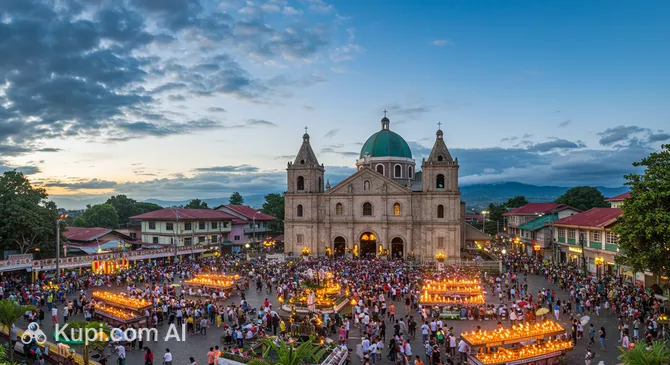
Minor Basilica of Our Lady of the Rosary of Manaoag. Illustration.
Source: Kupi.com AI

Traveler photos:

  • According to legend, the very site for the construction of the town's main shrine, the Minor Basilica of Our Lady of the Rosary, was pointed out by the Virgin Mary herself, who appeared to a local farmer in the early 17th century. This vision marked the beginning of Manaoag's history as one of the most important pilgrimage centers in the Philippines.

  • Manaoag houses a revered statue of the Virgin and Child, which is attributed with numerous miracles and healings. This relic, known as Our Lady of Manaoag, attracts believers from across the country and abroad who hope for her intercession.

  • The town is known not only for its spiritual significance but also for its unique local crafts. Intricately hand-crafted candles are especially popular; they are believed to gain special power if lit in the Manaoag Basilica.

  • Due to its historical and cultural importance, the Minor Basilica of Our Lady of the Rosary has been officially recognized as a National Cultural Treasure of the Philippines, highlighting its role not only in the religious but also in the secular life of the country.

How to Get There

You can reach this important pilgrimage center in various ways, although direct air access is unavailable. The town is located on the island of Luzon and has good road connections with the country's key transport hubs. You can find all the ways to get to the city on a dedicated page, and below we will look at the main options via the nearest airports.

There is no airport in the town of Manaoag itself, so travelers usually fly into one of the major aviation hubs on Luzon. The most convenient option in terms of distance is Clark International Airport (CRK), located in Angeles City, approximately 96 km from Manaoag. A trip from there by taxi or bus takes about 2–2.5 hours. Another popular but more distant option is the main capital hub, Ninoy Aquino International Airport (MNL) in Manila (about 180 km). The journey from Manila to Manaoag can take 4 to 5 hours depending on traffic, which can be quite heavy in the capital region.

For your convenience, here is a summary of the main airports through which you can plan your route:

AirportPassenger trafficDistance
Clark International Airport2.4 mln96 km
Cauayan Airport66 415166 km
Vigan Mindoro Airport167 km
Ninoy Aquino International Airport50.1 mln180 km
Tuguegarao Airport225 961221 km

There is no direct rail connection to Manaoag, so buses and cars remain the primary land transport. Comfortable buses from companies like Victory Liner or Five Star regularly depart from Manila (terminals in the Cubao or Pasay districts) heading to Pangasinan province. Many pilgrims and tourists choose routes to the city of Dagupan, from where Manaoag can be quickly reached by jeepney or tricycle (about 30–40 minutes).

Main Attractions

Manaoag, located in the province of Pangasinan, attracts many visitors, primarily due to its spiritual shrines. While the town has other interesting places to offer, its main fame is tied to religious pilgrimage.

One of the key and most revered attractions not only in Manaoag but in the entire Philippines is the Minor Basilica of Our Lady of the Rosary of Manaoag. This majestic temple is famous for its miraculous icon of Our Lady of the Holy Rosary, which is credited with numerous healings and miracles. Pilgrims from all over the country and abroad come here to pray, ask for intercession, or express gratitude. The architecture of the basilica is also impressive, and its history spans several centuries, making it an important cultural and historical site.

Minor Basilica of Our Lady of the Rosary of Manaoag. Illustration.
Source: Kupi.com AI

Traveler photos:

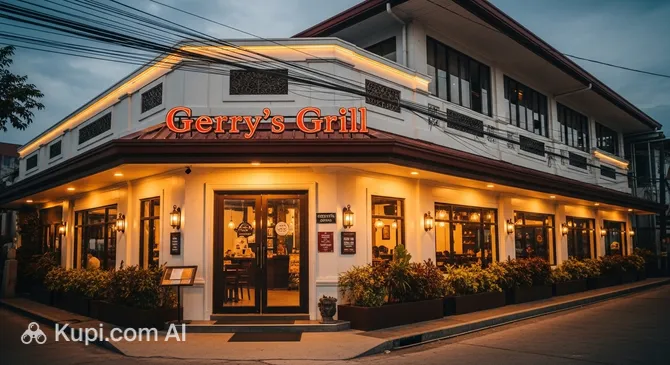
In addition to spiritual sites, Manaoag offers pleasant establishments for relaxation and dining. For example, Gerry's Grill is a popular restaurant where you can taste Filipino and international cuisine. It is a great place to grab a bite after visiting the basilica or simply to spend time in a cozy atmosphere enjoying delicious food.

Gerry's Grill. Illustration.
Source: Kupi.com AI

Traveler photos:

Local Cuisine

The gastronomic scene in Manaoag is a true discovery for connoisseurs of authentic Filipino cuisine. The town is famous for dishes prepared with the freshest local ingredients, many of which are grown on surrounding farms. A trip here will offer not only spiritual peace but also unforgettable flavor experiences.

Among the dishes that are a must-try in Manaoag, local desserts and snacks stand out. Be sure to taste “Puto Calasiao”—delicate rice cakes that pair perfectly with a cup of aromatic local coffee or hot chocolate. Another iconic treat is “tupig”, a sweet rice dessert wrapped in banana leaves and grilled over charcoal. This is an excellent option for a quick snack while walking. Lovers of hearty meals will enjoy traditional Filipino meat specialties such as “adobo” (meat stewed in vinegar and soy sauce) and “lechon manok” (roasted chicken), as well as fresh seafood, which is abundant in local markets. Don't forget to enjoy seasonal fruits like juicy mangoes, papayas, and sweet bananas, which are plentiful on local stalls.

The main drinks accompanying a meal or serving to quench thirst are freshly brewed local coffee and rich hot chocolate. Locals and tourists often enjoy their food at bustling street markets, where many authentic dishes can be found, or in small family-run cafes. For a more substantial dinner, you can visit one of the restaurants, such as Gerry's Grill, which offers a wide selection of Filipino dishes in a cozy setting.

The food culture in Manaoag is closely intertwined with community life. Food festivals and fairs are regularly held here, where you can not only try the full variety of local cuisine but also chat with residents and learn the secrets of traditional recipes. These events turn food into a real cultural celebration, bringing guests and locals together at one table and highlighting the hospitable and warm nature of the town's culinary scene.

Travel Tips

Planning a trip to Manaoag, the spiritual heart of Pangasinan province? To ensure your journey goes smoothly and leaves only pleasant impressions, we have prepared some practical tips to help you navigate this unique place.

  1. Clothing and Essentials: Given the tropical climate of the Philippines, choose light, breathable clothing made from natural fabrics (cotton, linen). Don't forget sunscreen, a hat, and sunglasses. Since the main attraction of Manaoag is the Basilica of Our Lady of Manaoag, be sure to bring modest clothing for your visit (shoulders and knees should be covered). Comfortable walking shoes are also essential. Electrical outlets here are type A, B, and C, with a voltage of 220V, so you may need a universal adapter.
  2. Transportation in Manaoag: The primary modes of transport in Manaoag and its surroundings are tricycles (motorcycles with a passenger sidecar) for short trips around town and jeepneys or buses for longer routes, such as to neighboring cities. Taxis in the traditional sense may be scarce, but arranging a ride with a tricycle driver is usually straightforward. Car rental is not necessary for getting around the town itself.
  3. Financial Matters: The local currency is the Philippine Peso (PHP). It is recommended to exchange a small amount of money upon arrival at the airport or at banks in larger cities before traveling to Manaoag. Exchange offices in the town itself may be limited. Credit cards are accepted mainly in large hotels and some restaurants, but cash is preferred for small shops, markets, and paying for transport. ATMs are available, but it's better to have a reserve of cash. An approximate daily budget might be 1500-2500 PHP (excluding accommodation), depending on your plans. Tipping is not strictly mandatory but is always welcome for good service (usually 5-10% in restaurants).
  4. Health and Safety: There are pharmacies (botika) in Manaoag where you can buy basic medications, but for specific medicines, it's better to bring your own supply. 24-hour pharmacies may not be available. For serious medical assistance, you may need to go to clinics or hospitals in larger cities in Pangasinan province. Manaoag is generally considered a safe place, especially around the Basilica, where there are always many pilgrims and police. Nevertheless, always follow general precautions: watch your belongings, especially in crowded places, and avoid walking in poorly lit areas after dark.
  5. Language and Communication: The official languages of the Philippines are Filipino (based on Tagalog) and English. In Manaoag, as in many parts of the country, English is quite widely spoken, especially among young people and in the tourism sector, so communication shouldn't be an issue. Knowing a few phrases in Tagalog, such as "Salamat po" (Thank you, polite) or "Magandang umaga/hapon/gabi po" (Good morning/afternoon/evening, polite), will be appreciated by locals. SIM cards from local operators (Globe, Smart) can be purchased at airports or shops nationwide; this is a good option for affordable mobile internet. Wi-Fi is available in most hotels and some cafes.
  6. Local Etiquette and Interaction: Filipinos are very hospitable and friendly. Greeting people with a smile and a polite nod is common. The terms "po" and "opo" (polite particles added to the end of sentences) are used when speaking to elders or respected individuals. Avoid public displays of anger or raising your voice, as this is considered extremely impolite ("nakakahiya" - shameful). When visiting local homes, it is customary to remove your shoes before entering.
  7. What to Avoid: Do not take photos of people without their permission, especially during religious rites or inside the church during mass. Also, try not to criticize local customs or food, even if they seem unusual to you. Showing respect for the local culture is key to an enjoyable trip.
  8. Special Tip for Manaoag: Manaoag is primarily a place of pilgrimage. If your trip coincides with major religious holidays (e.g., Holy Week, Christmas, or festivals dedicated to the Virgin Mary in May and October), be prepared for huge crowds of pilgrims. During these times, transport and accommodation may be overcrowded and prices higher. On the other hand, it is a unique opportunity to see local traditions in all their glory. Near the Basilica, there is a market where you can buy local delicacies, such as "tupig" (a sweet rice cake grilled in banana leaves), and religious souvenirs.

We hope these tips help you better prepare for your trip to Manaoag and enjoy its unique spiritual atmosphere and the hospitality of the local people. We wish you an unforgettable pilgrimage or simply an interesting journey!

Entertainment & Nightlife

In the evening, Manaoag offers its own more tranquil and authentic pace compared to the major tourist centers of the Philippines. Although the town is primarily known as a pilgrimage site, there are options for a pleasant pastime after sunset, especially if you are looking for a relaxing atmosphere and a chance to experience local life.

The main focus of evening entertainment in Manaoag is centered around restaurants where you can enjoy a nice dinner and small local venues. One such place to spend the evening is Gerry's Grill, which serves Filipino dishes. As for bars and clubs, the selection may be limited compared to major cities. However, you can find small local bars or the karaoke bars (videoke) popular in the Philippines, where both locals and visitors enjoy spending their time. Night markets and large concert venues are not typical for Manaoag, but local events with live music are sometimes held.

The nightlife atmosphere in Manaoag is generally laid-back and friendly. Establishments usually do not require a strict dress code—casual, comfortable clothing is perfectly appropriate. Most activity is not concentrated in specific "nightlife districts" but is instead scattered along the main streets or near the market square. The best time to visit restaurants is early evening, while smaller bars may stay open until late at night, though not always into the early morning hours.

In terms of practical advice, average prices in Manaoag's establishments are generally more affordable than in large tourist cities. Local tricycles can be used for getting around the town in the evening. It is recommended to agree on the fare in advance, especially if you plan to return late. Regarding safety, Manaoag is generally considered a peaceful town. Nevertheless, it is always wise to follow standard precautions: avoid poorly lit and deserted areas late at night and keep an eye on your belongings. You can usually hail a taxi (or tricycle) on the main streets or ask your hotel or restaurant staff to assist you.

During the day, Manaoag offers a completely different experience. The main point of attraction is undoubtedly the Minor Basilica of Our Lady of the Rosary of Manaoag, where pilgrims from across the country gather. You can also stroll through local shops and markets to experience the daily life of the town. There are few museums or large amusement parks in Manaoag; the focus is on the spiritual and cultural components related to its religious significance.

Parks & Museums

Manaoag, known primarily as a pilgrimage center, offers visitors a unique experience where spiritual heritage and cultural attractions intertwine, presenting the concept of urban parks and museums in a slightly different way.

While you won't find extensive city parks in the traditional sense in Manaoag, the area around the town's main shrine, the Minor Basilica of Our Lady of the Rosary of Manaoag, is often well-maintained and offers visitors a space for reflection and quiet rest. This zone is in itself a kind of spiritual oasis where one can find peace away from the city's bustle. For many tourists, this atmosphere serves as the town's primary "green zone."

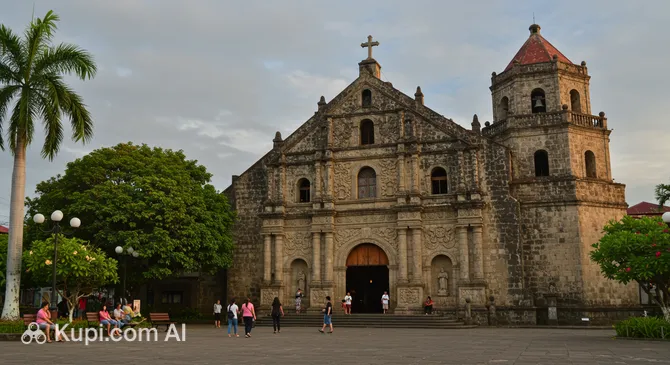
Minor Basilica of Our Lady of the Rosary of Manaoag. Illustration.
Source: Kupi.com AI

Traveler photos:

Regarding museums, it is important to note that the cultural and historical heritage of Manaoag is deeply concentrated around its main religious landmark. The Minor Basilica of Our Lady of the Rosary of Manaoag itself functions as a living museum, preserving history, religious art, and artifacts. Inside the basilica and on its grounds, pilgrims and tourists can see significant icons, sculptures, and architectural elements that tell the story of the rich spiritual journey of this place. While there may not be specialized museums dedicated to secular history or art in a broad sense, the basilica more than compensates for this with its cultural and historical significance.

The key historical and architectural site is undoubtedly the majestic Minor Basilica of Our Lady of the Rosary of Manaoag. It is not just a place of worship but also an impressive architectural monument that attracts thousands of visitors with its beauty, scale, and deep spiritual atmosphere. Its facades, interior decoration, and construction history are of significant interest to anyone who appreciates religious art and architecture.

For a more authentic Manaoag experience, do not limit yourself only to the basilica grounds. Stroll through the adjacent streets, which are home to numerous shops selling religious items, local delicacies, and souvenirs. This will give you the chance to observe the daily life of a town that lives in close connection with its main sanctuary.

Getting Around

Public transport in Manaoag consists mainly of traditional Philippine modes of transport, providing movement within the town and connections to neighboring settlements. The foundation of the transport system is made up of jeepneys and tricycles (motorcycle taxis with a sidecar). Jeepneys run on more or less fixed routes, connecting different parts of the town and nearby areas, while tricycles offer more flexible "door-to-door" trips and are the most common way to travel short distances.

The fare payment system in Manaoag is predominantly cash-based. In jeepneys, payment is made directly to the driver or conductor; the cost depends on the distance. In tricycles, it is customary to agree on the fare with the driver before boarding, especially if you are traveling a non-standard route or hiring them for a specific time. Specialized travel cards or mobile apps for paying for public transport are generally not available in small towns. Fares are usually low, making these modes of transport accessible to everyone.

Tourists planning to use public transport in Manaoag should keep a few things in mind. Jeepneys can be hailed with a wave of the hand almost anywhere along their route, and tricycles often wait for passengers at markets, churches, and other crowded places. Public transport usually operates most intensely during the daytime, from early morning until evening. At night, the number of trips may be limited, and tricycles become the primary available option.

As an alternative to public transport in Manaoag, you can consider hiring a private car with a driver for longer trips or excursions around the area, which can be arranged locally. Traditional taxi services may not be as widespread as in large cities, but tricycles often fulfill this function for longer distances or individual requests. The availability of ride-hailing apps (such as Grab) should be checked upon arrival, as their availability can vary. Organized bicycle rental is unlikely, but for short rides, you might find private offers.

Accommodation

When planning a trip to Manaoag, you will find various accommodation options to suit different preferences and budgets. The town, known primarily as a pilgrimage center, offers housing geared toward both pilgrims and regular tourists.

In Manaoag, options range from budget guesthouses and pensions to small mid-range hotels. Luxury resorts are generally scarce here, as the town's primary focus is spiritual tourism. Many travelers prefer to stay in the immediate vicinity of the town's main shrine—the Minor Basilica of Our Lady of the Rosary of Manaoag, which provides easy access to the church and its surrounding infrastructure.

Minor Basilica of Our Lady of the Rosary of Manaoag. Illustration.
Source: Kupi.com AI

Traveler photos:

While specific hotel examples are not provided in the data, decent lodging options can be found in and around the town. It is recommended to search for accommodation on popular online booking platforms to check reviews and current prices. Small private inns and rooms for rent are also available, which can offer a more authentic experience.

Regarding price range, budget and mid-level options predominate in Manaoag. It is recommended to book accommodation in advance, especially if your trip coincides with major religious holidays or weekends when the flow of pilgrims increases significantly. In addition to online services, it is sometimes possible to book directly by contacting the administration of the guesthouse or hotel.

Nearby Cities

For those looking to explore the surrounding area, Manaoag serves as an excellent starting point for day trips to several interesting nearby locations:

The city of Dagupan, known as the "Bangus (Milkfish) Capital of the Philippines," offers unique gastronomic experiences. Here, you can taste the freshest seafood and the famous local delicacy—grilled bangus. Additionally, Dagupan is a bustling urban center with shopping streets and a waterfront that is pleasant for walking.

A trip to Urdaneta will introduce you to an important commercial hub in the province of Pangasinan. The city is famous for its large market, particularly known for livestock trading, as well as a variety of local goods and produce. It is a great place to immerse yourself in the atmosphere of local commerce and perhaps purchase authentic souvenirs.

CityPopulationDistance
Mapandan38 0585 km
Laoac34 1285 km
San Jacinto44 3516 km
Pozorrubio74 7299 km
Mangaldan113 18510 km

These nearby destinations provide insight into the diverse culture and landscapes of the region. Planning a day trip will allow you to better get to know Pangasinan province and its surroundings.

Shopping & Souvenirs

Shopping in Manaoag has its own distinct character, closely linked to its status as a major pilgrimage center in the Philippines. The town is not known for large shopping malls or designer boutiques; however, you can find unique items that reflect local culture and religious traditions. The main focus is on souvenirs, religious items, and local delicacies.

The main "shopping district," so to speak, is the area around the Minor Basilica of Our Lady of the Rosary of Manaoag. On the surrounding streets and squares, there are many small shops and street stalls offering a wide range of goods for pilgrims and tourists. You can spend quite some time here choosing mementos and gifts.

Regarding shopping centers, you are unlikely to find large modern malls typical of big cities in Manaoag. Shopping here is more intimate and focused on small private stores and stalls. However, there may be small local commercial buildings in the town that house shops with basic necessities and some other categories of goods.

An important part of Manaoag's trade life is the local markets. Usually, Philippine towns have a public market (palengke) where fresh produce, meat, fish, and local delicacies are sold. Additionally, the numerous kiosks and stalls around the church can also be considered a kind of market specializing in religious goods and souvenirs.

From Manaoag, it is worth bringing back souvenirs related to its religious significance. These may include rosaries, icons, figurines of Our Lady of Manaoag, prayer books, and other religious items. Local sweets are also popular, such as "tupig" (a sweet rice cake grilled in banana leaves) or "puto" (rice cakes). You can sometimes find products made by local artisans, such as woven baskets or household items.

Shops and stalls in Manaoag, especially those located near the church, are usually open daily, including weekends and holidays, to serve the flow of pilgrims. Operating hours may vary, but peak activity occurs during the daytime. As for payment methods, cash (Philippine pesos) is preferred in small shops and markets. In larger stores, if available, bank cards may be accepted.

The possibility of Tax Free shopping (VAT refund) for tourists in Manaoag is unlikely, as this system usually operates in major international airports and large shopping centers geared toward foreign tourists. To clarify information, you should ask directly in the stores, but do not rely on it heavily.

Nearby cities

Reached the end of the page?

That means the route is fully explored