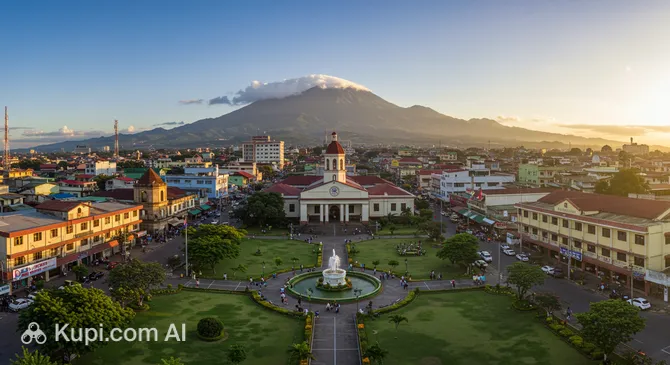
Tarlac City is the vibrant heart of the province of the same name in the Philippines, located in the Central Luzon region. The city has rightfully earned its reputation as a "melting pot" of cultures: ethnic groups of Kapampangans, Pangasinans, and Ilocanos live here in harmony, creating a unique social flavor. With a population of about 400,000, the city serves as a key administrative and commercial hub while maintaining a cozy provincial atmosphere, free from the capital's hustle and bustle.
Tarlac City. Illustration.
Source: Kupi.com AI
Geographically, the city stretches across picturesque plains crossed by the Tarlac River. It is primarily an agricultural center, surrounded by endless fields of rice, corn, and sugarcane, which defines not only the economy but also the gastronomic character of the region. In the city's rich historical heritage, traces of Spanish colonialism, the indigenous Aeta tribes, and post-war reconstruction are intertwined, turning Tarlac City into a modern, well-developed metropolis.
For the traveler, Tarlac City is interesting primarily for its contrasts: from the majestic San Sebastian Cathedral and the monumental Capitol to modern industrial parks like Luisita. The city invites you to immerse yourself in the authentic life of a Philippine province, enjoy local hospitality, and discover a unique blend of traditions in the very heart of Luzon island.
Weather Overview
Tarlac City is located in a tropical climate zone typical of Central Luzon. Two distinct seasons are observed here: dry and wet. The hottest months occur between March and May, when temperatures can reach +35°C to +37°C. Humidity also increases during this time, so it is better to plan walks for the early morning or evening hours.
The wet season begins in June and lasts until November, bringing heavy monsoon rains. Peak rainfall often occurs in July and August. It should be noted that the city is located on a plain, and short-term flooding near the Tarlac River is possible during strong typhoons. The average annual temperature stays in a comfortable range of +26°C to +28°C, allowing you to visit the region at any time of year.
To plan the most comfortable vacation, we recommend studying the city's climate in detail beforehand. The most pleasant time for a visit is considered to be from December to February, when dry and moderately warm weather sets in with cool evenings. During this period, the minimum temperature can drop to +21°C, creating ideal conditions for excursions and outdoor activities.
Average monthly temperature
Average monthly precipitation
Interesting Facts
Tarlac City was officially founded on May 28, 1873, when lands previously belonging to four different provinces—Pangasinan, Pampanga, Nueva Ecija, and Zambales—were merged into a single municipality.
The city is home to the massive Luisita Industrial Park, which plays a key role in the regional economy and attracts international investment due to its strategic position on Luzon island.
Tarlac province is considered a true "melting pot" of the Philippines: more than half of the city's population speaks the Kapampangan language, but Ilocano and Pangasinan dialects are also widely spoken.
The region around the city is famous for its agriculture, being one of the country's main suppliers of sugarcane, rice, and corn.
The early history of the city is inextricably linked with the indigenous Aeta and Ilongot tribes, who led a nomadic lifestyle in these fertile valleys long before the arrival of the Spanish.
How to Get There
Tarlac City occupies a strategic position in Central Luzon, making it easily accessible for travelers. The city is located about 124 kilometers north of Manila, and transport links with the capital are well-established. Most tourists prefer to use comfortable intercity buses from companies like Victory Liner or Five Star, which depart regularly from terminals in Manila. You can check route details and travel times on the page describing ways to get to Tarlac City.
Although the city itself does not have its own airport, travelers can use nearby air hubs. The most convenient option is Clark International Airport, located in Pampanga province just 80 kilometers from the city. Travel time by taxi or bus from Clark is about one and a half to two hours. Arrival at the country's main airport—Ninoy Aquino International Airport in Manila—is also possible, from where the journey will take from 3 to 4 hours depending on traffic conditions.
There is currently no rail service in the region, so the main focus is on highways. The main transport artery is the MacArthur Highway, served by numerous buses and jeepneys. If you are traveling from neighboring municipalities like Capas or Concepcion, it is most convenient to use local transport, which will take you to the center of Tarlac City within an hour.
Station
Passenger traffic
Distance
Angeles station
3
37 km
San Fernando station
5
51 km
Balagtas station
4
80 km
Monumento station
7
100 km
Balintawak station
7
101 km
Main Attractions
Although Tarlac City is primarily an administrative center, there are several locations that can interest a curious tourist. The main architectural landmark of the city is San Sebastian Cathedral, built in the Neo-Gothic style in the early 20th century. It is also worth visiting the Tarlac Provincial Capitol, which impresses with its monumentality and serves as an excellent place to get acquainted with the official life of the region.
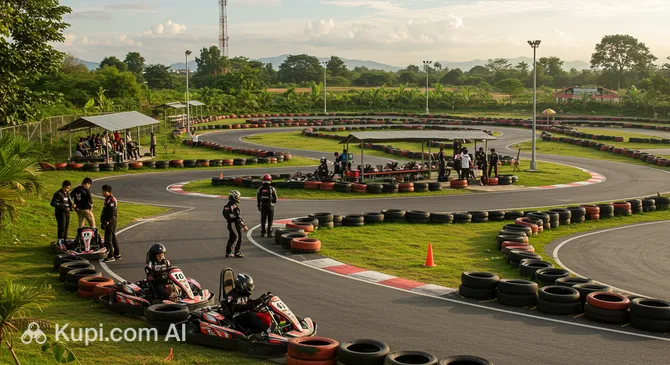
Kart City Tarlac. Illustration.
Source: Kupi.com AI
Traveler photos:
For those looking for active entertainment and excitement, Kart City Tarlac is the perfect spot. This is a modern karting track that is extremely popular with both locals and visitors. Here you can not only race karts but also relax in cozy cafes while watching the races, making the complex a great option for family leisure or hanging out with friends.
The cultural program is complemented by the Aquino Center and Museum, dedicated to the famous Aquino political dynasty, whose history is closely linked to the province. Fans of leisurely walks will appreciate the Japanese Garden and the embankments of the Tarlac River, where you can feel the calm rhythm of local life away from noisy shopping districts. The city also serves as an excellent base for trips to the natural attractions of Central Luzon.
Local Cuisine
The gastronomic scene of Tarlac City is a bright reflection of its cultural diversity. Local cuisine is based on traditional Filipino recipes with a noticeable influence from the culinary traditions of Kapampangan, which is considered the culinary capital of the country. Be sure to try longganisa (a local sweetish sausage) and the classic adobo. Due to the abundance of rivers in the region, fresh fried fish served with fragrant rice is often found on the menus of local establishments.
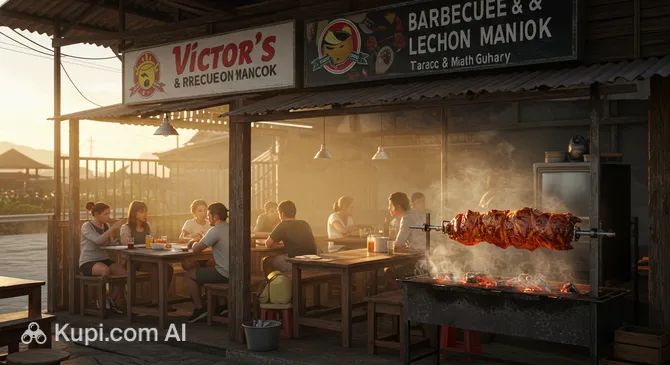
Victor's Barbecue & Lechon Manok. Illustration.
Source: Kupi.com AI
Traveler photos:
If you are looking for a place for a hearty lunch, stop by Victor's BBQ and Lechon Manok. This establishment is famous for its roasted chicken and grilled pork, prepared according to traditional recipes. For lovers of a more refined atmosphere and Oriental flavors, the Fortune Hongkong Seafood Restaurant is suitable, offering a wide selection of dishes from the freshest catch and Hong Kong cuisine classics.
As for drinks, on a hot day, there is nothing better than fresh-squeezed mango or pineapple juice. Locals also appreciate tuba—fermented coconut juice with a unique taste. You can immerse yourself in the city's atmosphere at local markets, where street vendors offer authentic delicacies at very affordable prices. This is where the spirit of the real Philippines reigns, where food is not just nutrition, but an important part of communication and culture.
Travel Tips
A trip to Tarlac City will be a pleasant and predictable experience if you take into account a few important practical nuances of life in a Philippine province.
Clothing and equipment: Choose light clothing made of cotton or linen, as it is almost always hot in the city. During the monsoon season (June–November), be sure to bring an umbrella or a light raincoat. For visiting San Sebastian Cathedral, a modest dress code is recommended: covered shoulders and knees.
Transport: For moving around the center, it is most convenient to use the Grab app. For short trips on tricycles, agree on the price in advance if a fixed fare is not set.
Finances: In Tarlac City, "cash is king." Although malls accept cards, you will need Philippine pesos in markets and for transport. ATMs are available in the center and shopping malls, but they sometimes may not accept foreign cards.
Safety and health: The city is generally safe, but avoid walking on the outskirts after sunset. Drink only bottled water and always use mosquito repellent to protect yourself from tropical fevers.
Connectivity: For stable internet, buy a local SIM card (Globe or Smart) immediately upon arrival at the airport. Shopping centers usually have free Wi-Fi, but its speed can be unstable.
Local etiquette: Filipinos are extremely polite. Use the particle "po" at the end of sentences when communicating with elders and always smile—it's the best way to win over the locals.
What to avoid: Do not criticize local cuisine or customs publicly and avoid political arguments. Also, you should not leave valuables in tricycles or on open market stalls.
Extra tip: Try to catch one of the local festivals—it's the best way to see the city in all its glory and try unique farm products.
Following these simple rules will make your visit to Tarlac City comfortable, safe, and filled only with positive impressions!
Entertainment & Nightlife
Nightlife in Tarlac City is calm and mostly provincial in character. There aren't a huge number of noisy discos like in Manila, but the city offers excellent opportunities for a cozy evening rest. Karaoke bars and restaurants with live music become the center of attraction after dark, where locals gather in large groups to enjoy socializing and singing.
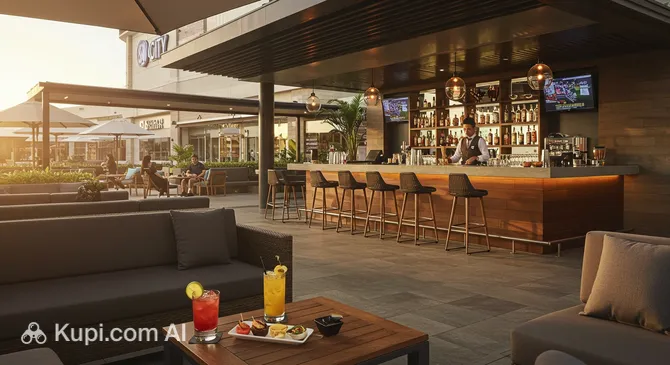
SM City Tarlac Grill Bar. Illustration.
Source: Kupi.com AI
Traveler photos:
Many popular establishments are concentrated around shopping centers and the Luisita Industrial Park. For example, the SM City Tarlac Grill Bar is a great place to start the evening by tasting local snacks accompanied by refreshing drinks. The atmosphere in such places is usually friendly and casual, with a crowd consisting of office workers, students, and families.
Daytime entertainment in the city is represented by modern cinemas in malls and fairs that are regularly held in central squares. If you crave more active nightlife, many tourists head to neighboring cities such as Clark or San Fernando, located about an hour's drive away. However, for those who value sincere Filipino hospitality, evenings in Tarlac City will leave the most pleasant impression thanks to the heartfelt atmosphere in local pubs.
Parks & Museums
The park infrastructure of Tarlac City reflects its status as a provincial capital: there are no huge forest tracts, but cozy spaces for relaxation have been created. One such place is the Japanese Garden—a small green oasis offering peace and quiet amidst the city bustle. The squares in front of the Capitol are also popular, where locals like to relax in the shade of trees, watching the flow of city life.
The cultural heart of the city is its museums and galleries. Diwa ng Tarlac deserves special attention. This exhibition center is the main guardian of the province's cultural heritage: exhibitions of contemporary art are regularly held here, artifacts telling about the life of indigenous peoples are displayed, and festive events uniting the city's communities are organized.
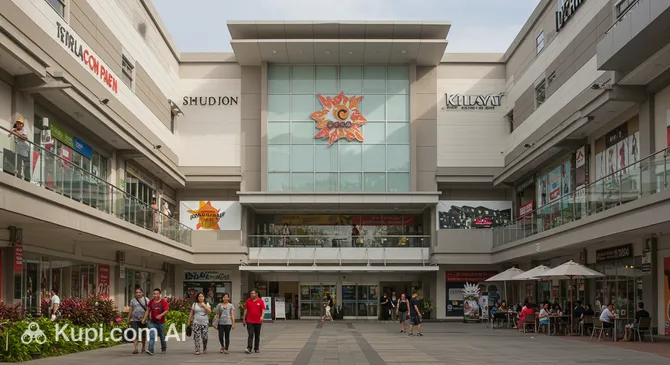
Magic Star Mall. Illustration.
Source: Kupi.com AI
Traveler photos:
Another important site is the Aquino Center, which functions not only as a museum but also as a research center. For those who want to see larger-scale nature, the city serves as a starting point to the rolling foothills of the province, where agricultural landscapes give way to tropical vegetation. Despite the dense development of the center, the proximity to agricultural lands allows residents and guests of Tarlac City to always stay in touch with the natural rhythms of the Philippines.
Getting Around
The public transport system in Tarlac City is typical of most large provincial cities in the Philippines. The main load is carried by jeepneys and tricycles. Jeepneys run on fixed routes, connecting the city's 76 barangays (districts) with the center, and are the most budget-friendly way to get around. Tricycles act as local taxis, taking passengers to narrow streets and remote neighborhoods where larger vehicles do not go.
For more comfortable trips, especially in tropical heat, Grab and regular taxi services are available in the city center. It is important to keep in mind that during peak hours—from 7 to 9 in the morning and from 5 to 7 in the evening—the city's main artery, MacArthur Highway, can be very congested. Payment in jeepneys and tricycles is cash only, so it is always useful to have small coins and bills with you.
There are no special travel cards for tourists in the city, and fares remain very low. If you are planning a trip during the rainy season, be prepared for tricycles to temporarily stop working due to heavy downpours. Walking around Tarlac City is possible, but limited by high humidity and the lack of wide sidewalks in some parts of the city, so transport remains a vital necessity for any traveler.
Accommodation
Tarlac City offers travelers a practical choice of accommodation, primarily oriented towards business travelers and those passing through the city. Budget hotels and small inns are concentrated in the central part of the city, providing necessary comfort for reasonable money. This is an excellent option for those who need quick access to administrative offices or shopping centers.
For longer stays or business trips, the Luisita Industrial Park area and modern residential quarters are popular. Here you can find apartments and guesthouses with an extended range of services. Despite the lack of luxury resort complexes, local accommodation is known for its cleanliness and the sincere Filipino hospitality of the staff.
Accommodation prices in the city remain quite affordable compared to Manila or popular beach destinations. Nevertheless, if your trip coincides with major local festivals or business forums, it is recommended to book a room in advance. Most accommodation options are listed on popular international booking services, making it easy to find an option that fits your budget.
Nearby Cities
Tarlac City serves as an excellent starting point for exploring the central part of Luzon island, offering travelers many interesting destinations within a short trip. The city's surroundings are rich in both natural beauty and historical sites that are perfect for day trips.
One of the most popular destinations is the town of Capas, located just 16 kilometers to the south. It is primarily known as the gateway to the famous Mount Pinatubo. Exciting jeep tours to the crater lake start from here. Also nearby is the town of Concepcion, where you can enjoy a peaceful rural atmosphere and see traditional Filipino farms. To the north, it is worth visiting the town of Gerona, famous for its agricultural lands and the hospitality of its residents.
City
Population
Distance
La Paz
68 952
14 km
Gerona
94 485
15 km
Capas
156 056
16 km
Pura
25 781
17 km
Concepcion
169 953
18 km
For those who miss a more dynamic vacation, San Fernando, a regional center with huge shopping malls and amusement parks, is an hour's drive away. Exploring the nearby municipalities will allow you to see the real, non-tourist Philippines and gain a deeper understanding of the lifestyle of Central Luzon residents.
Shopping & Souvenirs
Shopping in Tarlac City is a fascinating combination of modern shopping centers and colorful local markets. The city does not claim to be a fashion capital, but it offers everything necessary for comfortable shopping. The main shopping destination is the City Tarlac Shopping Center (SM City Tarlac), where international clothing brands, supermarkets, electronics stores, and food courts are gathered under one roof.
City Tarlac Mall. Illustration.
Source: Kupi.com AI
Traveler photos:
Another popular spot among city residents is the Magic Star Shopping Center. This mall is characterized by a more casual atmosphere and often offers goods from local manufacturers. For those looking for authentic souvenirs, it is worth heading to the central city markets. Here you can purchase the famous Tarlac longganisa, sugarcane products, and unique handicraft items created by representatives of the Aeta tribe.
Most shops in malls are open from 10 am to 9 pm, accepting both cash and bank cards. However, in markets and small shops, you will definitely need Philippine pesos in cash. The shopping culture here is closely linked to daily life: markets are most active in the early morning when fresh produce is brought from surrounding farms, creating a unique atmosphere of lively trade.