Support

Apatity

About

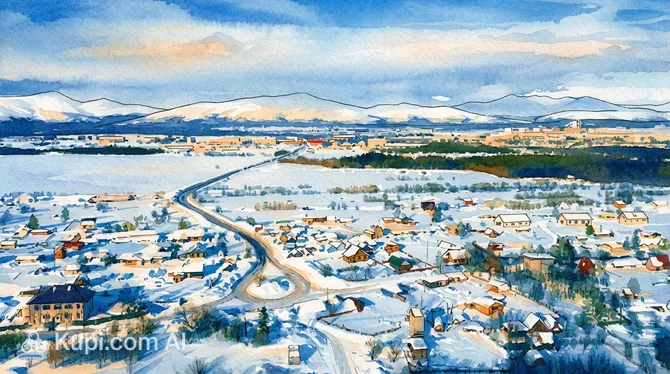
Apatity is a city with a unique northern character, nestled comfortably beyond the Arctic Circle on the picturesque Kola Peninsula. Surrounded by the majestic Khibiny Mountains and the waters of crystal-clear Lake Imandra, it attracts travelers with its calm atmosphere and proximity to the wilderness. This is a place where Russia reveals the magic of the Arctic to tourists in all its glory.

Apatity. Illustration.
Source: Kupi.com AI

Although you won't find ancient fortresses here, the history of Apatity is fascinating in its own way. The city is relatively young: it grew from a small railway siding in 1951 and quickly became an important scientific and industrial center for the region. Today, about 55,000 people live here, and the city's life is inextricably linked with geological discoveries and the study of the Earth's crust.

Apatity serves as an excellent starting point for active recreation. Climbers, skiers, and hiking enthusiasts come here to conquer the slopes of the Khibiny. Within the city itself, it is worth visiting unique museums with collections of rare minerals, and in winter, guests have the chance to see the enchanting Northern Lights right above their heads.

If you are looking for inspiration from the rugged beauty of the north, want to learn about scientific achievements, or simply enjoy the silence surrounded by mountains and lakes, Apatity will be a wonderful choice for your trip.

Weather Overview

The climate of Apatity is determined by the city's geographical position beyond the Arctic Circle, so the weather here is harsh but predictable. Winter is long and snowy: in the coldest months, January and February, the average temperature stays around -11.8°C, sometimes dropping below -14°C. The snow cover lasts a long time, creating ideal conditions for winter recreation until the middle of spring.

Summer here is short and not hot at all, which provides an escape from the heat for residents of southern regions. The warmest month is July with an average temperature of +14.3°C, when the air during the day can warm up to a comfortable +17.9°C. Precipitation occurs quite often throughout the year: even in August and September, up to 15–16 wet days per month are recorded.

Expect a cool summer with occasional rain and long, frosty winters with stable snow cover. The transitional seasons here are rapid: as early as October, the temperature drops to zero, and in May the air warms up on average only to +3.4°C. To know exactly what clothes to bring, we recommend checking the current weather in Apatity before your trip.

Average monthly temperature

Average monthly precipitation

Interesting Facts

In addition to its main attractions, Apatity holds many fascinating secrets that can surprise even seasoned travelers. Here are a few facts that reveal this Arctic city from an unexpected side:

  • Named after a stone. The city is named after a unique mineral—apatite, which is called the "stone of fertility." It was the large-scale deposits of this mineral that turned a small settlement into one of the key industrial centers of the North.

  • Open-air geology. This is the only place where Russia can boast a full-scale geological park right on the street. Here you can see rare rock samples and learn how the majestic Khibiny massif was formed millions of years ago.

  • Buddhism in the Arctic. One of the most surprising features of the city is the presence of Buddhist structures, which is considered a great rarity for Arctic latitudes. The local Stupa of Enlightenment attracts attention with its unusual architecture against the backdrop of northern landscapes.

  • Crystal fairytale. Apatity is famous for its ice sculpture masters. In winter, thematic festivals are held here, where complex and elegant works of art are created from blocks of ice, illuminated by the polar night.

How to Get There

Getting to the heart of the Kola Peninsula is possible in various ways, and the choice depends on how much time you are willing to spend traveling and which mode of transport you prefer. The fastest way is by plane, but many tourists choose the romance of trains to enjoy the northern landscapes. You can find all the ways to reach the city in our detailed guide, and below we look at the main transport hubs.

The nearest air harbor is Khibiny Airport (IATA: KVK). Please note that it is located not in Apatity itself, but in the neighboring city of Kirovsk, about 14.3 km from your destination center. This is a small but convenient regional airport receiving flights from major cities. A taxi ride from here will take only about 20–30 minutes.

If you are looking for more flight options, consider Murmansk Airport (IATA: MMK). This is a large international airport located in the city of Murmansk, 138.1 km from Apatity. Significantly more flights arrive here. The journey from Murmansk to Apatity by bus or car will take about 3.5–4 hours, but the road allows you to immediately immerse yourself in the Arctic atmosphere.

For convenience, here is summary information on the main airports:

AirportPassenger trafficDistance
Khibiny196 59214 km
Murmansk Airport1.5 mln138 km
Kuusamo Airport87 752254 km
Ivalo Airport220 000275 km
Kirkenes Airport, Høybuktmoen314 555280 km

The railway remains one of the most reliable ways to reach the north. The main arrival point is the Apatity-1 station. It is located just 1 km from the city center, so you can reach your hotel in literally 5–10 minutes. Trains from Moscow, Saint Petersburg, and other regions heading towards Murmansk arrive here.

Another important transport hub is the Kandalaksha station, located in the city of Kandalaksha, 61.7 km from Apatity. This is a large station, and in some cases, it may be convenient for tourists to transfer there and continue their journey by bus or taxi, which takes about an hour.

Below is information about the nearest railway stations:

StationPassenger trafficDistance
Khibiny Station250 00014 km
Apatity-1 Station1 km
Imandra Station50 00032 km
Polyarnye Zori Railway Station150 00044 km
Kandalaksha Railway Station350 00062 km
Olenegorsk Railway Station64 km

Main Attractions

Apatity is not just an industrial center, but a true scientific capital that Russia is proud of. The city's main attractions are closely tied to geological discoveries and the harsh nature of the Arctic. Travelers wishing to gain a deeper understanding of the soul of the Kola region should stay here to visit unique museums and memorial sites.

The absolute jewel of the city is the Museum of Geology and Mineralogy of the Geological Institute of the KSC RAS. This place attracts not only specialists but all lovers of natural beauty. The collection features the rarest minerals of the Khibiny and Lovozero tundras, many of which were first discovered right here. The museum's display cases sparkle with multi-colored crystals, and the tours explain why this region is called the planet's "mineralogical treasury."

To immerse yourself in the chronicles of Arctic exploration, head to the Museum of the History of the Study and Development of the European North. The exhibition covers a huge span of time: from ancient Sami settlements to the heroic scientific expeditions of the 20th century. Here you can see authentic geological tools, archival photographs, and ethnographic objects that tell the story of how people learned to live and work in the Far North.

While walking through the city streets, be sure to notice the Monument to Academician A.E. Fersman, the famous researcher thanks to whom Apatity came to be. The monument, carved from red granite, is surrounded by a kind of "stone garden"—rock samples placed directly in the open air. It is a great location for a commemorative photo and a quiet walk imbued with the atmosphere of scientific discovery.

Local Cuisine

The cuisine of Apatity is a gastronomic reflection of the harsh but generous North. The main delicacies here are consistently fish dishes, caught in the pristine waters of Lake Imandra and swift northern rivers. Gourmets should definitely try the local salmon, trout, and whitefish. They are prepared in various ways: baked with aromatic herbs, smoked over natural wood chips, or served lightly salted, which allows the natural flavor of the product to shine through.

An integral part of the local table are the gifts of the forest. Northern berries—cloudberries, lingonberries, and blueberries—are used not only for desserts and jams but also as a base for exquisite sauces for meat and fish. In the cold season, to keep warm, locals and tourists choose hearty ukha (fish soup) or thick porcini mushroom soups. Traditional pies with fish and potatoes, baked here with special love, serve as a filling addition to lunch.

Among the drinks, healthy mors (berry drinks) made from fresh berries and rich in vitamins are worth noting. Those who want to try something stronger will enjoy the signature infusions made with northern berries and herbs—they have a rich flavor and a warming effect. Also very popular in Apatity are aromatic herbal teas, the ingredients for which are collected in the ecologically clean corners of the region.

To immerse yourself in the city's food culture, we recommend visiting the farmers' markets. This is a true gastronomic attraction where you can find fresh fish, game, homemade pickles, and smoked meats. Additionally, in winter, the city often hosts Fisherman’s Day celebrations and culinary festivals where chefs compete in preparing authentic Kola Peninsula dishes, treating guests to real northern masterpieces.

Travel Tips

A trip beyond the Arctic Circle is an exciting adventure that requires proper preparation, as the North does not forgive small oversights. To make your visit to Apatity as comfortable and safe as possible, leaving only warm memories, we have compiled a list of proven recommendations.

  1. Clothing and gear. The main rule for a northerner is layering. Even in summer, the weather can change abruptly, so a windproof jacket and a fleece sweater should be in your suitcase. In winter, be sure to take thermal underwear, warm mittens (they warm better than gloves), and, most importantly, non-slip shoes with a thick sole. If you plan to "hunt" for the Northern Lights, bring chemical hand and foot warmers.

  2. Transport. The city is compact, and it is convenient to explore the center on foot. For trips over long distances or to neighboring Kirovsk, there is a well-developed network of buses and shuttles. The most convenient way to move around is by taxi; popular Russian mobile apps for calling cars work excellently here, and the prices will pleasantly surprise tourists from large cities.

  3. Finance. Bank cards are accepted almost everywhere: in supermarkets, cafes, and museums. However, it is still worth having a small supply of cash—it will be useful for paying for public transport or buying souvenirs from local artisans. ATMs of major banks are easy to find; they are located in shopping centers and on central streets.

  4. Health and safety. Apatity is a calm city, but the climate dictates its own rules. In winter, be extremely careful on sidewalks (it can be slippery) and keep an eye on roofs to avoid falling snow. In summer, if you are going out into nature by Lake Imandra, be sure to stock up on repellents—midges and mosquitoes in the tundra are very active. 24-hour pharmacies are available in the city center.

  5. Communication and navigation. There are no problems with mobile internet within the city; Wi-Fi is available in most hotels and cafes. For orientation, we recommend downloading offline maps in advance (for example, 2GIS or Yandex Maps), as they often contain more up-to-date information about transport routes and businesses than international services.

  6. Local etiquette. Northerners may seem reserved, but in reality, they are very responsive and ready to help. When entering a residential space (an apartment or guest house), be sure to take off your shoes—this is a strict rule of hygiene and respect for the hosts. In public places, it is customary to behave quietly; loud conversations are not welcomed.

  7. What to avoid. Never underestimate the changeability of the weather: a clear sky can become overcast in half an hour. Do not go on solo hikes in the mountains or forest without notice and appropriate preparation, even if the route seems easy. Also, do not attempt to take out raw minerals you found yourself without consulting specialists—some zones may be protected.

  8. Sleeping during the polar day. If your trip falls between late May and July, you will experience the polar day, when the sun does not set around the clock. This is beautiful but can disrupt your biorhythms. Be sure to bring a thick sleep mask, even if the hotel promises "blackout" curtains—it is the key to your well-being.

Apatity is a city where harsh nature is harmoniously intertwined with scientific progress and the warmth of the local residents. By following these simple tips, you can focus on the main thing—enjoying the majestic landscapes of the Khibiny and the unique atmosphere of the Russian North.

Entertainment & Nightlife

The nightlife in Apatity is not like the endless marathon of noisy parties found in major metropolises. It is a city with a cozy, almost intimate atmosphere, where evening entertainment is focused on warm socialization after a long day in the cold. You are unlikely to find massive nightclubs with queues at the entrance here, but you will discover soulful establishments where you can warm up, have a delicious dinner, and discuss your impressions of conquering the Khibiny.

Main evening activity is concentrated in the city center, primarily around Lenin Square and Fersman Street. The format of local establishments is most often gastropubs, small bars, and cafes that transform into venues with music and dancing on weekends. The crowd here is diverse and friendly: from local residents and the scientific intelligentsia to ski tourists who chose Apatity as a quieter base for their holiday.

Among the specific places to spend an evening, the Yegorov Palace of Culture stands out. It is not just a concert venue but the heart of the city's cultural life, regularly hosting touring theaters, musical concerts, and creative evenings. For those who prefer classic leisure, the Polyarny Cinema is a modern cinema hall that has become a popular meeting place. If your soul craves loud fun and bar energy until morning, experienced tourists often suggest taking a taxi to neighboring Kirovsk (only a 20-minute drive away), where the concentration of après-ski bars is significantly higher.

Practical tips for night outings:

  • Atmosphere and Dress Code: A democratic style prevails in Apatity's establishments. A warm sweater, jeans, and comfortable boots will be appropriate almost everywhere. Comfort and sincerity are valued here over glamour.
  • Transport: At night, public transport runs rarely or not at all. The most reliable way to get to your hotel is by taxi. Popular Russian ride-hailing apps work stably, cars arrive quickly, and prices around the city remain very affordable.
  • Safety: Apatity is a calm and safe city. However, in winter, especially during the polar night, you should be careful on roads and sidewalks due to ice and insufficient lighting in some courtyards.

Daytime and evening entertainment in the city flow smoothly into one another. Before the bar programs start, you can actively spend time at the indoor ice rink of the "Yunost" sports complex or visit the city pool to relax your muscles. Apatity offers a measured pace of rest that allows you to completely reset away from the urban bustle.

Parks & Museums

Despite its industrial and scientific origins, Apatity knows how to surprise guests with well-maintained green areas and a rich cultural life. A city where Russia demonstrates its achievements in Arctic exploration, it offers tourists a unique combination of fresh air walks and intellectual leisure in world-class museums.

Apatity's green zones are particularly valuable, as growing a garden in Arctic conditions is a true feat. One of the favorite places for locals and tourists to walk is "City Lights" Park. This is a modern public space that is especially transformed during the polar night thanks to its illumination. It is pleasant to walk along the well-kept paths here, rest on the benches, and enjoy the calm atmosphere in the very center of the city.

A unique phenomenon is the open-air "Stone Garden", located in the square near the Fersman monument. This is not just a park but a geological exhibition where huge boulders of rare minerals mined in the Khibiny are placed among the trees. A walk here turns into a fascinating geology lesson, where you can touch rocks that are millions of years old.

Another green artery of the city is Rowan Alley on Festivalnaya Street. In autumn, it turns bright orange and red, creating incredibly photogenic landscapes against the background of gray mountains, and in winter, the tree branches are covered with picturesque caps of snow, turning the street into a fairytale corridor.

The cultural life of Apatity goes far beyond traditional local history exhibitions. A real sensation in recent years has been the "Siyanie" Center for Contemporary Art. Founded by the famous TV presenter Andrey Malakhov, this art cluster brings exhibitions of leading contemporary artists to the Arctic, organizing performances and lectures. This is a place where the harsh northern context meets relevant world art, making it a must-visit.

The scientific pride of the city—the museum complex of the Kola Science Center of the RAS—cannot go unmentioned. The Museum of Geology and Mineralogy (often called the "Stone Flower") holds a collection that many metropolitan institutes would envy. Thousands of mineral specimens sparkling in all colors of the rainbow are presented here. And the Museum of the History of the Study and Development of the European North tells the story of the people whose will and intellect conquered these harsh lands.

In terms of architecture, Apatity represents a preserve of Soviet modernism. The buildings of scientific institutes, with their strict lines and monumental mosaics on the facades, reflect the spirit of the "physicists and lyricists" era of the 1960s. Particular attention should be paid to the Presidium building of the KSC RAS, which looks majestic against the backdrop of mountain peaks.

Insider tip: If you want to see something truly unusual, look into the Nikolay Rubtsov Literary Museum at the city library. This is an intimate and soulful place where the memory of poets inspired by the North is kept with great love. After the cultural program, take a walk along Fersman Street—look carefully at your feet and around you: rare types of stone were often used in the finish of ordinary houses and curbs here, which elsewhere can only be seen in museums.
Getting Around

The transport system of Apatity is simple, compact, and intuitively understandable even for those who are here for the first time. Since the city is small, there are no subways, trams, or trolleybuses. The main burden of passenger transport falls on buses and shuttle taxis (marshrutkas) that connect residential neighborhoods with the station, industrial zones, and the neighboring city of Kirovsk.

The bus network covers all the main streets of the city. Intervals on popular routes range from 10 to 20 minutes during the daytime. It should be taken into account that city transport does not work around the clock: service usually begins around 6:00 AM and ends around 11:00 PM. If you are planning a late walk or arrive on a night train, it is better to think about alternative ways to get around in advance.

The fare payment system in Apatity is conservative and reliable. Conductors work in most large buses, accepting payment in cash and by bank cards via portable terminals. In shuttle taxis (minibuses), payment is most often handed to the driver upon entry. The fare is fixed and very affordable. There are no special tourist passes or complex zone tariffs within the city, which saves travelers from having to figure out types of tickets.

An important feature of local logistics is the close connection with neighboring Kirovsk, where the ski slopes are located. Suburban buses regularly run between the cities (specifically, routes No. 102, No. 128, No. 131). This is the most budget-friendly way to get to the mountains if you are staying in Apatity. The schedule of these buses is followed quite strictly, and you can find it at stops or in online maps.

For route planning, we strongly recommend using popular Russian navigation apps such as Yandex Maps or 2GIS. They display transport movements in real-time quite accurately, which is especially valuable in winter when waiting for a bus at a stop is uncomfortable due to the frost.

The most popular alternative to public transport is the taxi. Well-known aggregators (for example, Yandex Go) as well as local dispatch services work excellently in the city. Prices for trips around the city are low, and car arrival time is usually only a few minutes. This is the optimal variant for traveling with luggage from the railway station, which is located at some distance from the residential areas.

Car sharing in the form common in major cities is not developed in Apatity, but travelers can use classic car rental services if they plan independent trips around the Kola Peninsula. In summer, the city is pleasant for walking, while bicycle rental is more of an entertainment nature and is available in park areas or sports equipment rental points.

Accommodation

Choosing accommodation in Apatity has its own characteristics dictated by the city's specifics. Unlike tourist centers with an abundance of chain hotels, the real estate market here is focused on practicality and affordability. The core of the accommodation stock consists of apartments and flats for daily rent. This is the most popular option among skiers and tourists coming to conquer the Khibiny, as having your own kitchen and several rooms allows a group to stay comfortably and save on meals.

For those who prefer classic hotel service, there are several large hotels and mini-hotels in the city. They offer a standard set of services, including breakfast and daily cleaning. A special niche is occupied by sanatoriums and health resorts, inherited from the Soviet era but often renovated. Here you can not only spend the night but also take advantage of wellness procedures, a swimming pool, or a sauna after a freezing day.

In terms of location, the most convenient area for a tourist is the city center (the area around Lenin Square, Fersman, and Bredov streets). Living here is advantageous for two reasons: first, supermarkets, cafes, and museums are within walking distance; second, bus routes to the ski slopes of neighboring Kirovsk pass through the center. Areas near the railway station, while convenient for arrival, are distant from the city infrastructure, so it might be a bit dull there without a personal car.

Booking tip: If your trip is planned for the peak season (New Year holidays or March-April, when the ski season is in full swing), it is worth booking accommodation at least 1–2 months in advance. The best apartments and hotel rooms are snapped up very quickly, as many travelers choose Apatity as a more budget-friendly alternative to staying directly at the slopes.

The price range in Apatity can be described as budget and mid-range. The cost of living here is generally lower than in Kirovsk, making the city an attractive "base" for budget-conscious tourists. To find accommodation, it is best to use major Russian booking services and daily rental platforms, as international aggregators may offer a limited selection in this region.

Nearby Cities

For those who want to explore the surroundings, Apatity serves as an excellent starting point for day trips to several interesting nearby locations. Its location in the center of the Kola Peninsula allows travelers to choose between the rugged beauty of northern seas, the industrial romance of neighboring cities, and the untouched nature of reserves.

One of the most popular destinations is Monchegorsk, located just 47 km away. It is often called the "city of beautiful lakes" as it is literally surrounded by the waters of Lakes Imandra and Lumbolka. Here it is worth taking a walk through the vast city park, visiting the Museum of Colored Stone, and enjoying the views of the mountain ranges from the well-maintained embankment.

If the breath of the sea beckons you, head to Kandalaksha (63 km to the south). This is the gateway to the White Sea and the unique Kandalaksha Nature Reserve. Tourists come here to walk along ecological trails, climb hills for panoramic views of the bay with its numerous islands, and, if lucky, see seals in their natural habitat.

For a longer trip, the regional capital—Murmansk—is suitable. Although the journey takes about 3–4 hours, a visit to the largest city in the world beyond the Arctic Circle is worth it. Here you can visit the legendary nuclear icebreaker "Lenin" and see the majestic "Defenders of the Soviet Arctic" memorial.

CityPopulationDistance
Kirovsk26 58113 km
Polyarnye Zori14 42144 km
Monchegorsk42 09947 km
Kandalaksha31 32963 km
Olenegorsk20 84764 km

These nearby destinations provide an insight into the region's diverse culture and landscapes. Each trip reveals a new facet of the Russian North: from lakeside scenery to maritime expanses.

Shopping & Souvenirs

Shopping in Apatity is primarily a hunt for unique gifts of the North, not a trip to fashion boutiques. The city, where apatite is the main symbol, offers travelers souvenirs that are hard to find in other regions. Here, Russia opens up through the wealth of its interior and the bright flavors of local cuisine.

The main gift from a trip is consistently stone products. Apatity lives up to its name: the shelves of local shops abound with crafts made from minerals mined in the Khibiny. Souvenirs made from the "stone of fertility"—apatite—as well as the mysterious eudialyte, which the Sami call "Lapp blood," are especially popular. You can purchase raw collector's specimens for a home museum, as well as elegant boxes, stone clocks ("stone paintings"), or jewelry. The best selection and guarantee of authenticity should be sought at the kiosks of the Geological Museum and in specialized salons on Fersman Street.

Gastronomic shopping will provide no less pleasure. Be sure to make room in your suitcase for northern delicacies. In local fish shops, look for the famous dried sea ruff, cold-smoked halibut, and tender cod liver produced in Murmansk. Fans of meat snacks will enjoy dried venison—reindeer meat chips or dry-cured sausage are sold in convenient vacuum packs that travel well.

A sweet reminder of the Arctic will be jars of cloudberry jam—the "royal berry" of the North, which has a unique taste and aroma. Jams made from blueberries and lingonberries are also popular, as are sauces based on them, which are perfect for meat dishes. For edible souvenirs, experienced tourists advise heading not to gift shops but to ordinary chain supermarkets or the city market, where prices will be lower and products fresher.

There are no large shopping malls of metropolitan scale in Apatity, but several small shopping centers and department stores operate in the city center where you can buy everything you need: from warm clothing and footwear for mountain walks to electronics. Most shops accept bank cards and work until 21:00–22:00, which is convenient for those returning from excursions late in the evening.

Reached the end of the page?

That means the route is fully explored