Support

Kola

About

Kola is one of the oldest towns on the Kola Peninsula, possessing a unique atmosphere of northern charm and a rich history. Located in the Murmansk Region of Russia, at the confluence of the Kola and Tuloma rivers which flow into the Kola Bay, this small town with a population of about 9,700 people attracts visitors with its authenticity. The climate here is subarctic, with long, snowy winters and short, cool summers, giving it a special allure at any time of year.
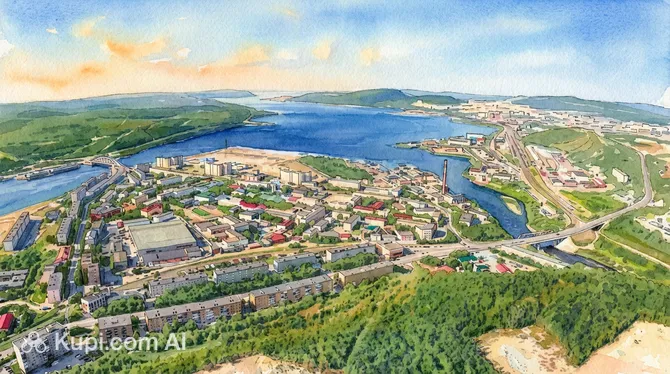
Kola. Illustration.
Source: Kupi.com AI

The main appeal of Kola lies in its historical heritage. As one of the first Russian settlements in the Arctic, the town carefully preserves the memory of its past. Among the places of interest are the Annunciation Cathedral, the oldest stone church on the Kola Peninsula, and the remains of the Kola Fort (Ostrog), which serve as a reminder of the town's strategic importance in times gone by. Furthermore, Kola's picturesque location on the banks of rivers and the bay creates excellent conditions for peaceful relaxation and admiring the rugged northern nature.

A visit to Kola is an opportunity to touch the history of the Russian North, enjoy the peaceful atmosphere of an ancient town, and see the unique landscapes of the Kola Peninsula. This town will undoubtedly leave a lasting impression on everyone seeking authentic experiences and ready to discover something new.

You can find more interesting facts on the history of Kola page.

Weather Overview

The weather in Kola is characterized by cool summers and frosty, long winters. During the summer months, such as July, the average air temperature is around +14.5°C (with maximum values up to +18.5°C), while rainy days are frequent, although the total amount of precipitation usually does not exceed 2-3 mm per month. In winter, for example in January, the average temperature drops to -10.6°C (minimum temperatures can reach -13.3°C), and frequent snowfalls are typical for this time of year with a small total volume of precipitation (about 1 mm per month). Overall, expect cool summers with occasional rainfall and cold, snowy winters. You can learn more on the Kola climate page.

Average monthly temperature

Average monthly precipitation

Interesting Facts

In addition to its main attractions, ancient Kola holds many surprising pages of history and curious details that not everyone knows about. Here are just a few of them:

  • For a long time, Kola was not just a settlement, but the main town and administrative center of the entire Kola Uyezd (district)—a vast territory stretching for hundreds of kilometers. It was from here that the northern lands were governed until the role of regional center finally passed to the young city of Murmansk at the beginning of the 20th century.

  • The famous Kola Fort (Ostrog)—the town's wooden fortress—not only successfully repelled a Swedish siege in 1591 but also became one of the few Russian sites in the North to be attacked by the British fleet during the Crimean War. In 1854, the fort was almost completely destroyed by artillery fire, but the town itself, despite the destruction, stood firm and was later rebuilt.

  • The currently existing Annunciation Church in Kola, built in 1804-1807, is the oldest surviving stone building on the entire Kola Peninsula. It was erected on the site of older wooden churches that had repeatedly suffered from fires, and today it remains an important spiritual and architectural monument.

  • The name of the town "Kola" itself, like the river of the same name, has Sami roots according to the most common version. It is believed to originate from the word "koljok" (or a similar sounding word), which can be translated as "golden river" or "fish river," indicating the historical abundance of local waters.

How to Get There

Getting to the town of Kola is quite simple thanks to its proximity to a major transport hub — Murmansk. Travelers can choose air transport or the railway, enjoying scenic views of the North along the way. You can find all the details and plan your route by visiting the how to get to Kola page, where all available options are gathered.

Since the town of Kola does not have its own airport, the main air hub for arrival is the international airport Murmansk (IATA: MMK). It is located in the neighboring city of Murmansk, just 15.6 km from the center of Kola. This is the largest airport in the region, receiving flights from Moscow, St. Petersburg, and other cities. A taxi ride from the airport will take approximately 45 minutes. You can also use an alternative option — the Khibiny airport (IATA: KVK), located in the city of Kirovsk. However, it is situated significantly further away, at a distance of about 160 km, so the journey by car will take more than 4 hours.

For clarity, here is summary information on the main airports:

AirportPassenger trafficDistance
Murmansk Airport1.5 mln16 km
Kirkenes Airport, Høybuktmoen314 555155 km
Khibiny196 592160 km
Vadso Airport100 645181 km
Vardoe Airport29 724181 km

Railway communication is another convenient and romantic way to get to the Arctic. The Kola station (railway station) is located within the town limits, just 1.5 km from the center, making arrival as comfortable as possible. Additionally, many long-distance trains arrive at the Murmansk Station in the city of Murmansk. It is approximately 10.2 km from Kola, and from there you can quickly reach your destination by taxi or suburban bus in 20–30 minutes.

Below is information on the nearest railway stations:

StationPassenger trafficDistance
Kola Railway Station2 km
Loparskaya Station29 km
Murmansk Railway Station10 km
Olenegorsk Railway Station84 km
Imandra Station50 000115 km
Khibiny Station250 000135 km
Apatity-1 Station148 km

Main Attractions

Kola, one of the oldest towns of the Russian North, carefully preserves evidence of its centuries-old and eventful history. Despite its compact size, the town offers travelers several iconic sites, each telling its own story about the past and present of this amazing corner of the Kola Peninsula.

One of the town's main gems is the Annunciation Cathedral. This is the oldest stone church on the entire Kola Peninsula, built between 1804 and 1807 on the site of previous wooden temples. The cathedral impresses with its austere northern beauty and is not only an important spiritual center but also an outstanding architectural monument. A visit to the cathedral provides an opportunity to touch the history of Orthodoxy in the Arctic and feel an atmosphere of peace.

No less significant as a historical site are the remains of the Kola Fort (Ostrog). Once a powerful wooden fortress founded in the 16th century to protect the northern borders of the Russian state, the fort played a key role in the region's defense, even withstanding a Swedish siege at the end of the 16th century. Unfortunately, it was almost completely destroyed as a result of a bombardment by an Anglo-French squadron during the Crimean War in 1854. Today, at the site of the former fortress, you can see the preserved earthworks and a Cross of Remembrance installed in memory of those heroic events. This place breathes history and allows one to imagine the former might of Kola.

To dive deeper into the past of the town and the region, it is worth visiting the Kola History Museum (Kola District Museum of Local Lore). Its exhibitions detail the ancient history of Kola, starting from the first settlements, the life and culture of the indigenous peoples of the North and Russian pioneers, and the key events that shaped the town's appearance. Here you can see unique artifacts, old photographs, and documents that will help you better understand the significance of Kola in the history of the development of the Kola Peninsula.

Another important memorial site in Kola is the Monument to the Defenders of Kola in the Crimean War. This monument is dedicated to the heroic defense of the town and its residents during an enemy fleet attack in 1854. The monument serves as a reminder of the courage and resilience of the townspeople who defended their land. It is not only a tribute to the past but also an important symbol of the town, highlighting its difficult but glorious history.

Local Cuisine

The gastronomic scene of Kola offers a unique immersion into the traditions of Northern Russian cuisine, where the main roles are played by the gifts of the harsh but generous nature of the Kola Peninsula. Here you won't find noisy food courts or exotic restaurants, but you can enjoy authentic dishes prepared with soul from the freshest local products. The cuisine of Kola is, above all, hearty and warming dishes, perfectly suited for the northern climate.

Be sure to try dishes made from local fish—salmon, cod, and halibut. This could be aromatic ukha (fish soup) prepared according to ancient Pomor recipes, or fried, baked, and, of course, smoked fish, which has a unique taste. Often on the menu, you can find dishes made from venison—traditional meat for northern peoples, which is prepared as a stew, cutlets, or served with wild berries. Don't miss the chance to try pies (kalitki or rybniki) with various fillings: fish, berries (cloudberry, cowberry, blueberry), or mushrooms.

As for drinks, pay attention to traditional Russian and northern options. Warm up with hot herbal tea or mors (berry juice) made from local berries—cowberry, cranberry, or cloudberry. Among alcoholic beverages, besides general Russian ones, you might find local berry infusions or herbal liqueurs that perfectly complement a meal and allow you to feel the flavor of the North more deeply.

The food culture in Kola is quite simple and oriented towards home comfort. The main places where you can get acquainted with local cuisine are small cafes and restaurants offering Russian and European dishes with an emphasis on regional specialties. Local residents often cook traditional dishes at home, but tourists will also be able to find establishments where tasty and authentic food is served. The atmosphere in such places is usually calm and hospitable, allowing you to enjoy your meal without unnecessary bustle.

Overall, the gastronomic experience in Kola is an opportunity to taste simple but very tasty and filling dishes prepared from fresh northern products. The main highlights are, undoubtedly, the various fish delicacies, venison dishes, and aromatic berry drinks and desserts. This is a cuisine that warms you up and tells the story of the region through its flavors.

Travel Tips

Planning a trip to ancient Kola? Wonderful! To make your journey to this northern town as comfortable as possible and leave only pleasant impressions, we have prepared some practical tips. They will help you better prepare and feel more confident while exploring this unique corner of Russia.

  1. Clothing and Essentials: The climate in Kola is subarctic, so the key word is layering. In summer (June-August), the weather is cool; bring warm sweaters, a windbreaker, a waterproof jacket, and comfortable closed shoes for walking. In winter (November-March), severe frosts and lots of snow are expected, so very warm outerwear (down jacket, fur coat), thermal underwear, a hat, scarf, mittens, and insulated waterproof footwear are necessary. To visit the Annunciation Cathedral, women are recommended to have a headscarf and clothing that covers the shoulders and knees; men should be in trousers and without headgear. Don't forget a socket adapter (types C and F are used in Russia, 220V voltage).

  2. Transport in town: Kola is a small town, and you can get around on foot, especially if you stay in the center. Public transport consists mainly of buses that connect different parts of the town and the suburbs. Taxi services are also available; it is recommended to use official services or call apps (for example, "Yandex Go," if it works in the region). Renting a car might be useful if you plan to explore the Murmansk Region, but for Kola itself, it likely won't be necessary.

  3. Finances: The official currency is the Russian Ruble (RUB). You can exchange currency in banks in Kola or, more likely, in neighboring Murmansk. It is recommended to have sufficient cash with you, as not all retail outlets, especially small ones, may accept bank cards. Cards from international payment systems (Visa, Mastercard) may work with restrictions; cards of the Russian "Mir" system are accepted everywhere. There are ATMs in the town, but it's better to check in advance which cards they service. Tips in restaurants and cafes are usually 5-10% of the bill and are left at your discretion.

  4. Health and Safety: There are pharmacies in Kola, but 24-hour ones may be absent, so it's better to bring necessary medications with you or purchase them in advance. If medical assistance is needed, contact local clinics or hospitals; tourists are recommended to have valid medical insurance. Kola is considered a quiet and safe town. Nevertheless, follow standard precautions: watch your belongings, especially in public places, and avoid walking alone in poorly lit areas at night. In winter, be careful due to icy conditions and low temperatures.

  5. Communication: The main language of communication is Russian. The level of English proficiency among the local population may be low, especially outside the limited tourist infrastructure. Learn a few basic phrases in Russian, such as "Zdravstvuyte" (Hello), "Spasibo" (Thank you), "Pozhaluysta" (Please)—this is always appreciated. A SIM card from a Russian operator can be purchased at mobile stores in Murmansk or perhaps in Kola (with a passport). Wi-Fi access may be available in some cafes or hotels, but don't count on it everywhere.

  6. Local Etiquette: Locals are usually reserved but friendly. It is customary to greet with a handshake (especially between men). In public places, try not to be noisy or attract unnecessary attention. When visiting churches, maintain silence and respectful behavior. If you want to photograph a local resident, it is better to ask for permission.

  7. What to Avoid: You should not photograph military installations or sites of strategic importance, should you encounter any. It is also better to refrain from discussing controversial political topics. Excessive alcohol consumption in public places may meet with disapproval.

  8. Additional Tip: Given Kola's location above the Arctic Circle, consider visiting the town during the Polar Day (summer), when the sun does not set below the horizon, or the Polar Night (winter), when there is a chance to see the Northern Lights. Although Murmansk is more famous as a spot for observing the Aurora, Kola is very close and can also provide this unforgettable sight under favorable conditions.

We hope these tips make your journey to Kola even more pleasant and informative. This ancient town on the edge of the earth awaits you to share its stories and northern charm!

Entertainment & Nightlife

Evening and night entertainment in Kola has its own unique northern flavor, which differs significantly from the bustling nightlife of major metropolises. Given that Kola is a small historical town with a population of about 9,700 people, you won't find districts with a string of noisy nightclubs or a vast variety of bars open until dawn. Nightlife here is more conducive to peaceful relaxation, socializing in a cozy setting, and enjoying the calm atmosphere of an ancient town.

The main spots for evening leisure in Kola are likely to be local cafes, perhaps such as the hypothetical "Northern Lights" cafe or a small, welcoming bar at one of the local hotels, like a symbolic "Traveler's Refuge." The atmosphere in such establishments is usually friendly and laid-back, catering mostly to a local crowd. You shouldn't expect loud parties with DJs or specialized concert venues here; evening leisure is more intimate and quiet. If you are interested in a more active and diverse nightlife with clubs and a wide choice of bars, you should consider a trip to the neighboring, larger city of Murmansk, which is about a half-hour drive away and offers many more options for night entertainment.

In a town the size of Kola, the choice of specific venues for night-time relaxation is limited, and they are generally known at the local level rather than being major tourist sites. There are no specialized nightclubs or streets where nightlife teems in Kola. If you are looking for a place for evening relaxation, it's best to look for cafes that might stay open until late evening or ask locals about a bar with an atmosphere that suits you. Evenings in Kola are usually quiet, so it's best not to arrive at venues too late. Public transport may not operate at night, so you should rely on taxis for getting around, which can be called via local services. The dress code in local establishments is generally casual and does not require special preparation.

In terms of safety, Kola is generally considered a quiet and safe town, especially its central part. Nevertheless, as in any other place, it is recommended to follow standard precautions during dark hours: keep an eye on your personal belongings and avoid walking alone in poorly lit or deserted areas. Calling a taxi through an official dispatch service or a verified app is the safest way to travel at night.

As for daytime entertainment, Kola offers its guests an immersion into the rich history and culture of the Russian North. You can visit iconic attractions such as the Annunciation Cathedral—the oldest stone church on the Kola Peninsula, explore the historical site where the Kola Fort (Ostrog) once stood, or stop by the Kola History Museum to learn more about the past of this ancient settlement. Walking through the town and its picturesque surroundings, especially along the banks of the Kola and Tuloma rivers, can also be a pleasant addition to your trip, allowing you to enjoy the rugged but alluring beauty of northern nature.

Parks & Museums

Kola, despite its modest size, offers guests both opportunities for peaceful relaxation in the embrace of northern nature and chances to touch its rich historical heritage through its cultural sites. There are no noisy amusement parks here, but it has its own special charm.

While Kola may not have extensive urban parks in the traditional sense, its natural surroundings are a magnificent zone for relaxation and walks in their own right. The picturesque banks of the Kola and Tuloma rivers, as well as the coast of the Kola Bay, provide excellent opportunities for unhurried promenades. Here you can enjoy the silence characteristic of small northern towns, breathe fresh air, and admire the rugged beauty of the local nature. These places are ideal for those seeking tranquility and wishing to take a break from the city bustle.

A central place in the town's cultural life is occupied by the Kola History Museum, also known as the Kola District Museum of Local Lore. This is a key site for getting acquainted with the past of this ancient settlement. The museum's exhibitions tell the story of the indigenous peoples of the North, the arrival of Russian Pomors, the founding and development of the Kola Fort (Ostrog), as well as the life and traditions of local residents over the centuries. A visit to the museum will be interesting for anyone who wants to better understand the history of the development of the Kola Peninsula.

Iconic cultural and historical sites in Kola certainly include the Annunciation Cathedral. As the oldest stone church on the entire Kola Peninsula, it attracts not only believers but also lovers of ancient architecture with its austere yet expressive northern beauty. Another place preserving the memory of centuries is the area where the Kola Fort once stood. Although only earthworks remain of the wooden fortress itself, this site, marked by a Cross of Remembrance and supplemented by the Monument to the Defenders of Kola in the Crimean War, vividly testifies to the town's eventful and heroic past.

To round out your impressions and create unique photos, we recommend taking a slow walk along the riverbanks at sunrise or sunset. The play of light on the water and the peaceful atmosphere of these places will give you special moments and help you better feel the spirit of ancient Kola.

Getting Around

Getting around Kola and its surroundings is possible using public transport, which, given the town's size, is mainly represented by bus services. The system is simple, but knowing some nuances will help you feel more confident.

The main type of public transport in Kola is buses. They run on regular routes, connecting various districts of the town, and also provide connections to nearby settlements, including the regional center—Murmansk. Route taxis (marshrutkas) may also supplement the bus network, offering faster but sometimes less predictable trips along popular routes. It is best to check information about routes and schedules locally, for example, at bus stops or by asking local residents.

The payment system for travel in Kola is likely quite simple. In buses, payment is usually made in cash directly to the driver or conductor upon boarding. The possibility of using bank cards or special transport cards for payment in a small town may be limited, so it is recommended to have small cash on hand. The fare is usually fixed within the town or depends on the zone for trips to the suburbs. It is better to check the exact cost with the driver or conductor before the trip.

Here are some practical tips for tourists: bus tickets are generally purchased directly in the vehicle. Special validation for single tickets paid in cash is usually not required. Buses run on a schedule that may be less frequent in the evening, as well as on weekends and holidays. Plan your trips in advance, especially if you need to reach a certain place by a specific time.

Speaking of alternatives, the most accessible option is a taxi. In Kola, as in the region, taxi services can be called by phone or through mobile applications such as "Yandex Go" (it is worth checking its functionality directly in Kola). A taxi will be a convenient choice for traveling with luggage, at night, or if you prefer individual comfort. Options like car-sharing or a developed bike rental system are likely not common or absent in a small northern town like Kola. Walking is also an excellent way to get to know the central part of the town, given its compact size.

There are no unique or specific types of transport, such as metros, trams, trolleybuses, or cable cars, in Kola. The transport system is oriented towards the basic needs of residents and guests of the town.

Accommodation

In Kola, as a small historical town, the choice of accommodation for tourists is mainly represented by cozy options that reflect the local flavor. You are unlikely to find large hotel chains or luxury resorts here, but you can find comfortable lodging in small hotels, guesthouses, or by renting apartments or rooms from local residents. This format allows for a deeper immersion into the atmosphere of an ancient northern town.

Given the compact size of Kola, most accommodation options are likely to be located in the central part of the town or in its immediate vicinity. This is convenient, as main historical attractions such as the Annunciation Cathedral, the site of the former Kola Fort, and the Kola History Museum will be within walking distance. It is also worth paying attention to the proximity to transport hubs, such as the Kola railway station, if you plan to travel around the region.

Specific famous hotels or large hotel chains may be absent in Kola, which is typical for small historical towns. Instead, travelers usually find accommodation in small private hotels or guesthouses, which often offer more personalized service and a home-like atmosphere. It is recommended to research available options on popular online booking platforms in advance to find the most suitable choice.

Regarding prices, you can find options for different budgets in Kola, from more economical guest rooms to comfortable rooms in small hotels. Overall, the price range can be described as moderate. It is highly recommended to book accommodation in advance, especially if your trip coincides with the summer tourist season or holidays. The main booking methods are popular online aggregators and travel portals where you can compare prices, read terms, and check reviews from previous guests. Sometimes direct booking is possible by contacting the owners of guesthouses or small hotels.

Nearby Cities

For those who want to explore the surrounding area, Kola serves as an excellent starting point for day trips to several interesting nearby locations:

CityPopulationDistance
Murmansk298 09610 km
Severomorsk51 20926 km
Snezhnogorsk12 64235 km
Polyarnyy17 60539 km
Zaozersk9 91562 km

These nearby destinations provide insight into the diverse culture and landscapes of the region. Each of these trips can be a fascinating addition to your visit to Kola, opening up new facets of the Murmansk Region. For example, Murmansk, as the largest city above the Arctic Circle, offers a rich cultural program and an introduction to maritime history. Severomorsk, being the base of the Northern Fleet, is interesting for its military history (access may be restricted). A trip to Monchegorsk will introduce you to the industrial heart of the Kola Peninsula and the beautiful nature around it, while Apatity will show you the scientific center and the Khibiny Mountains.

Shopping & Souvenirs

Shopping in Kola is more about an opportunity to purchase essential goods and unique local souvenirs rather than diving into a world of fashion boutiques and large shopping centers. The town is not a major shopping hub, and for a wide range of branded items or electronics, it is better to head to neighboring Murmansk. Nevertheless, in Kola, you can find interesting authentic goods that will serve as a pleasant reminder of your trip to the Russian North.

The main retail outlets in Kola are generally concentrated along the town's central streets. Here you will find small grocery stores, pharmacies, hardware shops, and perhaps a few shops with clothing or household goods. There are no specialized shopping streets or large shopping districts in Kola, but a walk through the center will allow you to find everything you need.

You most likely won't find large modern shopping malls, to which residents of metropolises are accustomed, in Kola. Shopping here is more traditional and is represented by individual stores of various types. If you need a wide selection of goods under one roof, the nearest large shopping centers are located in Murmansk.

As for markets, a small local market may exist in Kola where farmers or private sellers offer fresh products, especially in season. It is also possible that there are small spontaneous markets or fairs where you can find homemade preserves, knitted items, or other handmade goods. However, you should not expect large food or flea markets.

The most interesting thing for a tourist in Kola is, of course, souvenirs. Look for items with northern themes: these could be magnets, mugs, or postcards featuring Kola, the Northern Lights, or reindeer. Products made from reindeer horn, wood, or stone are popular. As gastronomic souvenirs, you can bring back local fish (smoked or dried), jam made from northern berries (cloudberry, cowberry, blueberry), or Ivan-tea. You should look for souvenirs in small shops or perhaps at the town history museum.

Shops in Kola usually operate on a standard schedule: approximately from 10:00 to 19:00 or 20:00 on weekdays, with potentially shorter hours on Saturday and Sunday. Grocery stores may open earlier and close later. The main method of payment in many small retail outlets remains cash in Russian rubles. "Mir" system bank cards are accepted almost everywhere, however, cards from foreign payment systems may encounter difficulties. It is recommended to always have some cash with you.

The Tax Free system is likely not available in Kola, as it usually operates in large stores aimed at foreign tourists, of which there are not many in small towns. You should not count on the possibility of arranging Tax Free for purchases in Kola.

Reached the end of the page?

That means the route is fully explored