Support

Kholmsk

About

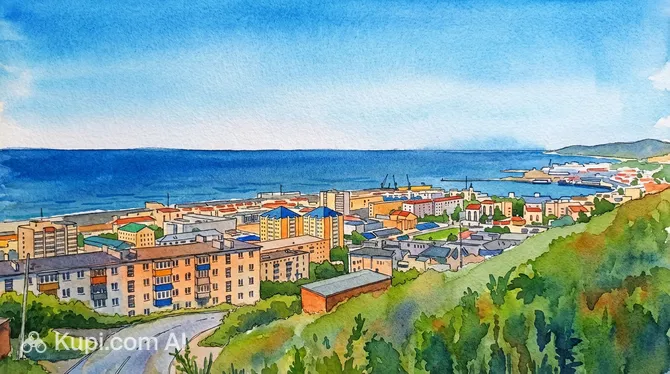
Kholmsk is a significant port city located on the southwestern coast of Sakhalin Island in Russia. It attracts visitors with its distinct maritime atmosphere and picturesque landscapes. Stretched along the foot of the Yuzhno-Kamyshovy Range on the shores of the Tatar Strait, the city serves as an important transport hub for the region. The population of Kholmsk is approximately 28,000 people.

Kholmsk. Illustration.
Source: Kupi.com AI

The climate here is temperate monsoon, featuring cool summers and snowy, moderately cold winters—typical for the Sakhalin coast. The city plays a vital role in the economic life of the island, primarily due to its ice-free port.

Among the key features that draw people to Kholmsk is its status as a major seaport, which defines the rhythm and character of the city. Travelers will appreciate the scenic coastal views of the Tatar Strait and the surrounding hills, which are especially beautiful at sunset. The city is also interesting for its history and blend of cultures, reflected in its appearance and atmosphere. A walk through the streets of Kholmsk allows you to experience its unique Far Eastern flavor.

Kholmsk is an excellent destination for those who want to get acquainted with the life of a port city at the edge of the world, enjoy the rugged yet captivating nature of Sakhalin, and feel the breath of the sea. A visit to Kholmsk will leave a lasting impression on lovers of non-trivial travel.

You can find more interesting facts on the history of Kholmsk page.

Weather Overview

The weather in Kholmsk has a pronounced seasonal character, typical for the Sakhalin coast. Summer here is quite short and cool. The warmest months are July and August, when average temperatures stay around +17°C to +18°C, and the air can warm up to +20°C. Precipitation is common in the summer months, though not always heavy: for instance, August sees about 15 days with precipitation.

Winters in Kholmsk are long, frosty, and snowy. January is the coldest period, with an average temperature of about -10.6°C, and nightly minimums can drop to -13.4°C and lower. Snow cover is usually stable, and the highest number of days with precipitation (mostly as snow) occurs in December, reaching up to 20 days.

Overall, Kholmsk is characterized by cool, moderately humid summers and cold, snowy winters. When planning a trip, consider these features and choose appropriate clothing. You can learn more about the climatic conditions and get a detailed forecast on the Kholmsk Climate page.

Average monthly temperature

Average monthly precipitation

Interesting Facts

Beyond its status as an important seaport and its scenic coastal views, Kholmsk hides many interesting details and little-known pages of history. Here are just a few of them:

  • Few people know that until 1946, Kholmsk bore the Japanese name Maoka (真岡). The city received this name during the period when Southern Sakhalin was part of Japan (Karafuto Prefecture), and it still preserves the memory of that historical stage.

  • Kholmsk serves as the western "sea gate" of Sakhalin, and its Vanino — Kholmsk ferry crossing is more than just a transport route—it is a vital artery connecting the island with mainland Russia. For many Sakhaliners, it is the primary way to reach the "mainland" and return.

  • The railway network of Sakhalin, including the lines passing through Kholmsk, long differed from the Russian standard due to its narrow gauge (1067 mm) inherited from the Japanese period. Although active modernization is currently underway to convert the tracks to the Russian standard (1520 mm), this feature was a hallmark of Sakhalin railways for many years.

  • The city's current name was not chosen by accident. "Kholmsk" comes from the word "kholm" (hill), which accurately reflects the local terrain—the city is picturesquely nestled among the hills and slopes along the coast of the Tatar Strait.

  • Near Kholmsk, on Cape Slepikovsky, stands one of Sakhalin's oldest and most remarkable lighthouses—the Slepikovsky Lighthouse. Built in the early 20th century, it still serves as a reliable landmark for ships and is a true symbol of the region's maritime history.

How to Get There

Kholmsk is a vital transport hub of Sakhalin, the "sea gates" of the island. When planning a trip here, keep the region's island location in mind. You can find all the details and consider all the ways to get to the city on a dedicated page; below, we will cover the main transport hubs nearby.

Kholmsk itself does not have an active passenger airport, so most tourists arrive via the regional capital. The main air hub receiving flights from the mainland is Yuzhno-Sakhalinsk Airport (IATA: UUS). It is located in the city of Yuzhno-Sakhalinsk, approximately 55 km from Kholmsk. This is a large, modern airport with flights from Moscow, Vladivostok, Khabarovsk, and other cities. The journey from the airport to Kholmsk by taxi or transfer takes about 1 hour and 45 minutes. There is also a regular bus service between the cities.

Geographically close to Kholmsk is Wakkanai Airport (IATA: WKJ), located in Japan on Hokkaido Island. The straight-line distance is about 185 km across the La Pérouse Strait. However, considering the need to cross an international border and the logistics of the crossing, this is not the primary route for most travelers to reach Kholmsk.

For clarity, here is a summary of the main airports located relatively near the city:

AirportPassenger trafficDistance
Yuzhno-Sakhalinsk Airport1.5 mln55 km
Wakkanai Airport305 727185 km
Rishiri Airport93 164213 km
Poronaysk Airport252 km
Sovetskaya Gavan15 000256 km

Railway transport on Sakhalin is actively developing. Although there are stations within Kholmsk, many travelers use the Yuzhno-Sakhalinsk Railway Station as a transit point. It is located in Yuzhno-Sakhalinsk, about 51 km from Kholmsk. Long-distance trains (for example, from Nogliki) arrive here, after which tourists transfer to buses or suburban trains ("Orlans") heading directly to Kholmsk. A car trip from the regional capital's station to Kholmsk takes approximately 1 hour and 40 minutes.

It is also worth mentioning the Dolinsk Railway Station, located in the town of Dolinsk, 63 km from Kholmsk. This may be useful if you are traveling from the north of the island, though transferring in Yuzhno-Sakhalinsk is usually more convenient logistically.

Below is a table with the nearest significant railway stations:

StationPassenger trafficDistance
Yuzhno-Sakhalinsk Railway Station400 00051 km
Dolinsk Railway Station150 00063 km
Makarov Railway Station182 km
Vakhrushev Station225 km
Poronaysk Railway Station252 km

Main Attractions

Kholmsk, being an important port city with a rich history, offers its guests several interesting sites that help better understand its character and enjoy the unique atmosphere of the Sakhalin coast. Here are some of the key attractions worth visiting:

Kholmsk Port is, without exaggeration, the heart of the city. Observing its operations—the arrival and departure of vessels, including the famous ferries connecting Sakhalin with the mainland—can be a fascinating activity. This is not just an industrial site, but a place offering impressive maritime panoramas where you can feel the power and significance of sea routes for the island. A walk around the port area allows you to experience true nautical romance.

Thanks to its location on the hills, Kholmsk boasts several viewpoints that offer breathtaking views of the city, the port, and the endless expanses of the Tatar Strait. It is especially beautiful here at sunset when the sun sinks below the horizon, painting the sky and water in incredible colors. These vantage points are easy to find and serve as excellent spots for photography and quiet contemplation.

Not far from the city, at Cape Slepikovsky, lies one of the region's iconic landmarks—the Slepikovsky Lighthouse. This historical navigation structure, built in the early 20th century, still performs its important function today. A trip to the lighthouse is an opportunity not only to see an impressive engineering feat but also to enjoy the rugged beauty of the Sakhalin coast, feel the power of the sea, and take memorable photos. This place is steeped in maritime history and attracts visitors with its seclusion and scenic beauty.

For those interested in the city's history and culture, the Kholmsk City History and Culture Center is well worth a visit. Here, you can learn more about Kholmsk's past, from ancient times through the period of Japanese rule (when the city was called Maoka) to the present day. The museum's exhibits tell the story of the city's development, its role in Sakhalin's history, the life and traditions of local residents, and the region's nature. It is an excellent place to gain a deeper understanding of the uniqueness of this Far Eastern city.

Local Cuisine

The gastronomic scene of Kholmsk, as befits a port city on Sakhalin, is primarily famous for its fresh seafood. The local cuisine is an interesting fusion of traditional Russian dishes with unique Far Eastern accents, where fresh fish and seafood take center stage. Here, you can truly taste the ocean, enjoying products that were swimming in the cold waters of the Tatar Strait just that morning.

Be sure to try dishes made from local fish—flounder, Atka mackerel, and smelt—which are prepared in a variety of ways: fried, baked, salted, or dried. Sakhalin delicacies hold a special place: the famous Kamchatka crab (or its local varieties), scallops, mussels, and, of course, red caviar. Definitely try Sakhalin-style ukha, a fish soup simmered with several types of fresh fish, known for its rich flavor and aroma. Also of interest are dishes using wild-harvested plants, such as fiddlehead fern salads or sea kale, which give the local cuisine a unique flair.

Among non-alcoholic drinks, mors and compotes made from local berries like klopovka (red bilberry), cowberry, or blueberry are popular for their vibrant taste and high vitamin content. You should also try herbal teas based on Sakhalin plants. As for alcoholic beverages, as in all of Russia, vodka is respected, but you can also find infusions made with local berries and herbs. Some establishments may offer beer from regional producers.

The dining culture in Kholmsk is quite democratic. The main places to get acquainted with the local cuisine are restaurants and cafes, many of which specialize specifically in fish and seafood. Prices are generally moderate, and portions are generous. While street food is not as common as in large metropolises, you can sometimes find stalls selling pastries, including pies with fish or berry fillings. To buy fresh fish and seafood, it's worth checking out the local markets, if available to tourists.

Gastronomic Kholmsk attracts tourists primarily with the exceptional freshness of its seafood and the chance to try unique Far Eastern specialties. The cuisine here is simple but hearty, based on quality local ingredients. It’s a great chance to discover the real taste of Sakhalin, where every dish tells the story of this rugged yet generous land. Tasting fresh crab, aromatic ukha, and wild berry drinks is exactly why foodies might include Kholmsk in their itinerary.

Travel Tips

Planning a trip to Kholmsk? Wonderful! To ensure your journey through this unique Sakhalin port city goes smoothly and leaves only pleasant impressions, we have prepared some useful tips for you.

  1. Clothing and Essentials: The climate in Kholmsk is temperate monsoon, with cool summers and snowy winters. In summer, bring a windbreaker and warm layers for evening walks by the sea. In winter, very warm windproof clothing, a hat, gloves, and non-slip waterproof footwear are essential. Comfortable shoes for walking the city's hilly terrain are useful year-round. If you plan to visit Orthodox churches, women are advised to have a headscarf and wear clothing that covers shoulders and knees, while men should wear long trousers. Electrical outlets in Russia are standard (types C and F, 220V), so adapters are only needed for devices with different plugs.

  2. Transport: It is most convenient to move around Kholmsk by local buses or taxis. The city is relatively small, so many interesting places in the center can be explored on foot. If you plan to explore the rest of Sakhalin, you might consider renting a car in Yuzhno-Sakhalinsk, but it isn't always necessary for Kholmsk itself. Remember that Kholmsk is a major port for the Vanino-Kholmsk ferry, which is the main way to bring a car to the island.

  3. Finances: The official currency is the Russian ruble (RUB). It is recommended to carry enough cash, especially for small shops and markets, as not all establishments accept bank cards. ATMs are available in the city, but you should check your bank's withdrawal conditions and card compatibility beforehand. International cards may have restrictions. Tipping in cafes and restaurants is usually 5-10% of the bill; it is at your discretion but always appreciated for good service.

  4. Health and Safety: There are pharmacies in Kholmsk, and some may operate 24/7—check addresses in advance. For medical assistance, tourists are recommended to have valid health insurance. Kholmsk is generally considered a safe city, but as with anywhere, take basic precautions: watch your belongings and avoid poorly lit, deserted areas after dark.

  5. Communication: The primary language is Russian. English may not be widely spoken among the local population, except perhaps for staff in some hotels. Learning a few basic Russian phrases (e.g., "Zdravstvuyte" – Hello, "Spasibo" – Thank you, "Skolko stoit?" – How much does it cost?) will be very helpful. A Russian SIM card with internet access can be purchased at mobile phone stores. Wi-Fi is available in some cafes and hotels.

  6. Local Etiquette: Residents of Kholmsk, like most Russians, are hospitable and helpful. It is customary to say hello when entering small shops or when addressing someone. In public places, try to behave reservedly. If you are invited to someone's home, a small souvenir or something for tea is a nice gesture.

  7. What to Avoid: Do not photograph strategic objects, including port facilities, without special permission—this can raise unnecessary questions. Also, try to avoid discussions on sensitive political topics. Respect local customs and traditions to ensure your stay is comfortable for everyone.

  8. Additional Advice: The weather on Sakhalin, and in Kholmsk specifically, can be very changeable. Even if the sun is shining in the morning, it can get cold, windy, or rainy abruptly during the day. Always dress in layers and be prepared for nature's whims—it's part of the charm of this Far Eastern region!

We hope these tips help you better prepare for your trip and get the most out of your time in Kholmsk. We wish you an unforgettable journey!

Entertainment & Nightlife

In the evening, Kholmsk offers its guests opportunities for quiet and leisurely relaxation after a busy day. As a port city with a relatively small population (around 28,000 people), it leans more toward intimate entertainment rather than the loud and crowded nightlife typical of major metropolises.

The main focus of evening life in Kholmsk is likely to be on local cafes and bars. These are pleasant places to spend time with friends, enjoy dinner, or have drinks in a cozy, often home-like atmosphere. Such establishments are usually geared toward both locals and visitors and may stay open until late evening, especially on weekends. Their style is generally democratic, without strict dress codes. Prices are moderate in most cases. The best time to visit is after 8:00 or 9:00 PM when the main crowd gathers.

Specialized nightlife districts or large nightclubs with loud music and dancing until dawn are likely scarce or non-existent in Kholmsk, which is typical for cities of this size. It is also unlikely to find large concert venues hosting famous artists or bustling night markets. Evening entertainment will mostly be concentrated along the central streets or near the embankment, where popular dining establishments are located.

Regarding other types of evening leisure, it is worth checking locally for a cinema with evening screenings—this can be a good option for a quiet night. There may also be places for bowling or billiards in the city, though their presence is not guaranteed. Local Houses of Culture sometimes host evening events, amateur concerts, or themed nights, which can be found through local billboards or by asking residents.

Unfortunately, providing a specific list of recommended bars or clubs with exact names is difficult without current local data. Travelers are encouraged to verify information about open establishments directly on-site—by looking for signs, asking for advice from locals, or checking with hotel staff. This will help you find the most suitable place for evening relaxation.

For getting around the city at night, taxis are the most convenient and safe option. It is recommended to use official taxi services, which can be reached via numbers provided by your hotel or found online. Walking along central, well-lit streets in the evening is generally safe, but one should always observe standard precautions and avoid deserted, unlit areas.

In terms of daytime entertainment, Kholmsk offers opportunities for cultural and educational leisure. For example, you can visit the Kholmsk City History and Culture Center to dive deeper into the history of the city and the region. Pleasant additions include walks along the picturesque embankment with views of the Tatar Strait or through the city's squares. Depending on the season, other outdoor activities may also be available.

Overall, the nightlife in Kholmsk is best suited for those seeking a peaceful end to the day in pleasant company and a cozy setting, rather than loud parties. It is a chance to feel the atmosphere of a small Sakhalin port city and relax in one of its hospitable establishments, enjoying the measured pace of life.
Parks & Museums

Kholmsk offers its guests not only picturesque maritime landscapes but also opportunities for cultural enrichment and outdoor relaxation. While the city may not boast extensive park complexes like major metropolises, it has its own corners for walking and discovering its unique history and atmosphere.

For fresh air and relaxation in Kholmsk, look for the city's squares and walking zones, especially those that might be located along the Tatar Strait coast. These spots, when well-maintained, are perfect for leisurely strolls, allowing you to enjoy the sea breeze and views of the port. The city's surroundings, with their characteristic hilly terrain and proximity to the sea, also provide opportunities for connecting with nature. In warm weather, small coastal areas can be attractive for relaxing by the water.

The key location for exploring the city's history and culture is the Kholmsk City History and Culture Center. As mentioned earlier, its exhibits detail the various stages of Kholmsk's development, from ancient times to the present, including the period when the city was named Maoka. This is a must-visit place for those who want a deeper understanding of this Far Eastern city. Other large museums or specialized art galleries in Kholmsk may be few, which is typical for settlements of this size. However, it is always worth inquiring locally about potential temporary exhibitions or small displays in local cultural institutions.

Beyond museums, the history of Kholmsk is reflected in its architectural objects and memorial sites. One of the most iconic is certainly the Slepikovsky Lighthouse, located near the city. This historic navigation facility not only fulfills its direct function but also serves as a silent witness to Sakhalin's rich maritime history. A walk through Kholmsk itself may also reveal interesting port infrastructure buildings or residential houses that have preserved features of past eras, perhaps even echoes of the Japanese period in their architecture.

For an authentic experience and unique photos, try climbing one of the many hills (sopkas) surrounding Kholmsk—from there, you can often find magnificent panoramic views of the city, port, and strait that aren't always available from the easily accessible viewpoints. Also, don't hesitate to talk to local residents: they can point you toward small but cozy squares or curious spots that aren't always listed in standard travel guides.

Getting Around

Moving around Kholmsk is possible via public transport, which helps guests and residents reach their destinations. The backbone of the city's transport system consists of buses that run on established routes, connecting various districts of Kholmsk. Additionally, shuttle taxis (marshrutkas) may be available, offering a faster but sometimes less predictable way to travel along popular routes. Metros, trams, or trolleybuses are not typical for a city of this size.

The fare payment system in Kholmsk is generally quite simple. Most often, payment is made in cash directly to the driver or conductor upon entering the vehicle. Fares are usually fixed for city routes. It is best to check locally for the availability of special transit cards or mobile payment apps, as their implementation is more common in larger cities. You should also inquire with locals or drivers in advance regarding the approximate cost of a trip.

For tourists, there are several practical points to know. Bus tickets are usually purchased on board. Information about routes and schedules can sometimes be found at bus stops, but the most reliable method is to ask locals or drivers. Public transport operating hours typically cover the daytime and evening, but the frequency of service may decrease in the evenings and on weekends. Plan your trips accordingly, especially if you are heading to remote areas of the city.

As an alternative to public transport, taxi services are always available in Kholmsk. This is a convenient option for nighttime travel, when carrying luggage, or if you prefer more comfortable and faster movement. You can call a car through local taxi companies or via mobile apps if they are popular in the region. Services such as car-sharing or developed city bike rentals are likely not characteristic of Kholmsk, given its size and specific local conditions.

Unique or historical forms of public transport, such as an ancient metro or cable cars, should not be expected in Kholmsk. The city's transport system is focused on practicality and meeting the daily needs of its residents and guests, offering basic and functional ways to get around.

Accommodation

In Kholmsk, travelers will find several accommodation options catering to different budgets and preferences. The primary choices are usually local hotels and guesthouses, offering both budget-friendly and comfortable rooms. Apartment rentals or rooms in private homes may also be available, which can be convenient for longer stays or for those seeking a more home-like environment. While you won't find world-class luxury resort complexes in Kholmsk, finding quality and cozy housing is quite realistic.

When choosing a place to stay in Kholmsk, consider the central part of the city, where the main infrastructure, including shops and cafes, is concentrated. Options located near the seaport can also be convenient, especially if your trip is connected to it, or near public transport stops, making it easy to reach other parts of the city or head toward Yuzhno-Sakhalinsk. Given the hilly terrain, some hotels may offer pleasant views of the surroundings or the Tatar Strait.

In Kholmsk, you will mostly find local hotels and guesthouses. Large international hotel chains are generally absent here, which is often compensated for by the personalized service and hospitality of small hotels. To choose the most suitable option, it is recommended to research offers and read traveler reviews on specialized online resources in advance. This will help you get an idea of the service level and amenities.

When planning a trip to Kholmsk, especially during the summer season or during significant local events, it is recommended to book accommodation well in advance. This will help you secure the best choice and avoid situations where all suitable options are already taken. Demand for housing can also increase depending on the schedule of the Vanino — Kholmsk ferry crossing.

The price range for accommodation in Kholmsk varies from budget options in small guesthouses or room rentals to mid-range prices in more comfortable hotels. Luxury-class options are likely to be few. Accommodation can most often be booked via popular online booking platforms or by contacting the chosen hotel directly via phone or email, if such information is available. Some local options may only be listed on Russian travel portals.

Nearby Cities

For those looking to explore the surroundings, Kholmsk serves as an excellent starting point for day trips to several interesting nearby locations:

Just 52 kilometers from Kholmsk lies Yuzhno-Sakhalinsk—the capital of the Sakhalin region and its cultural heart. This dynamic city offers many options for an interesting day out: visit the unique Sakhalin Regional Museum building, built in a traditional Japanese style; take a stroll through the picturesque Gagarin Park of Culture and Leisure with its lakes and attractions; or take the cable car up to the observation deck of the "Gorny Vozdukh" ski resort for breathtaking views of the city and surrounding hills. In winter, "Gorny Vozdukh" attracts skiing and snowboarding enthusiasts.

Another attractive destination for a day trip is Korsakov, located about 73 kilometers southeast of Kholmsk. This is one of the oldest port cities on Sakhalin, playing a vital role in the region's maritime history. In Korsakov, you can learn more about the island's exploration, visit Primorsky Boulevard for beautiful views of Aniva Bay, and feel the atmosphere of a major maritime hub.

Below is information on some other settlements located relatively close to Kholmsk, which can also be considered for longer excursions:

CityPopulationDistance
Nevelsk10 42145 km
Aniva9 40552 km
Yuzhno-Sakhalinsk194 88252 km
Dolinsk11 68564 km
Korsakov33 64573 km

These nearby destinations provide a glimpse into the diverse culture and landscapes of the Sakhalin region, making your trip even more fulfilling.

Shopping & Souvenirs

Kholmsk, being primarily an important port and industrial center, offers guests functional rather than extensive shopping. You won't find large shopping metropolises or global brand boutiques here, but you will be able to purchase all the essentials as well as some local goods that reflect the flavor of Sakhalin. Shopping in Kholmsk is an opportunity to buy fresh local products and souvenirs to remember your Far Eastern journey.

The main shopping points in Kholmsk are typically concentrated along the city's central streets, such as Sovetskaya Street, and in the adjacent blocks. Here you can find grocery stores, pharmacies, clothing shops, and household goods. There are likely no specialized shopping districts or pedestrian commercial streets in the city, but a walk through the center will allow you to find the main stores.

Do not expect large modern shopping malls like those in big cities. However, the city may have small "trading houses" or local department stores where various departments—from food to clothing and hardware—are gathered under one roof. These places are usually geared toward the daily needs of residents.

An important part of commercial life in Kholmsk may be the local market. If there is one, it will likely offer the freshest selection of local products, especially the fish and seafood for which Sakhalin is so famous. You can also find seasonal vegetables, fruits, wild-harvested plants, and perhaps inexpensive daily goods at the market. Visiting the market is also a great opportunity to observe local life and chat with the residents.

As souvenirs from Kholmsk and Sakhalin in general, focus on gifts of the sea. These can include canned red caviar, various fish delicacies (smoked or dried fish), and dried sea kale. Items with maritime themes or Sakhalin symbols are also popular. You might find small crafts by local artisans or souvenirs featuring views of Kholmsk. However, keep in mind that the widest selection of Sakhalin souvenirs is usually found in the regional capital, Yuzhno-Sakhalinsk.

Shops in Kholmsk typically follow a standard schedule for Russia: most open around 9:00–10:00 AM and close at 7:00–8:00 PM. Grocery stores and supermarkets may have longer hours. On Sundays, some small shops might be closed or operate on a reduced schedule. The primary method of payment is Russian rubles. Larger stores will likely accept bank cards, but in small shops and especially at the market, it is better to have enough cash on hand.

The possibility of Tax Free shopping (VAT refunds for foreign tourists) in Kholmsk's stores is unlikely. This system in Russia generally operates in large cities and in stores oriented toward international tourism. Therefore, you should not count on tax refunds when making purchases in Kholmsk.

Reached the end of the page?

That means the route is fully explored