Support

Rebun

About

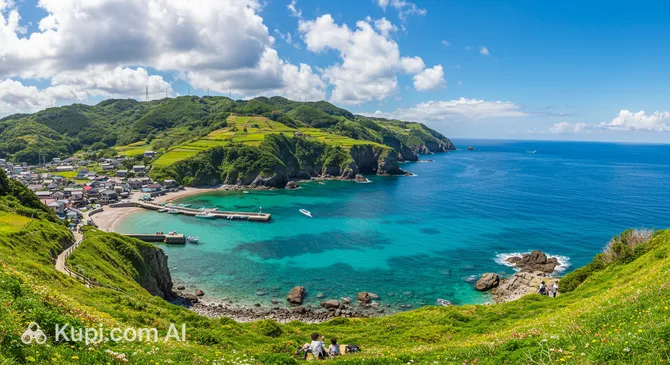
Rebun is an amazing island in the Sea of Japan, often called the "Floating Island of Flowers." This picturesque corner, located about 50 kilometers from the northernmost tip of Hokkaido Prefecture, attracts travelers with its pristine nature and atmosphere of peace. For many savvy tourists, Japan opens up here from a completely new, wild, and romantic side, far from the noise and neon lights of major metropolises.

Rebun. Illustration.
Source: Kupi.com AI

Geographically, the island is a strip of land stretched from north to south with a pronounced hilly relief. Due to the special cool climate, a unique ecosystem has developed here: alpine plants that are found elsewhere only high in the mountains bloom on Rebun right at sea level. The island's population is small and concentrated in small fishing villages living in harmony with the sea. The deep and original history of Rebun is inextricably linked with the culture of the indigenous Ainu people and centuries-old seafaring traditions, traces of which can be found in local names and legends.

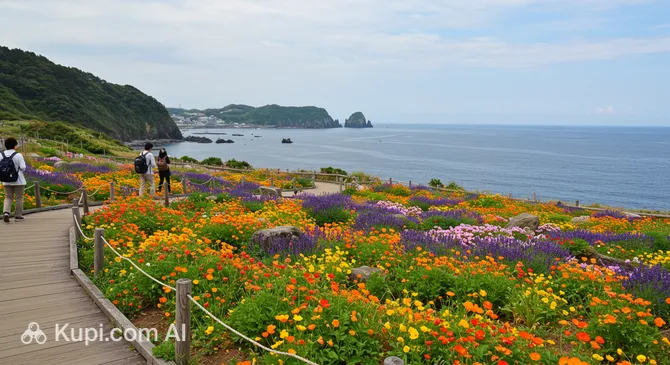
The main magnet for guests is the scenic trekking routes and the observation of unique flora. In the summer season, the green hills are covered with a carpet of rare plants, including the famous endemic — the "Rebun Lady's Slipper" orchid. Travelers are also drawn by the breathtaking panoramic views from Cape Sukoton and the chance to see the neighboring island of Rishiri. Visiting Rebun is an ideal chance to escape the city bustle, enjoy the silence, and try the best seafood at the very edge of Japanese land.

Weather Overview

The climate of Rebun Island is determined by its northern location in the Sea of Japan and is characterized by coolness even in the summer months. Winters here are quite harsh, windy, and snowy: in January and February, the average temperature drops to -4.0°C... -3.7°C, and the number of days with precipitation reaches 20–26 per month, making the island difficult to access during this period.

The summer season brings long-awaited warming, but there is no intense heat here. In the warmest month, August, the air warms up to an average of +20.3°C, reaching a maximum of +21.6°C, which creates ideal conditions for hiking and flower watching. Expect a moderately warm, comfortable summer and cold, long winters with heavy snowfall. To ensure your trip goes smoothly, we recommend checking the detailed weather in Rebun in advance and preparing appropriate clothing.

Average monthly temperature

Average monthly precipitation

Interesting Facts

In addition to its breathtaking landscapes, Rebun holds many fascinating secrets and unique features that make it a truly special place. Here are a few facts that will allow you to look at this northern island from a new perspective.
  • Botanical phenomenon. Rebun is often called the "floating island of flowers" due to an amazing natural anomaly. Thanks to the cold climate and sea winds, alpine plants grow here at sea level, which in other regions of Japan (on Honshu Island) are found only at altitudes of over 2,000 meters. The endemic orchid Rebun-atsumori-so has become a true symbol of this unique ecosystem.

  • Cinematic backdrop. The island served as the main filming location for the famous Japanese drama "A Chorus of Angels" (Kita no Kanaria Tachi). A school was built especially for the film on a picturesque cape, which blended so harmoniously into the landscape that it was preserved as a landmark. Now it is Kita-no-Kanari Park, where you can immerse yourself in the atmosphere of cinema.

  • A name from sea foam. The island's name comes from the language of the indigenous Ainu people. The word Repun translates as "island in the open sea." This name perfectly reflects the geography of the place: a long strip of land drifts in the waters of the Sea of Japan like a lonely ship, separated from the mainland of Hokkaido by a strait.

  • A challenge for travelers. For a long time, the hallmark of the island for active tourists was the legendary "8-hour course" — a trekking route crossing the west coast. Although the route has now been modified and broken into sections for safety and soil preservation, Rebun's fame as a "holy land" for hiking in Hokkaido remains unchanged.

Kita no Canary Park. Illustration.
Source: Kupi.com AI

Traveler photos:

How to Get There

Rebun Island is a remote corner of nature that cannot be reached directly by train or plane. Traveling here is a real adventure that invariably includes a ferry crossing. The main route lies through the city of Wakkanai in northern Hokkaido or through the neighboring island of Rishiri. You can find out all the ways to get to the city and plan your route by checking the information on the nearest transport hubs below.

There is no airport on Rebun Island itself, but you can fly into Wakkanai Airport (IATA: WKJ) in the city of Wakkanai, which is located about 60 km from Rebun (across the strait). This is the most convenient way to reach the ferry departure port. The journey from the airport to the Wakkanai ferry terminal will take about 30–35 minutes by bus or taxi, followed by the ferry crossing.

Another interesting option is Rishiri Airport (IATA: RIS), located on the neighboring island of Rishiri, only 12.8 km from Rebun. This is a small regional airport receiving flights from Sapporo. Upon arrival, you will need to get to the port (about 10–15 minutes by taxi) and take a ferry to Rebun, which takes about 40–45 minutes.

For international travelers, the main gateway is New Chitose Airport (IATA: CTS) in the city of Sapporo. This is the largest transport hub in the region, located 285.6 km from your destination. From here, you can fly to Wakkanai or Rishiri, or embark on a scenic train or bus journey across Hokkaido to the ferry crossing.

For clarity, here is summary information on the main airports:

AirportPassenger trafficDistance
Rishiri Airport93 16413 km
Wakkanai Airport305 72760 km
Asahikawa Airport1.1 mln213 km
Monbetsu Airport66 428217 km
Yuzhno-Sakhalinsk Airport1.5 mln220 km

There is no railway station in Rebun itself, as there are no railroads on the island. The traditional train route for tourists ends at JR Wakkanai Station in the city of Wakkanai on Hokkaido. From there, travelers transfer to the ferry to cross the strait. While stations on Sakhalin may appear on lists of nearby stations due to geographical proximity, they are not logistically connected to Japan's transport system.

Below is information about the nearest railway stations according to geographical data:

StationPassenger trafficDistance
Yuzhno-Sakhalinsk Railway Station400 000230 km
Dolinsk Railway Station150 000262 km

Main Attractions

The main attractions of Rebun are primarily masterpieces created by nature itself: rocky capes, flower fields, and breathtaking sea panoramas. The island does not abound with museums in the traditional sense, but every corner of it is a living postcard for which travelers travel a long way to northern Japan.

One of the most atmospheric and culturally significant places is Kita-no-Kanari Park. This park was created on the filming site of the famous Japanese film "A Chorus of Angels" (Kita no Kanariatachi). The central object here is a wooden elementary school building preserved as a set. Visitors can go inside the classrooms, feel the nostalgic atmosphere, and, looking out the window, see perhaps the most beautiful view of the neighboring island of Rishiri and its majestic volcano, Rishiri-Fuji.

Kita no Canary Park. Illustration.
Source: Kupi.com AI

Traveler photos:

At the northernmost tip of the island lies the harsh and windy Cape Sukoton. This place gives the feeling of being at the "edge of the world": the endless sea stretches out before you, and the uninhabited Todo Island is visible in the distance. It is always fresh and spacious here, and the rocky shores often become a resting place for seals. Near the cape, there are shops and small cafes where you can warm up after a walk in the biting sea wind.

For lovers of trekking and unique flora, the Momoiwa Observatory is a must-see. The name translates as "Peach Rock" because of the characteristic shape of the huge stone formation rising above the green hills. This is the heart of Rebun's flower routes: in summer, the surrounding meadows are covered with a carpet of rare alpine plants. The trail leading from here is considered one of the most picturesque on the island, offering tourists unforgettable views of the ocean and cliffs.

Another natural gem is Cape Sukai, known for its incredibly clear turquoise waters, which locals call "Sukai blue." This is a bay with steep cliffs and a stony beach hidden among the hills. Getting down to the water itself is difficult, but the specially equipped observation deck offers a view that often graces Rebun's travel posters thanks to the contrast between the blue sea and bright green vegetation.

Local Cuisine

The gastronomic scene of Rebun is entirely dictated by its geography: it is a kingdom of the freshest seafood harvested in the cold waters of the Sea of Japan. For many foodies, a trip to this northern island is primarily a culinary pilgrimage, the goal of which is to taste delicacies whose flavor here is radically different from what can be found in big cities.

The absolute king of local cuisine is the sea urchin (uni). Rebun is famous for harvesting the elite variety Ezo Bahun Uni, known for its rich orange color and incredibly sweet, creamy taste. The most popular dish that every tourist must order is uni-don: a bowl of hot rice generously covered with fresh sea urchin roe. The best time for tasting is the summer season (June to August), when the catch is freshest.

Another gastronomic pride of the island is hokke (Okhotsk atka mackerel). Fish caught in local waters are characterized by high fat content and juiciness. In local establishments, it is usually served as "hokke-yaki" — grilled whole, with a crispy skin and tender meat. This simple but satisfying dish perfectly conveys the taste of the northern sea and is often accompanied by grated daikon and soy sauce.

It is impossible to talk about Rebun's cuisine without mentioning kombu (kelp). The local seaweed is considered one of the best in Japan and serves as the basis for haute cuisine throughout the country. Here you can try it in many different forms: from dried kelp snacks to rich soups. Even if you don't order a separate dish, the taste of local kombu will be invisibly present in almost every broth and sauce, giving the food a deep umami flavor.

As for drinks, Japanese sake (nihonshu) is the perfect accompaniment to seafood. Although there are no large sake breweries on the island itself, varieties from neighboring Hokkaido cities such as Asahikawa or Mashike are widely represented in restaurants. Beer lovers should look out for Sapporo Classic — this variety is brewed exclusively for Hokkaido and is very refreshing after long walks. Among non-alcoholic drinks, tea made from kombu seaweed (kombu-cha), salty and healthy, is popular.

The food culture on Rebun is characterized by simplicity and homey comfort. There are no pretentious fine-dining restaurants; instead, tourists can expect small family-run diners and izakayas, concentrated mainly in the Kafuka port area. A special place is held by dining in traditional inns (ryokans): dinner there is often a real feast of a dozen small dishes prepared from the morning's catch. Remember that restaurants close early, so it's better to plan dinner in advance without putting it off until late in the evening.

Travel Tips

Welcome to the "Floating Island of Flowers"! Traveling to Rebun is a unique experience that requires special preparation, as life here flows at its own pace, different from the noisy metropolises of Japan. These practical tips will help you plan the perfect trip, avoid surprises, and enjoy the harsh beauty of the north without extra hassle.

  1. Clothing and gear. The climate on the island is cool even in the height of summer: the average August temperature rarely exceeds +20°C, and strong winds blow on the capes. Be sure to bring a windbreaker, a fleece sweater, and a raincoat. Since the main activity here is walking, you will need comfortable, broken-in trekking shoes. Forget about heels and formal suits — sporty style reigns here.

  2. Transport logistics. There are no railways on the island, and it's practically impossible to catch a taxi on the street (you need to order one). The main way to get around is Soya Bus, but they run infrequently. It is critically important to take a photo of the schedule at the terminal or download it in advance. If you plan to move around a lot, consider renting a car or scooter, but you need to book them several months before the trip due to the small fleet.

  3. Cash is king on the island. Despite the technological nature of Japan, Rebun remains a cash-only territory. Cards are accepted at the ferry terminal, Seicomart, and some large hotels, but in most family restaurants, souvenir shops, and when buying bus tickets, you will need cash yen. ATMs are extremely rare (mostly in post offices), so bring a sufficient supply of money with you.

  4. Health and safety. There are no 24-hour pharmacies on the island, and only one hospital. Be sure to pack a first-aid kit with your usual medications, motion sickness remedies (for the ferry), and band-aids for blisters. The island is very safe in terms of crime, but be careful on natural trails: the weather changes instantly, and railings are not everywhere. Do not stray from the trails to avoid hurting your feet or damaging the fragile soil.

  5. Connectivity and communication. English is practically not used on the island. Download an offline translator (such as Google Translate) and offline maps of the area to your phone in advance. Wi-Fi is available in hotels and the terminal, but mobile signals may drop on remote trekking routes. There is nowhere to buy a SIM card on the island — take care of this at your arrival airport (Tokyo or Sapporo).

  6. Environmental etiquette. Rebun is part of a national park. The strictest rule: never pick flowers or take stones with you. Many plants are the rarest endemics. Also, garbage sorting rules are very strictly observed on the island: if you don't find a bin (and there are few of them), take your trash back to the hotel. In public baths (onsens), be sure to wash before entering the communal pool.

  7. What to avoid: hunger in the evenings. Life on the island settles down early. Don't count on finding an open restaurant after 19:30–20:00 unless you are in the center of Kafuka. If you don't have dinner included at your hotel, take care of food in advance, otherwise the only option will be the Seicomart store, whose shelves may be empty by evening.

  8. Life hack for day tourists. If you arrived by ferry in the morning and are leaving in the evening, leave your heavy things in coin lockers in the Kafuka ferry terminal building immediately upon arrival. This will allow you to go hiking light. And don't forget to try the local soft-serve ice cream with kombu seaweed at the terminal cafe — the taste is specific, but unforgettable!

A trip to Rebun is a chance to slow down and be alone with pristine nature. By following these simple tips, you can avoid domestic inconveniences and fully devote yourself to contemplating breathtaking landscapes and tasting the best seafood of the north.

Entertainment & Nightlife

Nightlife on Rebun Island is fundamentally different from the usual rhythm of Japanese metropolises. Here you won't find neon signs for nightclubs, noisy discos, or 24-hour karaoke bars. Evenings on the island are a time for silence, tranquility, and gastronomic discoveries in a cozy, almost home-like atmosphere. Most activity fades with the sunset, giving way to calm rest after a day spent on trekking routes.

The center of evening life, so to speak, is the Kafuka port area. This is where most of the catering establishments that are open in the evenings are concentrated. The local "nightlife" format consists of traditional Japanese izakaya bars and small family-run restaurants. A warm atmosphere reigns in these establishments: local fishermen and tourists gather together to discuss the past day, enjoy the freshest grilled seafood (robata-yaki), and drink hot sake or cold beer. Live music is rare here; the main sound accompaniment is friendly conversations and the sound of the sea.

Practical tips and atmosphere:

  • Opening hours: Be careful: the concept of "late evening" here is relative. Most restaurants and izakayas open around 17:30–18:00 and take their last orders as early as 20:00 or 21:00. It's better to arrive at the opening to get a seat.
  • Dress code: The style is absolutely informal. Tourists often come in comfortable hiking clothes, and ryokan guests might drop in for dinner directly in a yukata (light cotton kimono), which is encouraged and adds to the local flavor.
  • Prices and payment: The average check for dinner with drinks will range from 3,000 to 5,000 yen. It is extremely important to have cash with you, as cards are not accepted everywhere.

Natural "shows" serve as an alternative to bars. Thanks to the lack of light pollution, Rebun is an ideal place for stargazing. In clear weather, the Milky Way is visible to the naked eye. Many tourists prefer to spend their evenings in the hot springs (onsens) at their hotels, enjoying views of the dark sea. From a safety standpoint, the island is one of the calmest places on the planet. Night walks are perfectly safe, however, the streets are poorly lit, so a flashlight will not be out of place. Public transport does not run at night, and it's difficult to catch a taxi on the street, but within the village of Kafuka, everything is within walking distance.

As for entertainment during daylight hours, it is inextricably linked with contemplation here. Instead of amusement parks, natural viewpoints reign. One of the main cultural points of attraction is Kita-no-Kanari Park. Although this place closes before dark, many try to visit it in the afternoon to catch the "golden hour" and take stunning photos of the school against the backdrop of Mount Rishiri before heading off to dinner.

Parks & Museums

Rebun and the island of the same name are a rare case where the boundaries between museum exhibits and wild nature are practically blurred. Most of the territory is part of the Rishiri-Rebun-Sarobetsu National Park, so the main "exhibition halls" here are flower fields and sea coasts, but there are several iconic man-made objects on the island that deserve attention.

The most famous and cinematic place is Kita-no-Kanari Park. This park was founded on the filming site of the popular Japanese drama "A Chorus of Angels" (Kita no Kanariatachi). The main attraction here is the preserved wooden elementary school building, inside which you can see photos from the filming and the actors' costumes. But tourists are drawn here not only by the film's history: perhaps the most breathtaking view of the neighboring island and the Rishiri-Fuji volcano, seemingly floating above the sea, opens from the park's territory.

For those who want to get acquainted with the unique flora of the island but are not ready for long mountain hikes, the Rebun Alpine Plant Garden is open. This is a specially organized zone at the foot of the mountain where more than 50 species of local plants are collected, including famous endemics. The garden is particularly interesting because you can see flowers whose blooming period in the wild has already passed or has not yet arrived, thanks to special care and different planting times.

The cultural heritage of the region is carefully preserved in the Rebun Local History Museum. The exhibition of this museum is much richer than one might expect from a small island settlement. It presents archaeological finds dating back to the Jomon period and the Okhotsk culture, which testifies to the ancient history of settlement in these harsh lands. A separate part of the exhibition is devoted to the life of the indigenous Ainu people, as well as the history of the island's development by Japanese fishermen and the growth of kombu kelp harvesting.

Insider tip: If you find yourself in the northern part of the island, visit the vicinity of Lake Kushu. It is the only freshwater lake on the island, with convenient walking paths laid out around it. There is a campsite here, and it is one of the best places to observe wild birds in silence, away from the main tourist groups.

Getting Around

Since Rebun is a relatively small island with complex terrain, there are no subways, trams, or railway connections here. The only form of public transport is the Soya Bus company's route buses. They connect the ferry terminal at Kafuka port with major tourist locations, such as Cape Sukoton in the north, Cape Shiretoko in the south, and the starting points of popular trekking routes.

The fare payment system on local buses may seem unusual to those visiting remote regions for the first time. Entry is through the back door, where you need to take a ticket (seiriken) with the number of your boarding stop. Payment is made upon exiting through the front door: match the number on the ticket with the electronic board above the driver to find out the cost, and drop the coins along with the ticket into the machine. It is important to have cash (change and 1,000 yen bills) with you, as transport IC cards (Suica, Pasmo) are generally not accepted here.

For tourists planning active travel, there are convenient 1-Day Passes. They can be purchased at the bus terminal ticket office in Kafuka port. This is especially convenient if you plan to visit several distant attractions in one day. Organized tour buses are also popular, running on fixed routes and allowing you to see the main beauties of the island without having to keep track of the regular bus schedule.

As an alternative to public transport, rental cars, scooters, and bicycles are available on the island. Renting a car gives you maximum freedom, but it's worth booking it long before your trip, as the fleet on the island is limited. A bicycle is an excellent choice for short trips, but consider the hilly terrain and strong winds; it's better to choose electric-assist models. Rental points are usually located within walking distance of the ferry terminal.

Taxis are available on the island, but they are few, and long-distance trips can be quite expensive. The taxi stand is located right at the exit of the ferry terminal. If you are planning a trip early in the morning or late in the evening, it's better to book a car in advance through your hotel or the tourist information center.

The main tip for travelers: keep a close eye on the bus schedule. Trips can be infrequent (once every 1–2 hours), and the last bus often leaves quite early, around 17:00–18:00. The schedule also changes depending on the season, being reduced in the winter period. Always have a paper copy of the schedule or a photo of the stand at the stop with you, as mobile internet in remote parts of the island can be unstable.

Accommodation

The choice of accommodation on Rebun Island is quite limited, dictated by its remoteness and small size. Here you will not find the usual international chain hotels or high-rise hotel complexes. The core of the room stock consists of traditional Japanese inns (ryokans), family guesthouses (minshuku), and a few mid-range hotels, often equipped with their own hot springs (onsens). Staying here is not just a place to sleep, but an immersion into authentic Japanese life with tatami on the floor and futons instead of beds.

Logistically, the most convenient area to stay is the vicinity of the Kafuka ferry terminal in the south of the island. By staying here, you will be within walking distance of the port, shops, the only bank, and bus stops heading to the trekking routes. This is a strategically sound choice for those traveling without a rental car. The second popular area is the village of Funadomari in the north. It is suitable for those seeking solitude, proximity to nature, and planning to explore Cape Sukoton or observe seals, although the tourist infrastructure there is less developed.

An important feature of the local hotel business is seasonality. The peak demand occurs during the blooming of alpine meadows and the sea urchin harvesting season (from June to August). During this time, finding a room on the same day is practically impossible. It is highly recommended to book accommodation at least 3–5 months before the trip. Keep in mind that many small minshukus close for the winter period (from November to April) when the tourist flow dries up.

The price range varies from budget (in simple guest houses with shared facilities) to high (in the best ryokans with sea views). The cost of living on Rebun is often higher than the average in Hokkaido, but the price usually includes two meals a day (half board). This is extremely convenient since restaurants on the island close early. Dinner at a hotel on Rebun is a separate gastronomic attraction with an abundance of the freshest seafood. For booking, it is better to use large international or Japanese online platforms, but be prepared for the fact that some small family hotels accept payment only in cash upon arrival.

Nearby Cities

For those who want to explore the surroundings, Rebun serves as an excellent starting point for day trips to several interesting nearby places. Given the island's location, most routes begin with a ferry crossing, providing access to the unique attractions of northern Hokkaido. * Wakkanai — Japan's northernmost city and the main gateway to Rebun Island. It is an ideal destination for a short visit. Here you can visit Cape Soya, the country's northernmost point, take a photo at the famous monument, and see the shores of Sakhalin on a clear day. The city is also famous for its Wakkanai Park and the breakwater shaped like an ancient colonnade, which protects the port from harsh winds. * Asahikawa — although this city is further away, it is an important transport and cultural center of the region. Asahikawa is known nationwide for its Asahiyama Zoo, which provides unique conditions for observing animals in an environment close to their natural habitat. It's also a great place to try the famous Asahikawa ramen and visit local sake breweries. * Rishiri Island — although not always listed as a city, this neighboring island is only 40–45 minutes away by ferry. Its main feature is the majestic Mount Rishiri-Fuji, which can be seen from the shores of Rebun. The island offers excellent cycling routes and hot springs, making it a wonderful addition to your journey.
CityPopulationDistance
Rishiri2 10018 km
Wakkanai34 00051 km
Nayoro27 062154 km
Rumoi20 260158 km
Nevelsk10 421165 km
These nearby destinations provide insight into the diverse culture and landscapes of the region, complementing the impressions of Rebun's wild nature.

Shopping & Souvenirs

General Overview: Shopping on Rebun Island in Japan has its own unique character. Here you won't find multi-story shopping centers, global brand boutiques, or noisy outlets. Trade on the island is concentrated around the gifts of the sea and unique nature. This place is ideal for buying authentic gastronomic souvenirs and local handicrafts that cannot be found in major metropolises. The shopping atmosphere here is calm, relaxed, and very "homey."

Main Shopping Areas: The main shopping point of the island is the area around the port of Kafuka. It is here, in the ferry terminal building and on the adjacent streets, that most of the shops are concentrated. Tourists can stroll along the waterfront, where small shops offer everything from fresh seafood to commemorative magnets. Souvenir kiosks can also be found at popular natural attractions, for example, at Cape Sukoton in the north of the island.

Shopping Centers and Stores: There are no large malls on the island. The role of the main "shopping center" is played by the Kafuka ferry terminal building (Marine Center Kafuka). On the first floor, there is a large souvenir shop offering the widest range of goods on the island. For purchasing daily goods, food, and drinks, the Seicomart store is indispensable — it is a popular chain of convenience stores (konbini) in Hokkaido, which serves as a real lifesaver for travelers on Rebun, offering hot food and basic necessities.

Markets and Seafood: Although there are few classic open-air markets here, specialized fish shops deserve special attention. In the port area, there are direct sales shops from fishing cooperatives. Here you can purchase the freshest delicacies caught literally a few hours ago. If you want to bring the taste of the sea home, look for vacuum packaging and canned products specially prepared for long transport.

Souvenirs: The main brand of Rebun is kombu (kelp). The local seaweed is considered one of the highest quality in the country, so be sure to buy dried kombu, seaweed tea, or snacks based on them. The second must-buy item is sea urchin (uni): shops sell canned and salted variations of this delicacy. Goods with the image of "Atsumon" — the island's cute orchid flower mascot — are also popular. Small souvenirs related to the film history of the island can be found by visiting Kita-no-Kanari Park, which has its own small shop.

Opening Hours and Payment: Life on the island settles down early. Most souvenir shops open around 8:00–9:00 AM and close by 5:00–6:00 PM. Seicomart stays open longer but not 24 hours. As for payment, cash (yen) is absolutely necessary here. Although the terminal and some larger outlets may accept cards, in small shops and cafes, you can only pay with cash. There are few ATMs on the island, so withdraw money in advance.

Tax Free: The Tax Free system is practically non-existent on Rebun Island. Most shops are small private businesses that do not offer this service. Do not count on Tax Free when making purchases here; consider the local prices as a contribution to supporting the economy of this remote and beautiful region.
Reached the end of the page?

That means the route is fully explored