Support

Natsional'naya Derevnya Narodov Saratovskoy Oblasti

About

Did you know that in the Volga region, you can explore the cultures of dozens of peoples just by walking down a single street? In the city of Saratov, at the top of Sokolovaya Hill, lies the National Village of the Peoples of the Saratov Region. This unique open-air ethnographic museum serves as a symbol of peace and harmony for the more than 135 ethnicities living in the region.

The complex consists of 16 farmsteads located on three cozy streets. Here, you can see a genuine 19th-century Russian izba, Bashkir and Kazakh felt yurts, a Mordovian "Kudo" estate, an Azerbaijani "Maiden Tower," and a Georgian house. Each structure is an authentic architectural specimen, with traditional life carefully recreated inside using vintage furniture, clothing, and handicrafts.
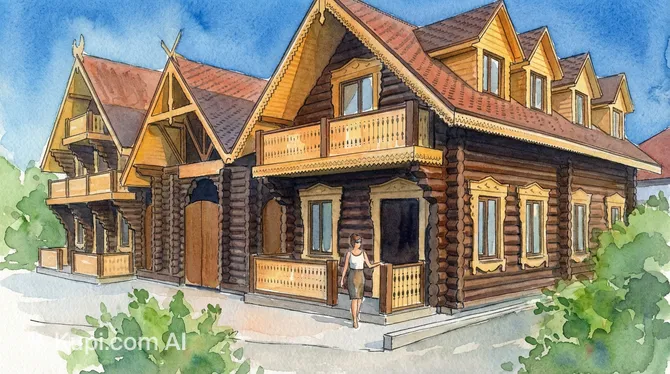
National Village of the Peoples of Saratov Region
National Village of the Peoples of Saratov Region. Иллюстрация. Источник: Kupi.com AI

Located in Russia, this complex has become a true hallmark of Saratov. The central "Friendship of Peoples Street" invites guests not just to look at the houses, but to experience living history through the aromas of national cuisine and the hospitable atmosphere of each courtyard.

Contacts

To clarify current information about events and the operation of specific farmsteads, we recommend checking the official community of the complex. You can contact representatives through social media.

How to contactContact
AddressСаратов, Саратовская обл., Россия, 410031
Websitevk.com

What to Do

Every visitor will find something to their liking in the National Village. The main reason people come here is for the tours of the national farmsteads. Under the guidance of guides, you can step inside the houses, learn the secrets of ancient crafts, and see how different peoples lived centuries ago. This is a great opportunity to examine the old-fashioned decor in detail: from carved window frames to traditional stoves and handmade carpets.

Tastings offer a special treat. Many farmsteads have restaurants where you can try authentic dishes: Tatar peremyachi, Armenian shashlik, Uzbek pilaf, or Ukrainian borscht. During holidays, especially on May 9th, the village comes alive: festivals and concerts take place on the open stage, and masters hold interactive classes for children and adults.

Don't forget to stroll through the gardens surrounding the estates and take commemorative photos against the backdrop of yurts or medieval towers—quite exotic for a city dweller. Thematic programs are often organized here for schoolchildren, allowing them to learn about the ethnography of their native land in a fun way.

Getting There

The ethnographic complex is located at: 10a Universitetskaya St, Saratov. It is situated within Victory Park on the famous Sokolovaya Hill, which is visible from almost anywhere in the city.

You can reach the site by public transport: buses and route taxis regularly run to the "Park Pobedy" or "Gora Sokolovaya" stops. A taxi ride from the city center or the railway station will take no more than 10–15 minutes.

If you enjoy walking and have the time, you can climb the hill from the Volga embankment side. Such an ascent will take about 30–40 minutes and requires some effort, but along the way, you will be rewarded with breathtaking panoramas of Saratov.

Ближайший город: Saratov

History & Facts

The idea for this unique place was born in 2003 at the initiative of the region's national-cultural associations. The main goal was to preserve the traditions of more than 135 peoples for whom Russia and the Saratov region became a common home. Construction began in April, and by May 9, 2003, the first six farmsteads opened on "Friendship of Peoples Street," highlighting the unity and diversity of the local culture.

The first and one of the most valuable exhibits was an authentic 19th-century Russian izba with a bathhouse, which was transported in disassembled form from the Voskresensky district. Each national association sought to contribute: furniture, utensils, and textiles for decorating the houses were often donated from private family collections as priceless relics.

By 2009, the village had grown to 15 farmsteads, and today their number has increased to 16. Despite temporary construction challenges in the mid-2000s, the complex has become an important cultural center. It was one of the first "national villages" in the country, serving as an example for the creation of similar ethno-parks in other regions.

Time Needed

To explore all the farmsteads without rushing, peek into the yurts and huts, and take beautiful photos, it is recommended to set aside 2–3 hours. This time is quite enough to get acquainted with the main exhibition and have a short break.

If you plan not just a tour, but a full lunch at one of the national restaurants or participation in a festive event, you should budget half a day for the trip. A walk through Victory Park, where the village is located, can be an excellent plan for an entire weekend day.

Working Hours

The territory of the ethnographic park is open for walks daily from 08:30 to 22:00. This allows guests to admire the architecture of the farmsteads both in daylight and in the glow of the sunset when the city below begins to light up.

It is important to remember that the internal museum exhibits in the houses and the national restaurants may have their own operating hours, which sometimes differ from the general park schedule. We recommend checking details on the official website or the complex's social media before visiting.

08:30–22:00

Nearby

Exploring Sokolovaya Hill is not limited to the ethnographic complex. The immediate surroundings are rich in memorials and park areas that will help make your walk even more fulfilling and interesting.

NameDistance
Cranes Memorial0.9 km
Victory Park0.9 km
Monument to Yak-38 in Victory Park1.1 km
Uzbechka1.3 km
MACHINE HEAD Rock Bar1.4 km
Holy Trinity Cathedral1.5 km
Saratov Regional Museum of Local Lore1.6 km

Reached the end of the page?

That means the route is fully explored