Support

Vladivostok

About

Vladivostok is a captivating city located in the Far East of the Russian Federation. Often referred to as Russia's "San Francisco" due to its hilly terrain and iconic bridges, it serves as a vital cultural and economic hub on the Pacific coast. As the eastern terminus of the famous Trans-Siberian Railway, the city holds a special place in the hearts of travelers and adventurers alike.

Geographically, the city is situated around the stunning Golden Horn Bay, offering sweeping maritime panoramas. The climate here is influenced by the monsoon, bringing distinct seasons with warm, humid summers and clear, cold winters. With a population of over 600,000 residents, it is the administrative center of Primorsky Krai and a bustling metropolis where European and Asian influences seamlessly blend.
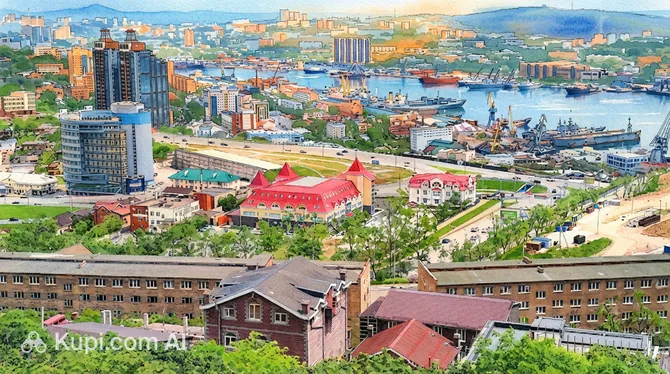
Vladivostok. Source: Kupi.Binoculars

Exploring the history of Vladivostok reveals its transformation from a military outpost to a vibrant cosmopolitan center. Visitors are often drawn to the magnificent Russky Bridge and the Zolotoy Rog Bridge, which define the modern skyline. The city's funicular offers breathtaking views of the harbor, while the Sportivnaya Harbor promenade is perfect for a relaxing seaside stroll.

Whether you are interested in naval heritage, fresh seafood, or simply enjoying the ocean breeze, Vladivostok offers a memorable experience. It is a destination that promises a unique perspective, combining rugged natural beauty with urban charm, making it well worth a visit.

Weather Overview

The climate in this coastal city is marked by distinct seasonal changes. Winters are typically freezing and dry, with January temperatures averaging -11.0°C and minimums dipping to -15.2°C. Precipitation during these colder months is negligible, often resulting in clear, crisp skies.

Summer brings a significant shift, offering warmer temperatures and increased humidity. August is the warmest month, featuring an average temperature of 21.9°C, but it also records the highest frequency of precipitation with up to 16 wet days. To help plan your activities, it is helpful to review the current weather in Vladivostok. Generally, you can expect warm summers with occasional rain and cold, dry winters.

Interesting Facts

Beyond the main attractions, Vladivostok holds many fascinating secrets and unique traits that define its character. From Hollywood connections to record-breaking engineering, here are some intriguing details about this Far Eastern city.
  • The Vladivostok Railway Station is not just an architectural gem; it marks the definitive end of the world's longest railway line. A commemorative column on the platform displays the number "9288," signifying the staggering distance in kilometers from Moscow to this Pacific terminus.

  • History enthusiasts might be intrigued by the Vladivostok Fortress Museum, which preserves the legacy of a massive defensive complex. At the time of its construction, the fortress was considered one of the strongest in the world, and its formidable reputation alone deterred enemy fleets from ever attempting a direct attack.

  • A surprising cultural fact is that the legendary Academy Award-winning actor Yul Brynner was born in this city in 1920. A statue dedicated to the star of "The King and I" stands near the house where he spent his early childhood years.

  • Vladivostok presents a unique automotive paradox: while traffic moves on the right side of the road, the vast majority of cars are right-hand drive. This local quirk is a result of the city's close proximity to Japan, leading to a high prevalence of imported Japanese vehicles.

  • To navigate the steep coastal terrain, the city utilizes a rare form of public transport. The Vladivostok Funicular Lower Station serves as the entry point for a short but scenic railway ride that connects the downtown area to the upper neighborhoods, offering spectacular views of the Golden Horn Bay.

Vladivostok Railway Station. Source: Kupi.Binoculars

How to Get There

Reaching this major port city on the Pacific coast is an adventure in itself, offering routes that are as diverse as the region's landscape. Whether you prefer a scenic flight or a legendary train journey, you can find more about how to get to Vladivostok to help plan your logistics.

The primary gateway for air travelers is Knevichi (IATA: VVO), a busy international airport serving the region. It handles a large volume of passenger traffic and connects the city with major hubs. Located approximately 35 km from the center, the trip by taxi or bus typically takes around 75 minutes. For those considering alternative routes through neighboring countries, Yanji Chaoyangchuan Airport (IATA: YNJ) is an option, though it is located in the city of Yanji, China, about 202 km away. Travel from there involves a significantly longer journey of over 5 hours and requires crossing the border.

For clarity, here is a summary of the main airports:

Airport Name City Passenger Traffic Km from City
Knevichi Vladivostok High 35.2
Yanji Chaoyangchuan Airport Yanji Medium 202.5
Mudanjiang Airport Mudanjiang Medium 243.7
Suifenhe Dongning Airport Suifenhe Low 170.1
Jixi Airport Jixi Low 246.7

Rail travel is an iconic way to arrive, as the city serves as the eastern terminus of the Trans-Siberian Railway. The Vladivostok Railway Station is the heart of this network, situated directly in the city, just 3.5 km from the main downtown area. It handles a very high volume of passengers and offers direct access to the city's sights. Alternatively, the Ussuriysk Railway Station is a significant regional hub located in the city of Ussuriysk, approximately 74 km from Vladivostok. A transfer from there by road would take about 2 hours.

Here is a list of the nearest railway stations:

Station City Passenger Traffic Km to Center
Vladivostok Railway Station Vladivostok High 3.5
Ussuriysk Railway Station Ussuriysk Medium 74.5
Smolyaninovo Station Bolshoy Kamen Low 47.5
Artem Railway Station Artem Unknown 31.0
Ugolnaya Station Artem Unknown 22.7

Main Attractions

Vladivostok offers a diverse array of sights that reflect its status as Russia's gateway to the Pacific. From sweeping panoramic views to immersive historical sites, the city's landmarks provide a fascinating mix of military heritage, modern engineering, and natural beauty. Here are some of the top places to explore during your visit.

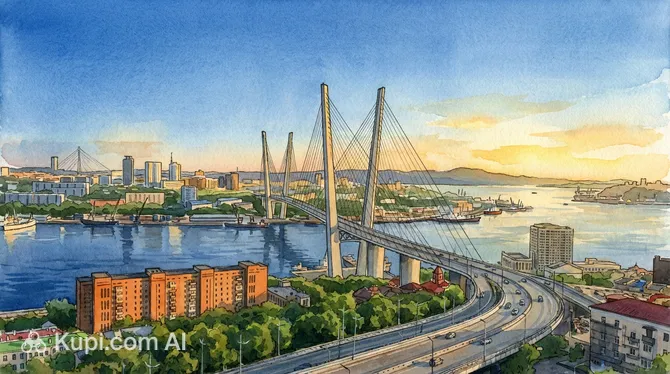
For the most iconic view of the city, a trip to the Eagle's Nest Viewpoint is an absolute must. Situated on the highest hill in the downtown area, this vantage point offers a breathtaking panorama of the Golden Horn Bay and the majestic cable-stayed bridge that spans it. It is a particularly popular spot at sunset, where tourists and locals alike gather to watch the city lights shimmer against the dark waters of the harbor.

Eagle's Nest Viewpoint. Source: Kupi.Binoculars

A short distance from the city center on Russky Island lies the Vladivostok Oceanarium, a world-class facility that is both an architectural gem and a scientific hub. The complex is designed to resemble a seashell and houses vast exhibits showcasing marine life from the Sea of Japan, the polar regions, and the tropics. It is an ideal destination for families and nature lovers, offering a chance to walk through underwater tunnels and observe exotic sea creatures up close.

Vladivostok Oceanarium. Source: Kupi.Binoculars

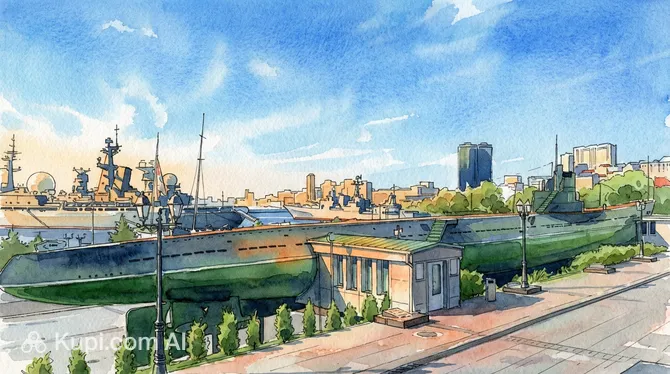
History enthusiasts will find the S-56 Submarine Museum to be a compelling attraction. Located on the Korabelnaya Embankment, this authentic World War II-era submarine has been preserved as a museum, allowing visitors to step inside and explore its compartments. Walking through the narrow corridors and seeing the original machinery provides a vivid sense of the conditions faced by the crew during their service.

S-56 Submarine Museum. Source: Kupi.Binoculars

Another architectural highlight is the Triumphal Arch of Nicholas II, a vibrant and ornate structure near the waterfront. Originally built to commemorate the visit of the future Emperor Nicholas II in 1891, the arch was later destroyed but meticulously reconstructed to its former glory. Its intricate details and bright colors make it a standout landmark and a perfect backdrop for memorable photos while strolling through the city center.

Triumphal Arch of Nicholas II. Source: Kupi.Binoculars

Local Cuisine

Local Cuisine:

The culinary landscape of Vladivostok is a unique fusion where Russian traditions meet the bountiful gifts of the Pacific Ocean and the spicy accents of neighboring Asia. Due to its coastal location, fresh seafood is the cornerstone of the local diet. Travelers travel from far and wide to taste the legendary Kamchatka crab, tender scallops, and sea urchins, often served raw or minimally processed to highlight their natural sweetness. The city is also famous for pyanse, a steamed bun filled with meat and cabbage, which has become an iconic street food staple.

Dining in this city is an experience in itself, with a surprising local love affair with Georgian cuisine. Supra Meore is one of the most popular destinations, known for its vibrant atmosphere, endless toasts, and delicious khinkali. It is a place where the hospitality is as warm as the food. Another excellent spot in this culinary family is Didi Supra, offering a cozy setting to enjoy traditional cheesy khachapuri and other Caucasian delights.

For those seeking a modern and trendy vibe, Kooperativ is a must-visit. This bustling gastro-market brings together various food concepts and bars under one roof, making it a hub for youth and nightlife. If you are in the mood for hearty meat dishes, Gastroli Grill specializes in high-quality steaks and grilled specialties, providing a perfect retreat for carnivorous travelers.

The city's evening scene is equally inviting, with several establishments offering a great selection of drinks. Brugge Pub brings the spirit of a Belgian brasserie to the Far East, featuring an extensive list of beverages and European snacks. Alternatively, Billy's Pub offers a classic, relaxed environment where you can unwind after a day of exploring the steep streets and windy embankments of Vladivostok.

Travel Tips

Welcome to Vladivostok, a city where the ocean breeze meets steep hills and urban energy. To help you navigate this unique Pacific metropolis with ease, here are some practical tips that will ensure your journey is as smooth and enjoyable as the views from its famous bridges.

  1. Clothing and Gear: The weather here is defined by the sea and the wind, so layering is essential regardless of the season. In summer, bring breathable fabrics but always carry a windbreaker for evening strolls along the embankments. If visiting in winter, thermal underwear, a heavy down jacket, and a hat are non-negotiable, as the humidity makes the cold feel more intense. Most importantly, wear sturdy, comfortable walking shoes with good grip; the city is built on hills, and you will be climbing many stairs and steep slopes.

  2. Transportation: The city has an extensive bus network that covers most areas, but traffic jams can be frequent during rush hours. For convenience, ride-hailing apps like Yandex Go are widely used and often more reliable than hailing a taxi on the street. While you can rent a car, be aware that parking in the city center is scarce and the terrain is challenging. Don't miss a ride on the historic funicular—it’s both a mode of transport and a sightseeing experience.

  3. Finances: The local currency is the Russian Ruble (RUB). While credit cards are used locally, international card systems may not operate, so it is highly advisable to bring sufficient cash in major currencies (USD or EUR) to exchange at local banks upon arrival. ATMs are widespread, but relying on foreign cards can be risky. Tipping is generally appreciated in restaurants; leaving about 10% of the bill is a standard gesture of gratitude for good service.

  4. Health and Safety: Vladivostok is generally safe for tourists, but standard precautions apply. Pharmacies, marked with a green cross, are easy to find, and many operate 24/7 in the city center. Be cautious when walking in winter, as sidewalks on the hills can become icy. It is also recommended to drink bottled water rather than tap water to avoid any stomach issues.

  5. Communication: The primary language is Russian. While younger people and staff in high-end hotels may speak English, it is not widely spoken in everyday settings. Downloading an offline translation app and a map app like 2GIS (which is extremely accurate for this region) is a lifesaver. You can easily purchase a local SIM card at the airport or mobile shops in the city with your passport to stay connected.

  6. Local Etiquette: Russians may seem reserved initially, but they are warm and hospitable once you get to know them. When entering someone's home, it is customary to remove your shoes immediately. In public transport, it is polite to give up your seat to elderly passengers or parents with small children. A firm handshake is the standard greeting for men, while a simple verbal greeting works well in mixed company.

  7. What to Avoid: Do not underestimate the local terrain or distances on a map; a destination might look close but require a steep uphill hike. Also, avoid taking photos of military installations or restricted areas near the port without permission, as this is a strategic border region.

  8. Seafood Insight: Since you are by the sea, trying the local seafood is a must, but be mindful of where you buy it. Avoid purchasing cooked seafood like shrimp or crabs from unauthorized street vendors on the beaches, as freshness cannot be guaranteed. Instead, head to reputable restaurants or specialized seafood markets to enjoy the famous Kamchatka crab and scallops safely.

Armed with these practical tips, you are ready to explore the winding streets and scenic lookouts of Vladivostok with confidence. Embrace the local rhythm, enjoy the fresh sea air, and let this vibrant port city surprise you at every turn.

Entertainment & Nightlife

Vladivostok transforms into a vibrant hub of energy once the sun sets over the Amur Bay. As a university city and a major port, the nightlife here is diverse, ranging from sophisticated cocktail lounges to energetic dance floors. The atmosphere is generally welcoming and casual, reflecting the city's open, seaside character. Locals love to socialize, and the evenings often start with a relaxed dinner before moving on to bars and clubs that stay open late into the night.

The heartbeat of the city's nightlife is concentrated in the downtown area, particularly around Svetlanskaya Street and Admiral Fokin Street (often called the Arbat). These pedestrian-friendly zones are lined with illuminated signs and offer a high density of venues within walking distance of each other. Another emerging hotspot is the area around Pogranichnaya Street, where trendy bars and creative spaces have taken root in historic brick buildings.

For a modern and bustling experience, Kooperativ is a standout destination. While it serves as a food court by day, at night it morphs into a lively social space where young people gather to enjoy craft drinks, DJ sets, and a spirited atmosphere. It is the perfect place to start your evening and mingle with the local crowd. If you prefer a more classic pub setting, Brugge Pub offers a slice of Europe in the Far East. Known for its extensive selection of beers and hearty snacks, it provides a warm, convivial environment that is popular with both expats and locals.

Those seeking a more refined evening might enjoy the city's cultural offerings. The Primorsky Pushkin Drama Theatre is a historic venue that stages high-quality productions, offering a glimpse into the rich Russian theatrical tradition. For families or those looking for a spectacular show, the recently renovated Vladivostok Circus is an architectural gem that hosts impressive performances in a state-of-the-art arena.

Daytime entertainment is equally varied. Visitors can explore modern shopping and leisure centers like Kalina Mall, which offers not only international brands but also cinema halls and food courts. For a nostalgic touch, the Carousel in the Sportivnaya Harbor area provides a charming seaside attraction, especially pleasant during the warmer months.

Practical Tips for Nightlife:
Most bars and clubs are busiest on Friday and Saturday nights. The dress code is generally "smart casual"—you don't need a tuxedo, but looking neat is appreciated; some high-end clubs may have face control. Prices are reasonable compared to Moscow, with cocktails averaging around 400-600 RUB. Getting around at night is safe and easy using taxi apps like Yandex Go, which are reliable and overcome the language barrier. While the city center is safe for night walks, it is always wise to stick to well-lit main streets and avoid unlit alleyways.

Parks & Museums

Vladivostok seamlessly blends its rugged maritime landscape with a rich cultural tapestry, offering visitors a variety of green sanctuaries and historical institutions. From quiet parks shaded by ancient trees to museums that chronicle the exploration of the Far East, the city provides ample opportunities to connect with its nature and heritage.

One of the city's most cherished green spaces is Pokrovsky Park. Located centrally, this historic park serves as a peaceful retreat from the urban bustle, featuring well-maintained paths and plenty of benches under a canopy of trees. It is a favorite spot for locals to take a leisurely stroll or enjoy a quiet moment. Historically, this area was once a cemetery, but it has been transformed into a vibrant recreational zone that retains a sense of solemn beauty.

For those who prefer the ocean breeze, Cape Kungasny offers a delightful seaside experience. This beach area is a popular recreational spot where visitors can relax by the water, enjoy a picnic, or watch the sunset over the Amur Bay. It has been developed in recent years to include walking areas and amenities, making it a comfortable place to enjoy the city's coastal geography without leaving the downtown area.

To gain a deeper understanding of the region, a visit to the Vladimir K. Arseniev Museum of Far East History is essential. As the oldest museum in the Russian Far East, it houses extensive collections related to the natural history, ethnography, and archaeology of the Primorsky region. The exhibits provide a fascinating insight into the indigenous peoples of the area and the history of its exploration and settlement.

Given the city's status as a major naval port, the Pacific Fleet Museum is another key cultural institution. Housed in a classic building, the museum showcases the naval history of Russia in the Pacific, displaying models of ships, authentic weapons, banners, and personal items of famous commanders. It is a compelling stop for anyone interested in maritime history and military heritage.

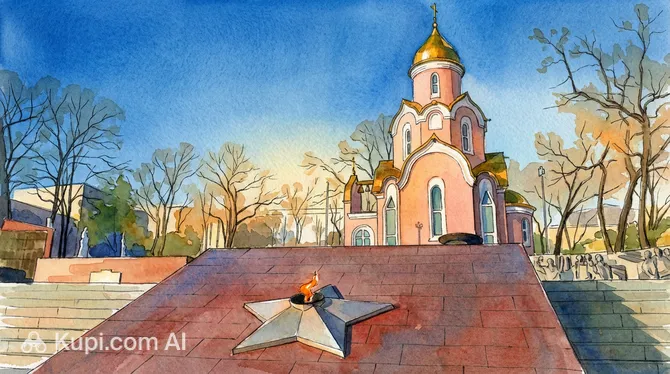
Among the city's most recognizable landmarks is the Monument to the Fighters for Soviet Power in the Far East (1917–1922). Dominating the central square, this imposing bronze statue is the largest of its kind in the Far East and serves as a symbol of the city. Just a short walk away, within the greenery of Pokrovsky Park, stands the Church of the Intercession of the Mother of God. This beautiful Orthodox church, with its golden domes and traditional architecture, was reconstructed on its original pre-revolutionary site and adds a spiritual dimension to the city's architectural landscape.

For a truly authentic experience, venture out to the Tokarevsky Lighthouse at the end of the Egersheld Peninsula. It is one of the oldest lighthouses in the region, and walking along the narrow spit of land to reach it during low tide feels like standing at the edge of the world.

Getting Around

Navigating Vladivostok is an experience defined by its hilly terrain and coastal geography. The city’s public transport system is well-developed and essential for getting around, especially given the steep slopes that can make walking distinctively challenging. The backbone of the network consists of buses and minibuses (marshrutkas), which cover the entire metropolis, from the historic center to the residential districts and beach areas. Buses run frequently and are the most reliable way to reach major attractions that are not within walking distance.

Electric transport also plays a role, though on a smaller scale. The city operates a limited trolleybus network and a single, yet iconic, tram line (Route 6) that runs through the southern part of the city. A standout feature of the system is the historic funicular. While it serves a practical purpose by connecting the downtown area to the upper streets near the university, it is also a beloved tourist attraction offering panoramic views of the Golden Horn Bay. It operates daily and is a quick, scenic way to avoid a steep climb.

For longer distances, particularly to the suburbs or the airport, the suburban electric trains (elektrichka) are an excellent option. They are comfortable, punctual, and offer scenic routes along the coast. The express train connecting the city center to the main airport is particularly convenient for travelers, avoiding city traffic entirely.

Paying for transport is straightforward. The most common method is using a contactless bank card or a smartphone with NFC capabilities, which is widely accepted on buses, trams, and the funicular. Paying with a card is often slightly cheaper than using cash. If you prefer cash, it is advisable to carry small change. In many buses, payment is traditionally made to the driver upon exiting the vehicle, though systems are modernizing, so it is always good practice to watch how locals are paying or look for validators near the doors.

Transport typically operates from early morning, around 6:00 AM, until late evening, approximately 10:00 PM or 11:00 PM. After these hours, or for a more direct route, taxis are a very popular alternative. Ride-hailing apps like Yandex Go are widely used, reliable, and overcome language barriers by allowing you to set your destination on a map. While car-sharing services and bike rentals are available, the city's challenging relief and heavy traffic often make taxis or walking (for short distances) the more practical choices for visitors.

Accommodation

Finding the perfect place to stay in Vladivostok is relatively easy, as the city offers a wide spectrum of accommodation options to suit every budget and preference. The hospitality sector here has developed significantly, ranging from affordable hostels and cozy guesthouses to modern business hotels and a few high-end luxury establishments. Whether you are a backpacker arriving via the Trans-Siberian Railway or a business traveler attending a conference, you will find suitable lodgings.

The most popular area for tourists is the Historic City Center, particularly along Svetlanskaya Street and the streets radiating from the central square. Staying here puts you within walking distance of major landmarks, the waterfront promenade, and a plethora of restaurants. It is also convenient for transport, with the Vladivostok Railway Station serving as a central hub for exploring the wider region. For those seeking a quieter atmosphere with stunning sea views, the Egersheld Peninsula is an excellent choice, offering hotels that overlook the Amur Bay.

Another sought-after location is the area around the Eagle's Nest Hill. Accommodation here often commands higher prices due to the spectacular panoramic views of the Golden Horn Bay and the iconic Golden Bridge. Waking up to the sight of ships navigating the harbor and the bridge illuminated at night is a highlight for many visitors.

Booking Tips:
Vladivostok is a seasonal destination, with the peak tourist season occurring in late summer (August and September). During this time, the weather is warmest, and the city often hosts major international events like the Eastern Economic Forum. Consequently, hotels can fill up months in advance, and prices may rise significantly. It is highly recommended to book your accommodation well ahead of your trip to secure the best rates and availability.

Prices and Methods:
Price ranges vary widely. Budget travelers can find hostel beds for a very reasonable cost, while mid-range hotels offer standard European comfort at moderate prices. Luxury options are more limited and priced accordingly. Major international booking platforms work for many properties, but checking local Russian booking sites or contacting hotels directly can sometimes yield better deals or more inventory.

Nearby Cities

Vladivostok serves as an ideal base for exploring the wider Primorsky Krai region. While the city itself is the main attraction, the surrounding areas offer a mix of industrial heritage, transport hubs, and scenic landscapes. A short journey from the coast can lead you to significant inland towns or other major ports, each contributing to the unique character of the Russian Far East.

For travelers planning to venture beyond the city limits, here are the nearest cities worth considering:

City Distance Population
Artem 32 km 106,692
Ussuriysk 74 km 170,660
Nakhodka 88 km 151,420
Arsenyev 158 km 52,471
Spassk-Dalny 178 km 41,127

Artem is the closest neighbor, located just north of Vladivostok. It is primarily known for hosting the region's international airport, making it a frequent transit point for visitors. Further inland lies Ussuriysk, a historic city with a relaxed atmosphere, often serving as a gateway to the region's nature reserves. To the east, Nakhodka rivals Vladivostok as a major Pacific port, offering its own beautiful coastal views and beaches.

Shopping & Souvenirs

Shopping:

Shopping in Vladivostok is a unique experience that reflects the city's position as a crossroads between Europe and Asia. Visitors will find a fascinating mix of standard Russian retail chains alongside a vast array of imported goods from Japan, South Korea, and China. From high-end fashion boutiques to bustling markets selling fresh Pacific delicacies, the shopping scene here offers something for every taste and budget.

The heart of the city's retail life beats along Svetlanskaya Street, the main historic thoroughfare. Here, you can admire beautiful 19th-century architecture while browsing through various shops, jewelry stores, and the historic GUM department store. Another key area is Admiral Fokin Street, often referred to as the local Arbat. This pedestrian-only street is lined with souvenir shops, cozy cafes, and small boutiques, making it a perfect spot for a leisurely shopping stroll.

For a modern, all-in-one shopping experience, Kalina Mall is the premier destination. As one of the largest complexes in the region, it houses a wide selection of international and local brands, a cinema, and a spacious food court, all within a contemporary setting. Another notable option is the Cheremushki Shopping Mall, located near the opera house and the Golden Bridge. It offers a convenient mix of clothing stores, electronics, and household goods.

Markets play a vital role in local life, particularly when it comes to food. The weekend fair on the central square is a vibrant event where farmers from across Primorsky Krai sell fresh produce, honey, and homemade goods. However, the true stars of Vladivostok's markets are the seafood vendors. Specialized shops and markets throughout the city offer vacuum-packed smoked fish, caviar, and the famous Kamchatka crab, which are packed specifically for travelers to take home.

When it comes to souvenirs, edible gifts are top of the list. Apart from seafood, the region is famous for its confectionery, particularly the "Bird's Milk" (Ptichye Moloko) sweets produced by the local Primorsky Confectioner factory. Due to the city's proximity to East Asia, high-quality Korean cosmetics and Japanese household goods are also popular buys, often available here at better prices than in the western parts of the country. For a more traditional keepsake, nautical-themed items like striped navy vests (telnyashka) are widely available.

Most major shops and malls operate daily from 10:00 AM to 10:00 PM. While credit cards are widely accepted in malls and supermarkets, carrying cash is highly recommended for street markets and smaller souvenir stalls. A Tax-Free system is technically available in Russia for eligible foreign tourists at participating retailers, allowing for a VAT refund, though it is advisable to check the current status and participating stores locally upon arrival.

Reached the end of the page?

That means the route is fully explored