Support

Safa and Marwah (Sa'i)

About

Safa and Marwa are two small hills that are an integral part of the sacred Al-Haram Mosque complex in Mecca. Located in the heart of Saudi Arabia, these hills hold immense religious significance in Islam. They are mentioned in the Quran as symbols of the Almighty and serve as the site for one of the key pilgrimage rituals.
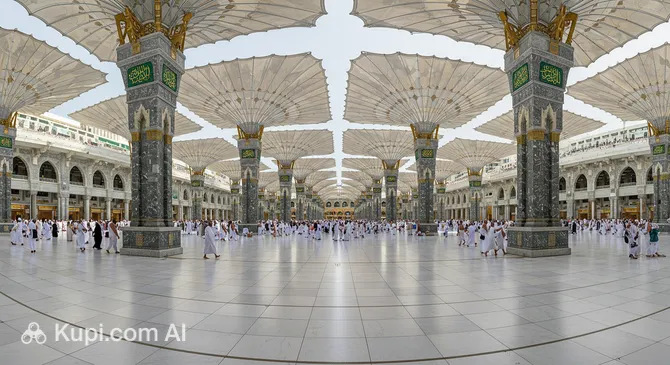
Safa and Marwah (Sa'i). Illustration.
Source: Kupi.com AI

Traveller photos:

The main reason millions of pilgrims visit this site annually is to perform the ritual walk known as sa'i. This ritual involves passing seven times between the hills of Safa and Marwa and is a mandatory part of Hajj and Umrah. It symbolizes Hajar's (Hagar's) search for water for her son, Prophet Ismail, and reminds believers of resilience and hope.

Today, the space between the hills is a spacious gallery integrated into the architectural complex of the Great Mosque. For the comfort of believers, it is fully air-conditioned. Visiting Safa and Marwa is not just a physical act, but a profound spiritual experience that allows one to touch centuries of history and feel unity with the Muslim community from all over the world.

Contacts

Since the hills of Safa and Marwa are an integral part of the Al-Haram Mosque complex, they do not have separate contact details for visitors. Access to this sacred site is via the entrances of the Great Mosque in Mecca. For up-to-date information on visiting rules, especially during the Hajj and Umrah periods, please refer to the official resources governing pilgrimage affairs in Saudi Arabia.

How to contactContact
Address4280 باب العمرة Harat Al Bab and Ash Shamiyyah مكة 24231، 7499, Al Haram, Makkah 7499, Saudi Arabia

What to Do

The main activity for visitors to the Safa and Marwa hills is participating in the ritual walk known as sa'i. This ritual is a key part of the pilgrimage (Hajj and Umrah) and consists of walking the path between the two hills seven times. The ritual begins at Al-Safa Hill and concludes after the seventh lap at Al-Marwa Hill. This act is deeply symbolic: it reenacts the desperate search for water by Hajar, the mother of Prophet Ismail, who ran between these hills in the desert to find water for her son.

Today, pilgrims perform sa'i in modern and comfortable conditions. The space between the hills is a spacious covered corridor with marble floors that protects believers from the scorching sun. The gallery is fully air-conditioned and consists of several floors, which helps distribute the flow of people and ensure convenience for everyone, including the elderly and people with disabilities. Following historical tradition, men run part of the way between special green markers, while the rest of the path is covered at a normal walking pace.

Beyond the physical act, sa'i is a deeply spiritual experience. While passing between the hills, believers recite prayers and call upon the Almighty. After ascending each hill, pilgrims turn to face the Kaaba and offer specific supplications, praising Allah and asking for mercy. This ritual allows one not only to fulfill a religious requirement but also to experience the humility, hope, and resilience shown by Hajar many centuries ago.

Getting There

The hills of Safa and Marwa are located directly within the territory of the main sanctuary of the Islamic world — the Great Mosque (Masjid al-Haram) in the center of Mecca. Therefore, to reach them, pilgrims must first enter the mosque complex itself. Access to the Al-Haram Mosque is open 24/7, and you can enter through any of the numerous gates surrounding it.

For most believers arriving for Hajj or Umrah, the journey begins at Jeddah International Airport. From there, Mecca, which is about 80-90 km away, can be reached in several ways. The fastest and most convenient option is the Haramain high-speed train, which reaches the city in approximately 30-45 minutes. Taxi and bus services are also available and run regularly between the cities. Many pilgrims arrive as part of organized groups, which eliminates the need to arrange transfers independently.

It is important to remember that visiting Mecca and, consequently, the Al-Haram Mosque with the hills of Safa and Marwa, is permitted exclusively for Muslims. This rule is strictly enforced, with special checkpoints established on the approaches to the holy city. Non-Muslims are not allowed to enter the city limits.

Nearest city: Mecca

History & Facts

The history of the Safa and Marwa hills is inextricably linked to the deeply revered Islamic story of Hajar (Hagar), the wife of Prophet Ibrahim (Abraham), and their son Ismail (Ishmael). According to tradition, by the command of the Almighty, Ibrahim left Hajar and the infant Ismail in a desolate, sun-scorched valley where Mecca would later rise. Accepting this as the will of Allah, Hajar showed incredible humility and resilience.

When their meager supplies of water and food ran out and the infant began to suffer from thirst, the desperate mother rushed in search of help. She ran seven times between the hills of Safa and Marwa, scanning the horizon and calling out to Allah. Returning to her son after the seventh lap, she witnessed a miracle: a spring of pure water gushed forth at Ismail's feet. This sacred spring was named Zamzam, and its appearance was the answer to Hajar's prayers and perseverance.

The events involving Hajar and Ismail formed the basis for one of the key rituals of Hajj and Umrah — sa'i, the ritual walk between the hills that pilgrims perform to this day. The emergence of the Zamzam spring transformed the lifeless valley into a place of attraction. Seeing birds circling over the water, the nomadic Jurhum tribe asked Hajar for permission to settle nearby, which marked the foundation of the city of Mecca. Thus, the hills of Safa and Marwa evolved from simple geographical landmarks into great signs of Allah, symbolizing hope, faith, and divine mercy.

Time Needed

When planning a visit to Safa and Marwa to perform the sa'i ritual, it is worth setting aside approximately 1 to 2 hours. This time can vary significantly depending on several factors. The main action involves walking the distance between the two hills seven times, which is about 450 meters per leg. Thus, the total distance a pilgrim covers is approximately 3.2 kilometers. For a person in good physical shape with small crowds, this can take about 40–60 minutes.

However, the duration of the ritual is heavily influenced by the number of pilgrims. During periods not associated with the Hajj, the gallery between the hills is less crowded, allowing for movement at a comfortable pace. During the Hajj, due to the enormous number of believers, completing the same path can take 2 hours or more. One should also consider personal pace: some pilgrims prefer to move slower, reciting prayers and supplications (dua), which also increases the total time. For the elderly and people with disabilities, special lanes and the option to use wheelchairs are provided, ensuring comfort, though this may affect the speed of movement.

Working Hours

Since the hills of Safa and Marwa are an integral part of the Great Mosque complex (Masjid al-Haram), access to them for performing the sa'i ritual is open 24 hours a day, year-round. The mosque operates without breaks, 24 hours a day, 7 days a week, allowing pilgrims to perform rituals at any time convenient for them, whether day or night. This is particularly important for managing the flow of believers and reducing congestion during peak hours.

No prior appointment or ticket purchase is required to visit Safa and Marwa or to perform the ritual walk — access is free for all Muslims eligible to be in Mecca. No special permits are needed beyond those required for performing Hajj or Umrah. However, during periods of high demand, such as the Hajj season, one should be prepared for large crowds and follow the instructions of local authorities to ensure order and safety.

Open 24/7

Nearby

Visiting the hills of Safa and Marwa is undoubtedly a central event for any pilgrim in Mecca. However, exploring other shrines and attractions located nearby can significantly enrich your spiritual and cultural experience. These sites hold pieces of the centuries-old history of Islam and allow for a deeper understanding of the context of the events that took place on this sacred land.

Since Safa and Marwa are located directly within the Great Mosque complex, many key Islamic heritage sites are within walking distance. This is a unique opportunity to visit other iconic locations without long travel times, each of which plays an important role in the rituals and history of pilgrimage.

NameDistance
Zamzam Well0.1 km
Al Salam Gate0.1 km
Masjid al-Haram0.3 km
Abraj Al Bait Towers0.4 km
Clock Tower Restaurant0.5 km
Mecca Museum3.4 km
Al-Bayaa Mosque4.1 km

Reached the bottom of the page?

Looks like you know this route inside out