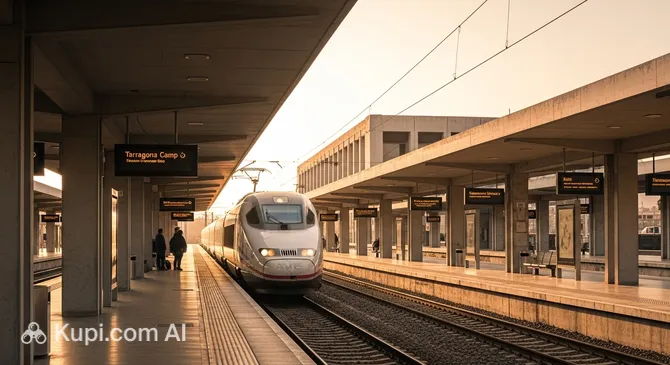
The railway station Camp de Tarragona Station (Camp de Tarragona) is a modern transport hub playing a key role in Spain's high-speed rail network. Located approximately 11 kilometers from Tarragona city center, this station serves AVE and Avant trains, connecting the region with Barcelona, Madrid, and the French border. The terminal building features a futuristic design, spacious halls, and an abundance of natural light, making the wait comfortable for travelers.
It is important for passengers to know that Camp de Tarragona Station is not located in the historic center, but between the municipalities of La Secuita and Perafort. Navigating inside is easy: the station has one main level with exits to platforms equipped with escalators and elevators. Navigation is intuitive thanks to clear signage in multiple languages, and arrival and departure zones are logically separated to prevent overcrowding.
Contact Information
To plan your trip and clarify details about Camp de Tarragona Station, please use the following contact details:
Official website: www.adif.es (infrastructure manager) or www.renfe.com (main carrier).
Address: Partida de la Coma, s/n, 43765 La Secuita, Tarragona, Spain.
Opening hours: the station is open daily from 05:45 to 23:30 (times may vary on public holidays).
Luggage storage information: luggage storage services may be limited; it is recommended to check availability at the information desk upon arrival.
Accessibility information: the Adif Acerca service (assistance for passengers with reduced mobility) is available and can be booked in advance by phone or online.
Getting There
Since Camp de Tarragona Station is located away from the city center, it is not possible to reach it on foot. The main and most budget-friendly option is to use public transport. Special buses by the Plana company run between Tarragona Bus Station (Estació d'Autobusos) and the railway station, making stops at Imperial Tàrraco Square. The travel time is about 20–30 minutes, and the schedule is usually coordinated with the arrival and departure of major trains.
For those who value speed and comfort, taxis are available. A trip from Tarragona center or the Costa Daurada resort areas will take approximately 15–20 minutes. The taxi rank is located right at the terminal exit. If you are traveling by private car, a large paid parking lot is provided within the station grounds where you can leave your vehicle for the duration of your trip.
Services and Amenities
Camp de Tarragona Station offers passengers a wide range of services for a comfortable wait. In the spacious main hall, there are ticket counters and self-service machines where you can purchase or print travel documents. For relaxation, comfortable waiting areas with seating are provided, and free Wi-Fi is available (registration on the Adif network is required).
Facilities include clean restrooms, including those equipped for people with disabilities, and baby changing rooms. For passengers with reduced mobility, an assistance service, ramps, and elevators to the platforms are provided. ATMs, car rental desks, and small retail points selling press and souvenirs can also be found on the premises. Please note that before accessing the platform for high-speed trains, luggage screening is conducted via a scanner.
Dining Options
Dining options at Camp de Tarragona Station itself are limited but sufficient for a quick snack. Inside the terminal, there is a cafeteria where you can order hot coffee, refreshing beverages, fresh pastries, and sandwiches (bocadillos). It is a great place to pass the time before boarding; the average price here is reasonable.
It is important to consider that the station is located away from urban areas, literally "in the fields," so there are no restaurants or supermarkets within walking distance. If you have a long wait or wish to have a full meal, it is highly recommended to do so in Tarragona center before leaving for the station or to bring food with you for the journey.
Station History
The history of Camp de Tarragona Station is inextricably linked to the development of high-speed railways in Spain. It was inaugurated in December 2006 as part of the line connecting Madrid and Barcelona. The construction of this station was a strategic decision that allowed the Tarragona province and the Costa Daurada coast to be included in the AVE (Alta Velocidad Española) network, bypassing the complex terrain and dense urban development of the city itself.
Since its launch, the station has become an important transport hub, significantly reducing travel time to the Spanish capital—the trip to Madrid now takes less than three hours. This gave a powerful boost to tourism development in the region. The building's architecture reflects modern trends of the early 21st century: a combination of glass, metal, and concrete symbolizes the speed and efficiency of the new transport era.
Traveler Tips
When planning a trip via Camp de Tarragona Station, try to arrive at the station at least 30 minutes before the train's departure. This is due to the need to pass through security control: all luggage is scanned before access to the platform is permitted. Boarding for AVE trains usually closes 2 minutes before departure, so punctuality is critical here.
If you are traveling from Tarragona center by bus, be sure to allow extra time for potential traffic jams or public transport delays. It is more cost-effective to buy train tickets online in advance, as fares on the day of departure can be significantly higher. The station is not suitable for overnight stays, as it closes for the night after the arrival of the last train. Also, do not leave your belongings unattended, although the level of security at the station is very high thanks to the presence of guards and surveillance cameras.