Support

St. Anthony Gate

About

As you stroll through the historical quarters of Tarragona, it’s hard to miss the majestic structure known as St. Anthony’s Gate (Portal de San Antonio). Located in Spain, this historical monument is one of the primary surviving entrances to the old city, harmoniously blending the strength of ancient Roman walls with the elegance of 18th-century architecture.
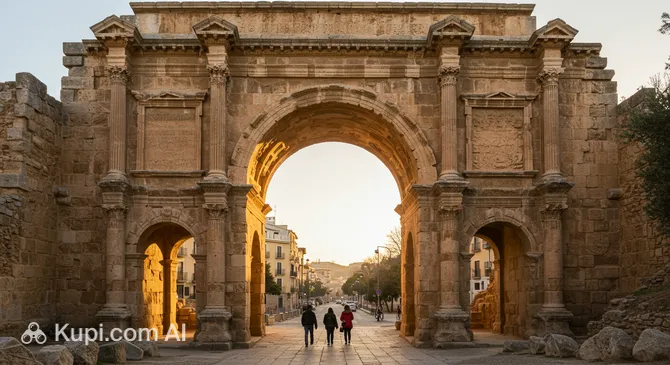
Saint Anthony Gate
Saint Anthony Gate. Иллюстрация. Источник: Kupi.com AI

The gate in its current form was rebuilt in 1737. The entrance to the city is crowned by a magnificent relief featuring the royal coat of arms, flanked by figures of lions, with depictions of ancient Roman military gear visible on the sides. These details underscore the city's status as a significant Mediterranean outpost.

Today, St. Anthony’s Gate is not just an architectural monument but also a wonderful viewpoint. Passing through it, you’ll find yourself at a spot offering some of the most breathtaking views of the sea, making it a must-visit for every tourist.

Contacts

For your convenience, we have gathered the official contact details for this attraction in the table below. This will help you find your way and clarify any visiting details if needed.

How to contactContact
AddressPg. St. Antoni, 26, 43003 Tarragona, Spain
Websitewww.tarragonaturisme.cat

What to Do

The primary reason to visit St. Anthony's Gate is the incredible panoramic views of the Mediterranean Sea. The space opening up beyond the arch is practically begging to be photographed, so be sure to bring your camera for some stunning shots.

Notice how the ancient fortress walls have literally "grown" into the modern urban landscape. In some places, you can see ancient masonry becoming part of the walls of residential houses—a rare chance to witness history in everyday life. The engineering genius of the ancient Romans is evident everywhere here: massive stone blocks weighing several tons still serve as a reliable foundation for the city.

A leisurely walk along the fortifications will allow you to feel the scale of ancient Tarraco. While examining the bas-reliefs above the arch, try to spot details of Roman gear and royal symbols that tell the story of different eras of rule in the region.

Getting There

St. Anthony’s Gate is located in the heart of the historic quarter and is easy to reach. If you are already strolling through the old city, simply follow the signs to the fortress walls—the walk from Forum Square (Plaza del Forum) will take only a few minutes of pleasant walking.

For those arriving in the city by train, it is convenient to take a taxi or a city bus to the edge of the old center. A walk from the central public transport stops to the gate itself will take about 10–15 minutes, allowing you to soak in the atmosphere of the ancient neighborhoods along the way.

For travelers with a private car, it is important to remember that traffic within the historical part of the city is strictly limited. It is recommended to leave your car in one of the municipal parking lots located outside the fortress walls and continue to the gate on foot.

Ближайший город: Tarragona

History & Facts

The history of this site dates back to antiquity, when the Romans began building the first defensive structures of Tarraco in the 3rd century BC. These walls were constructed from massive megalithic stone blocks that still capture the imagination with their size and weight.

St. Anthony’s Gate acquired its current appearance in 1737, during the reign of King Ferdinand VI. The reconstruction was driven by the need to modernize the city's defenses, while architects maintained continuity with the Roman heritage by integrating new elements into the existing fortifications.

In the 16th century, with the development of artillery, additional bastions were built around the gate, such as the bastions of St. Clement and St. Anthony. Today, the gate stands as a living testament to how the city has adapted to the challenges of time over millennia while preserving its architectural identity.

Time Needed

For a quick look at the gate's architecture and the reliefs, you will need about 30–60 minutes. This is plenty of time to take some beautiful photos and enjoy the sea breeze from the observation deck.

If you plan to combine your visit with a walk along the entire fortress wall or study the information stands about the Roman period, it's better to set aside 1–2 hours. The location encourages peaceful contemplation, so there's no need to rush.

Working Hours

St. Anthony’s Gate is part of the city's architectural ensemble and is open for viewing 24/7. This allows tourists to plan their visit for any convenient time—whether it’s early morning when the first rays of sun illuminate the old stone, or late evening when the fortress walls look particularly mysterious.

Since the site is outdoors and does not require a ticket, you can freely pass through the gate seven days a week without any schedule restrictions.

Круглосуточно

Nearby

Tarragona is a true open-air museum, and visiting St. Anthony’s Gate is just the beginning of your immersion into the ancient era. Exploring the surroundings will allow you to see how Roman heritage intertwines with later buildings, creating the city's unique character.

Within walking distance of the gate, you'll find the region's main archaeological treasures, which are definitely worth including in your itinerary.

NameDistance
Casa Canals0 km
Tarragona Museum of Modern Art0.2 km
Tarragona Amphitheatre0.4 km
Roman Circus of Tarragona0.4 km
Roman Walls of Tarragona0.5 km
Archaeological Promenade0.5 km
Model of the Roman City of Tarraco0.5 km

Reached the end of the page?

That means the route is fully explored