Support

Museu d'Història dels Jueus

About

In the heart of the old town, amidst a labyrinth of narrow cobbled streets, lies the Museum of Jewish History. This unique cultural institution is located in the historic El Call quarter—one of the best-preserved medieval Jewish settlements in all of Europe. The museum occupies a building where the heart of the community once beat, telling the fascinating story of the life, culture, and traditions of Catalonia's Jews from the 11th to the 15th centuries.
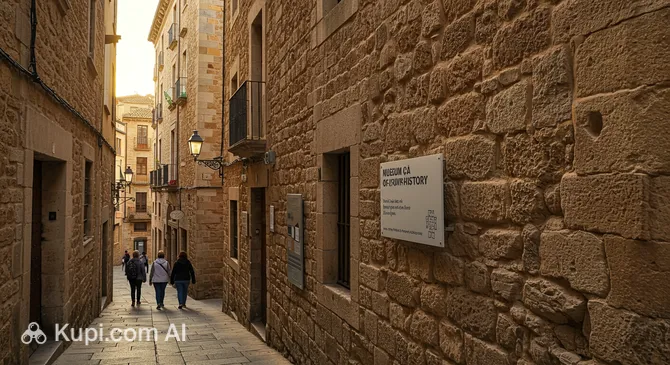
Museum of Jewish History
Museum of Jewish History. Иллюстрация. Источник: Kupi.com AI

This museum in the city of Girona is more than just a collection of antiquities; it is a full-fledged educational center. Within its walls, located in Spain, an impressive collection of archaeological finds, rare documents, and manuscripts is presented. The museum's crown jewel is its unique lapidarium—a collection of medieval tombstones with Hebrew inscriptions, recognized as one of the most valuable in the world.

The museum's exhibition is divided into 11 thematic halls, each opening a new chapter in the community's life: from daily life and crafts to profound philosophical teachings and the organization of synagogues. Visitors can see authentic artifacts and learn about the roles Jewish scholars, doctors, and merchants played in the prosperity of medieval Catalonia.

Contacts

To plan your visit and check for the latest information, you can use the museum's official contact details.

How to contactContact
AddressCarrer de la Força, 8, 17004 Girona, Spain
Phone+34 972 21 67 61
Websitewww.girona.cat

What to Do

Inside the museum's halls, you will find yourself immersed in the world of medieval traditions. Be sure to visit the Synagogue Hall, where ritual objects and documents recreate the atmosphere of the community's spiritual life. Examine the collection of ancient manuscripts on Kabbalah and learn about the works of famous philosophers whose ideas were born within these very walls.

Special attention should be paid to the lapidarium—a hall with Hebrew inscriptions where the stones tell the personal stories of people who lived centuries ago. Also, take a look at the halls dedicated to daily life: here you can see craftsmen's tools, household items, and documents recording trade deals and family unions of the quarter's residents.

After touring the indoor exhibition, be sure to take a stroll through the El Call quarter itself. Here you can find traces of ancient mikvahs (ritual baths) and feel the spirit of the past while wandering between high stone walls. The museum often serves as a venue for temporary exhibitions and lectures, so it's worth checking the current events program before your visit.

Getting There

The museum is located at Carrer de la Força, 8, in the heart of the historic center. The easiest way to get here is on foot, as the Jewish Quarter is a pedestrian zone. If you arrive at the city's train or bus station, the walk to the museum will take about 15–20 minutes across scenic bridges and squares.

For those traveling from Barcelona, the most convenient option is the high-speed train (AVE) or a regional train, with the journey taking about an hour. From the station, follow the signs to the Cathedral—the museum is located in its immediate vicinity.

If you are traveling by car, it is recommended to leave your vehicle in one of the public parking lots outside the city walls (for example, near Passeig de la Devesa), as the narrow cobbled streets of El Call are not suitable for driving or parking private vehicles.

Ближайший город: Girona

History & Facts

The city's Jewish community, known as the Aljama, began to form as early as the 9th century. By the Middle Ages, it comprised nearly 10% of the population, playing a fundamental role in the region's economic and scientific prosperity. Girona was a renowned center for Kabbalah studies, and its local school was famous throughout Europe for its outstanding thinkers.

One of the quarter's most famous residents was Moshe ben Nahman, also known as Nachmanides. A prominent philosopher, physician, and rabbi, he made an invaluable contribution to the development of Jewish thought. The museum carefully preserves the memory of the community's "Golden Age," which lasted for three centuries under the protection of the Crown of Aragon until the tragic events of the late 15th century.

The museum's exhibition is based on unique finds discovered right within the quarter. These include archaeological artifacts from ancient synagogues and ritual spaces. Of particular value is the collection of tombstones with Hebrew inscriptions, which is considered one of the most significant and well-preserved in Spain.

Time Needed

For a detailed tour of all 11 exhibition halls, the average visitor needs 1 to 2 hours. This is enough time to study the main artifacts, read the information boards, and soak in the atmosphere of the historic building.

If you plan to combine your museum visit with a leisurely stroll through the labyrinth of the El Call quarter, a visit to the neighboring Cathedral, and a break at a local cafe, we recommend allowing at least 3 hours for this part of the city. The museum is an excellent starting point for immersing yourself in medieval history.

Working Hours

The museum welcomes visitors throughout the week, though the operating hours vary depending on the day:

  • Tuesday – Saturday: 10:00 AM to 6:00 PM
  • Monday and Sunday: 10:00 AM to 2:00 PM

Please note that entry stops half an hour before closing, so plan your visit in advance to ensure you have enough time to see all the halls without rushing.

DayWorking hours
Понедельник10:00 – 14:00
Вторник10:00 – 18:00
Среда10:00 – 18:00
Четверг10:00 – 18:00
Пятница10:00 – 18:00
Суббота10:00 – 18:00
Воскресенье10:00 – 14:00

Nearby

A visit to the museum fits perfectly into an itinerary through the old town, as the region's main architectural treasures are concentrated within a radius of just a few hundred meters. A walk through these sites will allow you to feel the city's multilayered history more deeply.

NameDistance
Rafael Masó Foundation / Casa Masó0 km
Girona Art Museum0.1 km
Arab Baths0.2 km
Girona Cathedral0.2 km
CaixaForum Girona0.2 km
Eiffel Bridge0.2 km
Basilica of Sant Feliu0.2 km

Reached the end of the page?

That means the route is fully explored