Support

Le Cachot

About

The modest and austere atmosphere of this place can touch the heart of even the most experienced traveler. Le Cachot is a unique historical museum located in the town of Lourdes, which once served as a temporary home for the family of Saint Bernadette. This small room, a former prison cell, has become a symbol of resilience and faith for millions of pilgrims visiting France annually.
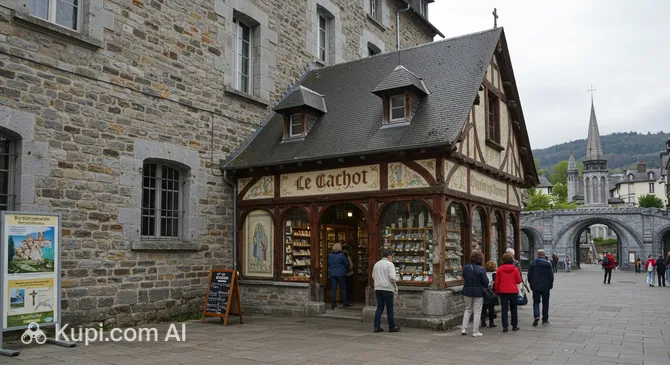
Le Cachot
Le Cachot. Иллюстрация. Источник: Kupi.com AI

The museum occupies only 16 square meters on the ground floor of an old building. From the winter of 1857 to the autumn of 1858, the Soubirous family lived here in extreme poverty. The name of the site translates from French as "dungeon" or "cellar," which perfectly describes the cold and damp conditions in which the future saint lived during her famous visions at the Massabielle Grotto.

Today, this site carefully preserves its authentic mid-19th-century appearance. The high rating of the attraction among tourists is explained by its powerful energy and the opportunity to see the true history of Lourdes without embellishment. Le Cachot is an essential stop on the pilgrimage path, allowing guests to better understand the social context and hardships Bernadette's family faced before the town became a global center of pilgrimage.

Contacts

To clarify visit details or find out about possible schedule changes, you can use the museum's official contact information. The administration works with the city's tourist office to provide up-to-date information for pilgrims and tourists.

Below are the main ways to get in touch and the exact address of the attraction:

How to contactContact
Address12-14 Rue des Petits Fossés, 65100 Lourdes, France
Phone+33 5 62 94 51 30
Websitewww.lourdes-infotourisme.com

What to Do

A visit to this place primarily involves inner contemplation and learning about the living conditions of the city's most famous native. Inside Le Cachot, you can view the empty cell, where the rough stone walls and minimal natural light have been preserved. This space helps visualize the daily struggles of the Soubirous family: the overcrowding, the cold, and the lack of basic amenities.

For the convenience of tourists, information plaques are installed here, detailing Bernadette's life and the history of the building itself. You can slowly explore the exhibition, which is concise yet extremely expressive. Many visitors note that it is here that one best feels the contrast between the grandeur of Lourdes' modern sanctuaries and the impoverished past of its main saint.

It is recommended to combine a visit to the museum with a walk along the "Blue Line"—a walking route that connects the city's important historical sites. Very close by is another significant spot—Moulin Lacadé (Bernadette's family home). A self-guided tour allows you to linger in the cell for a few minutes to reflect in silence on the events of 1858, which became a turning point in the history of this region.

Getting There

Finding this historical location is quite easy, as it is situated in the heart of the old town. The most popular and atmospheric way to reach the site is to follow the famous "Blue Line." This is a special marking on the sidewalks that connects the main attractions related to the life of Saint Bernadette and leads directly to the doors of Le Cachot.

If you are in the area of the Sanctuary of Our Lady of Lourdes, the walk to the museum will take only about 10–15 minutes. For those arriving from other parts of the city or the train station, it is convenient to use local buses or a taxi, asking the driver to stop at rue des petits fossés. Travelers flying into Tarbes Airport (located 43 km away) are also advised to first reach the city center via transfer.

Since the site is located in a historical zone with narrow streets and cobbled sections, it is best to plan a walking route. For a comfortable walk, it is recommended to wear comfortable shoes, as exploring the old quarter involves moving over uneven surfaces.

Ближайший город: Lourdes

History & Facts

The name of this place, which translates as "prison" or "dungeon," fully reflects its original purpose. Until 1824, it indeed housed the town prison, but later the premises were deemed unfit even for criminals due to the appalling dampness and cramped space. It was into this single room of just 16 square meters that the Soubirous family was forced to move in 1857, having fallen into extreme poverty.

For nearly two years, eight people huddled here without light or basic amenities: parents and six children. Bernadette Soubirous, the eldest of the children, lived here during the most important period of her life. It was from these somber walls on February 11, 1858, that she set out for the Massabielle cave to gather firewood and bones to sell, and it was on that day that she had the first of 18 visions of the Virgin Mary.

The site began operating as a museum in the 1950s, when city authorities decided to preserve it as an important testament to the saint's humble origins. Today, Le Cachot serves as a powerful reminder that great events can begin in the most destitute and unremarkable conditions. The site is included in the official cultural heritage list and is an integral part of the history of pilgrimage to France.

Time Needed

A detailed tour of Le Cachot usually requires very little time. Since the museum consists of one small room with information boards, 30–45 minutes is enough for most visitors to feel the atmosphere of the place, read the historical notes, and take a few photos.

If you are following the general pilgrimage route, which includes 17 key points in the city, you can set aside about 15–20 minutes for this location. This time is quite sufficient for brief contemplation and learning about the Soubirous family's daily life. The place does not invite a long stay, but it leaves a deep emotional impression, so there is no need to rush during the visit.

Working Hours

The museum doors are open to visitors daily; however, the schedule includes a midday break traditional for the region. Le Cachot operates on the following schedule: Monday to Sunday inclusive from 10:00 AM to 12:00 PM and from 2:00 PM to 5:00 PM.

Please note that during the peak tourist season (from April to October), opening hours may be slightly extended, while in winter, access to the site is sometimes reduced. Before planning a visit, it is recommended to check the current opening times on-site or at the information office, as seasonal changes are possible.

10:00 – 12:00, 2:00 – 17:00

Nearby

Exploring the surroundings of this attraction allows for a deeper immersion into the atmosphere of the old town and an understanding of the region's historical context. Very nearby are both majestic fortresses and quiet sites related to religious history, making for a rich and varied walk.

Due to the compactness of the historical center, many interesting sites can be visited in a single day simply by moving on foot. Below is a list of nearby attractions worth including in your itinerary:

NameDistance
Château Fort and Pyrenean Museum0.1 km
Pizzeria Da Marco0.1 km
Childhood Home of Saint Bernadette0.3 km
Birthplace of Bernadette / Boly Mill0.3 km
Lourdes Wax Museum0.3 km
Les Halles Market0.3 km
Sainte-Bernadette Museum0.4 km

Reached the end of the page?

That means the route is fully explored