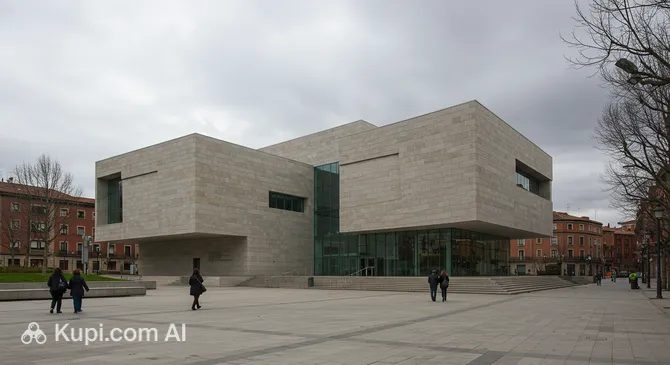
In the heart of the historical center of Vitoria-Gasteiz lies a unique cultural space — the Memorial Centre for Victims of Terrorism. This national memorial, opened in 2021, occupies the majestic building of the former headquarters of the Bank of Spain and is a vital place for understanding the modern history that Spain preserves.
Memorial Center for Victims of Terrorism Museum. Illustration.
Source: Kupi.com AI
Traveler photos:
The museum is a modern, high-tech institution created to preserve collective memory and protect democratic values. It is not just an exhibition, but a profound educational project that is part of an international network of similar memorials in New York and Paris.
The significance of this site is highlighted by its status as a state foundation. Here, through the lens of personal stories and archival documents, visitors can learn about the struggle for human rights and the ethical values that form the basis of modern society. The museum serves as a reminder of the importance of peace, freedom, and human dignity.
Contacts
To plan your visit to this significant memorial center, you can use the official contact details provided. The museum is open to dialogue and provides detailed information about its exhibitions upon request.
Visitors are invited to walk through six thematic halls that sequentially reveal the history and social impact of terrorist acts. The halls display unique authentic objects belonging to victims, as well as devices and key documents that help visualize historical events with maximum precision.
One of the most powerful impressions for many is the full-scale reconstruction of the room where José Antonio Ortega Lara was held for a long period. The use of interactive screens, audiovisual installations, and photographs allows you to literally touch history, making the visit a deeply personal and emotional experience.
In addition to the main exhibition, you can visit the library and documentation center, as well as participate in educational events. The availability of audio guides in several languages helps you understand each exhibit in detail, while regular temporary exhibitions supplement the main theme with new research and facts.
Getting There
The museum is located at Lehendakari Aguirre Kalea, 2, in the heart of the city. Thanks to its central location, the memorial is easily accessible on foot from almost anywhere in the historical center, using the famous Plaza de la Virgen Blanca as a landmark.
For those who prefer public transport, the city's main bus routes pass nearby. If you are arriving in the city by train or intercity bus, a taxi ride from the station will take only a few minutes. Drivers can use one of several paid underground parking lots located within a 500-meter radius of the building.
Nearest city: Vitoria-Gasteiz
History & Facts
The building housing the museum today is an architectural monument in its own right. It was designed by the renowned architect José Yarnoz Larrosa and built in 1920. For decades, it served as a branch of the Bank of Spain, which explains the monumentality and strict Neo-Renaissance style of the structure.
A new chapter in the building's history began in March 2015, when the first stone was laid for its extensive renovation project. Large-scale work to update the interior and adapt it to the needs of a modern museum took several years and resulted in the creation of a high-tech space.
The official opening of the Memorial Centre took place on June 1, 2021. Symbolically, exactly one hundred years after its first opening as a bank, the building was transformed into a national symbol of memory, becoming an important ethical landmark not only for the region but for the entire country.
Time Needed
To thoughtfully explore all the halls and multimedia materials of the main exhibition, most visitors need between 2 and 3 hours. The display is filled with details that require quiet study and reflection.
If you decide to use the audio guide, visit the temporary exhibitions, or spend time in the documentation center for a deeper study of the archives, we recommend planning about 4 hours for your visit. This will allow you to immerse yourself in the historical context without rushing.
Working Hours
The museum is open from Tuesday to Saturday from 12:00 PM to 7:00 PM, and on Sundays, the doors are open to visitors from 11:00 AM to 2:00 PM. Please note that the memorial center is closed on Mondays.
A significant advantage for tourists is that entry to the museum is free. Nevertheless, before planning your trip, it is recommended to check the official website to confirm any possible changes to the schedule during holidays.
Day
Working hours
Monday
Закрыто
Tuesday
12:00–19:00
Wednesday
12:00–19:00
Thursday
12:00–19:00
Friday
12:00–19:00
Saturday
12:00–19:00
Sunday
11:00–14:00
Nearby
Vitoria-Gasteiz is famous for its beautifully preserved old town, so a visit to the Memorial Centre can easily be combined with a walk to other iconic sites. Exploring the surroundings will allow you to better feel the atmosphere of this ancient city and see the contrast between modern monuments and medieval architecture.