Support

Monasterio de la Encarnación

About

The Monastery of the Incarnation (Monasterio de la Encarnación) is an iconic historical site located in the ancient city of Ávila, Spain. Founded in the 15th century, this active Carmelite convent became world-famous as the place where Saint Teresa of Ávila lived and worked for three decades. It was here that the great mystical reformer began her spiritual journey.
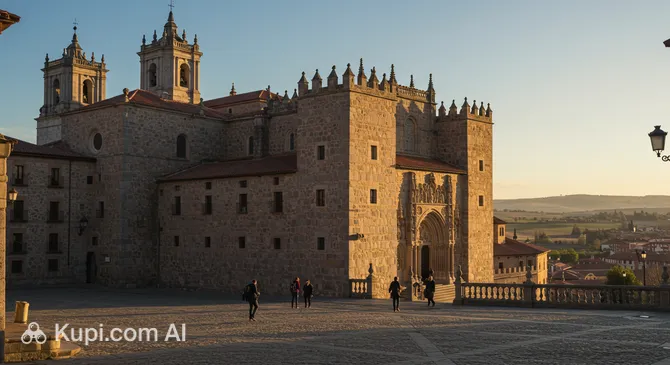
Monastery of the Incarnation
Monastery of the Incarnation. Иллюстрация. Источник: Kupi.com AI

The architectural ensemble of the monastery is striking for its understated beauty and harmony. The building features four naves around a central courtyard and a two-story cloister. Inside, visitors will find not only a majestic church with a Baroque interior but also a unique museum housing personal belongings of Saint Teresa and a rare drawing of the crucified Christ by Saint John of the Cross.

Today, the monastery is included in the UNESCO World Heritage list as part of the ensemble of the Old Town and its extra-muros churches. It is a place where time seems to stand still, allowing tourists to touch deep spiritual history and enjoy an atmosphere of absolute tranquility.

Contacts

To plan your visit to the Monastery of the Incarnation, it is helpful to check the official contact information in advance. This will help you verify any potential changes to the schedule or book a group tour to fully immerse yourself in the history of this holy place. Please note that the monastery is an active convent, so observing silence and following visiting rules is mandatory.

How to contactContact
AddressP.º la Encarnación, 1, 05005 Ávila, Spain
Phone+34 920 25 90 98
Websitewww.avilaturismo.com

What to Do

A visit to the Monastery of the Incarnation offers guests a unique opportunity to see the lifestyle of the Carmelite nuns and connect with the legacy of Saint Teresa. Be sure to visit the museum, where her personal items are displayed, and see the original cell, which has been transformed into a small chapel of the Transverberation. Special attention should be given to the drawing of Christ on the cross, which, according to tradition, was created by Saint John of the Cross after a mystical vision.

Stroll through the two-story cloister and look into the inner courtyard, decorated with a mosaic symbolizing Teresa’s famous work, "The Interior Castle". This is an ideal space for quiet reflection. In the monastery church, notice the rich Baroque altarpieces and the exquisite decoration of the dome, which contrast with the austere simplicity of the convent's exterior walls. The site is permeated with an atmosphere of peace, making it a must-visit for those seeking spiritual serenity.

Getting There

The monastery is located at Paseo de la Encarnación, 1, just a few hundred meters north of Ávila's famous city walls. If you are in the historic city center, the walk to the convent will take about 10–15 minutes. The route passes through picturesque streets leading outside the old part of the city, offering a new perspective on the medieval fortifications.

For those arriving by train or bus, the journey from the station (Ávila Bus Station) takes about 5–10 minutes by taxi. You can also take city buses No. 1 or No. 2, which will drop you off very close to the monastery. If you are traveling by car, there is parking available near the entrance, making a visit very convenient.

Ближайший город: Avila

History & Facts

The monastery's history began in 1478 when it was founded within the city walls of Ávila. However, by the early 16th century, the community moved to a new location outside the medieval fortifications, on land that once housed a Jewish cemetery. The solemn opening of the new building took place on April 4, 1515, which symbolically coincided with the baptismal day of the future Saint Teresa.

For Teresa of Ávila herself, this monastery was home for 30 years. It was here that she took her monastic vows in 1535 and where she experienced her most profound mystical revelations. Within these walls, she corresponded and met with the leading spiritual mentors of the time, including Francis Borgia and John of the Cross, the latter of whom served as the monastery's chaplain for five years in the second half of the 16th century.

In the 18th century, the interior of the monastery church underwent significant changes, acquiring ornate Baroque features, and in 1715, a tall bell tower was erected, becoming an important architectural landmark. In 1983, the Monastery of the Incarnation was designated a national monument, confirming its exceptional historical and cultural value to the country.

Time Needed

To leisurely explore all the key areas of the monastery, including the museum, the cell, and the church, usually takes about 1 to 2 hours. This is sufficient time to absorb the special spiritual energy of the place and carefully examine the historical exhibits.

If you also plan to spend time in prayer or quiet reflection in the courtyard, it is worth setting aside a bit more time. A morning walk to the monastery is a great way to start the day, allowing you to enjoy the peaceful atmosphere before the arrival of large tour groups.

Working Hours

The monastery doors are open to visitors daily; however, the schedule is split into morning and afternoon hours with a break. From Monday to Friday, the convent can be visited from 09:30 to 13:30 and from 16:00 to 17:30. On Saturday and Sunday, the visiting hours change slightly: from 10:00 to 13:00 and from 16:00 to 18:00.

Please keep in mind that the schedule may vary on religious holidays or during special services. It is recommended to arrive at least half an hour before closing to have enough time to see the main museum exhibition and the church.

DayWorking hours
Понедельник9:30 – 13:30, 4:00 – 17:30
Вторник9:30 – 13:30, 4:00 – 17:30
Среда9:30 – 13:30, 4:00 – 17:30
Четверг9:30 – 13:30, 4:00 – 17:30
Пятница9:30 – 13:30, 4:00 – 17:30
Суббота10:00 – 13:00, 4:00 – 18:00
Воскресенье10:00 – 13:00, 4:00 – 18:00

Nearby

Exploring the surroundings of the Monastery of the Incarnation can significantly enrich your experience of visiting this region. Since the monastery is located just a few minutes' walk from the medieval center, you can easily combine your visit with a stroll through the most famous sites. The surrounding area is steeped in antiquity, with every step revealing new facets of Spanish culture.

Near the monastery, you will find majestic fortress gates and sections of the walls, which are considered some of the best-preserved examples of military architecture in Europe. Below is a list of interesting sites located within walking distance:

NameDistance
Puerta del Carmen0.5 km
Walls of Ávila0.6 km
Basilica of San Vicente0.6 km
Mercado Chico Square0.7 km
Palacio de Polentinos0.7 km
Museum of Ávila0.8 km
Museum of Saint Teresa of Ávila0.8 km

Reached the end of the page?

That means the route is fully explored