Support

MUBA, Museo de Bellas Artes de Badajoz

About

If you want to truly experience the cultural DNA of the Extremadura region, then the Badajoz Museum of Fine Arts (MUBA) is a destination that cannot be missed. Located in the heart of the city of Badajoz, this museum is recognized as one of the five most important art collections that Spain takes pride in.
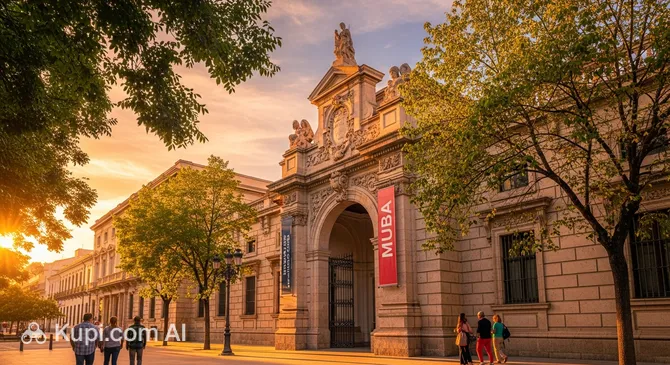
Museum of Fine Arts of Badajoz
Museum of Fine Arts of Badajoz. Иллюстрация. Источник: Kupi.com AI

Founded in 1919, the museum occupies a complex of magnificent 19th-century historical mansions, which were masterfully restored and expanded in 2015. Its holdings include more than 2,000 works, including paintings, sculptures, and graphics. The collection spans from the 16th century to the present day, representing the work of over 350 masters, among whom famous natives of these lands hold a special place.

The uniqueness of MUBA lies not only in the richness of its exhibits but also in its architectural design. The museum space is divided into three buildings connected by a cozy inner patio. Here you can see masterpieces by such titans as Francisco de Zurbarán, Luis de Morales, and even great innovators like Goya, Picasso, and Dalí. In 1962, the building and the collection were officially declared a Historical-Artistic Monument.

Contacts

To check up-to-date information about special exhibitions or to organize a group visit, you can use the following contact details:

How to contactContact
AddressC. Duque de San German, 3, 06001 Badajoz, Испания
Phone+34 924 21 24 69
Websitewww.dip-badajoz.es

What to Do

A visit to the museum turns into a fascinating journey through the centuries, organized in an unusual reverse chronological order. You will begin your introduction with contemporary 21st-century works in Building A and gradually delve deeper into history, finishing your tour with 16th-century masterpieces. This allows you to see how the styles, techniques, and worldviews of artists have changed over five hundred years.

Be sure to pay attention to the halls with religious paintings and royal portraits. The main magnet for visitors is traditionally the canvas "The Virgin of the Clouds" by Francisco de Zurbarán, as well as the mysterious "Judith with the Head of Holofernes" from the Caravaggio school. Modernism enthusiasts will appreciate the works of Antonio Juez, whose paintings are filled with symbolism and vibrant Spanish color.

In addition to the permanent exhibition, Building C regularly hosts temporary exhibitions dedicated to both classical and contemporary art. If your visit coincides with the summer months, you might catch evening concerts, and as part of the "White Night" initiative, the museum opens its doors for large-scale cultural events, filling the historic halls with new energy.

For those who prefer thoughtful study, there is a specialized library. And to round off your walk, spend some time in the inner patio — an architectural gem of the complex where you can reflect on what you have seen in silence, admiring the play of light on the museum's modern and ancient walls.

Getting There

Finding this art center in Badajoz is easy, as it is located in the heart of the historic district. Most tourists prefer to get here on foot, walking from central points such as Plaza de la Libertad or Plaza de Santa María. A walking tour will allow you to fully enjoy the atmosphere of the old city before immersing yourself in the world of art.

If you plan to use public transport, look for bus routes that stop at Plaza de la Libertad. The museum entrance is just a few minutes' walk from the stop. For those arriving from more distant areas, taxis are a convenient option — a trip from the center or the train station will take about 15–20 minutes.

For travelers arriving via Badajoz Airport (located 20 km away), renting a car or taking a taxi is the best option. If you are driving, remember that parking in the historic center can be limited, so it is better to find a paid parking lot nearby in advance and continue on foot.

Ближайший город: Badajoz

History & Facts

The history of this place began in August 1919. The museum was initiated by the Provincial Council of Badajoz, which by then had accumulated a significant number of artworks while supporting local talent. The museum officially opened its doors to the public on January 4, 1920, initially occupying only three halls in the Provincial Palace.

The first director was the outstanding painter Adelardo Covarsí, whose intellectual contribution laid the foundation for the collection. In the following decades, the museum actively expanded. In 1962, its collection was granted the status of a Historical-Artistic Monument, confirming its high cultural significance not only for the region but for all of Spain.

An important stage in the institution's life was the large-scale renovation and expansion started in 2011 under the direction of the Hago architectural firm. The project was so successful that it was nominated for the prestigious Mies van der Rohe Award. The architects managed to masterfully combine 19th-century historical buildings with modern wings, creating a single space with an area of more than 3,000 square meters.

Today, the Badajoz Museum of Fine Arts (MUBA) is considered one of the most significant art galleries in the country. Its funds include more than 2,000 works spanning from the 16th century to the present day, making it the primary guardian of Extremadura's creative heritage.

Time Needed

To explore the main exhibition without rushing and appreciate the architectural merits of the renovated museum complex, we recommend setting aside 1.5 to 2.5 hours. This time is sufficient to walk through all three buildings and pay attention to the most significant masterpieces.

If you are a passionate fan of painting or plan to study the temporary exhibitions in Building C in detail, your visit could last half a day. Given the calm atmosphere and the presence of the inner patio, it is a pleasant place to spend time enjoying the silence and the aesthetics of the surrounding space.

Working Hours

The museum welcomes visitors according to a schedule with a siesta break, which is typical for many cultural institutions in the region. Please note the following opening hours:

  • Tuesday – Friday: 10:00 AM – 2:00 PM and 6:00 PM – 8:00 PM;
  • Saturday and Sunday: 10:00 AM – 2:00 PM;
  • Monday: Closed.

Before planning your visit, it is recommended to check the museum's official website, as the opening hours may change on public holidays or during special events.

DayWorking hours
понедельникЗакрыто
вторник10:00–14:00, 18:00–20:00
среда10:00–14:00, 18:00–20:00
четверг10:00–14:00, 18:00–20:00
пятница10:00–14:00, 18:00–20:00
суббота10:00–14:00
воскресенье10:00–14:00

Nearby

The museum's location in the city's historic center offers wonderful opportunities for further exploration of the region's culture and architecture. A walk around the neighborhood will allow you to see both ancient fortress walls and elegant squares that have preserved the spirit of past centuries.

Exploring these locations will help you form a complete picture of the multifaceted history of this border city.

NameDistance
Las Tres Campanas Building0 km
Plaza de la Soledad0 km
Rincón Nazarí Bar0.2 km
Plaza Alta0.3 km
La Mafia se sienta a la mesa0.3 km
Archaeological Museum of Badajoz0.4 km
Alcazaba of Badajoz0.5 km

Reached the end of the page?

That means the route is fully explored