Support

Archaeological Museum of Badajoz

About

The Archaeological Museum of Badajoz is a unique cultural space that invites guests on a fascinating journey through the history of the region. Located in the historic palace of the Counts of Roca, the museum is situated inside the famous Islamic fortress of the Alcazaba, making it an essential part of any tourist itinerary in the city of Badajoz.
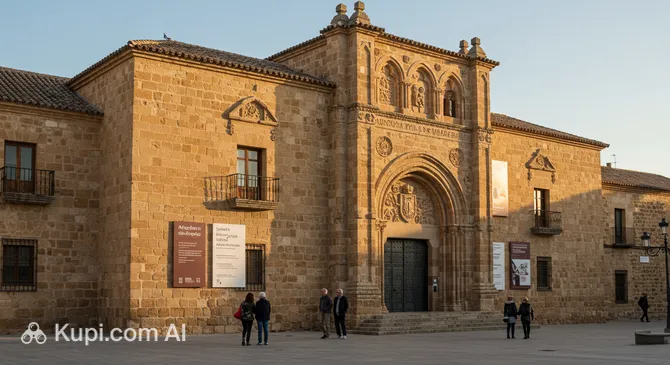
Archaeological Museum of Badajoz
Archaeological Museum of Badajoz. Иллюстрация. Источник: Kupi.com AI

The museum building is a magnificent example of 16th-century Mudéjar style, preserving its original towers and elegant arched windows. Founded back in 1867, today this museum in Spain houses an impressive collection of over 15,000 exhibits, spanning periods from distant prehistory to the late Middle Ages.

Visitors can see rare anthropomorphic steles from the Bronze Age, exquisite Roman mosaics, and unique items from the Visigothic and Islamic eras. This site is a key center for heritage preservation, offering a deep and authentic look at the development of civilizations on the Iberian Peninsula.

Contacts

For up-to-date information on exhibitions or to book group tours, you can use the museum's official contact details.

How to contactContact
AddressPlaza José Álvarez y Sáenz de Buruaga s/n, 06002 Badajoz, Spain
Phone+34 924 00 19 08
Websitemuseoarqueologicobadajoz.juntaex.es

What to Do

In the museum halls, you will encounter amazing artifacts, each telling its own story. Be sure to look for the Roman mosaics with their intricate patterns and the collection of Bronze Age steles, which are striking for their ancient symbolism. History enthusiasts will appreciate the section dedicated to the Visigothic period and the rich collection of Arabic ceramics, which bear witness to the city's Moorish past.

Beyond exploring the displays, it's worth taking time to appreciate the building itself. Stroll through the inner courtyard to admire the architectural details of the 16th-century palace and feel the atmosphere of peace within the walls of the ancient citadel. Information panels will help you navigate the chronology of events without overwhelming you with unnecessary details.

The best plan is to combine a visit to the museum with a walk around the Alcazaba itself—one of the largest fortresses in Europe. After touring the exhibition, it's pleasant to step out onto the square with the fountain in front of the museum entrance and admire the panoramic views from the fortress walls overlooking the modern city and the Guadiana River.

Getting There

Finding the Archaeological Museum of Badajoz is easy, as it is located in the most prominent part of the city—inside the monumental Alcazaba fortress. If you are already walking through the historic center, the walk from the cathedral or the main square will only take about 10–15 minutes. The stroll to the museum is pleasant in itself, as the path leads through the picturesque gates of the ancient citadel.

For those who prefer public transport, city buses head towards the Alcazaba and stop at the foot of the fortress hill. From the stop, there is a short uphill walk. If you are arriving by taxi from other parts of the city or the station, the driver can drop you off very close to the entrance of the fortress complex.

Travelers arriving from Badajoz Airport (located about 20 km away) will find it most convenient to take a taxi—the trip takes about 25–30 minutes. For those driving, there are parking areas near the fortress, though spaces may be limited on weekends due to the popularity of this historic district.

Ближайший город: Badajoz

History & Facts

The history of this cultural institution began in 1867, when the Provincial Commission for Heritage Conservation decided to gather the region's rich archaeological finds in one place. Since then, the collection has grown steadily, becoming one of the most significant collections in the southwest of the Iberian Peninsula.

The museum building itself deserves special attention—it is the Palace of the Dukes of Feria (Counts of Roca), built in the 16th century. The palace is a magnificent example of the Mudéjar style and is built directly into the structure of the Alcazaba Islamic fortress, which was declared a historical and artistic monument back in 1931. The architecture of the building, with its characteristic towers and elegant arched windows, perfectly complements the atmosphere of antiquity.

The museum's exhibition vividly illustrates how the region's appearance has changed over the centuries. It features artifacts left by the first Megalithic settlers, luxurious evidence of Roman rule, and unique items from the Visigothic and Islamic periods. Of particular value are the Bronze Age steles, which are considered one of the most representative collections of its kind in Europe.

Time Needed

To leisurely explore the museum's main exhibition, it usually takes about 1–2 hours. This is enough time to get acquainted with the key sections—from prehistoric steles to Islamic ceramics—and appreciate the architecture of the palace itself.

If you have a deep interest in archaeology or want to study the Roman mosaics and Visigothic artifacts in detail, plan for a half-day visit. Since the museum is located inside the fortress, a visit here is easily combined with a walk along the walls of the Alcazaba, which together will take about 3 hours.

Working Hours

When planning your visit to the Archaeological Museum of Badajoz, please note the opening hours, as the museum closes in the afternoon.

Opening hours:

  • Monday: Closed
  • Tuesday — Saturday: 09:00 to 15:00
  • Sunday: 10:00 to 15:00
DayWorking hours
ПонедельникЗакрыто
Вторник9:00 – 15:00
Среда9:00 – 15:00
Четверг9:00 – 15:00
Пятница9:00 – 15:00
Суббота9:00 – 15:00
Воскресенье10:00 – 15:00

Nearby

Exploring the surroundings of the archaeological museum is a great way to dive deeper into the atmosphere of the ancient city. Since the museum is located in the heart of the historical citadel, other architectural treasures are just a few steps away, each holding its own secrets.

A walk after visiting the exhibition will allow you to see magnificent squares, ancient gates, and unique buildings that make this area one of the most photogenic in the region. Below is a list of interesting sites that can be reached on foot within minutes.

NameDistance
Plaza Alta0.1 km
Alcazaba of Badajoz0.2 km
Rincón Nazarí Bar0.2 km
Las Tres Campanas Building0.3 km
Plaza de la Soledad0.3 km
Museum of Fine Arts of Badajoz0.4 km
Legion Park0.5 km

Reached the end of the page?

That means the route is fully explored