Support

Cadiz Museum

About

Located on the picturesque Plaza de Mina, the Museum of Cádiz is the primary guardian of the centuries-long history of one of Europe’s oldest cities. Cádiz is rightfully proud of this cultural center, housed in an elegant 19th-century building that was once a Franciscan monastery.
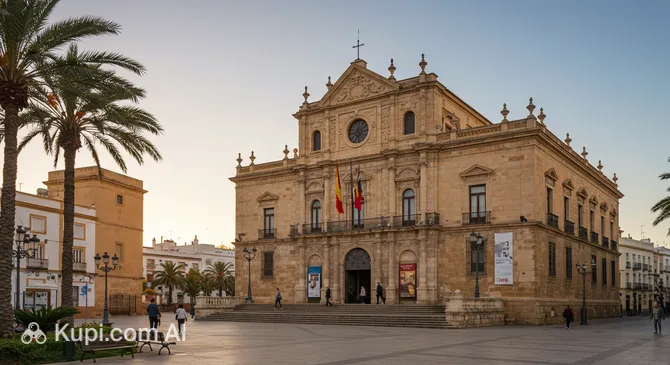
Cadiz Museum
Cadiz Museum. Иллюстрация. Источник: Kupi.com AI

The museum brings together two rich collections: archaeology and fine arts. Here, visitors can journey through time, from Phoenician and Roman antiquities unearthed from Andalusian soil to masterpieces of classical European painting. Spain is represented here by the works of great masters whose names are written in gold in the history of world art.

The exhibition is divided into three levels, each revealing a new facet of the region's cultural heritage. This site is ideal for those who want to understand how ancient traditions intertwined with the Age of Discovery and the flourishing of the Spanish Baroque.

Contacts

For more information on special exhibitions or to plan a group visit, you can use the institution's official contact details.

How to contactContact
AddressPl. de Mina, s/n, 11004 Cádiz, Spain
Phone+34 956 00 81 50
Websitewww.museosdeandalucia.es

What to Do

Inside the museum’s halls, you will encounter the unique Phoenician anthropoid sarcophagi — rare artifacts that are striking for their preservation and craftsmanship. Walking through the archaeological department, you will see Roman household items and medieval finds that recreate the appearance of the ancient port center piece by piece.

Art lovers should head to the floors dedicated to fine arts. Here, a magnificent series of paintings by Francisco de Zurbarán depicting Carthusian monks is on display, along with works by geniuses such as Bartolomé Esteban Murillo, José de Ribera, and Peter Paul Rubens. It is a wonderful chance to see world-class canvases in a quiet, almost meditative setting.

Beyond the exhibits, be sure to note the building's architecture and the atmosphere of Plaza de Mina. A museum visit can be part of a cultural route through the Old Town—after your tour, stop by the nearby Santa Cueva Church to see Goya's frescoes, or simply relax in the shade of the trees on the square, discussing the masterpieces you've seen.

Getting There

Getting to the museum is quite simple as it is located in the heart of the Old Town. If you are already exploring the historic center, the walk from the Cádiz Cathedral will take no more than 10–15 minutes through picturesque narrow streets. From the city beaches or the port, the walk is about 20–30 minutes.

For those who prefer public transport, bus stops for lines C1, C2, 1, and 2 are within walking distance (look for the Plaza de Mina or Catedral stops). If you are coming from other cities, such as Seville, it is most convenient to take the Renfe ALVIA train to the Cádiz railway station and then take a taxi or walk for 15 minutes.

Travelers arriving by car should keep in mind that much of the city center is pedestrianized. It is best to leave your car in one of the paid parking lots on the perimeter of the Old Town and continue on foot, enjoying the sea breeze and the architecture.

Ближайший город: Cadiz

History & Facts

The history of this site is inextricably linked to Cádiz itself, which is considered the oldest city in Europe. Founded by the Phoenicians around 1100 BC under the name Gadir, it served as a key trading hub. The museum carefully preserves artifacts from the era when the city flourished thanks to its silver mines — it is said that even ship anchors were once made of silver here.

The building housing the exhibition today is a historical monument in its own right. It is a former Franciscan monastery, whose halls and courtyards add a special colonial-era atmosphere to the collections. The museum underwent a transformation in 1970 when the provincial collections of archaeology and fine arts were united under one roof.

Cádiz gained particular importance during the Age of Discovery. It was from here that Christopher Columbus set off on his second expedition. In the 18th century, when the city held a monopoly on trade with the New World, it became an incredibly wealthy port, allowing local patrons to assemble the outstanding art collections that are now the pride of the museum.

Time Needed

To explore all three floors of the exhibition without rushing, a typical visitor will need approximately 1.5–2 hours. This is enough time to carefully examine the Phoenician sarcophagi in the archaeology department and enjoy the masterpieces of painting on the upper levels.

If you are a dedicated lover of classical art or ancient history, your visit might last until midday. The museum features a calm and intimate atmosphere, which encourages thoughtful contemplation without the hustle and bustle typical of larger tourist centers.

Working Hours

When planning your visit, take note of the museum’s operating hours to ensure you have enough time to see all the halls. Please note that the museum is closed to visitors on Mondays.

Opening Hours:

  • Tuesday – Saturday: 09:00 – 21:00
  • Sunday: 09:00 – 15:00
  • Monday: Closed

DayWorking hours
ПонедельникЗакрыто
Вторник9:00 – 21:00
Среда9:00 – 21:00
Четверг9:00 – 21:00
Пятница9:00 – 21:00
Суббота9:00 – 21:00
Воскресенье9:00 – 15:00

Nearby

The museum is located in an area with a high concentration of historical monuments, making it easy to combine your visit with other iconic sites. A walk through the surrounding area will allow you to deeper experience the maritime and ancient character of the city.

Just a few minutes' walk away, you will find both ancient ruins and magnificent viewpoints offering panoramas of the Atlantic Ocean and the rooftops of the Old Town.

NameDistance
Oratory of the Holy Cave0.2 km
Gadir Archaeological Site0.3 km
Monument to the Constitution of 18120.3 km
Tavira Tower0.4 km
Museum of the Cádiz Cortes0.4 km
Baluarte de la Candelaria0.4 km
ECCO - Contemporary Culture Space of Cádiz0.5 km

Reached the end of the page?

That means the route is fully explored