Support

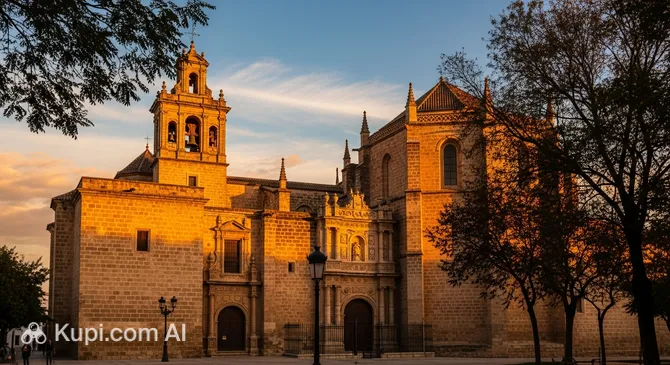
Real Convento de Santo Domingo

About

The Royal Monastery of Santo Domingo is a prominent architectural monument and one of the most significant religious shrines in the city of Jerez de la Frontera. As part of the rich cultural heritage of Spain, this monastery represents a rare blend of Mudejar, Gothic, Renaissance, and Baroque styles, making it a true gem of Andalusian architecture.
\n\n
Royal Convent of Santo Domingo
Royal Convent of Santo Domingo. Иллюстрация. Источник: Kupi.com AI
\n\n

The monastic complex is particularly famous for its 15th-century Gothic cloister, which is recognized as one of the most beautiful in Andalusia. The monastery church has an unusual T-shape (hammer shape) and houses valuable works of art within its walls, including magnificent reliefs and exquisite wrought-iron screens. For visitors, this place reveals itself as an oasis of silence and spirituality in the middle of the busy city center.

\n\n

Today, the site holds the status of Property of Cultural Interest (BIC) and continues to serve as an active religious center. The monastery not only attracts history and architecture enthusiasts but also serves as home to several ancient brotherhoods that play an important role in the city's traditional festive processions.

Contacts

For those planning a visit to the Royal Monastery of Santo Domingo, it is useful to have up-to-date contact information. This will help you clarify visit details or learn about possible changes to the holiday service schedule.

\n\n
How to contactContact
AddressAlameda Cristina, 11403 Jerez de la Frontera, Cádiz, Испания
Phone+34 956 34 10 37
Websitewww.dominicoshispania.org

What to Do

A visit to the monastery offers guests of the city an immersion into an atmosphere of medieval tranquility. Begin your tour at the Church of Santo Domingo to admire its architectural features: the narrow central nave and the rich interior decoration. Special attention should be paid to the Chapel of Our Lady of Consolation (Virgen de la Consolación) — the patroness of Jerez, whose legend is associated with the miraculous rescue of sailors in the Bay of Cádiz. Its Rococo retablo impresses with its delicate craftsmanship and unusual details, such as images of unicorns.

\n\n

Be sure to set aside time for a walk through the Gothic cloister. This quiet courtyard with elegant arches and Doric columns is an ideal place for reflection and relaxation. Today, exhibitions, chamber concerts, and cultural events are often held here, allowing you to see the ancient walls in the light of modern life.

\n\n

Art lovers should carefully examine the 17th-century High Altar and the Renaissance sacristy, which houses valuable church relics. If your visit coincides with the activities of local brotherhoods, you can experience the living traditions of Jerez by observing the preparations for religious holidays and rituals that have been performed here for centuries.

Getting There

The monastery is located in the heart of the historic district at Alameda Cristina. Thanks to its central location, it is easily accessible on foot from most parts of the old town. For example, a walk from the main square, Plaza del Arenal, takes no more than 10–15 minutes, making it convenient to combine a visit with other local attractions.

\n\n

If you are arriving from more distant areas or another city, you can use a taxi. From Jerez Airport, located about 12 km away, the trip takes approximately 15–20 minutes. Additionally, city buses stop in the immediate vicinity of the complex, connecting Alameda Cristina with the city's key transport hubs.

\n\n

For travelers with their own or a rental car, it is important to remember that parking in the center of Jerez can be difficult due to the narrow streets. It is recommended to leave your car in one of the paid underground parking lots nearby and continue on foot, enjoying the city's architecture.

Ближайший город: Jerez de la Frontera

History & Facts

The founding of the Royal Monastery of Santo Domingo is inextricably linked to a key moment in the city's history — its liberation from the Moors. In 1264, King Alfonso X the Wise granted these lands to the Dominican Order. It is believed that the first Catholic Mass in Jerez after the Reconquista was celebrated here by Saint Peter González Telmo, the well-known patron saint of sailors.

\n\n

Over the centuries, the monastery enjoyed the special favor of monarchs and quickly became one of the wealthiest cultural centers in Andalusia. In the 16th century, the cloister owned vast olive groves and livestock herds, highlighting its influence. The architectural appearance of the building evolved gradually: elements of Gothic, Renaissance, and lavish Baroque were added to the original structures, creating the unique ensemble we see today.

\n\n

A tragic turn occurred in 1835 during the period of disentailment (confiscation of church property). The monks were forced to leave the building, and the complex itself almost fell into ruin. However, the church remained active, and the monastery's famous cloisters even served as a museum in the early 20th century, housing about 3,000 exhibits.

\n\n

Monastic life only resumed here at the end of the 19th century. Today, the monastery is recognized as a Property of Cultural Interest (Bien de Interés Cultural). It remains an important spiritual symbol for the city's residents, carefully preserving the memory of centuries of Jerez's history and traditions.

Time Needed

To fully appreciate the architectural beauty of the church and take a leisurely stroll through the famous Gothic cloister, it usually takes about 1–2 hours. This time is sufficient to view the interiors, study the altarpieces in detail, and visit the chapels.

\n\n

If the monastery is hosting temporary exhibitions or cultural events, the visit might take a little longer. It is also worth setting aside an extra half hour if you wish to sit in the silence of the courtyard, enjoying its unique acoustics and the tranquility hidden from the city noise.

Working Hours

Visits to the monastery are possible throughout the week, except for Mondays and Sundays when the doors are most often closed to tourists. Main visiting hours are Tuesday to Friday from 10:30 AM to 1:30 PM and in the evening from 6:00 PM to 9:00 PM. On Saturdays, the monastery is usually open only in the morning, until approximately 1:15 PM.

\n\n

Since the monastery is an active religious site, the schedule may change during church holidays or special events. It is highly recommended to check the current schedule on the official website or on-site before your visit.

DayWorking hours
понедельникЗакрыто
вторник10:30–13:30, 18:00–21:00
среда10:30–12:50, 18:00–21:00
четверг10:30–13:30, 18:00–21:00
пятница10:30–13:30, 18:00–21:00
суббота10:00–13:15
воскресеньеЗакрыто

Nearby

The monastery's location in the historic center makes it an ideal starting point for further exploration of the city's architectural treasures. A walk through the surrounding area will allow you to see both magnificent noble palaces and cozy squares steeped in the atmosphere of Andalusia.

\n\n

Below are interesting sites within walking distance of the Royal Monastery of Santo Domingo:

\n\n
NameDistance
Cloisters of Santo Domingo0.1 km
Plaza del Mamelón0.2 km
Plaza del Arenal0.5 km
Palace of the Viceroy Laserna0.5 km
Lola Flores Cultural Center0.5 km
El Rincón del Pirata0.5 km
Las Banderillas0.6 km

Reached the end of the page?

That means the route is fully explored