Support

Puerta de Almocábar

About

Imagine a massive stone structure that for centuries served as the main southern bastion of an ancient city. The Almocábar Gate is a monumental historic landmark located in the city of Ronda. They are part of a powerful system of fortifications that once reliably protected the local population from enemies, and today attract thousands of travelers from all over the world.
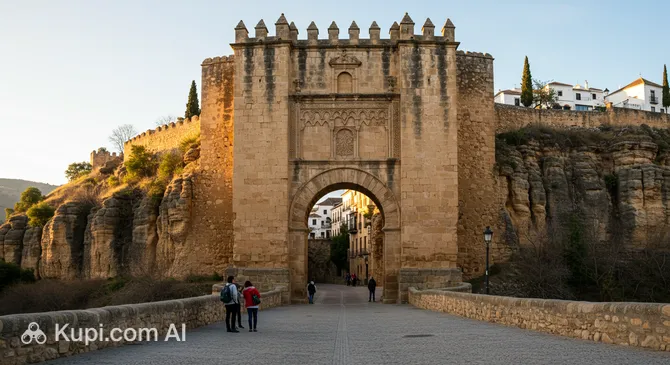
Almocábar Gate
Almocábar Gate. Иллюстрация. Источник: Kupi.com AI

This architectural masterpiece was erected by the Moors back in the 13th century. The gate received its name due to its proximity to a Muslim cemetery located outside the city walls. Today, this site is rightfully considered one of the most recognizable symbols that Spain is proud of, embodying a harmonious blend of Arabic and Christian traditions in Andalusian architecture.

The gate consists of two semicircular towers and a central arch that has preserved elements of the classical Islamic style. Passing under its vaults, you literally take a journey through time, moving from the modern rhythm of life into the atmosphere of a medieval city with its narrow cobbled streets and whitewashed houses.

Contacts

To clarify information about visiting the attraction or booking tours, you can use the following contact details:

How to contactContact
AddressPl. Ruedo Alameda, 29400 Ronda, Málaga, Spain
Phone+34 952 18 71 19
Websiteandaluciarustica.com

What to Do

Once at the gate, first of all, it is worth taking the time for a detailed inspection of its architecture. Examine the powerful stone blocks and massive towers that held off enemy onslaughts for centuries. A walk through the gate allows you to feel the scale of the Moorish fortifications and take impressive photos against the backdrop of the ancient masonry.

Be sure to climb the preserved sections of the fortress walls, known as the Murallas del Carmen. From the height of the defensive structures, a breathtaking panorama opens up over the surrounding valleys and authentic quarters of the city. It is an ideal place to pause for a moment and feel the majesty of history, while admiring the sunset or the morning mist over the mountains.

The square in front of the gate — Plaza Ruedo Alameda — serves as an excellent starting point for a walking route. From here, you can head deep into the Old Town to find hidden courtyards, ancient churches, or reach the famous bridge spanning the deep gorge. Also nearby are cozy spots where you can taste local wines and traditional dishes of the region.

Getting There

The Almocábar Gate is located in the southern part of the historical quarter. If you are already in the city center, a pleasant stroll through the medieval streets will take very little time and allow you to fully enjoy the atmosphere of old Spain.

For those arriving at the Ronda railway station, the walk will take about 20–30 minutes. This is a great way to see a cross-section of the city, moving from more modern districts to the ancient fortifications. You can also always use the services of a local taxi, which will quickly take you to Pl. Ruedo Alameda.

If you prefer public transport, city buses regularly run towards the old quarter. For travelers with a private or rented car, there are several small parking areas near the gate, although it is worth noting that the streets in this part of the city are quite narrow.

Ближайший город: Ronda

History & Facts

The construction of the Almocábar Gate dates back to the 13th century, a period when the territory was under Moorish rule. At that time, Ronda was an impregnable fortress, and this gate served as a vital defensive hub and the main entrance to the city from the south. It received its unusual name from the Arabic word "al-maqabir", which translates as "cemetery" — in ancient times, a Muslim burial ground was located outside the city walls.

The history of the gate changed dramatically in 1485, when the city was conquered by Christian forces. The gate became a silent witness to the triumphant entry of King Ferdinand's army, marking the beginning of a new era for the region. Later, in the 16th century, the Spanish carried out an extensive restoration of the structure, adding elements typical of the architecture of that time while preserving the foundation of the original Moorish masonry.

Over the centuries, the Almocábar Gate performed not only a defensive but also an administrative function. A customs post and guards were stationed here, strictly controlling the flow of people and goods entering the city. Today, this structure is recognized as one of the most important monuments of military architecture in Andalusia, preserving the spirit of two great cultures.

Time Needed

Travelers usually need about 30–40 minutes to leisurely inspect the gate itself, appreciate the strength of the masonry, and take commemorative photos. This time is quite sufficient for a basic introduction to the site as part of a sightseeing walk.

If you decide to climb the adjacent fortress walls or linger in the square to enjoy the views of the valley, plan to spend 1 to 1.5 hours here. The Almocábar Gate often serves as a starting point for long walks through the Old Town, so the total visit time will depend on your further route.

Working Hours

The Almocábar Gate is an open-air site, so it is accessible for viewing 24 hours a day. You can come here early in the morning to catch the first rays of the sun on the ancient stones, or late in the evening when architectural lighting gives the structure a special mystery.

It should be noted that 24-hour access applies to the exterior part of the gate and the adjacent squares. If museum exhibitions are organized in the interior rooms of the towers in the future, their operating hours may differ from the general access to the monument.

Круглосуточно

Nearby

Visiting the Almocábar Gate is just the beginning of your immersion into the city's rich history. The site's location in the southern part of the old center makes it easy to combine a tour of the fortifications with visits to other iconic places within walking distance.

Exploring the surroundings will help you better understand how the city's defensive system was organized and how its appearance changed over the centuries. Below are the attractions you should include in your itinerary:

NameDistance
Bar Fina Ronda0 km
Ronda0.4 km
Church of Santa María la Mayor0.4 km
Arab Baths of Ronda0.5 km
Lara Museum0.5 km
Puente Viejo0.6 km
Puente Nuevo Viewpoint0.6 km

Reached the end of the page?

That means the route is fully explored