Support

Ronda

About

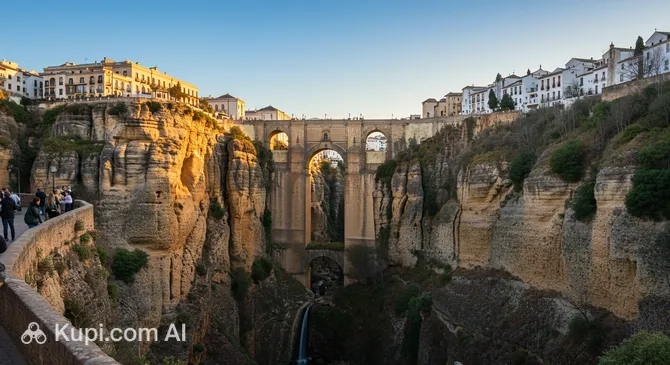
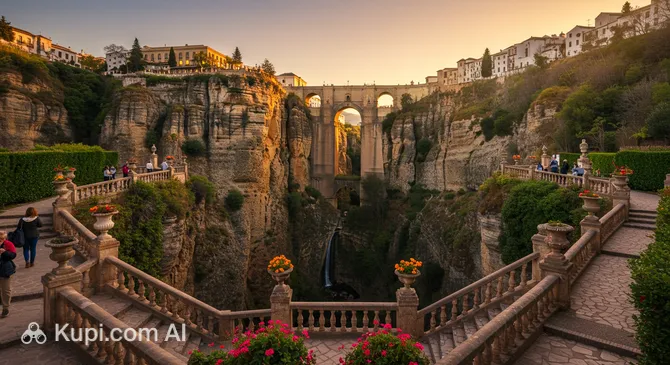
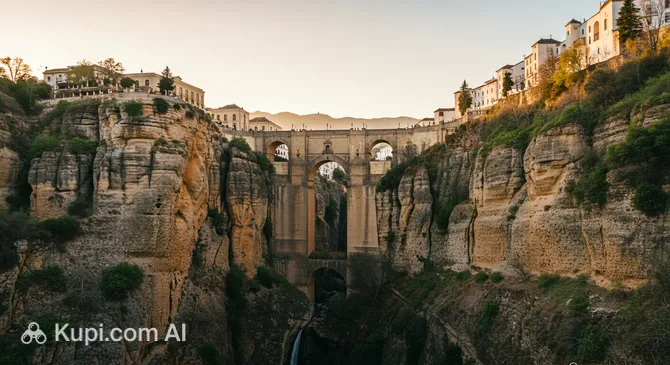
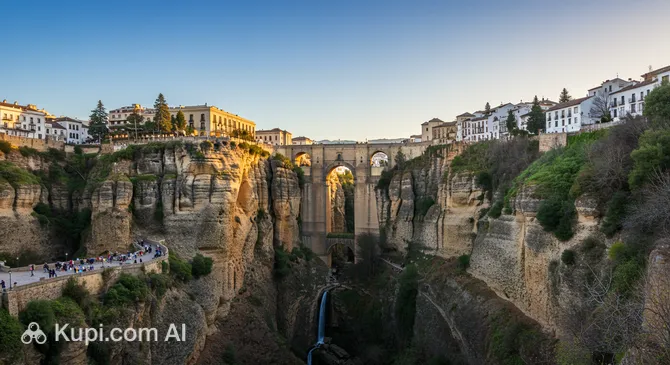
Ronda is an amazing city, a true gem of Andalusia, located in Spain. It literally soars atop a rocky plateau, about 100 kilometers from Malaga, and its unique location above the deep El Tajo gorge is breathtaking at first sight. This dizzying gorge divides the city into two main parts: the old Moorish La Ciudad and the newer El Mercadillo.
Ronda. Illustration.
Source: Kupi.com AI

With a population of about 33,000 people, Ronda retains the charm of a small Andalusian town where every corner breathes history. It is a place where you can feel the authentic spirit of old Spain while strolling through its narrow streets lined with the traditional whitewashed houses so characteristic of this region.

The crown jewel of Ronda and its most recognizable symbol is undoubtedly the Puente Nuevo (New Bridge). This grand 18th-century structure, spanning the El Tajo gorge at a height of about 100 meters, connects the old and new parts of the city. The views from the bridge and numerous observation decks are simply unforgettable. Besides the bridge, the city is famous for its historic bullring, one of the oldest and most revered in the country, as well as its ancient Arab baths and charming palaces.

Ronda is often called Spain in miniature: it is passionate, mysterious, and incredibly beautiful. This city enchants with its dramatic beauty, rich cultural heritage, and unique atmosphere. It is ideal for those seeking inspiration, romantic walks, and vivid impressions. A visit to Ronda will undoubtedly be one of the most memorable moments of your trip through Andalusia.

You can find more interesting facts on the Ronda city history page.
Weather Overview

In Ronda, you can expect very hot and dry summers, while winters are mild and moderately wet. The summer months, especially July and August, are characterized by an average temperature of around 25-26°C (with maximum values regularly exceeding 30°C) and almost a complete absence of precipitation. In winter, for example in January, the average temperature is around 9.1°C. The highest amount of rainfall, though still small overall, occurs in March (about 5 mm), and rainy days are also more frequent from October to April. To learn more about the climate and weather by month, visit the Ronda Climate page.

Average monthly temperature

Average monthly precipitation

Interesting Facts

Beyond its world-famous views, Ronda hides many surprising stories and little-known details. This city is a true treasure chest of secrets, and here are just a few of them:

  • Ancient roots and name: Ronda is considered one of the oldest cities in Europe, with history dating back to the 4th century BC when Celts settled here. Later, the city belonged to the Romans and Moors, each of whom left their mark. Interestingly, the original Arabic name of the city, Izn-Rand-Onda, eventually transformed into the name we know today—Ronda.

  • Secrets of the New Bridge: The famous Puente Nuevo (which includes the Puente Nuevo Viewpoint), built in the 18th century and soaring nearly 100 meters over the El Tajo gorge, does more than just connect two parts of the city. Inside its massive supports, according to legend, were rooms that served as a prison at various times. Some sources mention galleries through which one could descend to the base of the canyon.

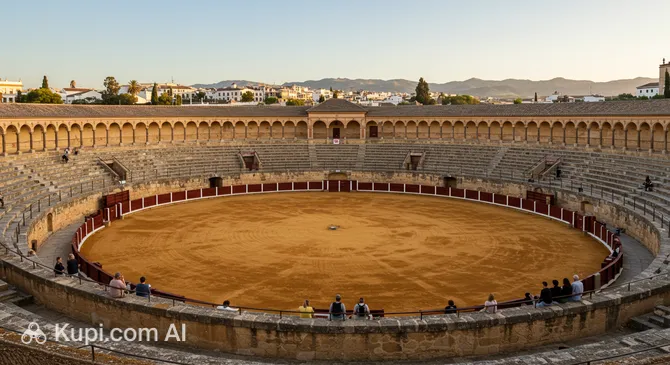
  • The cradle of modern bullfighting: Ronda is considered the birthplace of modern Spanish bullfighting. In the 18th century, local matador Francisco Romero introduced key elements of the bullfight, including the use of the red cape (muleta) and a specific sequence of actions. The city's Plaza de Toros is one of the oldest and most revered in Spain, a true temple of this spectacle.

  • Prehistoric art nearby: Not far from Ronda is the amazing Cueva de la Pileta, whose walls are decorated with cave paintings over 15,000 years old. These ancient depictions of animals and symbols are one of the most important monuments of Paleolithic art in Andalusia and attract researchers and tourists from all over the world.

Plaza de Toros de Ronda. Illustration.
Source: Kupi.com AI

Traveler photos:

How to Get There

Ronda is located in the mountainous terrain of Malaga province, making the journey there incredibly scenic. Although there is no airport in the city itself, thanks to Andalusia's developed transport network, getting here is easy. You can find out more about how to get to Ronda by exploring all available routes and modes of transport.

There is no airport in Ronda, but you can fly into Malaga Airport (IATA: AGP) in Malaga, which is about 60 km from Ronda. This is the main international hub of the Costa del Sol, receiving flights from all over the world. The journey from the airport to Ronda by taxi or rental car will take about 1 hour and 30 minutes, as part of the route follows winding mountain roads with beautiful views.

Another convenient option is Seville Airport (IATA: SVQ) in Seville, located about 99 km from Ronda. This is a major regional transport hub. A car trip from here will take about 1 hour and 45 minutes. You can also consider flying into Jerez Airport (IATA: XRY), located in Jerez de la Frontera (about 80 km from Ronda), though the number of international flights there is smaller.

For clarity, here is summary information on the main airports:

AirportPassenger trafficDistance
Malaga Airport24.9 mln60 km
North Front Airport474 00068 km
Jerez Airport948 93680 km
Seville Airport8.1 mln99 km
Sania Ramel187 777129 km

Train travel is also a popular way to reach the region. Ronda has its own railway station connected to major cities. If you are planning a complex itinerary, the main stations in Andalusia may be useful. For example, Santa Justa (IATA: XQA) in Seville is one of Spain's most important railway hubs, located about 102 km from Ronda. AVE high-speed trains from Madrid arrive here, after which you can transfer to regional transport or rent a car.

Also worth noting is the Maria Zambrano Station (IATA: YJM) in Malaga, located about 65 km from Ronda. This is a modern station with high passenger traffic, integrated with a shopping center. From here, it is convenient to reach Ronda by both direct train and bus. The travel time by car from Malaga station to Ronda is about 1 hour and 20 minutes.

Below is information about the nearest major railway stations:

StationPassenger trafficDistance
María Zambrano Station8.9 mln65 km
Puente Genil Railway Station225 24374 km
Jerez Railway Station1.9 mln87 km
Santa Justa Railway Station10.1 mln102 km
Cádiz Station1.6 mln104 km

Main Attractions

Ronda, perched atop a cliff and divided by the impressive El Tajo gorge, offers tourists many unique attractions. This Andalusian city is rich in history and culture, traces of which are visible at every turn.

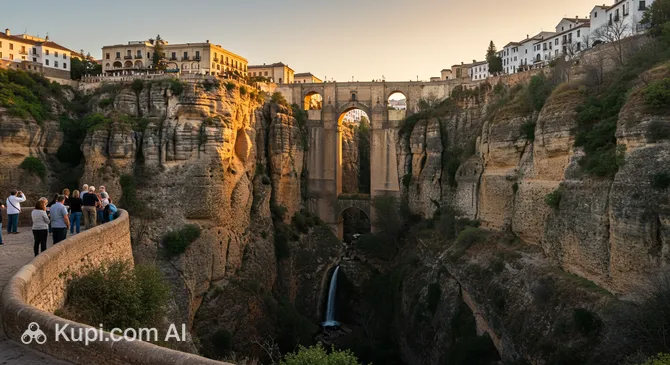
One of the most iconic and photographed attractions in Ronda is undoubtedly the Puente Nuevo Viewpoint. This bridge, whose name translates to "New Bridge," connects the old and new parts of the city, towering over the deep El Tajo gorge. Construction of the bridge was completed at the end of the 18th century, and it has since captured imaginations with its monumentality and engineering. Breathtaking views of the gorge and surrounding landscapes open up from the bridge and surrounding viewpoints. A prison was once located inside one of the bridge's supports, and it now houses a small museum telling the story of its construction.

Puente Nuevo Viewpoint. Illustration.
Source: Kupi.com AI

Traveler photos:

For lovers of history and Spanish traditions, a visit to the Plaza de Toros de Ronda is a must. This is one of the oldest and most respected bullrings in Spain, built in 1785. The arena is considered the cradle of modern bullfighting, as it was here that the Romero family laid the foundations of bullfighting on foot. In addition to the arena itself, there is a bullfighting museum where you can learn more about the history of this spectacle and see the costumes of famous toreros.

Plaza de Toros de Ronda. Illustration.
Source: Kupi.com AI

Traveler photos:

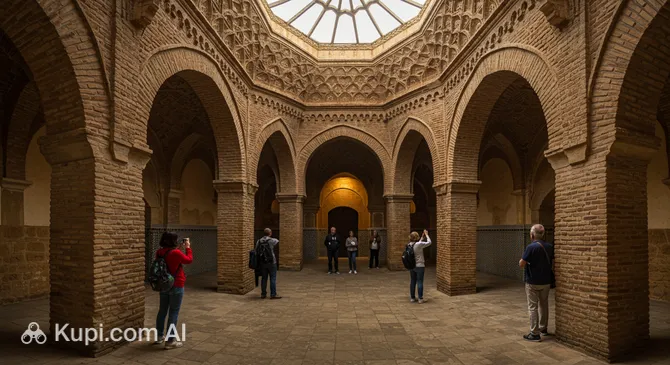
To immerse yourself in the atmosphere of Ronda's Moorish past, visit the Arab Baths of Ronda (Baños Árabes). These baths, dating back to the 13th-14th centuries, are among the best-preserved on the Iberian Peninsula. Visitors can explore various rooms—cold, warm, and hot—and imagine how bathing rituals were conducted during the era of Arab rule. Star-shaped openings in the ceilings, through which light filtered, create a special atmosphere.

Arab Baths of Ronda. Illustration.
Source: Kupi.com AI

Traveler photos:

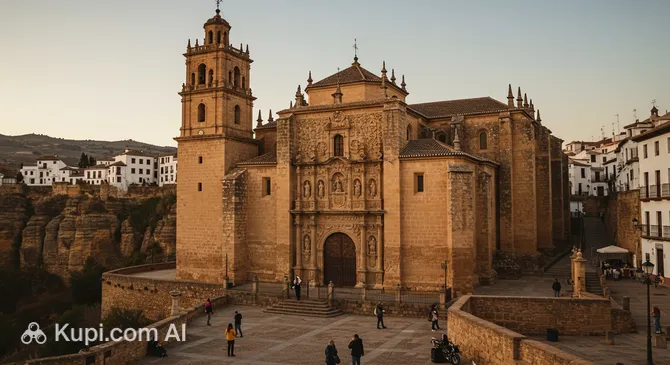
Another important historical and architectural monument is the Church of Santa Maria la Mayor. Ronda's main church was built on the site of a former mosque after the Christian conquest of the city. Construction continued for several centuries, leading to a blend of architectural styles—from Gothic to Renaissance and Baroque. Inside, you can see a richly decorated altar and beautiful stained glass windows. The church's bell tower, which was originally a minaret, is also worth noting.

Church of Santa María la Mayor. Illustration.
Source: Kupi.com AI

Traveler photos:

A walk through the Alameda del Tajo, a charming 19th-century park, offers not only a rest in the shade of the trees but also magnificent views of the gorge and the surrounding mountains. The park is decorated with fountains, sculptures, and balconies hanging over the abyss, making it a popular place for walks and photographs.

Local Cuisine

The cuisine of Ronda is a true gastronomic journey, combining centuries-old Andalusian traditions with unique local recipes passed down through generations. The city is rightfully considered a paradise for gourmets and wine lovers, offering authentic flavors and unforgettable experiences.

Among the dishes you must try in Ronda, rabo de toro—a tender oxtail stew prepared according to a special recipe—stands out. The region is also famous for its goat cheese, aromatic olives, and homemade sausages. Don't miss the chance to try fried eggplants with honey—a popular snack in local tapas bars—as well as the freshest seafood and, of course, the famous Spanish jamón.

Ronda's special pride is its local wines. Winemaking here is undergoing a true renaissance: about twenty wineries produce high-quality red and white wines, many of which have won international awards. Wine tours and tastings will be a wonderful addition to your gastronomic experience. Among non-alcoholic drinks, freshly squeezed juices and traditional Spanish refreshing beverages are popular.

Tropicana Restaurant. Illustration.
Source: Kupi.com AI

Traveler photos:

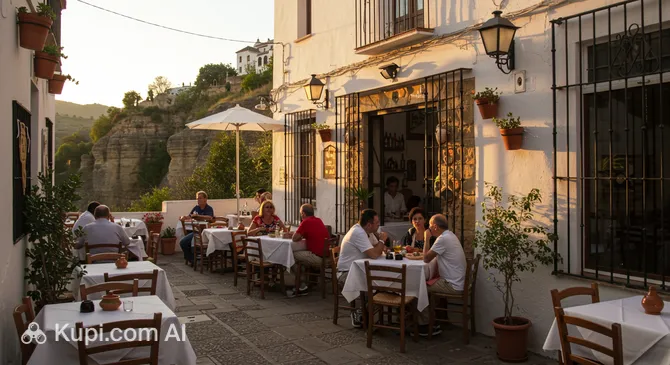
Ronda's food culture is centered around cozy tapas bars, where locals and tourists enjoy a variety of appetizers in a relaxed atmosphere. On weekends and holidays, farmers' markets open in the city, offering fresh vegetables, fruits, cheeses, and sweets. For a more substantial dinner, you can choose from numerous restaurants, such as Tropicana Restaurant, which serves local and international cuisine. In the fall, the city comes alive thanks to the Wine and Gastronomy Festival, which attracts lovers of good food and fine wine from all over the area.

Travel Tips

Planning a trip to picturesque Ronda, one of the most impressive cities in Spain? To ensure your trip goes smoothly and leaves only the best impressions, we have prepared some practical tips for you.

  1. Clothing and items for the season: Ronda is located on an elevation, so the weather here can be changeable. In summer (June-August), expect heat, so light breathable clothing, a headpiece, sunglasses, and sunscreen are essential. In spring and autumn, the weather is pleasant, but evenings can be cool—bring a sweater or light jacket. In winter, it can be quite cold, with potential frost. A key wardrobe element at any time of year is comfortable shoes for walking on cobbled streets and exploring the gorge. Don't forget an adapter for electrical appliances if your plugs differ from European ones.
  2. Getting around the city: Ronda is a city that is perfectly suited for walking. Most attractions, including the famous Puente Nuevo and the old town, are within walking distance. Public transport inside the city is limited and you are unlikely to need it. Taxis are available and can be found at stands or called by phone. Renting a car makes sense if you plan to explore the surrounding "white villages" (pueblos blancos) of Andalusia.
  3. Financial matters: The official currency in Spain is the Euro (€). Bank cards (Visa, Mastercard) are widely accepted in most hotels, restaurants, and shops. ATMs (cajeros automáticos) are easy to find throughout the city. Before your trip, check with your bank for conditions on cash withdrawals and card payments abroad. Tips in restaurants are usually not included in the bill; if you enjoyed the service, it's customary to leave 5-10% of the amount or just round the bill up.
  4. Health and safety: Pharmacies (farmacias) in Ronda are marked with a green cross; there is always an on-call pharmacy open 24 hours (information can be found on the doors of other pharmacies or online). For medical assistance, tourists are recommended to have travel insurance. Ronda is considered a very safe city. Nevertheless, follow standard precautions: keep an eye on your belongings in crowded places and do not leave valuables unattended.
  5. Language and communication: The official language is Spanish. In tourist areas, hotels, and restaurants, staff often speak English. However, knowing a few basic Spanish phrases (e.g., "Hola"—hello, "Adiós"—goodbye, "Gracias"—thank you, "Por favor"—please, "¿Cuánto cuesta?"—how much does it cost?) will be very helpful and appreciated by locals. Mobile SIM cards with internet access can be bought at mobile shops. Free Wi-Fi is available in many hotels, cafes, and public places.
  6. Local etiquette: Spaniards are generally friendly and sociable. It is customary to say hello and goodbye when entering and leaving shops or cafes. Addressing someone as "tú" (informal "you") is common, but it's better to address elders or strangers as "Usted" (formal "you") until you are invited to use "tú." Don't be surprised by loud conversations and active gesturing—it's part of the local communication culture.
  7. What to avoid: Try to avoid discussing sensitive political topics such as Catalan separatism or historical disputes unless you are sure of your conversation partner's position. Also, do not photograph people without their permission, especially in informal settings. Respect the siesta time (roughly from 14:00 to 17:00), when some small shops and establishments may be closed, though this is less pronounced in the tourist center.
  8. Special tip for Ronda: To fully enjoy the views of the Puente Nuevo and the El Tajo gorge, and to take the best photos, visit the viewpoints early in the morning or at sunset. At these times, there are fewer tourists, and the lighting creates a magical atmosphere. Also, don't miss the chance to try local specialties, such as stewed oxtail (rabo de toro) and local wines.

We hope these tips help you plan an unforgettable trip to Ronda. Enjoy every moment in this amazing and authentic corner of Spain, its stunning views, and its hospitality!

Entertainment & Nightlife

Ronda, with its dramatic landscapes and rich history, offers guests not only daytime excursions but also pleasant evening entertainment. Although it is not a city of loud nightclubs, you can find a cozy and authentic atmosphere for relaxation after sunset.

Most evening life in Ronda is centered around the main shopping street, Calle Espinel, also known as "La Bola," and its adjacent squares, such as Plaza del Socorro. Here you will find many tapas bars, restaurants, and cafes where locals and tourists enjoy socializing and delicious food. The atmosphere is usually relaxed and friendly, perfect for a leisurely evening. Most establishments are open until late, especially during the tourist season.

For dinner in a pleasant setting, consider Tropicana Restaurant, known for its cuisine and hospitality. An evening here can smoothly transition into a late-night gathering over a glass of local wine. Although Ronda doesn't have many classic nightclubs, some bars offer music and a livelier atmosphere closer to midnight, especially on weekends. Look for "copas" (drinks/cocktails) signs to find places to stay out late. The dress code in most places is casual, but for dinner in a more refined restaurant, you might want to dress up a bit.

Practical tips for nightlife in Ronda:

  • Spaniards dine late, so many restaurants and bars only come to life after 9-10 PM.
  • Average prices for drinks and food in Ronda are quite moderate, especially if you choose traditional tapas bars.
  • The city center is compact, and most interesting places are easily reachable on foot. If you need a taxi, you can call one by phone or find them at stands in the central squares.

Ronda is considered a safe city for night walks, especially in the central and tourist areas. Nevertheless, it's always wise to follow standard precautions. Walking across the illuminated Puente Nuevo at night is a special experience not to be missed.

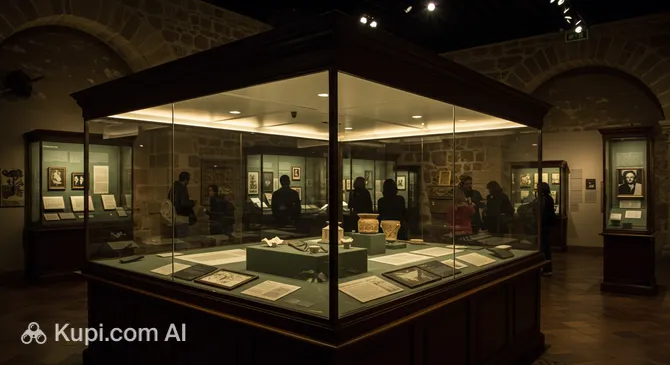
During the day, Ronda also offers many interesting activities. You can visit museums such as the Lara Museum or the Milamores Museum to dive deeper into the region's history and culture. For outdoor strolls, the Alameda del Tajo park is ideal, offering spectacular views of the gorge and surroundings.

Lara Museum. Illustration.
Source: Kupi.com AI

Traveler photos:

Parks & Museums

Ronda, this picturesque city in the heart of Andalusia, offers its guests not only breathtaking views but also a rich cultural heritage expressed in its parks, museums, and numerous historical monuments. Immerse yourself in the atmosphere of this unique place by exploring its green corners and treasure troves of history.

A walk through Ronda would be incomplete without visiting its green oases. One of the most charming spots is the Alameda del Tajo—a beautiful 19th-century park and promenade located on the edge of a cliff. From here, stunning panoramic views of the surrounding valleys and mountains open up. It is the perfect place for a leisurely walk, resting on a bench in the shade of the trees, and enjoying the fresh air. No less impressive as a natural site is the El Tajo gorge itself, which divides the city into two parts. While not a park in the traditional sense, its majestic cliffs and the views from observation points like the La Hoya del Tajo Viewpoint or the Ronda Viewpoint make it a must-visit.

Alameda del Tajo. Illustration.
Source: Kupi.com AI

Traveler photos:

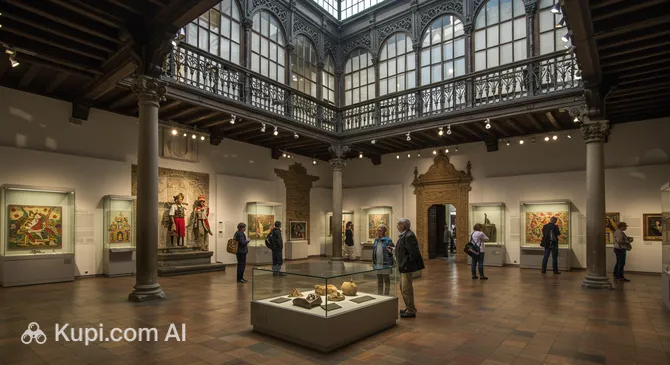
To dive deeper into Ronda's history and culture, it's worth visiting its museums. The Lara Museum is an eclectic collection housed in a beautiful 18th-century palace. Here you will find artworks, clocks, weapons, scientific instruments, and even an exhibition dedicated to the Inquisition and witchcraft. This place surprises with the variety and unusual nature of its exhibits. Another interesting museum is the Milamores Museum, which offers a look at Ronda's romantic history through the prism of legends and artifacts related to bandits, bullfighters, and travelers of the past.

Milamores Museum. Illustration.
Source: Kupi.com AI

Traveler photos:

Ronda itself is an open-air museum. The symbol of the city is undoubtedly the Puente Nuevo, a grand 18th-century structure spanning the El Tajo gorge. Magnificent views of it and the gorge can be enjoyed from the Puente Nuevo Viewpoint. Don't forget to also see the Puente Viejo (Old Bridge) and the famous Arab Baths of Ronda—some of the best-preserved in Spain. Bullfighting enthusiasts will be interested in the Plaza de Toros de Ronda, one of the oldest and most beautiful bullrings in the country, which also houses a bullfighting museum. The city's historic center, with its narrow streets, white houses, and old churches like the Church of Santa Maria la Mayor, preserves the atmosphere of past centuries.

El Tajo Gorge. Illustration.
Source: Kupi.com AI

Traveler photos:

For an authentic experience, turn off the main tourist routes in the old town (La Ciudad) and simply wander through its labyrinths. Peep into courtyards, find less famous viewpoints, for example near the Almocabar Gate, to enjoy the silence and beauty of Ronda away from the hustle and bustle.

Getting Around

Ronda is a city best explored on foot, especially its historic part with its narrow streets and the famous Puente Nuevo bridge. However, for moving longer distances or for connecting with the outskirts and neighboring settlements, there are several options.

The main form of public transport in Ronda is the city and suburban bus network. The route network connects various city districts and also provides connections to the railway station and the bus station. Buses are relatively inexpensive and run according to a schedule that can be found at stops or on the local transport company's website. Single tickets, which can be purchased directly from the driver, are usually used for payment. In some cases, multi-trip passes may be available, but for short-term tourists, single tickets are usually the most convenient option.

Bus operating hours usually cover the daytime, with less frequent services in the early morning and late evening. The schedule may change on weekends and holidays, so it is recommended to check it in advance. Ticket validation occurs upon entering the bus.

In addition to buses, taxi services are widely available in Ronda. Taxi stands can be found at key points in the city, such as stations, central squares, and near large hotels. A taxi is a more expensive but more comfortable way to get around, especially if you are traveling with luggage or in a group. Taxi prices are regulated by tariffs, and a trip within the city is usually not too costly.

Given the compactness of Ronda's historic center, many tourists prefer to get around on foot. This allows you to enjoy the city's atmosphere, its architecture, and stunning views. For those who want to explore the surroundings, renting a bike can be an interesting alternative, though the hilly terrain should be taken into account. Specialized car-sharing systems generally don't exist in small towns like this, but car rental services are available at the region's larger transport hubs.

Accommodation

In Ronda, travelers will find diverse accommodation options to suit various preferences and budgets. The city offers a wide range of lodging: from cozy guesthouses and budget hostels to comfortable mid-range hotels and luxurious boutique hotels, some of which are located in historic buildings. Apartment rentals are also popular, which is especially convenient for families or long stays.

The areas adjacent to the main attractions, such as the famous Puente Nuevo bridge and the old town (La Ciudad), are the most sought-after by tourists. Staying here provides easy access to iconic sites, restaurants, and shops. Ronda's historic center enchants with its narrow streets and traditional architecture, offering a unique living experience. Many hotels and apartments in this part of the city boast spectacular views of the El Tajo gorge.

The price range for accommodation in Ronda varies from budget options to more expensive luxury offerings. In general, you can find both inexpensive rooms in hostels or guesthouses and exquisite rooms in hotels with high service standards. It is recommended to book accommodation in advance, especially if your trip is planned during the peak tourist season (spring, summer, and early autumn) or during local festivals. This can be done through popular online booking platforms or directly on hotel websites.

Nearby Cities

For those who want to explore the surrounding area, Ronda serves as an excellent starting point for day trips to several interesting nearby locations.

Several notable places are located close to Ronda, ideal for short excursions. For example, fashionable Marbella beckons with its famous beaches, luxury yachts in Puerto Banús, and picturesque old town. For full immersion in Andalusian character, head to Mijas—one of the charming "white villages" where you can ride a donkey taxi and enjoy spectacular views of the coast. Also worth noting is Estepona, known for its well-kept historic center decorated with thousands of flower pots and beautiful beaches for relaxation.

CityPopulationDistance
Ubrique16 48227 km
Benahavís8 76327 km
San Pedro35 00033 km
Marbella150 72536 km
Estepona74 49336 km

These nearby destinations provide a more complete picture of Andalusia's diverse culture, history, and natural landscapes, complementing the experience of visiting Ronda itself.

Shopping & Souvenirs

Ronda, a charming city in Andalusia, offers tourists not so much large-scale shopping in the conventional sense, but the opportunity to purchase authentic local products and souvenirs. The city is famous for its craft traditions, especially leather goods, ceramics, and regional gastronomic delicacies. Here you will find many small shops and boutiques reflecting the spirit of old Spain.

The main shopping artery of Ronda is the pedestrian Calle Espinel, better known among locals as "La Bola." This busy street stretches through the new part of the city and offers a wide range of shops: from clothing and footwear by Spanish brands to souvenir stalls and shops with local products. It is also worth strolling through the streets adjacent to the Plaza de Toros and the Puente Nuevo bridge, where many souvenir shops are concentrated.

Ronda. Illustration.
Source: Kupi.com AI

Traveler photos:

There are no large modern shopping centers in Ronda typical of big cities. Shopping here has a more intimate character and is mainly concentrated on the main shopping street and in small shops scattered throughout the historic center. This allows for a deeper immersion into the city's atmosphere and finding unique items.

Although there are no famous flea markets in Ronda, you can visit the Municipal Market (Mercado de Abastos), located near the center. Here you can dive into the daily life of the townspeople and purchase fresh local products: fruits, vegetables, cheeses, jamón, and olives. Sometimes seasonal craft fairs are held in the city, where you can find interesting handmade items.

From Ronda, it is worth bringing home traditional Andalusian souvenirs. Especially popular are:

  • Leather goods: handmade bags, belts, wallets, and shoes.
  • Ceramics: painted plates, pitchers, tiles with traditional patterns.
  • Gastronomic products: local wines (especially Ronda's red wines), olive oil, cheeses, sweets (for example, "yemas del Tajo"—a dessert made from egg yolks).
  • Bullfighting-related souvenirs: given the famous bullring in Ronda, you can find posters, fans, magnets, and other themed items here.
Plaza de Toros de Ronda. Illustration.
Source: Kupi.com AI

Traveler photos:

Most shops in Ronda operate on a typical Spanish schedule: from Monday to Saturday, roughly from 10:00 to 14:00 and then after the siesta from 17:00 to 20:00 or 21:00. Large stores and some souvenir shops in tourist zones may work without a break. Most shops are closed on Sundays, except for some souvenir and grocery stores during peak season. Both cash (euros) and bank cards (Visa, Mastercard) are accepted. Small shops may prefer cash.

Tourists from non-EU countries can take advantage of the VAT (IVA) refund system for purchases over a certain limit (the amount can change, check locally). To do this, you need to ask the store for a special "tax free" check and present it along with the purchases at customs when leaving the EU.

Reached the end of the page?

That means the route is fully explored