Support

Puerta de Palmas Bridgehead

About

The majestic Puerta de Palmas gate is one of the most recognizable symbols of the city of Badajoz. Located in sunny Spain, it greets travelers at the northern end of the bridge over the Guadiana River. This monumental structure, erected in 1551, once served as the main entrance to the fortified city and part of its defensive ring.
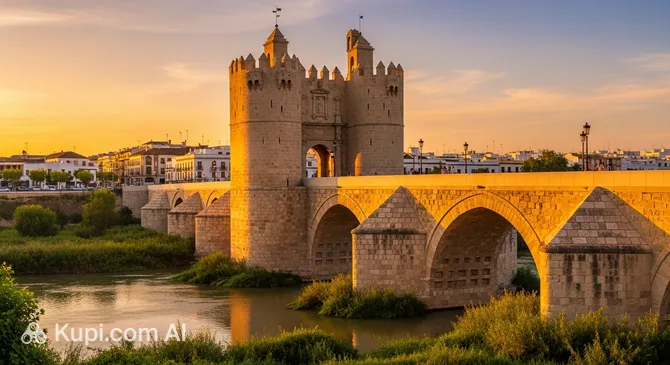
Puerta de Palmas
Puerta de Palmas. Иллюстрация. Источник: Kupi.com AI

The architecture of the site is striking in its solidity: the facade is decorated with two powerful cylindrical towers with crenellated tops and decorative bands. On the outer side, you can see the coat of arms of Emperor Charles V, as well as commemorative inscriptions dedicated to the monarch and his son, Philip II. At various times, the building performed a variety of functions—from a triumphal arch to a prison and even a small chapel.

Today, these gates open the way to the city's oldest bridge, creating a picturesque ensemble that looks especially impressive in the rays of the setting sun. This historical site combines the austerity of Renaissance military architecture with the elegance of an old city that carefully preserves its traditions.

Contacts

To find the latest information on events or get tourist maps, you can contact the local information service. When planning a visit to Puerta de Palmas, it is useful to have the main contact details on hand. Below is the key information to help you find your way on-site.

How to contactContact
AddressPuente de Palmas, 06007 Badajoz, Испания
Phone+34 924 21 00 00
Websitewww.turismobadajoz.es

What to Do

Start your visit with a leisurely stroll across the Puente de Palmas pedestrian bridge. It is about 600 meters long and offers stunning panoramic views of the Guadiana River and the historical city center. This is an ideal location for photo shoots, especially at sunrise or during the "golden hour" before sunset, when the stone arches are illuminated with soft light.

When examining the gate itself, pay attention to the details: the massive cylindrical towers, the double arch, and the information panels that reveal the secrets of their past. History buffs can walk to the west bank to see the Hornabeque fortifications, which are currently being actively restored. Often, you can find street musicians here, whose melodies create a unique atmosphere on the embankment, turning architectural sightseeing into a pleasant rest.

Getting There

Getting to this historical location is very simple, especially if you are arriving in the city by train. Badajoz railway station is within walking distance: just walk about 600 meters across the bridge, which will lead you directly to the ancient gate and the historical center.

If you are already in the city center, the walk to Puerta de Palmas will take about 10–20 minutes at a leisurely pace through picturesque streets or along the embankment. You can also always use a taxi, which will quickly and comfortably take you from any point in the center or from the station directly to the start of the pedestrian bridge zone.

For those who prefer public transport, several bus stops are located nearby. If you are traveling by car, remember that the bridge itself is pedestrian-only, so it is better to leave your car at one of the parking lots near the embankment, using the coordinates 38.8849379, -6.9794445 for navigation.

Ближайший город: Badajoz

History & Facts

Originally, this monumental entrance was known as the Puerta Nueva. Completed in 1551, the gate was built as a triumphal symbol of the power of Charles V and Philip II. Over the centuries, its purpose changed: it served as an important customs point, a grim prison, and a quiet chapel of the Virgin of the Angels (Virgen de los Ángeles). Until the beginning of the 20th century, the gate was physically connected to the city walls, and it was only in 1906 that pedestrian passages were arranged around it.

The history of the neighboring bridge is no less dramatic. The first bridge at this site appeared back in 1460, but it was completely destroyed by a powerful flood. The current structure has survived several major reconstructions, the most significant of which occurred in 1833 under the direction of the engineer José María Otero. As a result, the bridge received its modern 32 spans and majestic appearance, which has become a hallmark of the Extremadura region.

Interestingly, Puerta de Palmas has retained its authenticity despite turbulent historical events. Today, it serves as a reminder of the times when Badajoz was an impregnable fortress on the border, protecting the river approaches. The fortifications on the west bank, which are part of the same complex, are planned to be converted into a modern museum of river defense in the future.

Time Needed

To simply admire the architecture of the gate and take some beautiful photos from the bridge, 30–60 minutes is quite enough. This is enough time to read the information boards and enjoy the view of the Guadiana.

If you decide to combine seeing the landmark with a full walk along the embankment, a visit to the park areas on the west bank, and exploring the outer fortifications, it is better to set aside 1–2 hours for the visit. An evening walk may last longer, as the atmosphere here is perfect for a long rest by the water.

Working Hours

Since Puerta de Palmas is part of an open urban space and pedestrian route, it is accessible for viewing 24 hours a day. You can come here at any time of the day or night, any day of the week, including holidays and weekends.

For those who want to learn more about possible guided tours or access to the interior of the towers during special events, it is recommended to check the information on Badajoz's official tourism website before your trip.

Круглосуточно

Nearby

A walk around Badajoz's Old Town allows you to visit several iconic sites in a short amount of time. After seeing the gate, you will find yourself in the heart of the historical district, where every alley holds a piece of the past.

Exploring the surrounding fortifications and squares will help you better understand the rich history of the region. Below is a list of interesting sites located within a short walking distance:

NameDistance
Palmas Bridge0.3 km
La Mafia se sienta a la mesa0.6 km
Castelar Park0.8 km
Las Tres Campanas Building0.9 km
Plaza de la Soledad0.9 km
Museum of Fine Arts of Badajoz0.9 km
Degusta Badajoz0.9 km

Reached the end of the page?

That means the route is fully explored