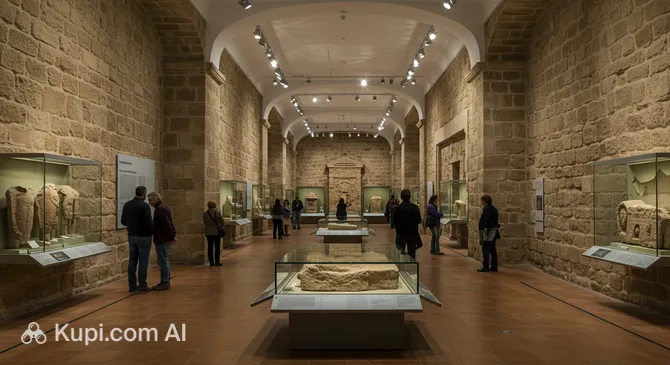
The Archaeological Museum of Jerez invites you to immerse yourself in the centuries-old history of the southern Iberian Peninsula. Located in the historic quarter of Jerez de la Frontera, it is one of the most important cultural centers in the province of Cádiz. Spain is renowned for its ability to carefully preserve its heritage, and this museum is a prime example.
The museum is housed in a magnificent 18th-century building officially recognized as an Asset of Cultural Interest. Its architecture is a classic Andalusian casa patio—a house with three charming inner courtyards, spanning over 3,000 square meters. This space harmoniously blends a historic atmosphere with modern museum technologies.
Jerez Archaeological Museum. Illustration.
Source: Kupi.com AI
Traveler photos:
The main exhibition covers a vast timeline—from the Paleolithic era to the late Middle Ages. It features unique artifacts found near the Guadalete River and on the sites of ancient settlements, telling the stories of Phoenicians, Romans, and Moors on these lands. The museum is rightly considered a must-visit for anyone wishing to understand the deep historical roots of the region.
Contacts
For more details regarding your visit or to book group tours, you can use the following contact information:
The main reason to visit the museum is the chance to see the legendary 7th-century BC Corinthian bronze helmet with your own eyes. This incredibly rare artifact, found in the Guadalete River, is considered one of the gems of Spain’s archaeological heritage. Visitors can examine Roman ceramics, exquisite ancient coins, and everyday items used by the ancient inhabitants of Mesas de Asta—a city that once rivaled the largest ports of antiquity in importance.
Besides the permanent exhibition, the museum regularly hosts temporary exhibitions dedicated to specific aspects of local history. In the audiovisual room, you can watch informative presentations that help visualize what ancient settlements looked like hundreds and thousands of years ago. For those traveling with children or wanting to dive deeper into the subject, the museum offers educational programs and cultural events.
A pleasant bonus is the walk through the museum building itself. Quiet patios with orange trees and ancient stonework create the perfect atmosphere for a relaxing break between exploring the halls. Look out for free admission days: these are typically the first Sunday of every month, as well as significant holidays like Andalusia Day (February 28) or International Museum Day (May 18).
Getting There
The museum is located in the heart of the historic San Mateo quarter. Thanks to its central location on Plaza del Mercado, it is easily accessible on foot from the city’s main landmarks. For instance, a walk from the Cathedral or the Alcázar fortress takes no more than 10–15 minutes through the picturesque streets of the old center.
If you plan to use public transport, city buses for Jerez de la Frontera stop near the museum. The railway station and the city’s main bus station are approximately 2–3 kilometers from the museum; a taxi or bus ride from there takes about 10 minutes. For those arriving from other regions, Jerez Airport (XRY) is located 15 km away, allowing you to reach the center by rental car or transfer in 20 minutes.
For travelers with a private vehicle, please keep in mind that the streets in the historic center are quite narrow. It is recommended to leave your car in one of the underground parking lots near the central market, from where you can walk to the archaeological exhibition while enjoying the atmosphere of ancient Andalusia.
Nearest city: Jerez de la Frontera
History & Facts
The history of this collection began in 1873, when a small archaeological storage site was established at the municipal library in the Old City Hall building. The collection was initially formed from artifacts donated by the city’s enlightened residents. For a long time, these treasures were accessible only to a narrow circle of specialists until systematic cataloging work began in the 1930s under the leadership of the distinguished archaeologist Manuel Esteve Guerrero.
A turning point for the museum was the accidental discovery in 1938—an ancient Greek Corinthian helmet was recovered from the waters of the Guadalete River. This unique 7th-century BC relic instantly brought the collection to international attention. In 1963, the collection officially gained the status of the Municipal Archaeological Museum, and Esteve Guerrero became its first director, dedicating decades to studying the ancient settlement of Asta Regia.
The modern era of the museum began in 1993, when the exhibition moved to its current building on Plaza del Mercado. This magnificent late 18th-century palazzo is a historic monument in its own right. It previously housed the San Juan Bautista College and one of the province's first schools. In 1997, the museum was included in the Register of Museums of Andalusia, confirming its status as one of the region’s most significant cultural centers.
Time Needed
To leisurely explore all the halls and appreciate the richness of the collection, a typical visitor needs between 1.5 and 2.5 hours. This is plenty of time to get acquainted with key exhibits from various eras, from prehistoric times to the Islamic period.
If you are a history enthusiast or plan to visit temporary exhibitions and browse the museum’s specialized library, you should set aside half a day for your visit. The architecture of the building itself, with its cozy inner patios, invites thoughtful and measured exploration, turning your visit into an aesthetic pleasure.
Working Hours
The museum’s schedule may change depending on the season, so it is recommended to check the official website for the latest information before your visit. Generally, the museum is open from Tuesday to Friday from 9:00 AM to 2:00 PM. During the summer period (from mid-June to September), morning opening hours may be slightly extended, and on Fridays, the museum sometimes opens for additional evening hours (from 4:00 PM to 7:00 PM).
On Saturdays and Sundays, the museum usually welcomes visitors from 9:00 AM to 2:00 PM (from 10:00 AM in summer). Monday is the traditional closing day. Please note that the museum is closed on key public holidays: January 1st and 6th, Good Friday, and Christmas Day (December 25th).
Day
Working hours
Monday
Закрыто
Tuesday
09:00–14:00
Wednesday
09:00–14:00
Thursday
09:00–14:00
Friday
09:00–14:00
Saturday
09:00–14:00
Sunday
Закрыто
Nearby
The museum's location in the historic San Mateo district makes it an ideal starting point for further exploration of the city's architectural and cultural heritage. A stroll through the surrounding streets will allow you to see magnificent palaces and ancient squares literally steeped in the spirit of the ages.