Support

Acueducto de San Lázaro

About

Have you ever wondered how the ancient Romans solved the problem of urban water supply? The San Lázaro Aqueduct is an impressive monument of engineering located in the city of Mérida. As one of the three main aqueducts of ancient Emerita Augusta, it once stretched for over a kilometer, delivering vital water to the flourishing colony that Spain was at the time.
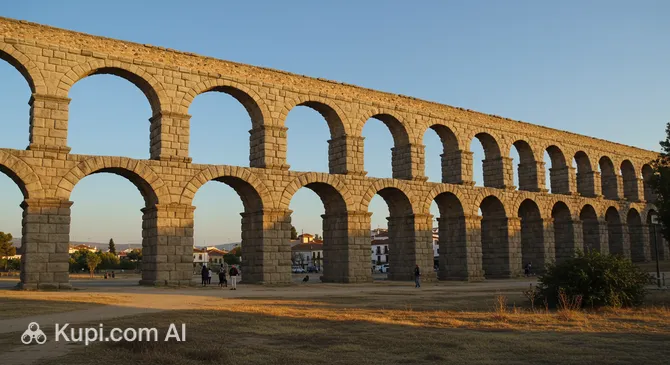
San Lázaro Aqueduct
San Lázaro Aqueduct. Иллюстрация. Источник: Kupi.com AI

To this day, three majestic columns nearly 15 meters high, connected by double arches, have been preserved. The peculiarity of this structure lies in the combination of materials: the lower parts of the supports are made of massive granite blocks, while the upper parts feature characteristic Roman brickwork. These "surviving" fragments allow us to see firsthand the scale and reliability of ancient construction.

Today, this site is part of a unique archaeological ensemble recognized as a UNESCO World Heritage site. Located near the Roman Circus, the aqueduct blends harmoniously into the modern cityscape, serving as a reminder of the times of great emperors and skilled craftsmen of the past.

Contacts

To clarify visiting details or get more information about the archaeological ensemble's monuments, you can use the official communication channels. Please note that the site is managed by the consortium responsible for preserving the city's heritage.

How to contactContact
AddressConsorcio de, Calle Sta. Julia, 5, 06800 Mérida, Badajoz, Spain
Phone+34 924 00 49 08
Websitewww.consorciomerida.org

What to Do

When visiting the San Lázaro Aqueduct, it is worth paying attention to the architectural details. Get up close to examine the "cushioned" granite masonry of the base and how it gives way to even rows of brick. This is a wonderful place for thoughtful contemplation and studying how the Romans used buttresses to reinforce such tall structures.

Photographers will find excellent angles here: the powerful columns against the Spanish sky create monumental shots. Since the aqueduct is located in an open-air park area, a walk along it will be a pleasant addition to your cultural program. You can see not only the arches but also the remains of the lead and ceramic channels through which water was once distributed.

It is best to combine a tour of the aqueduct with a visit to the Roman Circus, which is literally across the street. This will allow you to cover two grandiose sites at once and get a full picture of how this city district functioned in ancient times. Don't forget to also check out the Acueducto de los Milagros to compare different construction styles of the same era.

Getting There

Getting to this historical site is easy, as the San Lázaro Aqueduct is located within the city limits, right next to another grand structure — the Roman Circus. If you are already in the center of Mérida, the walk to the aqueduct will take very little time and allow you to enjoy the atmosphere of the ancient streets.

For those who prefer public transport, you can use local bus routes going toward Juan Carlos I Avenue. Taxis are also always available and can quickly take you from the train or bus station directly to the archaeological zone. Mérida is a compact city, and most Roman monuments are within walking distance of each other.

Ближайший город: Merida

History & Facts

The history of this structure is full of transformations. Although the aqueduct's modern appearance owes much to 16th-century restoration work, it stands on the foundation of an ancient Roman water supply system. During the Roman Empire, this route was a vital artery for the city of Emerita Augusta, delivering water from northern springs across the Albarregas River valley.

Interestingly, due to its long and slender shape, the structure earned the amusing local nickname "Rabo de Buey", which translates to "ox tail". Although time has spared only part of the above-ground structure, the underground channels where water once flowed have survived in remarkably good condition, demonstrating the genius of past engineers.

In the 19th century, the aqueduct underwent another major reconstruction to continue fulfilling its primary function. Few people know that this ancient system was used to supply water to the city until the late 1970s. Thus, the San Lázaro Aqueduct is not just "frozen history," but a site that served the people for many centuries.

Time Needed

A visit to the San Lázaro Aqueduct itself usually takes about 30 to 45 minutes. This is plenty of time to walk along the surviving columns, study the masonry, and take memorable photos against the backdrop of the ancient arches.

However, considering that the Roman Circus and other significant sites are just a few steps away, we recommend allocating about 2-3 hours for visiting this area. This way, you can enjoy the architectural ensemble without rushing and experience the grandeur of the Roman era as a whole.

Working Hours

One of the main advantages of visiting this monument is its accessibility. The San Lázaro Aqueduct is located in an open area and is available for viewing around the clock (24 hours a day), seven days a week.

You can come here in the early morning to catch the first rays of sun on the ancient stones, or in the evening when the architectural forms stand out strikingly against the sunset. No tickets or advance booking are required for exterior viewing of the columns.

Круглосуточно

Nearby

Mérida is a true open-air museum, where every step reveals a new page of history. Exploring the surroundings of the San Lázaro Aqueduct will allow you to dive deeper into the ancient atmosphere and see how grand this city was during its peak.

Famous arenas and temples that were once centers of public life are located nearby. We recommend taking the time to visit the following sites:

NameDistance
Roman Circus of Mérida0.3 km
Mérida Museum of Art0.4 km
López de Ayala Park0.5 km
Roman House of the Amphitheatre0.6 km
Braseria ChapaTapa0.6 km
Roman Theatre of Mérida0.7 km
National Museum of Roman Art0.7 km

Reached the end of the page?

That means the route is fully explored