Support

National Museum of Roman Art

About

An immersion into the atmosphere of antiquity begins in the city of Mérida with a visit to the National Museum of Roman Art. This is not just a repository of antiquities, but a true portal into the past of the great empire on the territory of modern-day Spain. The museum building, designed by the renowned architect Rafael Moneo, is striking in its scale: massive brick arches recreate the grandeur of Roman engineering, providing the perfect frame for ancient artifacts.
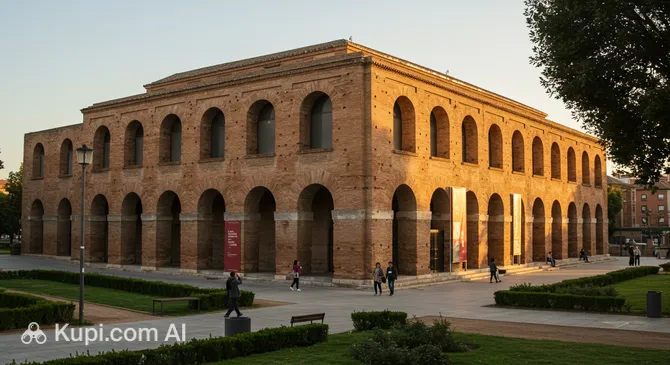
National Museum of Roman Art
National Museum of Roman Art. Иллюстрация. Источник: Kupi.com AI

The museum is a key part of the archaeological ensemble included in the UNESCO World Heritage list. It houses one of the world's best collections dedicated to the life of Emerita Augusta—the ancient capital of the province of Lusitania. Spanning over 10,000 m², it showcases thousands of exhibits, from monumental sculptures to exquisite jewelry.

A special feature of the museum is its unique structure: real archaeological excavations continue in the lower level of the building, where you can see the foundations of Roman houses and sections of ancient roads. This site is rightfully considered a must-visit for anyone wishing to understand the life, culture, and art of one of history's most powerful civilizations.

Contacts

For more details about your visit or to book group tours, you can use the contact information provided below. It is recommended to check the official website in advance for special events and temporary schedule changes.

How to contactContact
AddressC/ José Ramón Mélida, s/n, 06800 Mérida, Badajoz, Spain
Phone+34 924 31 16 90
Websitewww.museoarteromano.es

What to Do

The highlight of the museum experience is the Sculpture Gallery, where sun-drenched halls display statues of gods, heroes, and busts of emperors. Be sure to head to the upper levels to examine the colossal Roman mosaics—many are so well-preserved that they allow you to see the smallest details of sea battles, hunting scenes, and mythological stories that once decorated the floors of wealthy villas.

Equally fascinating is the descent into the underground part of the complex. There, among the ancient foundations, you will literally walk through the streets of Roman Mérida, seeing the very stones touched by the sandals of legionnaires thousands of years ago. To complete the experience, use the multimedia guides, which help reconstruct the original appearance of building fragments and frescoes.

If your trip coincides with the summer season, you can complement your museum visit with performances at the International Festival of Classical Theatre, located just steps away from the entrance. After an enriching walk, it's worth stopping by the souvenir shop for high-quality replicas of ancient coins or relaxing in the local café while enjoying the view of the ruins.

Getting There

Finding this cultural hub is easy, as it is located at C/ José Ramón Mélida, s/n, in the heart of the historic district. If you are already in the center of Mérida, the best way is on foot: a walk from the main square or the famous Roman bridge will take no more than 10–15 minutes through picturesque streets.

For travelers from other regions of Spain, the railway is a convenient option. Renfe (AVE) trains connect the city with Madrid (the journey takes about 3.5 hours), and from the station, you can quickly reach the museum by taxi or city bus. There is also a regular ALSA bus service from Seville and Badajoz.

Within the city, bus routes No. 1, No. 3, and No. 6 go to the museum complex and the adjacent Roman theater (get off at the Teatro Romano stop). If you are traveling by car, follow the A-66 highway, but keep in mind that it is better to look for parking in designated areas near the archaeological zone, as many surrounding streets are pedestrian-only.

Ближайший город: Merida

History & Facts

The history of this site is inextricably linked to the prosperity of the ancient colony of Emerita Augusta, founded in 25 BC by Emperor Augustus. The city was intended as an honorary settlement for veterans of the V and X legions and quickly transformed into the brilliant capital of the province of Lusitania. The museum's collection began to take shape as early as 1836, when a decree was issued to preserve finds from the rich local excavations.

A real breakthrough in exploring the past occurred at the beginning of the 20th century under the guidance of archaeologist José Ramón Mélida. It was his meticulous work at the Roman theater that allowed for the recovery of thousands of priceless artifacts from the earth, which today form the core of the exhibition. In the middle of the century, restoration efforts helped reconstruct many monuments, making the city one of the leading centers for classical archaeology in the world.

The modern museum building, opened in 1986, is an architectural masterpiece in its own right. The designer Rafael Moneo created a space where soaring concrete arches and brickwork echo the monumentality of ancient Roman structures. Notably, during construction, the remains of actual Roman houses and roads found on the site were carefully preserved and integrated into the basement level.

In 1993, the entire archaeological ensemble of the city, including the museum's holdings, was officially included in the UNESCO World Heritage list. This recognition confirmed Mérida's status as the most significant and extensive monument of the Roman era on the entire Iberian Peninsula.

Time Needed

To leisurely explore the main collection, admire the giant mosaics, and descend into the archaeological zone beneath the building, it is recommended to allocate at least 2–3 hours. The scale of the halls and the wealth of fine details in the exhibition require a thoughtful approach.

If you plan to combine your visit to the museum with neighboring sites—the Roman Theater and Amphitheater—then you should set aside at least half a day (around 4–5 hours). Such an immersion will allow you to fully experience the grandeur of the ancient capital of Lusitania without any rush.

Working Hours

The museum is open to visitors throughout the week, except for Mondays, when maintenance work is carried out. Please consider the current schedule when planning your visit:

Tuesday – Saturday: from 09:30 to 20:00
Sunday: from 10:00 to 15:00
Monday: closed

DayWorking hours
ПонедельникЗакрыто
Вторник9:30 – 20:00
Среда9:30 – 20:00
Четверг9:30 – 20:00
Пятница9:30 – 20:00
Суббота9:30 – 20:00
Воскресенье10:00 – 15:00

Nearby

The museum is located at the epicenter of historical heritage, so your introduction to antiquity can continue literally just outside the building. A walk through the surrounding area will show you how seamlessly the ancient ruins are integrated into the fabric of the modern Spanish city.

Below are the most interesting sites within walking distance:

NameDistance
Roman Theatre of Mérida0 km
Roman House of the Amphitheatre0.1 km
Shangri-La Vegetarian Bar0.2 km
Portico of the Municipal Forum of Augusta Emerita0.3 km
Braseria ChapaTapa0.3 km
Mérida Museum of Art0.3 km
López de Ayala Park0.3 km

Reached the end of the page?

That means the route is fully explored