Support

Archaeological area of ​​Morería

About

In the heart of the historical center of Mérida lies a unique archaeological complex — the Morería Archaeological Area. This is not just a museum, but a large-scale excavation site where a multi-layered history literally comes to life beneath your feet. Spain carefully preserves the remains of various eras here: from majestic Roman houses to medieval Moorish quarters.
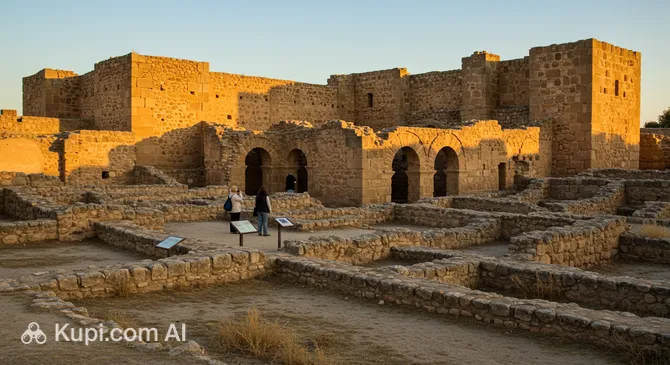
Morería Archaeological Area
Morería Archaeological Area. Иллюстрация. Источник: Kupi.com AI

The territory of the complex is striking in its significance — it is included in the UNESCO World Heritage list. Here, visitors can see the evolution of urban development: ruins of Roman villas, Visigothic foundations, and Arab defensive walls with a necropolis coexist on a single site. This place offers a rare opportunity to visually trace how one city changed its appearance and culture over the centuries.

Morería is very popular with tourists (average rating of 4.2 based on thousands of reviews) due to its accessibility and informativeness. It is an ideal location for fans of ancient architecture and archaeology who want to see real evidence of the daily life of the ancient inhabitants of the capital of the Roman province of Lusitania.

Contacts

To clarify current information about visiting or to book tours, you can use the official contact details of the archaeological zone. The site administration is open to tourist inquiries and ready to assist with organizational matters.

How to contactContact
AddressP.º Roma, s/n, 06800 Mérida, Badajoz, Spain
Phone+34 924 00 49 08
Websiteturismomerida.org

What to Do

A visit to Morería is a fascinating journey through time, where the main activity is an archaeological walk. You can walk along ancient defensive walls, study the layout of the Moorish quarter, and see the remains of Roman residential houses. Strolling along specially equipped routes, it is interesting to observe how foundations from different eras are literally layered on top of each other.

Special attention should be paid to the ancient necropolis and fragments of the city's road network. In the nearby tourist center, you can often see maps and reconstructions of what these streets looked like thousands of years ago. This place is perfect for educational tourism: here you can clearly visualize how the ancient water supply system functioned and how the city's defenses were organized during the period of Arab rule.

For photography enthusiasts, the Morería area offers many atmospheric angles — the play of light on ancient stones and panoramic views of the ruins create unique shots. A peaceful atmosphere prevails here, conducive to thoughtful study of history in the fresh air. It is also recommended to join one of the guided tours to learn details about the artifacts found here, which today adorn the region's best museums.

Getting There

The Morería Archaeological Area is exceptionally well-located in the historical center of the city at P.º Roma, s/n. Thanks to Mérida's compactness, most ancient monuments can be reached from here on foot. The walk from the famous Roman theater or the bridge over the Guadiana River takes only a few minutes, making Morería a convenient stop on a walking route through the city.

If you arrive in the city by bus, the walk from the bus station is about 10–15 minutes. For those using public transport, local buses that run through the center stop nearby. If traveling by car, you should look for parking in the historic quarter, though spaces can be limited during peak season.

Tourists arriving from other regions via Badajoz Airport (located about 50 km away) will find it most convenient to use a taxi or regular buses, which will get you to Mérida in about an hour. It is best to start your journey from the tourist information office, where you can get a map and detailed navigation instructions for the ancient ruins.

Ближайший город: Merida

History & Facts

The history of this place is inextricably linked to the founding of the city of Emerita Augusta in 25 BC by the Romans. As the capital of the province of Lusitania, the city developed actively, and the Morería area became an important residential and strategic hub. The famous route used in ancient times to transport silver passed through here, leaving its mark on the architectural appearance of the quarter.

Over the centuries, Morería turned into a true "historical chronicle." The Romans were succeeded by the Visigoths, and from the 8th century, during the period of Arab rule, the Moorish quarter was established here. Notably, new buildings were constructed directly on top of ancient foundations, using them as a reliable support. Today, archaeologists highlight fragments of ancient walls and a necropolis here, which clearly demonstrate the succession of eras.

Following the return of Christian rulers in the 13th century, the city continued to preserve these cultural layers. The unique preservation of various historical strata allowed Morería to be included in the Archaeological Ensemble of Mérida, which was recognized as a UNESCO World Heritage site in 1993. This site remains one of the most significant testaments to the centuries-long evolution of Spanish architecture.

Time Needed

To leisurely explore all the open excavation sites, appreciate the layered walls, and study the information boards, an average visitor will need about 1–2 hours. This is quite enough time to soak in the atmosphere of the ancient city and examine the details of life from different eras.

If you plan to study every foundation in detail, use an audio guide, or combine your walk with visits to neighboring archaeological sites and the tourist center, you should allow 2–3 hours for the visit. The Morería Archaeological Area encourages thoughtful contemplation, so it is best not to plan your visit in a hurry.

Working Hours

When planning your visit to the Morería Archaeological Area, please note that the site operates on a strict schedule. The area is open to visitors daily, making it easy to fit into any travel itinerary.

The official opening hours of the complex are from 9:00 to 15:00 every day of the week, including Saturday and Sunday. It is recommended to arrive at opening time or at least an hour before closing to ensure you have time to see all the significant excavation areas without rushing.

9:00 – 15:00

Nearby

Exploring the surroundings of the Morería Archaeological Area is a great way to dive deeper into the atmosphere of the ancient past. Since Mérida is rightfully considered an open-air museum, you will find many other majestic monuments just a few minutes' walk from this site.

A stroll through the nearby streets will allow you to see the evolution of ancient Roman engineering and art, from grand bridges to elegant temples. Below are the main attractions located in the immediate vicinity:

NameDistance
Sybarit Gastroshop Restaurant0.3 km
Jazz Bar Merida0.3 km
Capitoline Wolf0.3 km
Roman Bridge of Mérida0.4 km
Temple of Diana0.5 km
Portico of the Municipal Forum of Augusta Emerita0.6 km
Agallas Gastro & Food0.6 km

Reached the end of the page?

That means the route is fully explored