Support

Casa del Mitreo y área funeraria de Los Columbarios

About

The House of Mithraeum and Columbarium Area is a unique archaeological ensemble in the city of Mérida that offers a true journey back in time. This site combines the remains of a magnificent Ancient Roman villa and an antique necropolis, showcasing the contrast between the luxurious lifestyle and the funerary traditions of the province of Lusitania.
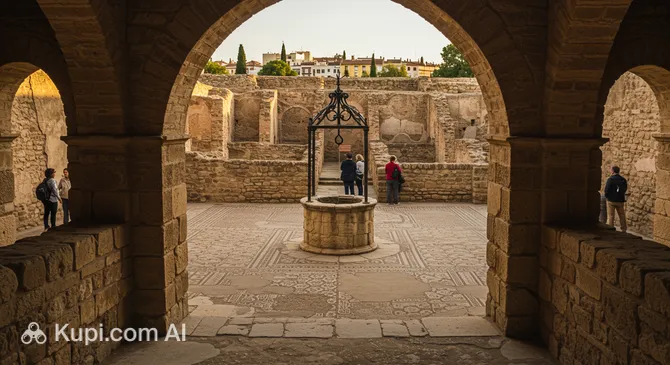
House of the Mithraeum and Columbarium Area
House of the Mithraeum and Columbarium Area. Иллюстрация. Источник: Kupi.com AI

Located in modern-day Spain, the complex was once part of Emerita Augusta—one of the most important administrative centers of the Roman Empire. The House of Mithraeum is particularly famous for its artistic treasures, most notably the Cosmos Mosaic. This masterpiece is striking for its technical complexity and the depth of its allegorical meaning, depicting the origin of the Universe and the elements.

Adjoining the house is the Columbarium area, a well-preserved cemetery featuring family tombs. Walking here, you can see burial niches and urns that tell the story of the daily lives and beliefs of ordinary citizens who lived thousands of years ago. Today, this complex is an important part of the UNESCO World Heritage.

Contacts

To clarify information about visiting the complex, you can use the official communication channels. Please note that the administration recommends checking for the latest updates before your visit.

How to contactContact
AddressC. Oviedo, s/n, 06800 Mérida, Badajoz, Spain
Phone+34 924 00 49 08
Websitewww.consorciomerida.org

What to Do

The main draw for visitors inside the House of Mithraeum is the ancient mosaics, which have retained their vibrant colors after centuries. Be sure to find the Cosmos Mosaic—a true masterpiece where the sky, earth, sea, and seasons are represented in human forms. Exploring the layout of the rooms and the internal courtyards (atriums), it is easy to imagine the life of a wealthy Roman family surrounded by columns and cool gardens.

In the Columbarium area, a more contemplative atmosphere awaits guests. Here, you can examine burial niches, stone sarcophagi, and urns, as well as read the surviving epitaphs. This site clearly demonstrates the transition from Roman cremation rituals to burial traditions, opening up little-known pages of the everyday history of ancient Emerita.

The complex grounds are well-equipped for tourists: there are convenient paths and information panels that help explain the purpose of various rooms. For those who want to discover more hidden details, professional guide services or themed open-air lectures are often available.

Getting There

The "House of Mithraeum and Columbarium Area" archaeological complex is located in the southeastern part of the city, within walking distance of most key ancient monuments. A walk from the historical center of Mérida to the complex entrance takes about 10–15 minutes, making it a convenient addition to your main sightseeing route.

If you arrive at the train station or bus station, you can also reach the destination on foot while enjoying views of the city. For those who prefer comfort or are short on time, local taxi services are always available to quickly take you from any central square directly to the complex gates.

Travelers with a personal or rental car will have no trouble finding the site at C. Oviedo, s/n. Parking zones are available nearby; however, spaces can be limited during peak tourist hours, so arriving early is recommended.

Ближайший город: Merida

History & Facts

The construction of this luxurious urban villa dates back to the late 1st — early 2nd century AD. At that time, Mérida was the thriving colony of Emerita Augusta, and such houses belonged exclusively to members of the upper class or high-ranking officials. It is noteworthy that the name "House of Mithraeum" became historically associated with the monument, although modern researchers have found no direct evidence of a sanctuary dedicated to the god Mithra existing here.

The adjacent Columbarium area served as a city necropolis and was located outside the city walls of that time. This site provides an invaluable insight into Roman burial traditions. Columbaria are small above-ground structures with numerous internal niches where funeral urns containing the ashes of the deceased were kept after cremation—a common practice in the 1st–3rd centuries.

Archaeological excavations at this site have uncovered not only architectural elements but also many epigraphic inscriptions and everyday objects. These finds help scientists reconstruct the social structure of ancient society and understand how the inhabitants of the great Roman Empire lived and what they believed in on the territory of modern Spain.

Time Needed

To leisurely explore all the details of the Roman villa and examine the burial structures, visitors usually need between 45 minutes and 1.5 hours. This time is quite sufficient to carefully examine the mosaics and walk through the necropolis area.

If you plan to join an organized tour or study the information boards in detail, you should aim for the upper end of this time range. The complex is compact but rich in small historical details that deserve attention.

Working Hours

The attraction is open to visitors daily, making it easy to include in any travel itinerary. The current operating hours for the complex are:

  • Monday — Sunday: 09:00 to 20:30.

Please note that depending on the season and public holidays in Spain, the schedule may change slightly. During the summer months, keep in mind the possibility of a siesta, although Mérida's major archaeological parks often operate without breaks. It is recommended to check the city's official website before your visit.

9:00 – 20:30

Nearby

The complex's location in the historical heart of the city makes it easy to combine your visit with other iconic ancient monuments. The walk between sites takes very little time, revealing a panorama of the Roman Empire's former greatness.

Exploring the surroundings will help you dive deeper into the atmosphere of ancient Emerita Augusta and see how harmoniously the ruins of the past blend with the modern urban landscape.

NameDistance
Agallas Gastro & Food0.4 km
Roman Theatre of Mérida0.6 km
Temple of Diana0.6 km
Portico of the Municipal Forum of Augusta Emerita0.6 km
Roman House of the Amphitheatre0.7 km
Shangri-La Vegetarian Bar0.7 km
National Museum of Roman Art0.7 km

Reached the end of the page?

That means the route is fully explored