Support

Capitoline Wolf

About

Strolling along the picturesque waterfront of Mérida, it is impossible to pass by one of the most recognizable symbols of antiquity — the Capitoline Wolf. This monument is a bronze replica of the famous Roman statue depicting the legendary she-wolf who suckled the twins Romulus and Remus. Located in the province of Badajoz, in Spain, the sculpture serves as a vivid reminder of the city's grand past when it was known as Emerita Augusta.
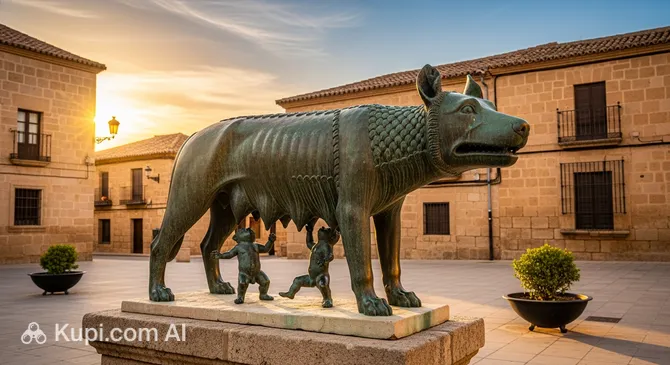
Capitoline Wolf
Capitoline Wolf. Иллюстрация. Источник: Kupi.com AI

The statue stands 75 centimeters tall, exactly replicating the dimensions of the original masterpiece in Rome's Capitoline Museums. It is located in the open space of Paseo de Roma, allowing tourists and locals to freely admire the mythical protector of the Eternal City's founders against a backdrop of modern scenery.

This monument is not just a decoration for the promenade, but an important link between ancient cultural heritage and the present day. It attracts history and mythology enthusiasts who wish to feel the spirit of the Roman Empire, which in Mérida can be sensed at almost every turn.

Contacts

The sculpture is located in a public space, so it can be viewed at any time. For additional information about city tourist routes, you can use the following contact details:

How to contactContact
AddressP.º Roma, 1A, 06800 Mérida, Badajoz, Испания
Phone+34 924 14 89 29
Websitewww.esculturaurbanaaragon.com.es

What to Do

A visit to the Capitoline Wolf is a wonderful opportunity to take iconic photographs. The sculpture is positioned so that the frame captures not only the legendary symbol but also the atmosphere of the ancient city of Mérida. The monument looks especially striking in the evening when the artistic lighting is turned on, giving the figures of the wolf and the infants a special charm.

Take a walk along Paseo de Roma, enjoying views of the river and other ancient ruins. This spot is perfect for pausing a moment to reflect on the myth of Romulus and Remus's survival. Many tourists combine seeing the wolf with a visit to the nearby Roman Theater and Amphitheater, which are UNESCO World Heritage sites.

For those traveling with children, this is a great occasion to tell them the exciting legend of Rome's origin. Thanks to its convenient location, you can take a short rest by the sculpture before continuing to explore the archaeological treasures of this amazing region.

Getting There

The sculpture is located at Paseo de Roma, 1A in Mérida. The most convenient way to reach this region of Spain is by train or bus from major cities. The journey from Madrid takes about 4 hours, and from Seville, it's about 3 hours.

From the main Mérida railway station, the waterfront is just a 15–20 minute walk away, or a 5-minute taxi ride. If you are traveling by car, there are parking areas near Paseo de Roma.

For those who prefer active travel, renting a bicycle or electric scooter is an excellent option. Since the city's main Roman monuments are within walking distance of each other, a stroll to the Capitoline Wolf will be a pleasant part of your itinerary.

Ближайший город: Merida

History & Facts

The history of this symbol is inextricably linked with the legend of the founding of Rome. According to legend, the twins Romulus and Remus, abandoned in the waters of the Tiber, were saved and suckled by a she-wolf. Later, one of the brothers founded the great city in 753 BC. Although modern Mérida is located in Spain, in ancient times it was known as Emerita Augusta — a vital outpost of the Roman Empire.

Interestingly, the original statue in Rome was long considered an Etruscan work from the 5th century BC. However, modern radiocarbon dating has shown that the wolf figure itself was created in the 11th–12th centuries, while the figures of the infants were added only in the 15th century during the time of Pope Sixtus IV.

The replica installed on Paseo de Roma serves as a reminder of the deep ancient roots of the Extremadura region. It emphasizes the city's status as the "Spanish Rome," where a theater, an amphitheater, and one of the longest Roman bridges in the world are still magnificently preserved.

Time Needed

To see the Capitoline Wolf and take a few memorable photos, 10–20 minutes is usually sufficient. It is a local landmark that fits harmoniously into a walking route along the promenade.

We recommend setting aside about 30–45 minutes to stroll leisurely along Paseo de Roma and read the information plaques explaining the city's connection to Roman mythology. It is an ideal "quick stop" before visiting larger sites like the Roman Theater.

Working Hours

Since the Capitoline Wolf is installed in the open public area of Paseo de Roma, it is accessible 24/7. You can visit the monument at any time convenient for you — from early morning until late at night.

The sculpture is open for viewing 7 days a week, including holidays. To clarify information about city tours or special events in the archaeological zone, we recommend checking the city's official tourism website.

Круглосуточно

Nearby

Exploring the surroundings of Paseo de Roma will allow you to fully immerse yourself in the atmosphere of antiquity. Mérida is a true open-air museum, where key historical monuments are located literally within a few minutes' walk of each other.

NameDistance
Temple of Diana0.3 km
Roman Bridge of Mérida0.3 km
Morería Archaeological Area0.3 km
Sybarit Gastroshop Restaurant0.3 km
Jazz Bar Merida0.3 km
Agallas Gastro & Food0.4 km
Portico of the Municipal Forum of Augusta Emerita0.5 km

Reached the end of the page?

That means the route is fully explored