Support

Cáceres Museum

About

The Museum of Cáceres is the most important cultural center of the Extremadura province, offering guests a unique journey through millennia. Located in the heart of the ancient city of Cáceres, this museum complex occupies two majestic historic buildings: Las Veletas Palace and Casa de los Caballos. It is a place where archaeological artifacts meet masterpieces of world art within the setting of medieval walls.
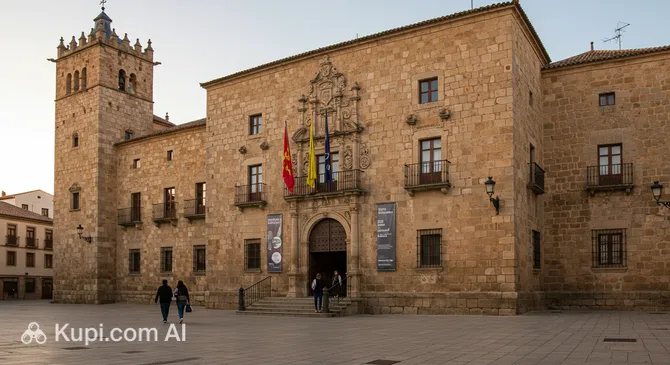
Cáceres Museum
Cáceres Museum. Иллюстрация. Источник: Kupi.com AI

The main architectural gem of the museum is the aljibe—one of the most beautiful and well-preserved Muslim water cisterns in Spain. Descending into this mysterious underground space with its forest of arches, you literally touch the region's Moorish past. The palace building itself is impressive with its Renaissance facade decorated with coats of arms and an elegant courtyard with Tuscan columns.

Inside, a rich collection is assembled, spanning periods from the Paleolithic to the present day. Here you can see rare Roman mosaics, Visigothic jewelry, and traditional household items of the residents of Extremadura. The Museum of Cáceres is not just a repository of antiquities, but a living history of a city recognized as a World Heritage site.

Contacts

To confirm current information about special exhibitions or visiting rules, you can contact the museum administration directly. The main contact details for the institution are provided below.

How to contactContact
AddressPl. de las Veletas, 1, Centro-Casco Antiguo, 10003 Cáceres, Spain
Phone+34 927 01 08 77
Websitemuseodecaceres.gobex.es

What to Do

A visit to the museum should begin with the archaeological halls, which feature amazing finds ranging from prehistoric tools to the exquisite Roman mosaic "The Three Graces". Be sure to notice the Bronze Age stelae and the mysterious stone carvings of boars left by pre-Roman tribes. For those interested in cultural heritage, the ethnographic section reveals the secrets of traditional crafts and showcases the region's vibrant folk costumes.

The highlight for many is the descent into the Muslim aljibe. Standing in the dim light of this ancient cistern, you will feel the cool air and see the reflection of the vaulted arches in the still surface of the water—it is one of the most photogenic moments in the entire city. We recommend taking an audio guide to learn more about the construction secrets of this engineering marvel.

Art lovers should cross the gallery to Casa de los Caballos. Here, canvases by El Greco await you—specifically his work "The Savior"—as well as pieces by 20th-century masters such as Pablo Picasso and Joan Miró. You can finish your walk in the quiet sculpture garden, which offers a peaceful retreat after an intensive tour of the collections.

Getting There

Finding the Museum of Cáceres is easy, as it is located in the heart of the historic San Mateo district. The exact address is Plaza de las Veletas, 1. Since the old town is a UNESCO World Heritage site, traffic is restricted, and the best way to get around is on foot through the picturesque cobbled streets.

If you are traveling from other regions, Cáceres has good train and bus connections with Madrid (the journey takes about 3–4 hours), Seville, and Badajoz. You can reach the city center from the station by local bus or taxi in 15–20 minutes.

For travelers arriving by car, it is recommended to leave your vehicle in one of the parking lots outside the fortress walls, as navigating the narrow alleys within the Old Town can be difficult. From nearby squares like Plaza Mayor, the museum is just a few minutes' walk away.

Ближайший город: Caceres

History & Facts

The museum's history began in 1898 when a small collection of ancient coins was gathered within the walls of a local school. Over time, the collection grew thanks to generous donations and archaeological finds in the region, such as the famous Aliseda Treasure. In 1933, the museum found its current home in two majestic buildings: Las Veletas Palace and Casa de los Caballos.

Las Veletas Palace was built in the 16th century on the foundations of an old Moorish fortress. The most astonishing evidence of that era is the aljibe (water cistern), preserved from the time of Almohad rule. This underground structure with horseshoe arches is considered one of the best-preserved in the world and still fulfills its function today, collecting rainwater.

In the mid-20th century, the museum underwent a period of active development under the leadership of director Carlos Callejo Serrano, who also introduced the world to the rock art in the Maltravieso Cave. In 1992, the museum expanded to include Casa de los Caballos, which houses the fine arts collection, thus connecting the ancient history of the region with contemporary creativity.

Time Needed

To explore all the exhibitions without rushing, visitors usually need between 1.5 and 2.5 hours. This is enough time to walk through the archaeology halls, peek into the ethnographic department, and descend into the ancient cistern.

If you are an art lover and plan to study the collection in Casa de los Caballos in detail—including works by El Greco and Picasso—it is worth setting aside an additional 45 minutes. Also, don't forget to leave time for a stroll through the sculpture garden that connects the two museum buildings.

Working Hours

When planning your visit to the Museum of Cáceres, please note that it is closed on Mondays. On other days, the museum operates with a siesta break, which is typical for this region.

Opening Hours:

  • Tuesday – Friday: 09:00 – 15:00, 16:00 – 20:00
  • Saturday: 10:00 – 15:00, 16:00 – 20:00
  • Sunday: 10:00 – 15:00
  • Monday: Closed
Please keep in mind that admission usually stops 15–30 minutes before closing time.

DayWorking hours
ПонедельникЗакрыто
Вторник9:00 – 15:00, 4:00 – 20:00
Среда9:00 – 15:00, 4:00 – 20:00
Четверг9:00 – 15:00, 4:00 – 20:00
Пятница9:00 – 15:00, 4:00 – 20:00
Суббота10:00 – 15:00, 4:00 – 20:00
Воскресенье10:00 – 15:00

Nearby

The museum's location in the historic core allows tourists to easily combine their visit with other iconic sites. A walk around the neighborhood turns into a real journey through time, where a medieval tower or a Renaissance palace hides around every corner.

Exploring nearby sites will help you feel the atmosphere of the medieval city more deeply and see how different eras are intertwined in the architecture of this unique place.

NameDistance
Bastion of the Wells0.1 km
San Jorge Square0.1 km
Stork Tower Palace0.1 km
Atrio0.1 km
Palace of the Golfines de Abajo0.1 km
Yusuf Al-Burch Arab House Museum0.1 km
Old Town of Cáceres0.2 km

Reached the end of the page?

That means the route is fully explored