Support

Puente Mayor

About

Puente Mayor is a monumental stone bridge over the Pisuerga River, serving as one of the oldest and most significant architectural landmarks in the city of Valladolid. Spanning approximately 250 meters, the structure impresses with its grandeur and the austere forms of its seven arches, which have served as a reliable crossing for people in Spain for centuries.
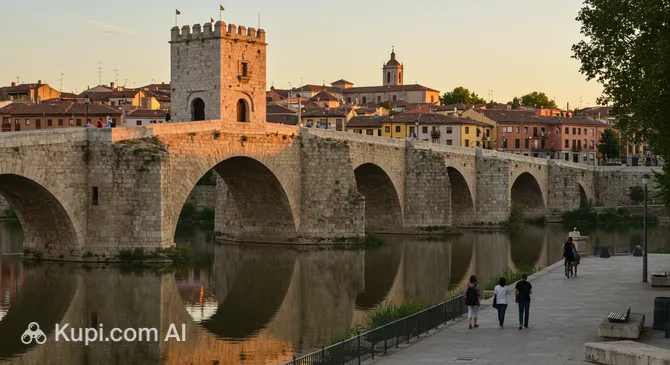
Puente Mayor
Puente Mayor. Иллюстрация. Источник: Kupi.com AI

The history of this site dates back to the 11th century, when, according to legend, the bridge's construction was initiated by Doña Eylo, the wife of the city's founder. Today, the bridge represents a unique fusion of medieval engineering and later Gothic elements added during numerous renovations.

For the modern tourist, Puente Mayor is more than just a historical monument; it is a fantastic viewpoint. It offers classic views of the riverbank and historical buildings, making it a must-visit for any traveler who appreciates the atmosphere of old Europe.

Contacts

To find more information about tourist routes related to the bridge or to plan your walk, you can use the city's official resources.

How to contactContact
AddressC. del Puente Mayor, 47003 Valladolid, Spain
Websitewww.valladolid.es

What to Do

The main joy of visiting Puente Mayor is taking a walk along its wide sidewalks. The bridge offers a magnificent panorama of the Pisuerga River, and you'll surely capture iconic buildings like the Edificio Duque de Lerma in your photos. Sunset is a particularly good time for photos, as the soft light highlights the texture of the ancient stone.

It is interesting to observe how the bridge connects different parts of the city. Crossing to the right bank, you will find yourself in the La Victoria neighborhood, which owes its existence to this very crossing. It’s an excellent spot to witness the daily life of locals, who often use the bridge for their daily strolls or bike rides.

History buffs should examine the masonry of the piers and the shape of the arches—you can see traces of the bridge's expansion carried out in the 15th century. In the evening, architectural lighting transforms the structure into a romantic space, creating a special atmosphere for a leisurely promenade above the river.

Getting There

Reaching this historic site is easy, as it is located on the edge of the historic center. If you are at the main square, Plaza Mayor, a leisurely walk to the bridge will take only 5–10 minutes. The route passes through picturesque neighborhoods, allowing you to enjoy the city's architecture along the way.

For those who prefer public transport, Valladolid's city buses have routes passing nearby. From the main railway station, Valladolid-Campo Grande, you can reach Puente Mayor in 15–20 minutes on foot or take a taxi, which takes no more than 5 minutes.

Travelers arriving from Valladolid Airport (VLL) can reach the center by bus or taxi in approximately 20–30 minutes. The bridge's coordinates make it easy to find using a navigator by following the course of the Pisuerga River.

Ближайший город: Valladolid

History & Facts

Although folk tradition links the origins of Puente Mayor to the year 1080 and the name of Doña Eylo, wife of Count Ansúrez, modern researchers date its core structure to the 13th–14th centuries. It was during this period that the characteristic pointed Gothic arches were formed, giving the bridge its recognizable appearance today.

In the 15th century, the bridge underwent a unique transformation: its width was doubled. This was achieved by building a nearly identical structure right next to the existing one, significantly widening the roadway. In the 17th century, a grand triumphal arch stood at the bridge entrance, built for the visit of King Carlos II, though this architectural element has not survived.

The bridge's history is inextricably linked to the struggle against the elements. Due to the powerful flooding of the Pisuerga River, the structure required frequent repairs, particularly in the 17th and 18th centuries. In 1812, two spans were damaged but were restored in stone by 1828 under the guidance of architect Juan Iruré. Each reconstruction added new details while maintaining the overall historical continuity of the structure.

Time Needed

A basic visit to Puente Mayor typically takes about 30 to 60 minutes. This is enough time to cross the river, admire the architectural features of the stone arches, and take some impressive photos against the city skyline.

If you plan to combine your walk across the bridge with exploring the adjacent La Victoria neighborhood or relaxing in one of the riverside parks, you should set aside about 1.5–2 hours. This will allow you to enjoy the atmosphere of this historic site at different times of the day without rushing.

Working Hours

Since Puente Mayor is an essential part of the city infrastructure and an open pedestrian route, it is accessible 24 hours a day.

You can visit at any time, whether early morning to catch the sunrise or late evening to see the bridge illuminated by decorative lighting. The site is open every day, including weekends and holidays, remaining accessible to both tourists and locals.

Круглосуточно

Nearby

Exploring the area around Puente Mayor can significantly enrich your travel experience. The bridge is ideally located, making it easy to reach the most iconic spots of the historic center, where every mansion and square holds memories of the city's former glory.

A walk through the nearby neighborhoods will allow you to see both monumental palaces and cozy modern leisure spaces. Below is a list of interesting locations within walking distance:

NameDistance
Las Moreras Park0.3 km
Old Bullring Square0.5 km
Patio Herreriano Museum0.6 km
Royal Palace of Valladolid0.7 km
Church of San Benito0.7 km
National Museum of Sculpture0.8 km
José Zorrilla House Museum0.8 km

Reached the end of the page?

That means the route is fully explored